Letter Job Offer Sample With No Experience In Contra Costa
Description
Get your form ready online
Our built-in tools help you complete, sign, share, and store your documents in one place.
Make edits, fill in missing information, and update formatting in US Legal Forms—just like you would in MS Word.
Download a copy, print it, send it by email, or mail it via USPS—whatever works best for your next step.
Sign and collect signatures with our SignNow integration. Send to multiple recipients, set reminders, and more. Go Premium to unlock E-Sign.
If this form requires notarization, complete it online through a secure video call—no need to meet a notary in person or wait for an appointment.
We protect your documents and personal data by following strict security and privacy standards.

Make edits, fill in missing information, and update formatting in US Legal Forms—just like you would in MS Word.

Download a copy, print it, send it by email, or mail it via USPS—whatever works best for your next step.

Sign and collect signatures with our SignNow integration. Send to multiple recipients, set reminders, and more. Go Premium to unlock E-Sign.

If this form requires notarization, complete it online through a secure video call—no need to meet a notary in person or wait for an appointment.

We protect your documents and personal data by following strict security and privacy standards.
Looking for another form?





Form popularity
FAQ
No, an offer letter differs from an employment contract. While an offer letter is a formal, initial communication indicating a company's intent to hire and outlines basic job details, it is not as legally binding or detailed as an employment contract.
The legal implications of signing an offer letter can vary based on jurisdiction but generally imply a mutual agreement to the terms outlined. This means, once signed, you are legally obligated to adhere to the conditions set forth, and failure to do so could result in legal repercussions.
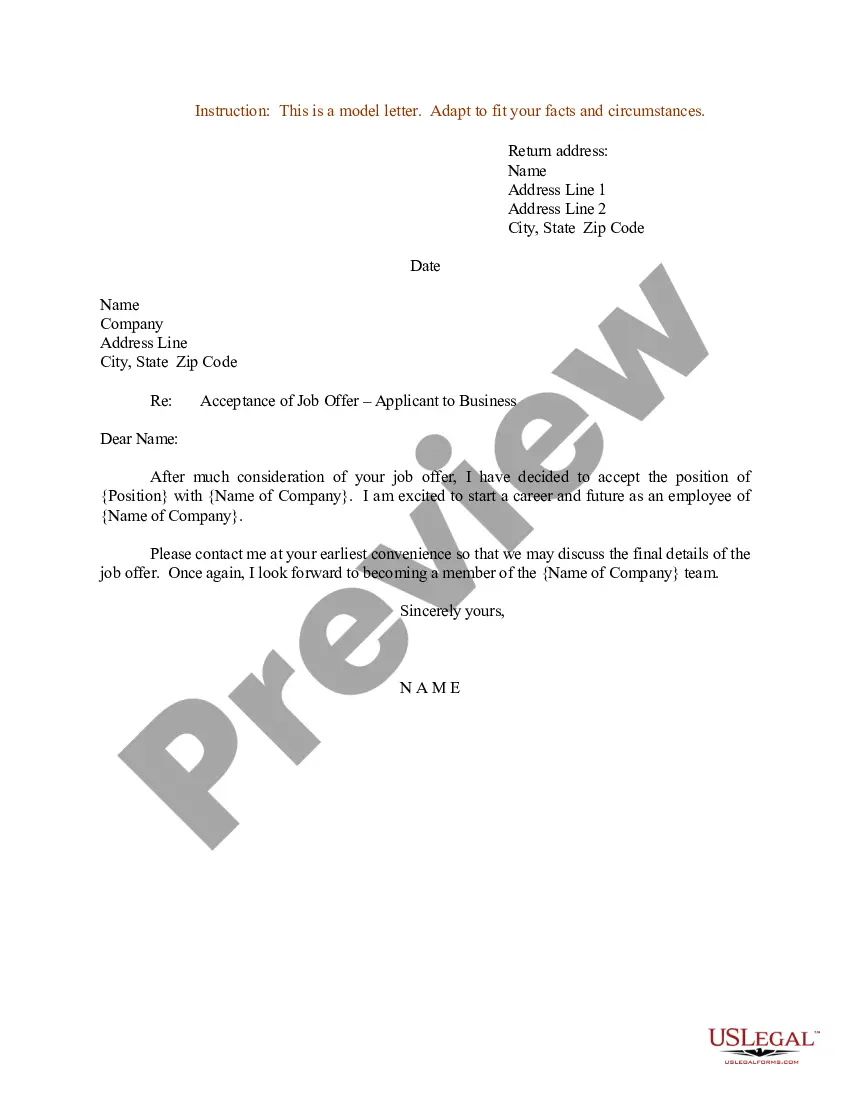
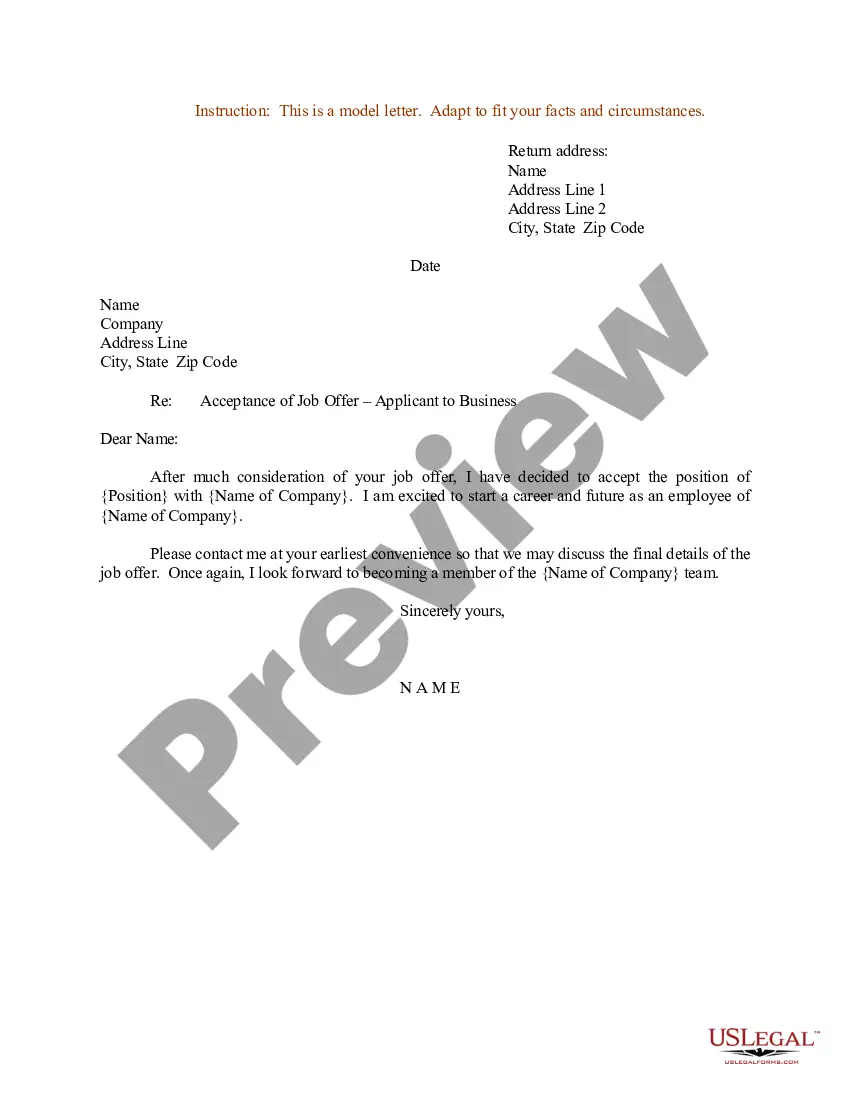
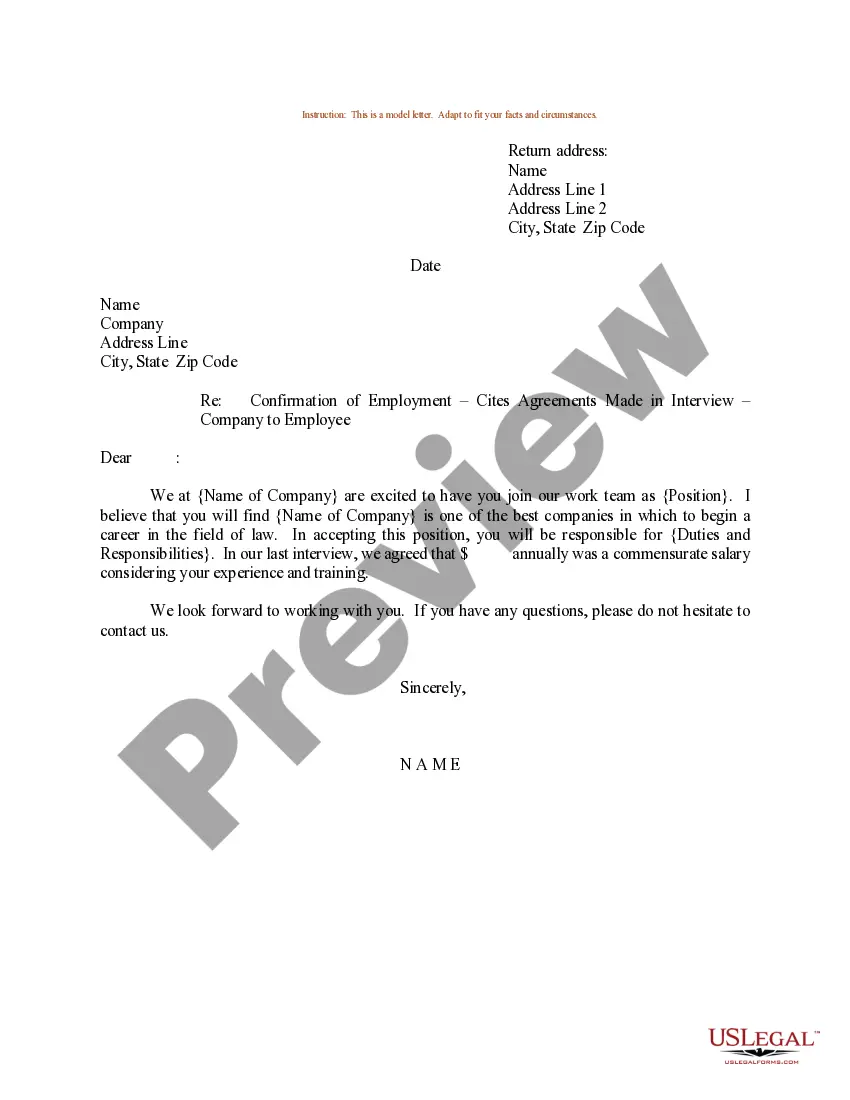
Clearly state the job title and position being offered. Include the key details of the offer, such as salary, benefits and any additional compensation. Outline the start date and working hours, including full-time, part-time, contract or internship duration.
We're excited to offer you the role of title at company name . We believe you're a great match for the full- or part-time title position. In this position, you will be expected to duties and responsibilities. You will start on start date and report directly to supervisor's name at workplace address.
An offer letter is a letter or email sent to a candidate chosen at the end of the hiring process, extending an offer of employment. An offer letter can be an official or unofficial document and often includes information like salary/wage, a list of benefits, start date, etc.
Company name is delighted to offer you the full-time, part-time, etc. position of job title with an anticipated start date of start date, contingent upon background check, drug screening, etc.. As the job title, you will be responsible for brief mention of job responsibilities and expectations.
DON'T include: Language that makes the letter sound like a contract. A place for the employee to sign the letter, which also makes it seem like a contract. Language that implies job security or longevity, such as “You'll be able to grow here” or “You will enjoy a long career here.”
An offer letter outlines employment terms, including company name, job position, responsibilities, salary details and employment tenure. It should also include information on leave and termination policies, joining document requirements, and company-provided benefits to enhance transparency.
Greeting / opening line Start your offer letter with“Dear,” followed by the candidate's first and last name. Congratulate them and express enthusiasm about offering them the job with a positive, upbeat opening line, like: “We are excited to offer you a position at Company Name!”

