Letter With Job Offer In Arizona
Description
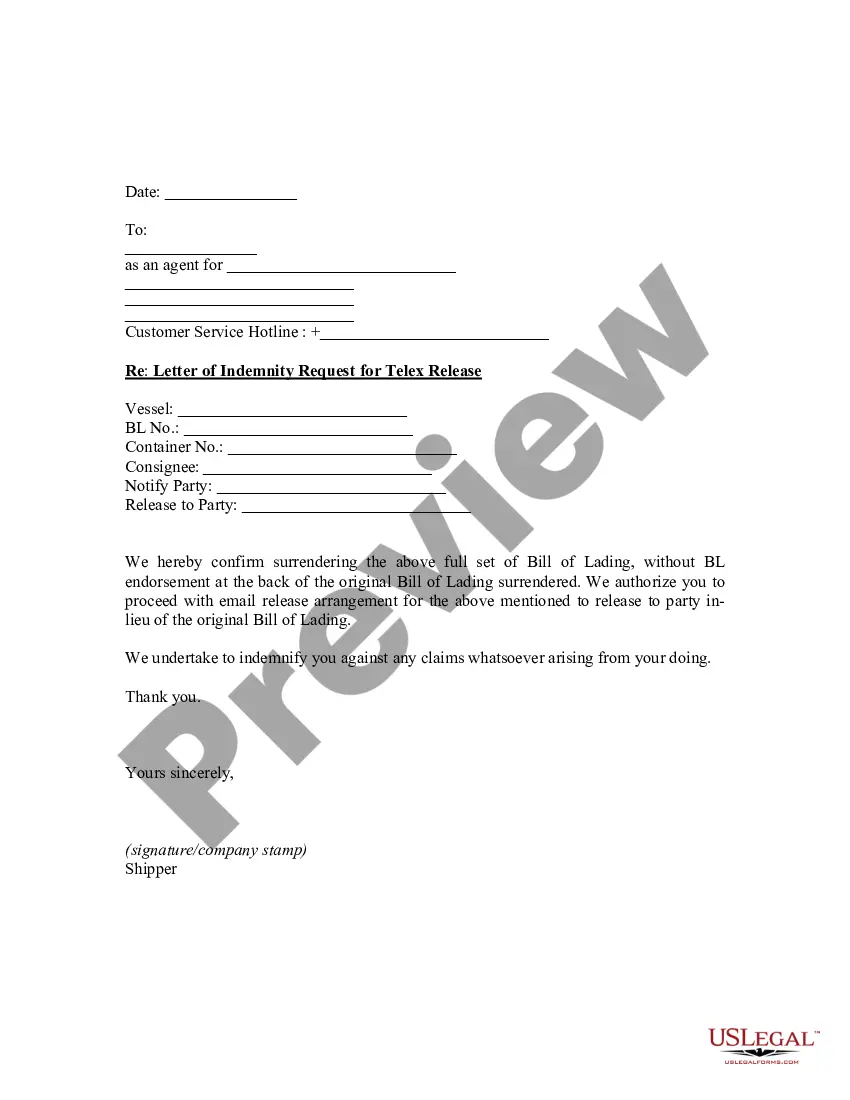
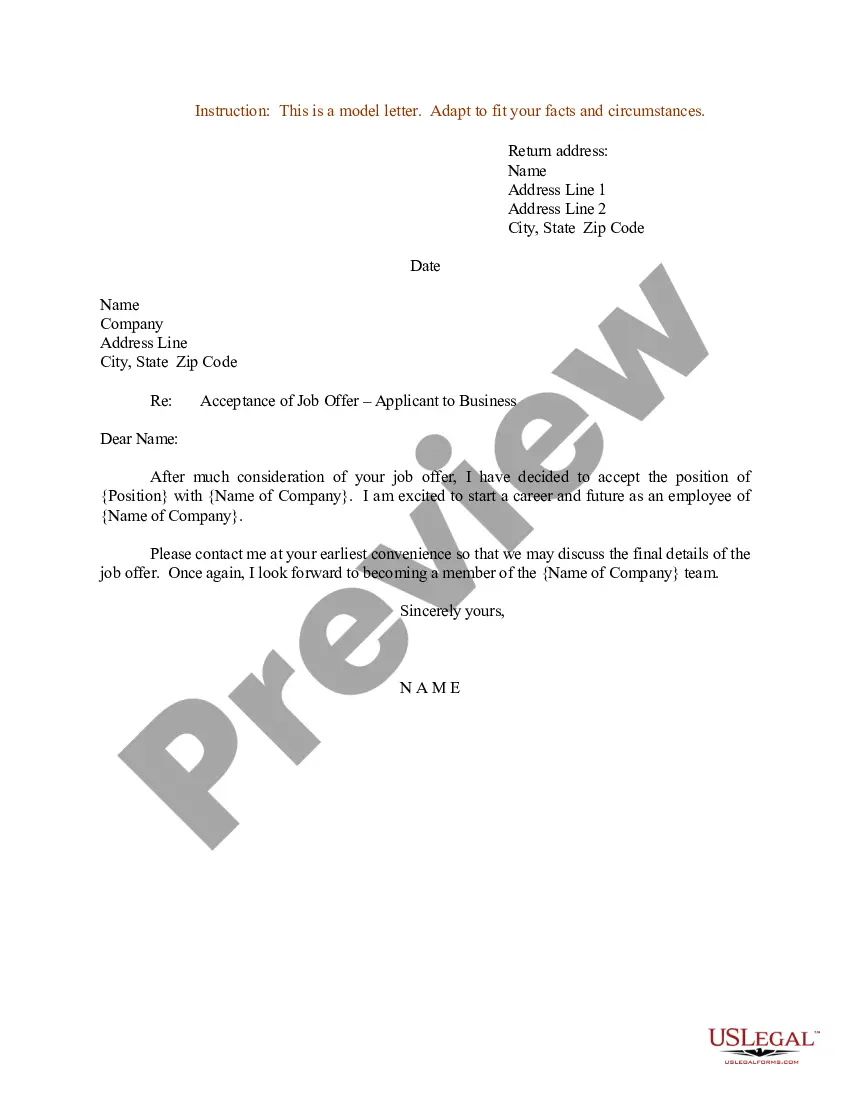
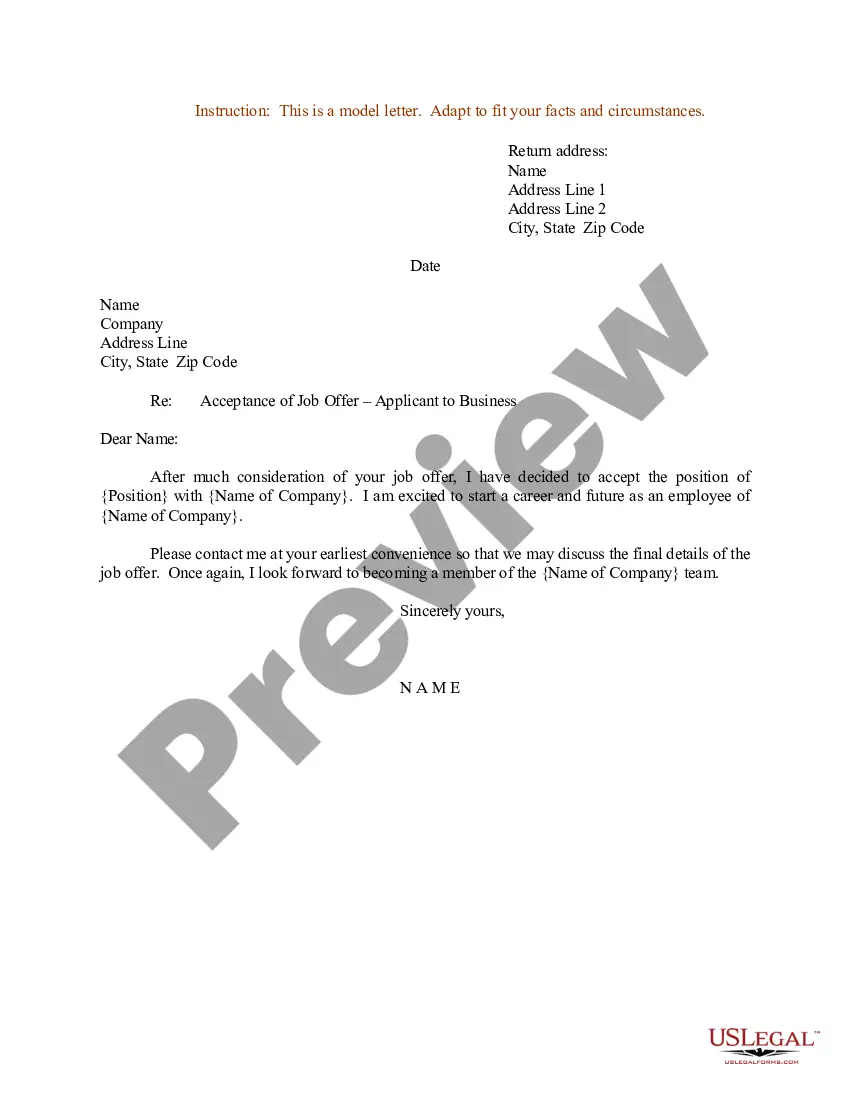
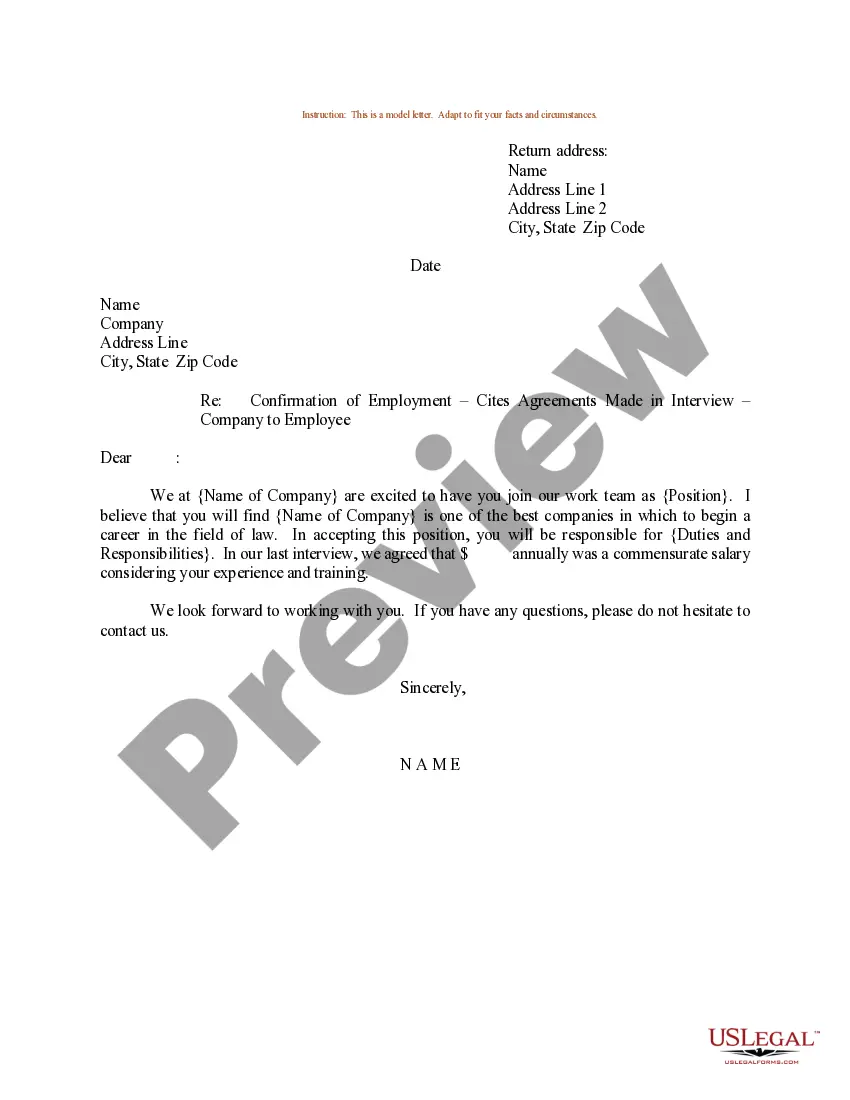
Get your form ready online
Our built-in tools help you complete, sign, share, and store your documents in one place.
Make edits, fill in missing information, and update formatting in US Legal Forms—just like you would in MS Word.
Download a copy, print it, send it by email, or mail it via USPS—whatever works best for your next step.
Sign and collect signatures with our SignNow integration. Send to multiple recipients, set reminders, and more. Go Premium to unlock E-Sign.
If this form requires notarization, complete it online through a secure video call—no need to meet a notary in person or wait for an appointment.
We protect your documents and personal data by following strict security and privacy standards.

Make edits, fill in missing information, and update formatting in US Legal Forms—just like you would in MS Word.

Download a copy, print it, send it by email, or mail it via USPS—whatever works best for your next step.

Sign and collect signatures with our SignNow integration. Send to multiple recipients, set reminders, and more. Go Premium to unlock E-Sign.

If this form requires notarization, complete it online through a secure video call—no need to meet a notary in person or wait for an appointment.

We protect your documents and personal data by following strict security and privacy standards.
Looking for another form?



Form popularity
FAQ
While a signed offer letter is a formal part of the hiring process, it is not a legally binding contract in the same way that an employment contract is.
Offer letters aren't considered legal documents because these documents just propose a position to potential candidates. Many employers like to use offer letters because they are a way for them to avoid future hiring risks. As a potential candidate, you have no obligation to a certain company.
Contrary to common belief, an offer letter is not a legally binding employment contract but rather a formal job offer. Its purpose is to outline the terms of employment, but it does not guarantee employment for a fixed term.
Contract or signed agreement: Many employees get a signed contract, employment agreement or offer letter before they start a new job. You can use either document to prove employment and income.
A job offer letter typically is sent after the offer is made over the phone or by email. But even at the point of offer letter receipt, the job offer isn't necessarily set in stone. Many companies set contingencies before employment begins, like a completed background check or drug screening.
Yes, an offer letter can be legally binding if it includes essential details such as job title, salary, start date, and any other terms and conditions agreed upon by both parties.
While an offer letter is a formal job offer, it is usually considered as an invitation to enter into a contract rather than a binding agreement. On the other hand, employment contracts are legally binding documents that establish the rights and obligations of both parties and are enforceable by law.
Some important details about an offer letter are: It is NOT a legally binding contract. It does NOT include promises of future employment or wages. It includes an employment “at-will” statement.
Yes, it's generally acceptable to show your employment offer letter to a potential landlord if they request it. Landlords often ask for proof of employment or income to ensure that prospective tenants can afford the rent.
An offer letter is a short congratulatory note extending a job offer, while an employment contract is an extended written agreement setting out the terms and conditions of employment. Both an offer letter and an employment contract are legal documents, discussed below.

