Acceptance Letter To College In Arizona
Description
Get your form ready online
Our built-in tools help you complete, sign, share, and store your documents in one place.
Make edits, fill in missing information, and update formatting in US Legal Forms—just like you would in MS Word.
Download a copy, print it, send it by email, or mail it via USPS—whatever works best for your next step.
Sign and collect signatures with our SignNow integration. Send to multiple recipients, set reminders, and more. Go Premium to unlock E-Sign.
If this form requires notarization, complete it online through a secure video call—no need to meet a notary in person or wait for an appointment.
We protect your documents and personal data by following strict security and privacy standards.

Make edits, fill in missing information, and update formatting in US Legal Forms—just like you would in MS Word.

Download a copy, print it, send it by email, or mail it via USPS—whatever works best for your next step.

Sign and collect signatures with our SignNow integration. Send to multiple recipients, set reminders, and more. Go Premium to unlock E-Sign.

If this form requires notarization, complete it online through a secure video call—no need to meet a notary in person or wait for an appointment.

We protect your documents and personal data by following strict security and privacy standards.
Looking for another form?






Form popularity
FAQ
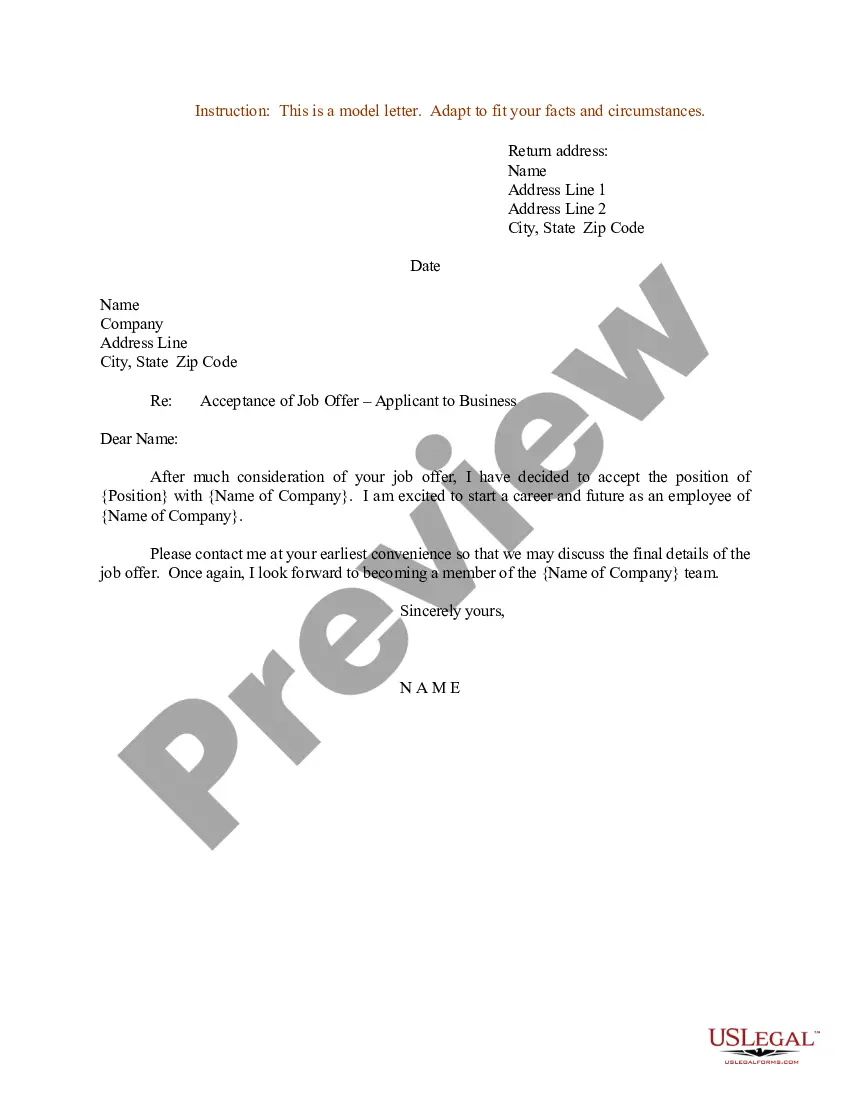
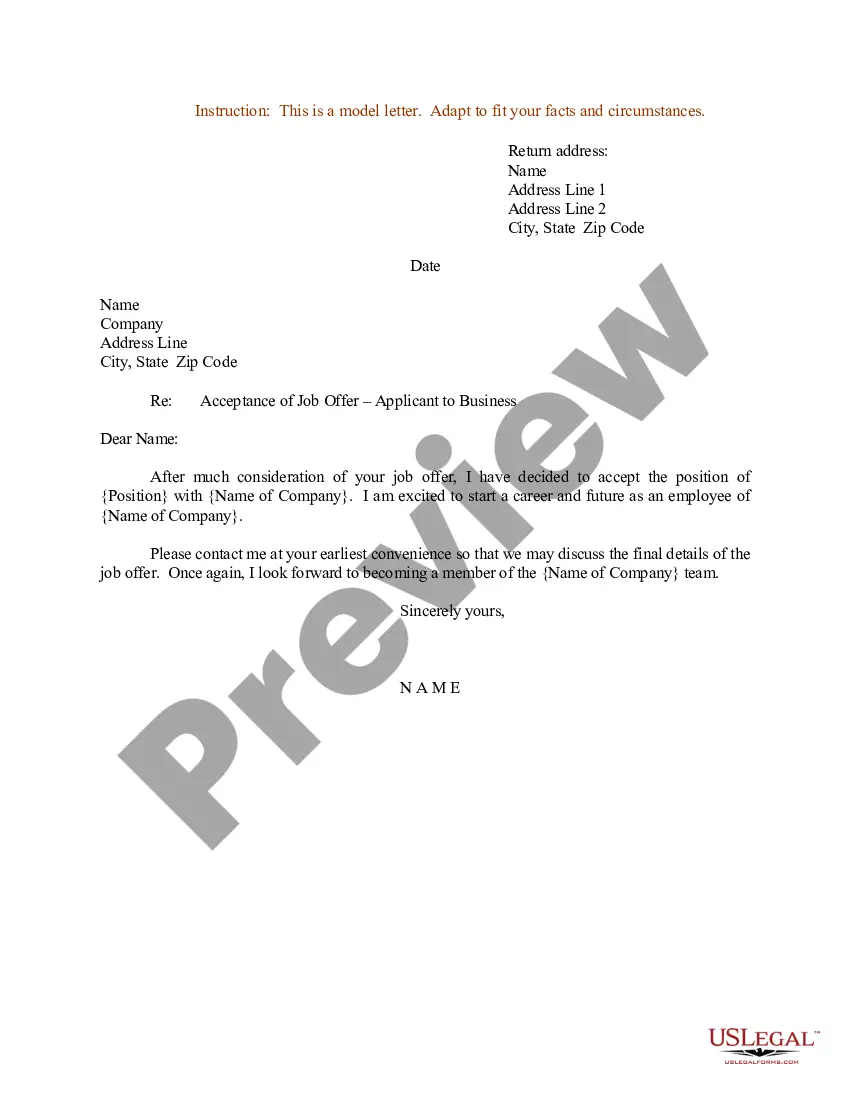
Respond to the college you've decided to attend Make sure to send in the following items, via the online student portal or through email, by the deadline: Your acceptance letter. A deposit. A separate acceptance letter for financial aid if required.
Although most colleges will send an acceptance letter in the mail, that isn't the only way you'll receive your college acceptance letter.
How to write an admissions acceptance letter Prepare the header. Begin the letter with an official header that includes the student's full name and address. Confirm the candidate's admission. Share congratulations. Explain how to accept. Include optional details. Encourage them to accept.
If you received your college acceptance letter via email, you can respond directly to that email. If the letter was sent through direct mail, consider replying with a physical letter. The college admissions board often specifies their preferred method of communication in the acceptance letter.
Once your college acceptance letters are in and you've decided which college or university to attend, it's time to respond to your school of choice. You can usually do this by filling out a form and sending it to the college along with a non-refundable deposit.
Thank the admissions office for their time and consideration during the application process. Conclude the letter politely, such as ``Sincerely'' or ``Best regards,'' followed by your name. It's important to respond promptly, as colleges often have deadlines for students to accept or decline their offers.
In these cases, recruits should write a handwritten letter back to the coach acknowledging any questions and thanking them for the letter. They should also follow up with a phone call at some point. College coaches will set up phone calls with recruits that they are highly interested in.
Acceptance letters are the admission letters that everyone wants to receive. These letters may include information about next steps, deadlines, scholarships and awards, special programs, and more. You may receive admission to more than one college.
How to respond to a university acceptance letter Include your contact information. Create a subject line. Start with a professional greeting. Mention your enrolment intentions and state your thanks. Close the letter.
How to write an admissions acceptance letter Prepare the header. Begin the letter with an official header that includes the student's full name and address. Confirm the candidate's admission. Share congratulations. Explain how to accept. Include optional details. Encourage them to accept.

