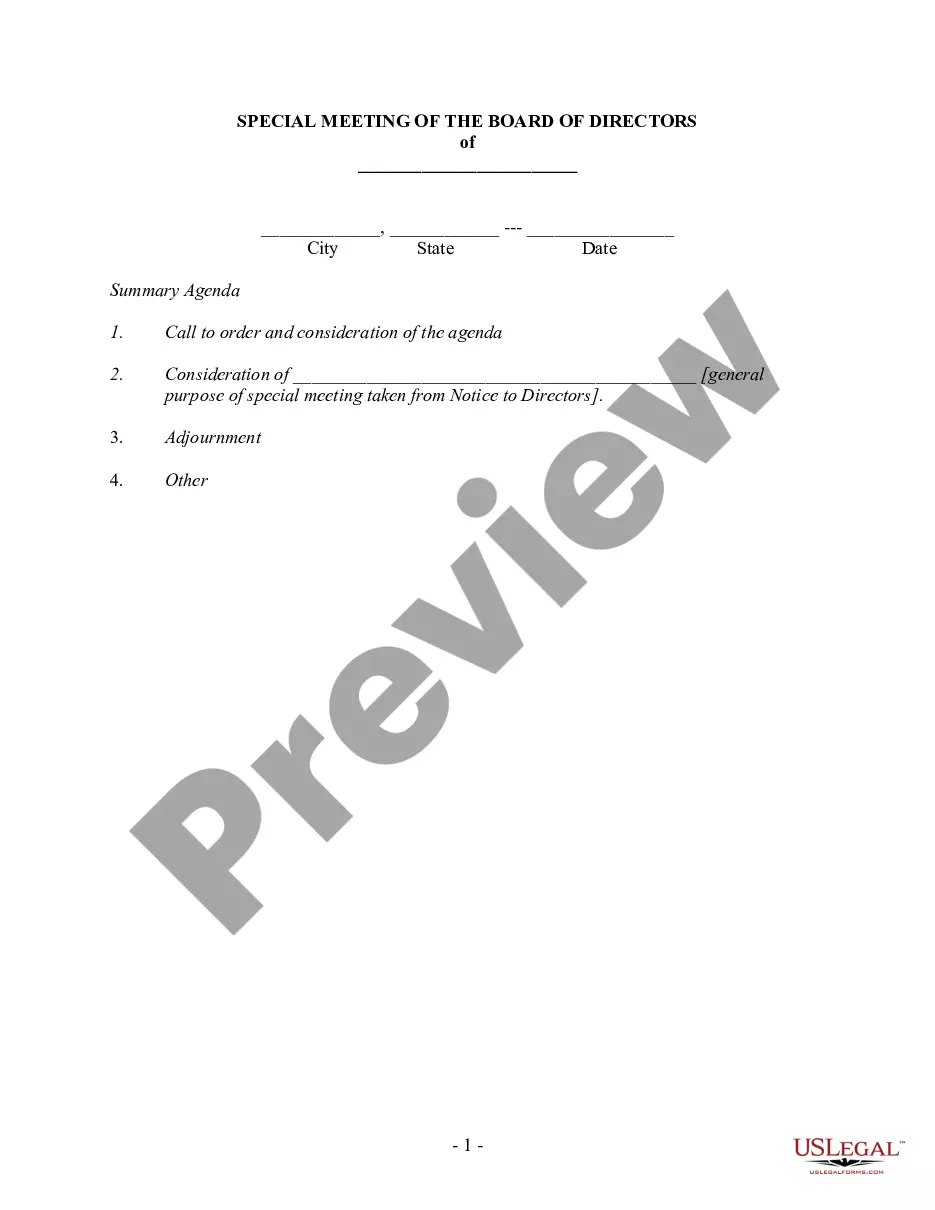
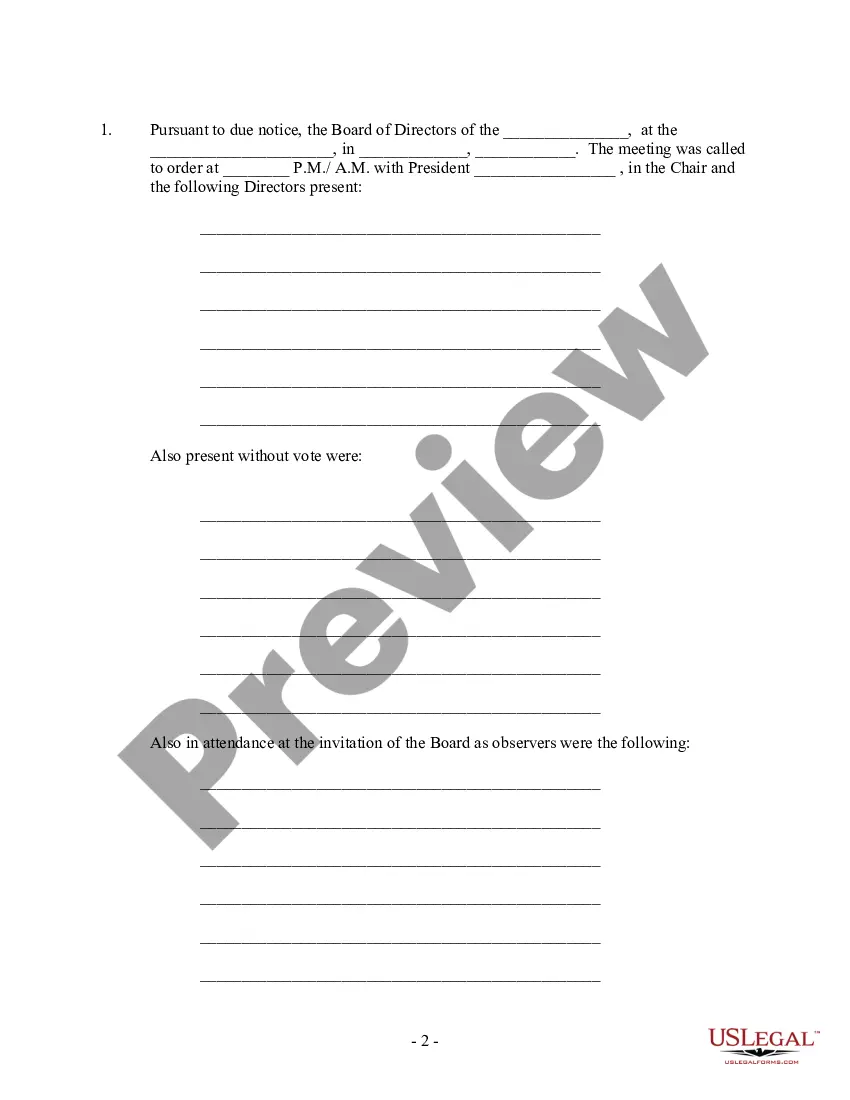
Board Meeting Agenda Format In Pima
Description




Get your form ready online
Our built-in tools help you complete, sign, share, and store your documents in one place.
Make edits, fill in missing information, and update formatting in US Legal Forms—just like you would in MS Word.
Download a copy, print it, send it by email, or mail it via USPS—whatever works best for your next step.
Sign and collect signatures with our SignNow integration. Send to multiple recipients, set reminders, and more. Go Premium to unlock E-Sign.
If this form requires notarization, complete it online through a secure video call—no need to meet a notary in person or wait for an appointment.
We protect your documents and personal data by following strict security and privacy standards.

Make edits, fill in missing information, and update formatting in US Legal Forms—just like you would in MS Word.

Download a copy, print it, send it by email, or mail it via USPS—whatever works best for your next step.

Sign and collect signatures with our SignNow integration. Send to multiple recipients, set reminders, and more. Go Premium to unlock E-Sign.

If this form requires notarization, complete it online through a secure video call—no need to meet a notary in person or wait for an appointment.

We protect your documents and personal data by following strict security and privacy standards.
Looking for another form?





Form popularity
FAQ
The agenda should include the meeting's goal, a list of topics to be discussed with their purposes, time allocations, and assigned facilitators. This structure provides a clear roadmap for the meeting, ensuring that all important points are covered. Share the agenda with all participants well in advance of the meeting.
The order of the agenda is the preferable sequence of business items in the meeting. It should be the following: call to order, approval of meeting minutes, committee reports, special orders, unfinished business, new business, and adjournment.
Formatting Best Practices Include a title and date at the top of each agenda. List attendees directly underneath the header. Note the start/end times. Use bullet points and numbering to break up blocks of text for visual appeal and easy reading flow. Establish a consistent structure from meeting to meeting.
How to write a meeting agenda in 5 steps Define the meeting's objective. When building an agenda, think about why you are having the meeting to begin with. Determine who needs to attend. Gather input from team members. Prioritize agenda items. Assign clear roles and responsibilities.
Make Sure You Have These 7 Items on Your Next Meeting Agenda Meeting name. Date and time of the meeting. Specific agenda items. Amount of time for each agenda item. Name next to each agenda item. Meeting introduction. Meeting wrap-up. Learn how to run effective meetings.
What is the best format for a meeting agenda? Meeting details, like date, time, location and attendees. Meeting objectives that state the purpose of the meeting. Agenda items with specific topics for discussion. Schedule of events with times allocated to each agenda item. Action items from previous meetings.
The 5Ps are Purpose, Participants, Process, Payoff, and Preparation (some suggest it should be 6Ps including Pizza). Purpose: Every meeting should have a clear purpose, which must be more specific than just a subject line calling for a 'daily meeting' (why should the team meet daily?).
Inspired by the work of researchers Kim Cameron and David Whetten, here are some proven methods for how to have an effective meeting every time by following the four Ps: purpose, product, people, and process.
How to write a meeting agenda in 5 steps Define the meeting's objective. When building an agenda, think about why you are having the meeting to begin with. Determine who needs to attend. Gather input from team members. Prioritize agenda items. Assign clear roles and responsibilities.
Organize your board agendas Outline the intent: Indicate whether the session requires attendees to make a choice, provide feedback, or simply listen to your concerns. Knowing the final aim of each agenda item makes it simpler to accomplish as participants know what to achieve.
