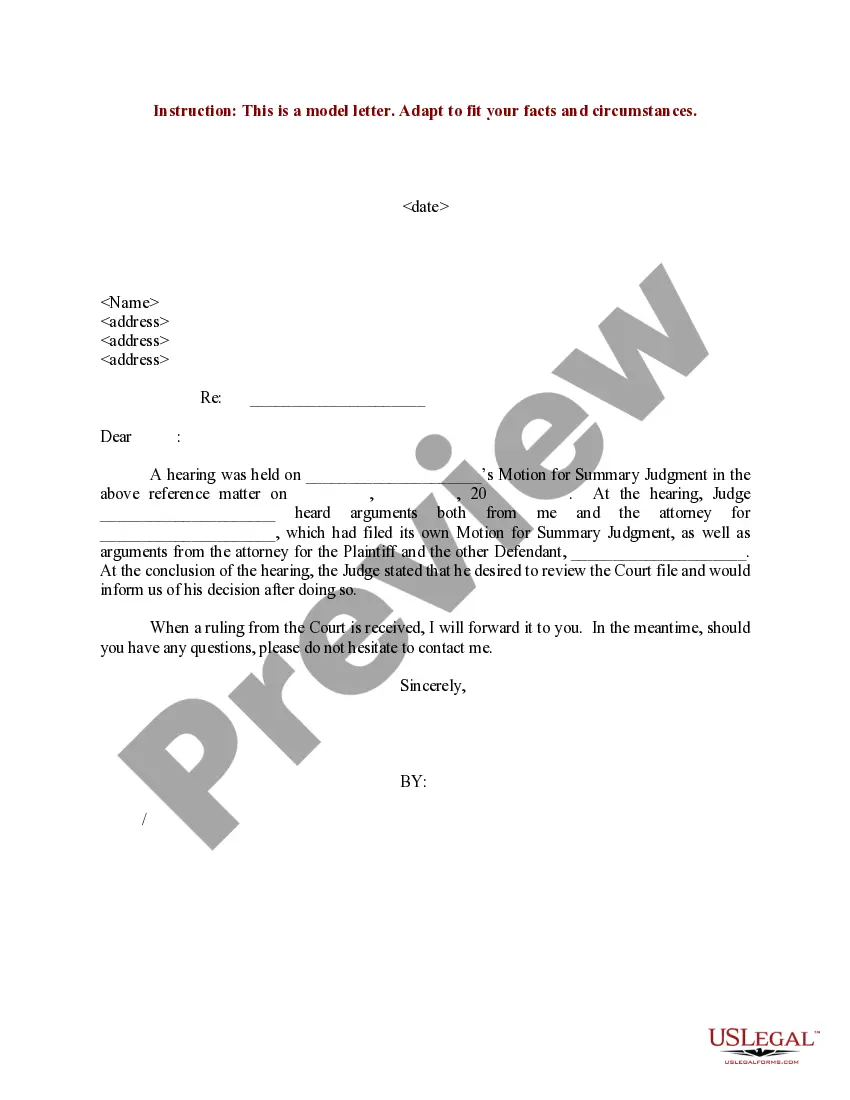
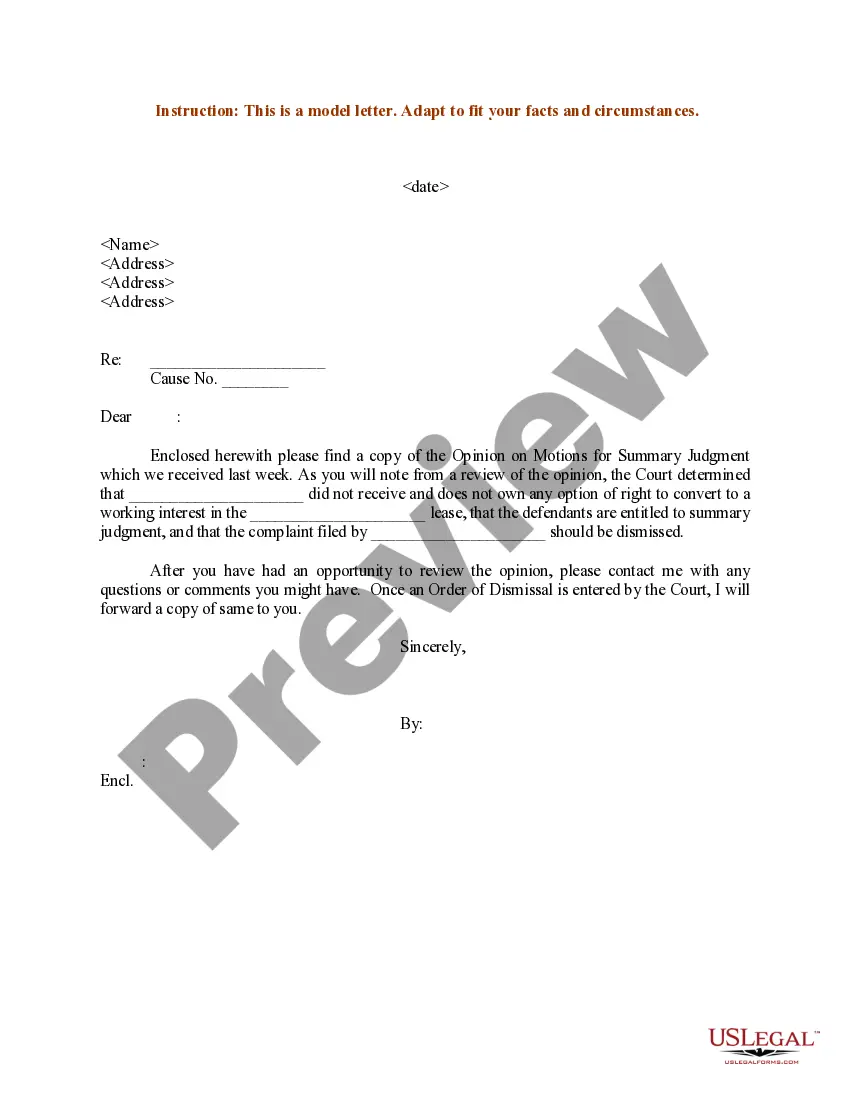
Letter Concerning Hearing For Court In Wake
Description
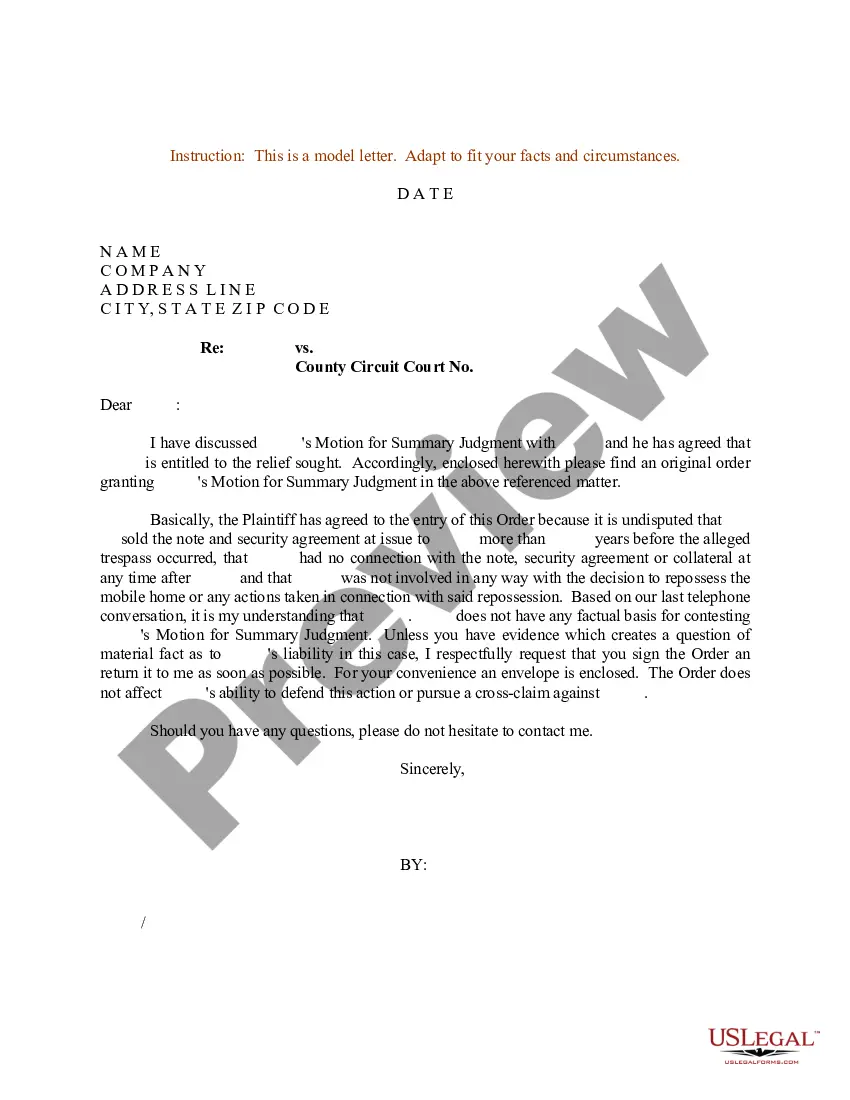
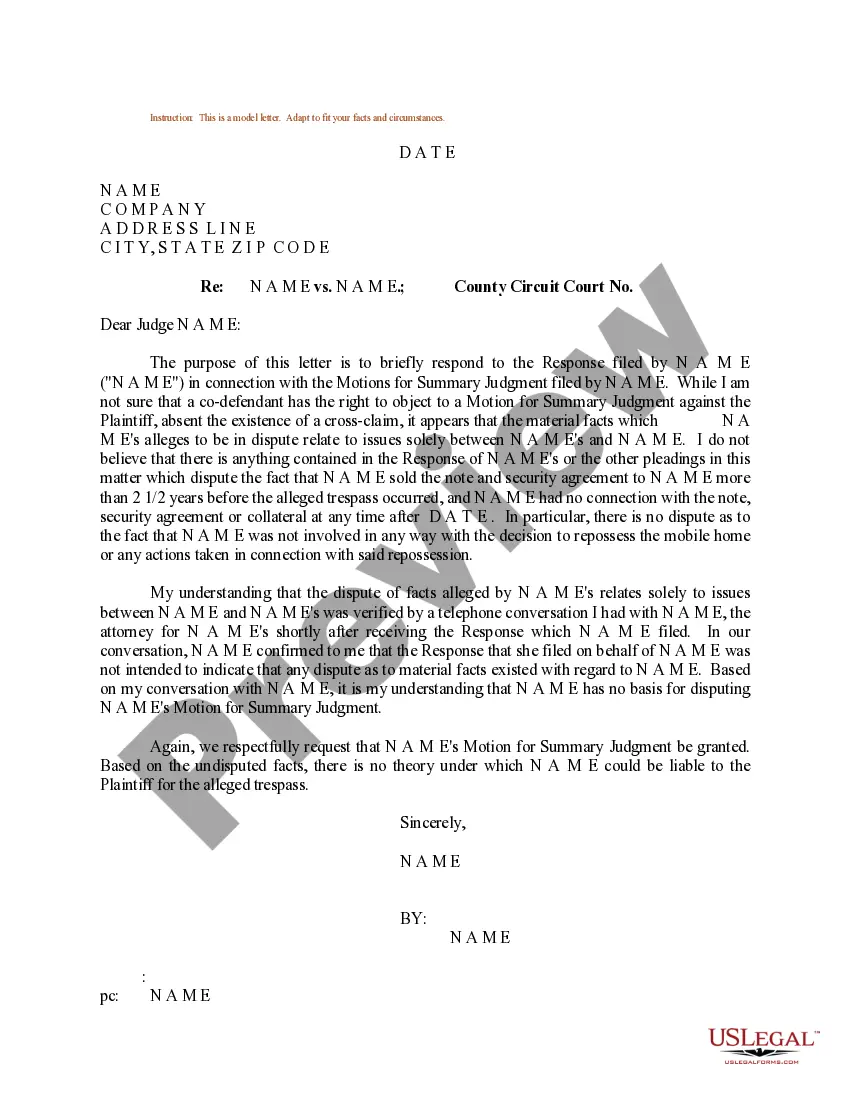
Get your form ready online
Our built-in tools help you complete, sign, share, and store your documents in one place.
Make edits, fill in missing information, and update formatting in US Legal Forms—just like you would in MS Word.
Download a copy, print it, send it by email, or mail it via USPS—whatever works best for your next step.
Sign and collect signatures with our SignNow integration. Send to multiple recipients, set reminders, and more. Go Premium to unlock E-Sign.
If this form requires notarization, complete it online through a secure video call—no need to meet a notary in person or wait for an appointment.
We protect your documents and personal data by following strict security and privacy standards.

Make edits, fill in missing information, and update formatting in US Legal Forms—just like you would in MS Word.

Download a copy, print it, send it by email, or mail it via USPS—whatever works best for your next step.

Sign and collect signatures with our SignNow integration. Send to multiple recipients, set reminders, and more. Go Premium to unlock E-Sign.

If this form requires notarization, complete it online through a secure video call—no need to meet a notary in person or wait for an appointment.

We protect your documents and personal data by following strict security and privacy standards.
Looking for another form?










Form popularity
FAQ
Writing Your Letter Search for a form letter. Some courts print off forms that you can use to request a hearing. Open a word processing document. Insert a salutation. Add a heading. Begin the letter with your request. Explain why you need the hearing. Provide a contact number. Sign the letter.
If you want to file a motion, the process is generally something like this: You write your motion. You file your motion with the court clerk. The court clerk inserts the date and time your motion will be heard by the judge. You “serve” (mail) your motion to the other side.
Notice of hearing; waiver; permissible form of notice and waiver. (a) The clerk of court, upon the request of the plaintiff, shall issue a notice to the defendant setting a time and place for a hearing before the clerk which shall not be less than 10 days from the date of service of said notice upon the defendant.
Filing the Documents Take the original and two (2) copies of the Motion to the Civil Division of the Clerk of Superior Court's office in the county where your case is filed. The Clerk will stamp each Motion “filed,” place the original in the Court file and return two (2) copies of the “filed” document to you.
Type the Name and Address of the Judge or Court Staff Leave one blank line of space below your name and address and type the name of the judge or the name of a member of the court staff for whom your letter is intended. If you are sending the letter to a judge, the words "The Honorable" are always used before her name.
What you say to them may hurt the defendant, even if you think it will help. If you want to send a letter to the judge, address it "Dear Judge (judge's last name)," but send it to the defendant's attorney. The attorney will review it and forward it to the judge if and when it is helpful.
Follow the order of this format, leaving a space in between each section: Your Information (first thing that goes on the inside of the letter) Name. The Date. The Judge's Information. Honorable Judge First Name Last Name. What the Letter Is Going to Address. Salutation. Body. Signature.
They should be addressed either to the Honorable FIRST NAME LAST NAME or Judge FIRST NAME LAST NAME. Although you can put the case number on the letter, it is not necessary, as it will be submitted by the lawyer.
Introduce yourself in the opening paragraph. Outline your relationship with the person who is the subject of the legal proceedings. Acknowledge the charges that have been brought against the person. State your opinion of the person's general character.