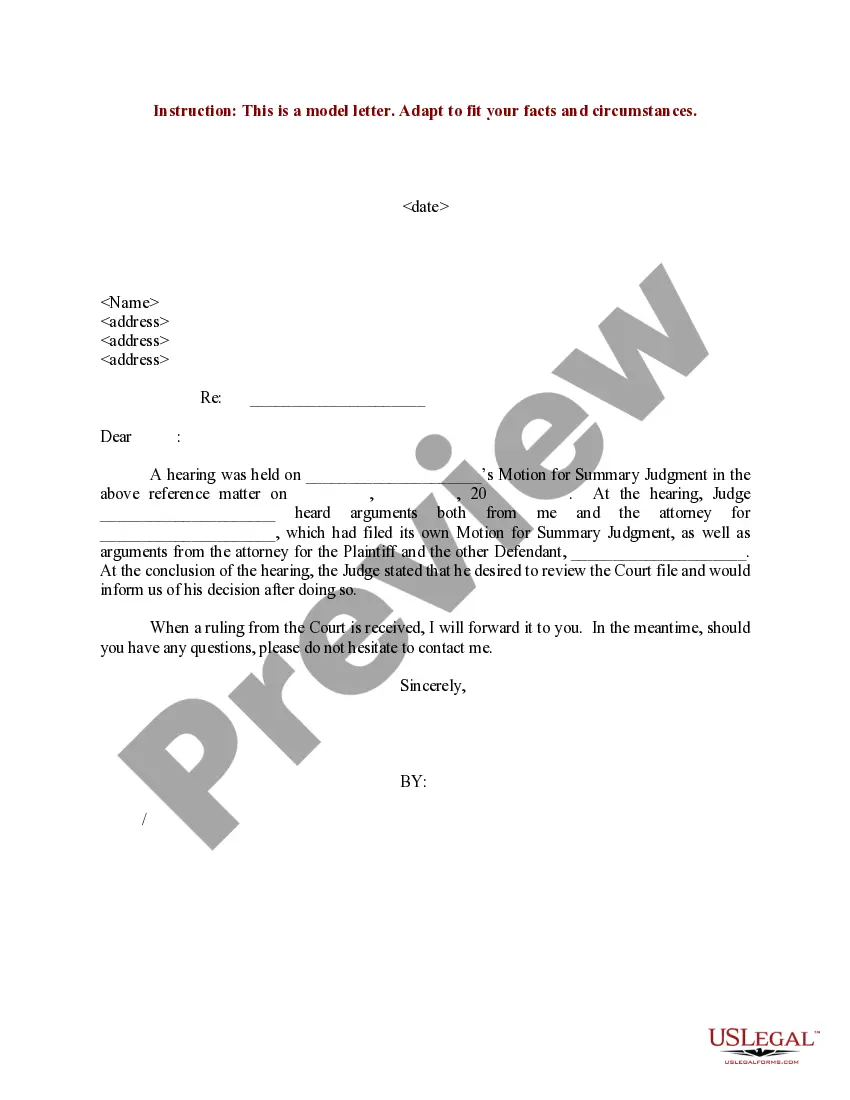
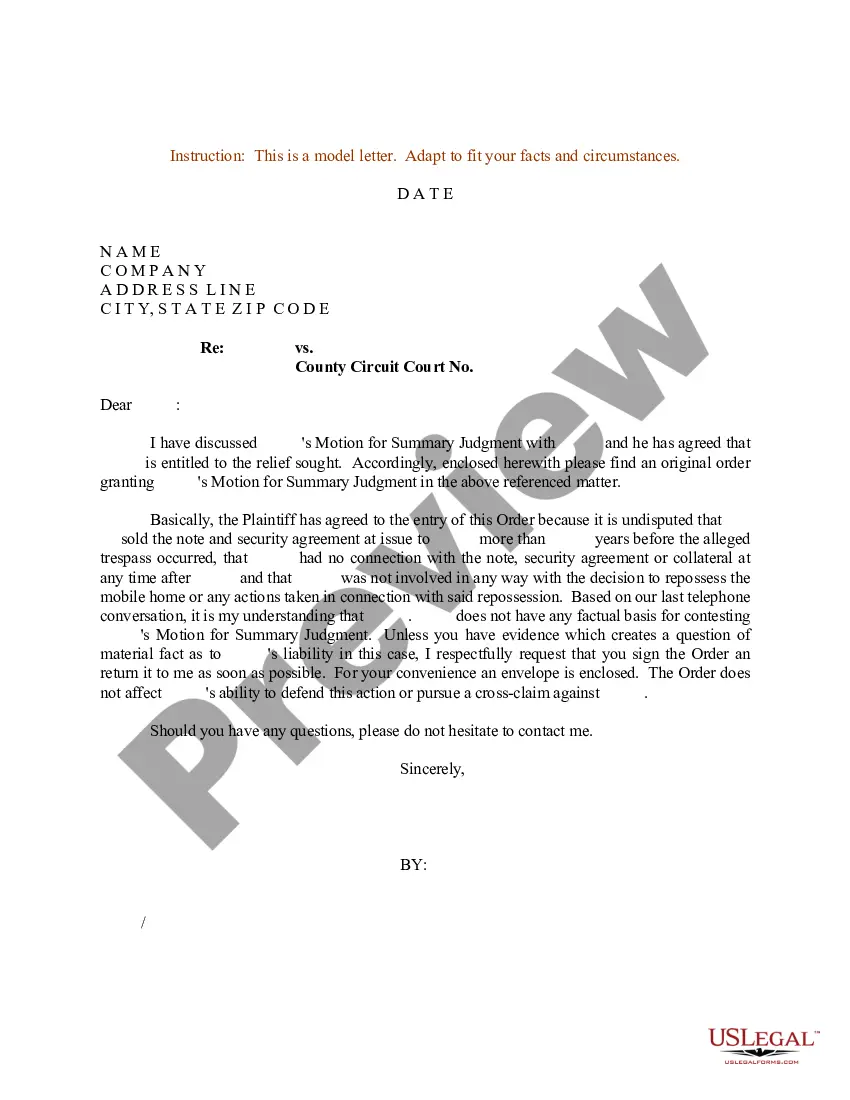
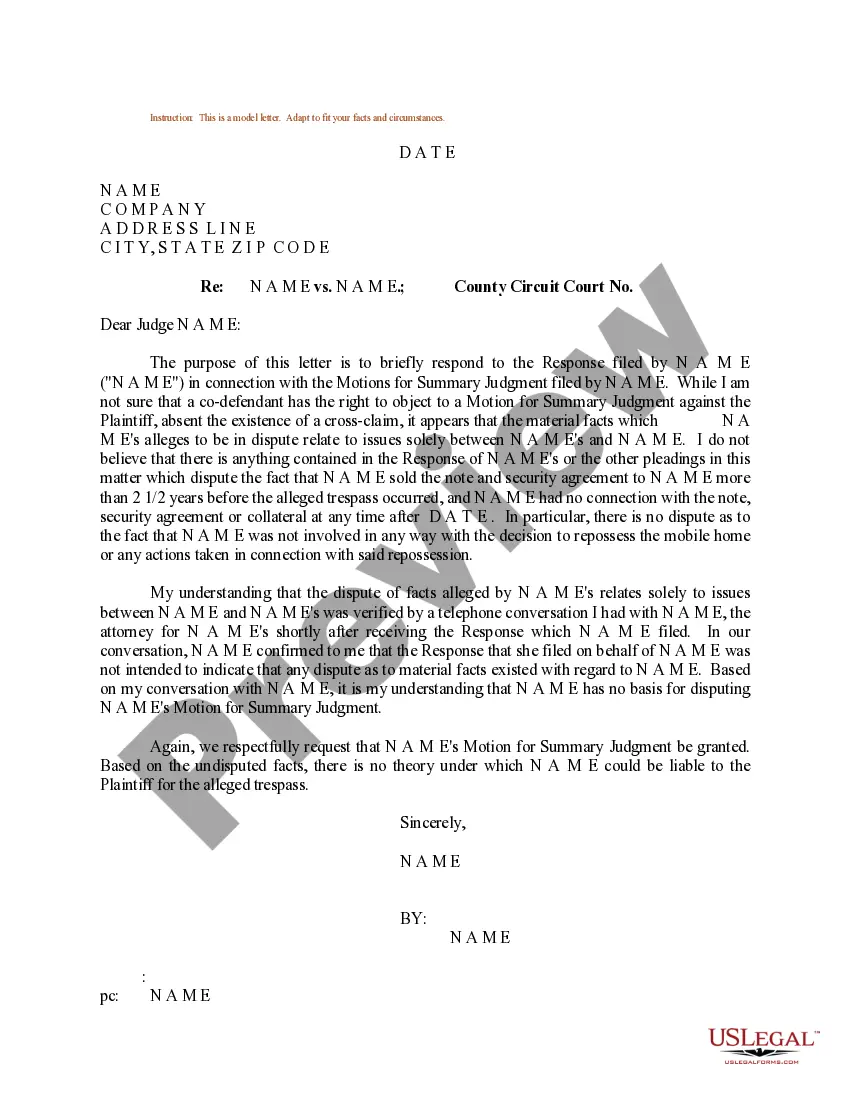
Letter Concerning Hearing For Court In Fairfax
Description
Get your form ready online
Our built-in tools help you complete, sign, share, and store your documents in one place.
Make edits, fill in missing information, and update formatting in US Legal Forms—just like you would in MS Word.
Download a copy, print it, send it by email, or mail it via USPS—whatever works best for your next step.
Sign and collect signatures with our SignNow integration. Send to multiple recipients, set reminders, and more. Go Premium to unlock E-Sign.
If this form requires notarization, complete it online through a secure video call—no need to meet a notary in person or wait for an appointment.
We protect your documents and personal data by following strict security and privacy standards.

Make edits, fill in missing information, and update formatting in US Legal Forms—just like you would in MS Word.

Download a copy, print it, send it by email, or mail it via USPS—whatever works best for your next step.

Sign and collect signatures with our SignNow integration. Send to multiple recipients, set reminders, and more. Go Premium to unlock E-Sign.

If this form requires notarization, complete it online through a secure video call—no need to meet a notary in person or wait for an appointment.

We protect your documents and personal data by following strict security and privacy standards.
Looking for another form?




Form popularity
FAQ
You must file your appeal notice with the office of the court where your case is being handled. If your decision was made by a circuit judge in a county court (other than a final decision in a multi-track claim), your appeal will be dealt with by a High Court judge.
The Virginia Court of Appeals process begins with the filing of a petition for appeal from the Circuit Court judgment. If the petition is denied, the appellant has the option to seek a reconsideration by what's called a “writ panel.” This is a panel of the court that can determine whether or not to grant the petition.
Requests for dismissal or non-suit of a pending case can be submitted by using the Request for Court Action – Civil/Small Claims Division form, plaintiff's praecipe, endorsed order, or sufficient proof of the consent of all parties.
After a Decision is Issued The judge made an error of law. An error of law is the strongest type of ground for appeal because the appellate court reviewing the case does not have to give any weight to what the trial court judge did. The judge made an error regarding the facts. The judge “abused his/her discretion”
The Virginia Court of Appeals process begins with the filing of a petition for appeal from the Circuit Court judgment. If the petition is denied, the appellant has the option to seek a reconsideration by what's called a “writ panel.” This is a panel of the court that can determine whether or not to grant the petition.
Begin with a clear and concise introduction, stating the grounds for dismissal. Follow with a detailed argument section that outlines why the complaint should be dismissed, supported by legal authorities. Use Casefleet's customizable reports to organize your arguments and ensure all critical points are covered.
If you are unable to appear on the court date, you may file a request for a continuance, in writing, no less than two business days prior to the court date. Such written request will be placed with the case documents; and on the court date, the Judge will consider your request.
Requests for dismissal or non-suit of a pending case can be submitted by using the Request for Court Action – Civil/Small Claims Division form, plaintiff's praecipe, endorsed order, or sufficient proof of the consent of all parties.
To defend against a motion to dismiss for lack of personal jurisdiction, you should be prepared to show the judge that the other party has had “contact” with the state where you have filed the case, s/he was served in the state, or there is some other reason why the court has jurisdiction.