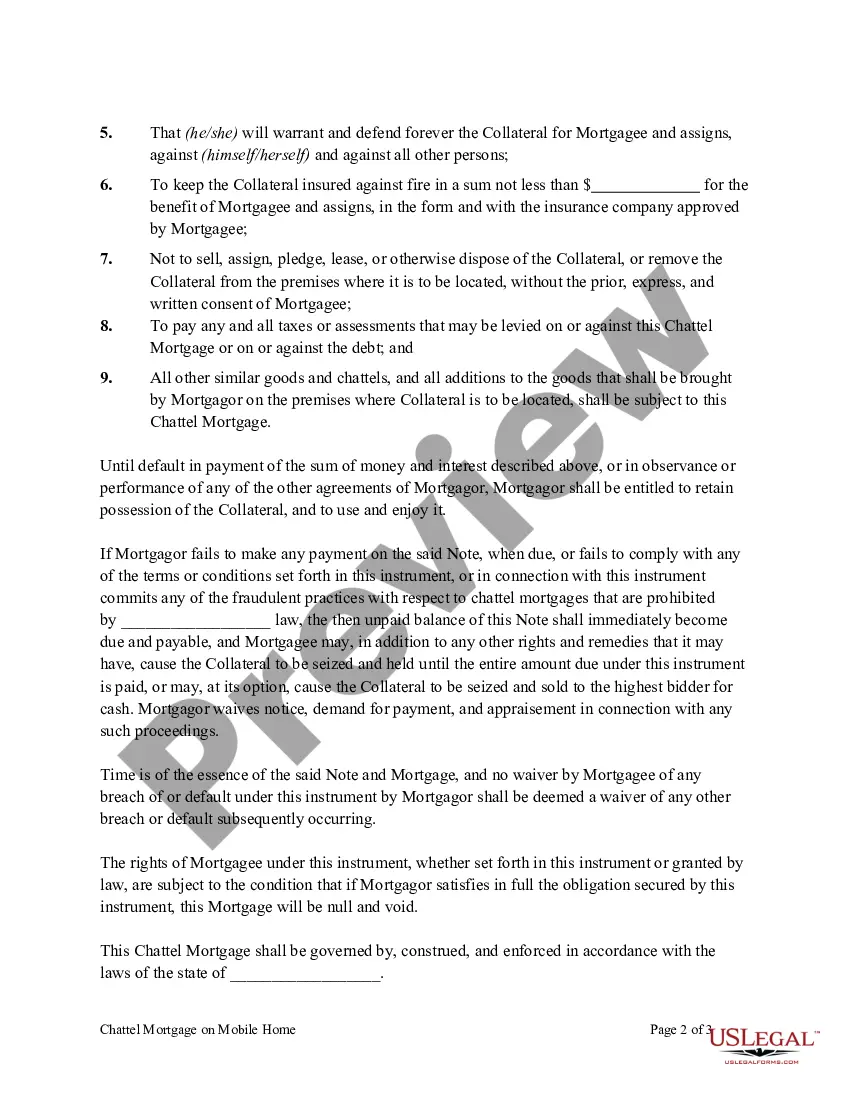
Chattel Mortgage Form Foreclosure In Santa Clara
Description

Get your form ready online
Our built-in tools help you complete, sign, share, and store your documents in one place.
Make edits, fill in missing information, and update formatting in US Legal Forms—just like you would in MS Word.
Download a copy, print it, send it by email, or mail it via USPS—whatever works best for your next step.
Sign and collect signatures with our SignNow integration. Send to multiple recipients, set reminders, and more. Go Premium to unlock E-Sign.
If this form requires notarization, complete it online through a secure video call—no need to meet a notary in person or wait for an appointment.
We protect your documents and personal data by following strict security and privacy standards.

Make edits, fill in missing information, and update formatting in US Legal Forms—just like you would in MS Word.

Download a copy, print it, send it by email, or mail it via USPS—whatever works best for your next step.

Sign and collect signatures with our SignNow integration. Send to multiple recipients, set reminders, and more. Go Premium to unlock E-Sign.

If this form requires notarization, complete it online through a secure video call—no need to meet a notary in person or wait for an appointment.

We protect your documents and personal data by following strict security and privacy standards.
Looking for another form?









Form popularity
FAQ
In California, lenders can foreclose on deeds of trust or mortgages using a nonjudicial foreclosure process (outside of court) or a judicial foreclosure process (through the courts). The nonjudicial foreclosure process is used most commonly in our state.
Non-judicial foreclosure has an expedited time compared to judicial foreclosure. Borrowers also have no right of redemption in non-judicial foreclosure, meaning they cannot buy the property back after the foreclosure sale like they can in a judicial foreclosure.
Financing Options for Foreclosed Homes 203(k) loans from the Federal Housing Administration (FHA) Fannie Mae's HomePath ReadyBuyer program. The HomeSteps program through Freddie Mac.
The foreclosure rate in California is still relatively low compared to the national average, but it is increasing. In March 2023, the foreclosure rate in California was 1 in every 4,244 households. The national foreclosure rate was 1 in every 1,217 households.
Most mortgages have a power of sale clause, so lenders can foreclose without going to court (non-judicial). These are the most common type of foreclosures in California.
There are two answers, each equally true: California statutes tell us the minimum time for an unpaid lender to foreclose: about 4 months, from start to sale. In practice, it's far longer. Since the mortgage meltdown in 2008, lenders very seldom move a foreclosure as fast as the law allows.
A deed, as you know, is the legal document used by property owners to transfer their ownership of the property to a new owner. In California, the vast majority of property is transferred through one of two types of deeds: the grant deed – by far the most commonly used – and the quitclaim deed.
A chattel mortgage shall not be valid against any person except the mortgagor, his executors or administrators, unless the possession of the property is delivered to and retained by the mortgagee or unless the mortgage is recorded in the office of the register of deeds of the province in which the mortgagor resides at ...
Act No. 2496. AN ACT TO AMEND SECTION FIFTEEN OF ACT NUMBERED FIFTEEN HUNDRED AND EIGHT, ENTITLED "THE CHATTEL MORTGAGE LAW," BY ESTABLISHING A NEW SCHEDULE FOR THE REGISTRATION OF CHATTEL MORTGAGES.
There are two answers, each equally true: California statutes tell us the minimum time for an unpaid lender to foreclose: about 4 months, from start to sale. In practice, it's far longer. Since the mortgage meltdown in 2008, lenders very seldom move a foreclosure as fast as the law allows.
