Chattel Mortgage Form Ford In Riverside
Description

Get your form ready online
Our built-in tools help you complete, sign, share, and store your documents in one place.
Make edits, fill in missing information, and update formatting in US Legal Forms—just like you would in MS Word.
Download a copy, print it, send it by email, or mail it via USPS—whatever works best for your next step.
Sign and collect signatures with our SignNow integration. Send to multiple recipients, set reminders, and more. Go Premium to unlock E-Sign.
If this form requires notarization, complete it online through a secure video call—no need to meet a notary in person or wait for an appointment.
We protect your documents and personal data by following strict security and privacy standards.

Make edits, fill in missing information, and update formatting in US Legal Forms—just like you would in MS Word.

Download a copy, print it, send it by email, or mail it via USPS—whatever works best for your next step.

Sign and collect signatures with our SignNow integration. Send to multiple recipients, set reminders, and more. Go Premium to unlock E-Sign.

If this form requires notarization, complete it online through a secure video call—no need to meet a notary in person or wait for an appointment.

We protect your documents and personal data by following strict security and privacy standards.
Looking for another form?







Form popularity
FAQ
Skill inventory assessment can be understood as a process of identification, evaluation, and analysis of employee skills by the employer. It is conducted to identify the strengths and weaknesses of each employee to make informed decisions regarding job allocation and further appraisals.
An inventory appraisal is a process used to determine the value of tangible property, such as furnishings, fixtures or equipment. It is conducted by an experienced appraiser who inspects the property in detail, often using specialized techniques to assess its condition and value.
Performance appraisal examples You can start by looking at their attendance, then at their capacity to bring innovative ideas, their communication skills, their time management, and so on. The categories you choose will depend on the employee's job and the company's goals.
The act of examining someone or something in order to judge their or its qualities, success, or needs: The newspaper gave an editorial appraisal of the government's achievements of the past year. Synonyms. assessment.
In California, if a decedent's estate owns real property, however, then an inventory and appraisal is required, even in a small estate. The inventory is either attached to the affidavit of small estate or, in a probate, filed with the court. In a probate the inventory and appraisal is always required.
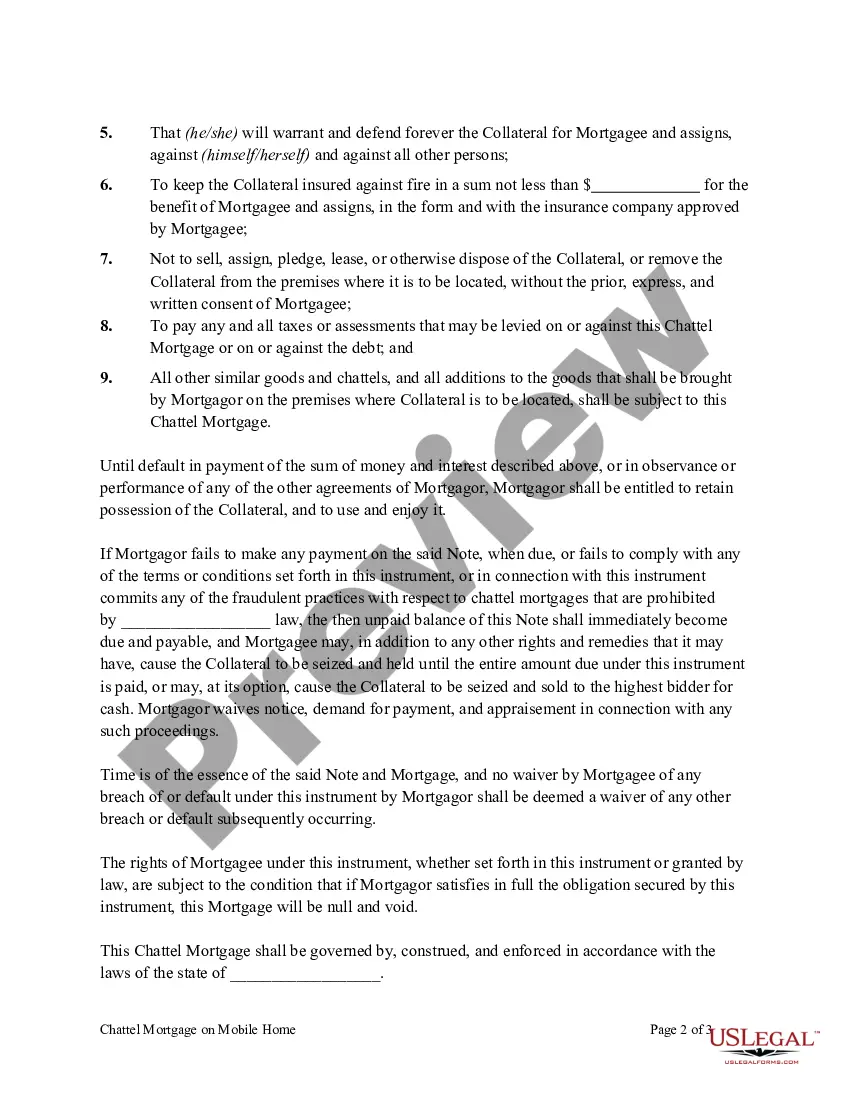
By chattel mortgage, personal property is recorded in the Chattel Mortgage Register as a security for the performance of an obligation. If the movable, instead of being recorded, is delivered to the creditor or a third person, the contract is a pledge and not a chattel mortgage.
The Chattel Mortgage Law in the Philippines establishes regulations and requirements for the mortgaging of personal property, including the delivery of possession to the mortgagee or registration with the Register of Deeds, with violations resulting in fines, imprisonment, or both.
A: In California, common non-probate assets can include: Retirement accounts, like 401(k)s and IRAs. Life insurance policies with specific beneficiaries. Jointly owned properties that come with rights of survivorship. Assets that are controlled via trust, rather than a will.
