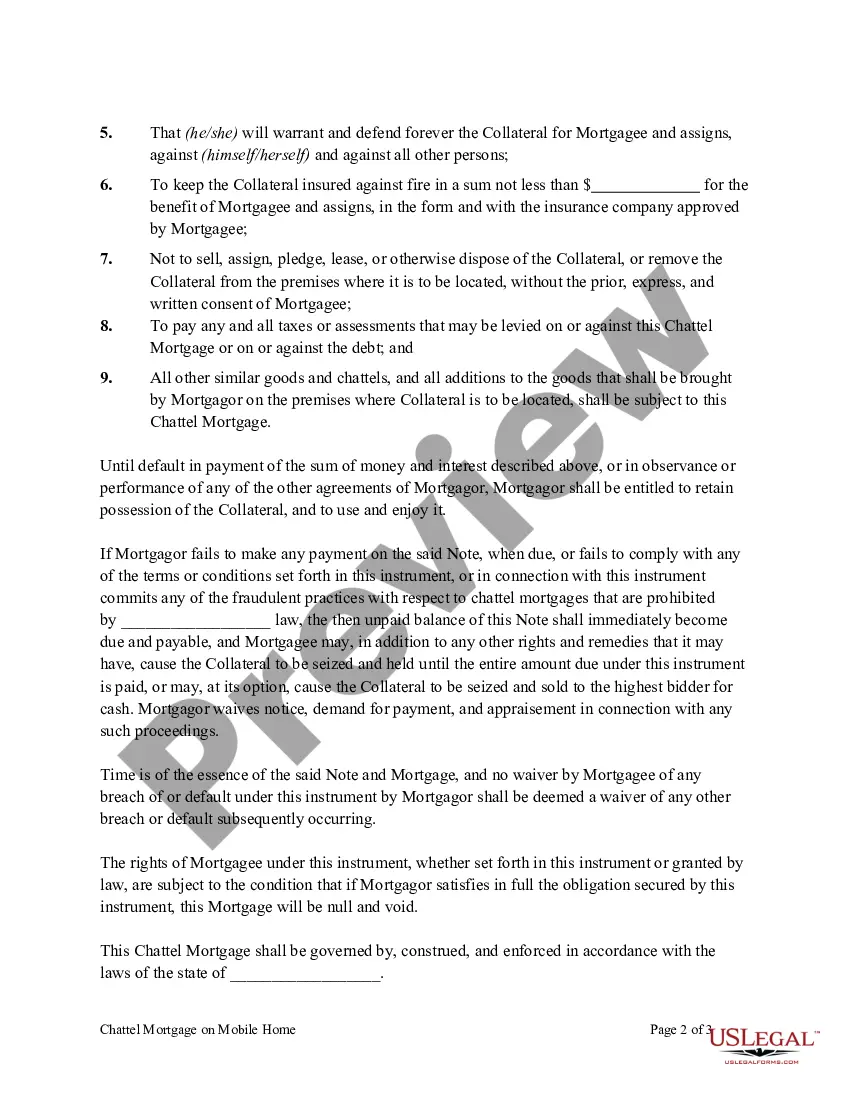
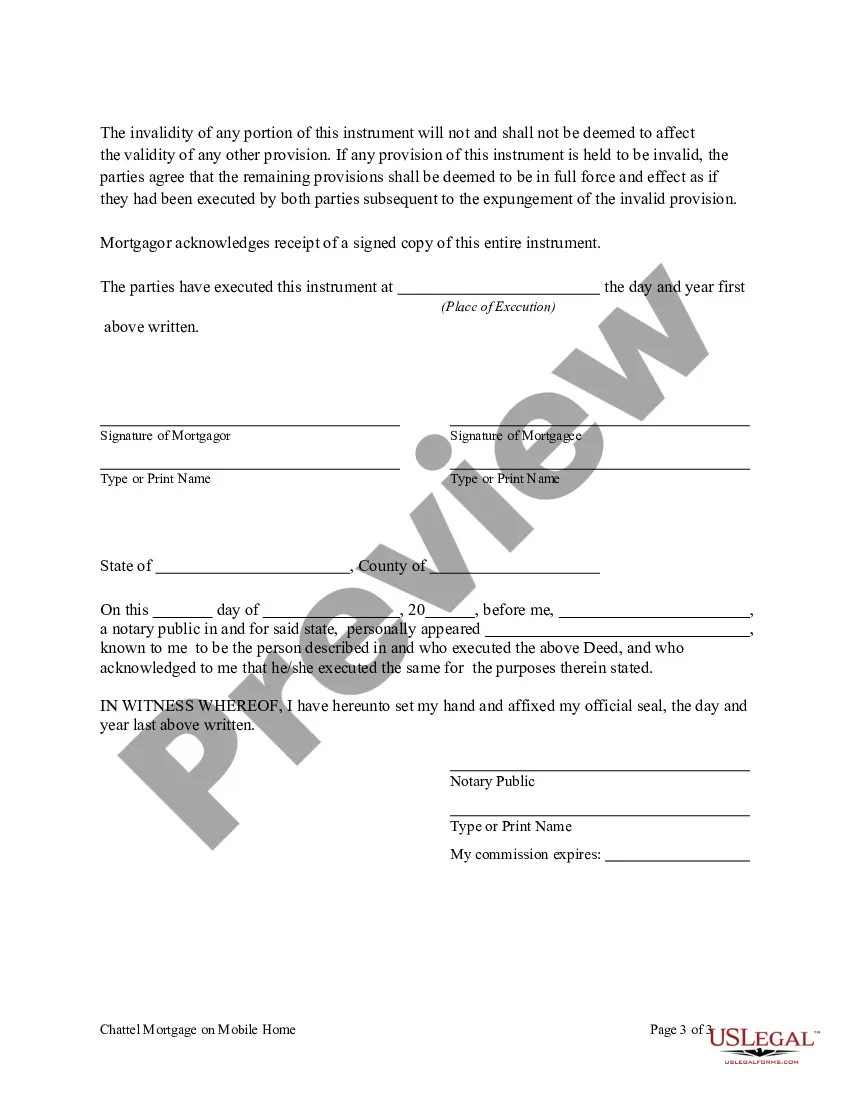
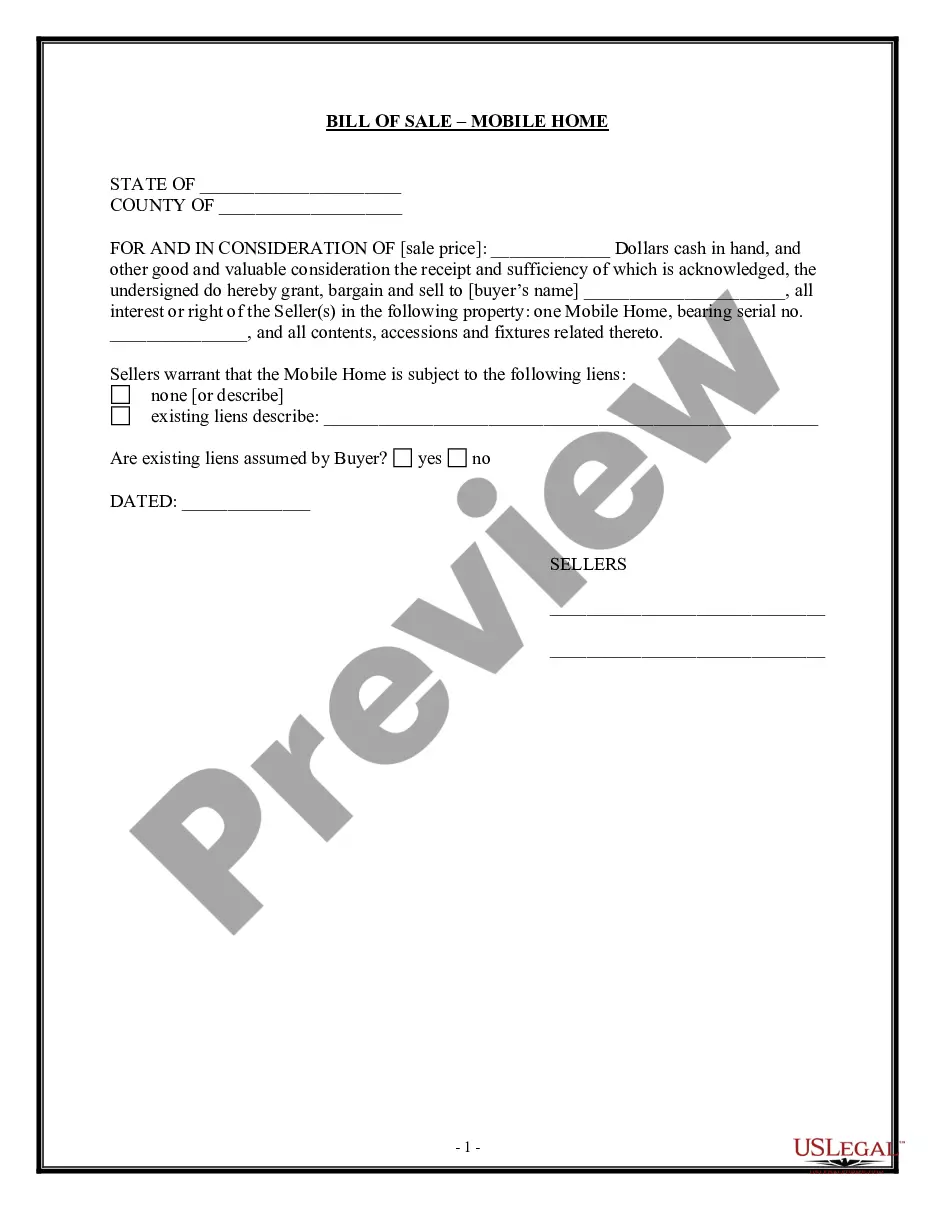
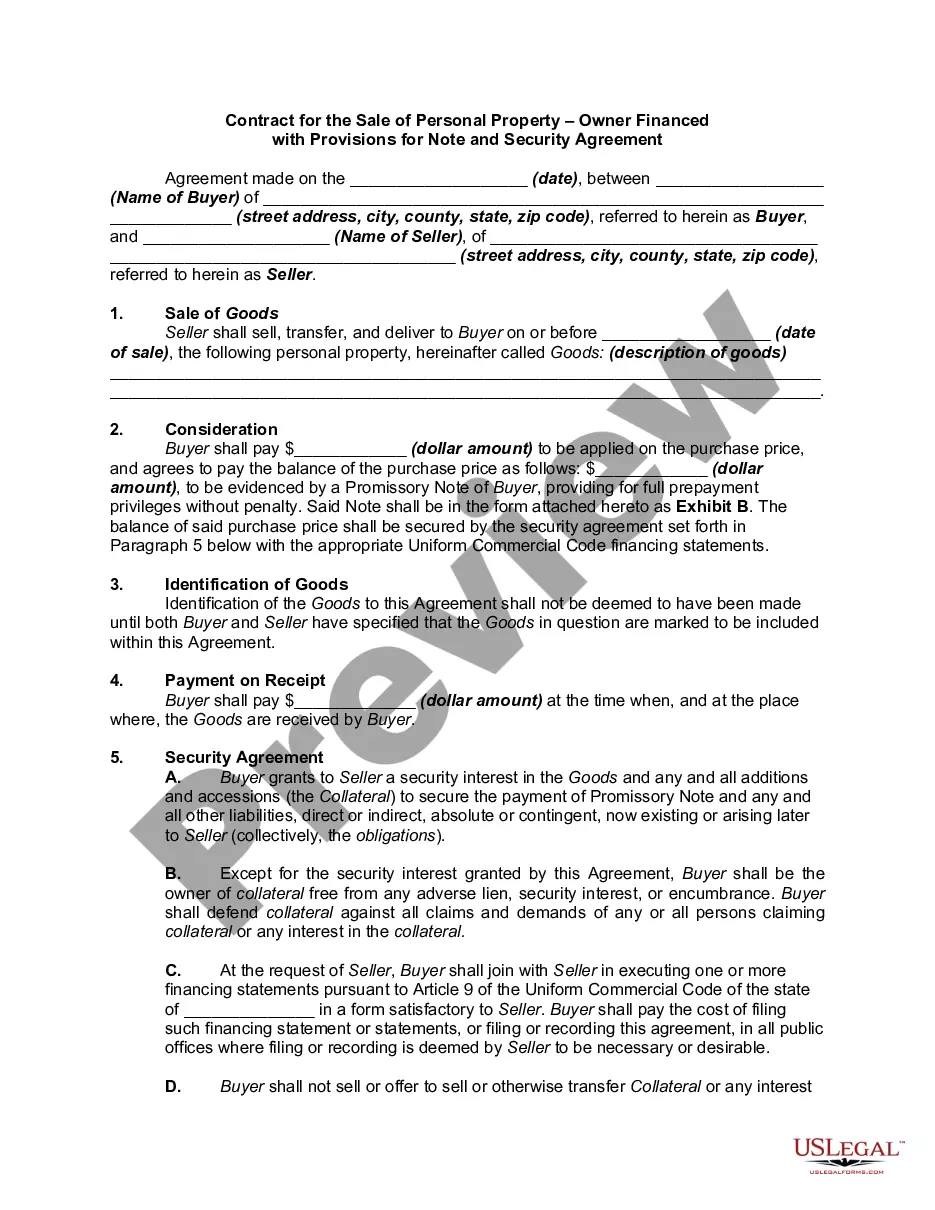
Chattel Mortgage Form Foreclosure In Montgomery
Description

Get your form ready online
Our built-in tools help you complete, sign, share, and store your documents in one place.
Make edits, fill in missing information, and update formatting in US Legal Forms—just like you would in MS Word.
Download a copy, print it, send it by email, or mail it via USPS—whatever works best for your next step.
Sign and collect signatures with our SignNow integration. Send to multiple recipients, set reminders, and more. Go Premium to unlock E-Sign.
If this form requires notarization, complete it online through a secure video call—no need to meet a notary in person or wait for an appointment.
We protect your documents and personal data by following strict security and privacy standards.

Make edits, fill in missing information, and update formatting in US Legal Forms—just like you would in MS Word.

Download a copy, print it, send it by email, or mail it via USPS—whatever works best for your next step.

Sign and collect signatures with our SignNow integration. Send to multiple recipients, set reminders, and more. Go Premium to unlock E-Sign.

If this form requires notarization, complete it online through a secure video call—no need to meet a notary in person or wait for an appointment.

We protect your documents and personal data by following strict security and privacy standards.
Looking for another form?









Form popularity
FAQ
Timelines for distressed borrowers Borrowers have the most protections if a complete application for mortgage assistance is submitted within 120 days of the first missed payment because the servicer is not allowed to start a foreclosure process during those 120 days.
Fourth Missed Mortgage Payment By the fifth missed payment, foreclosure proceedings are usually underway.” In California, you may get a notice of trustee's sale, which puts your property on the auction block.
Foreclosure has six typical phases: payment default, notice of default, notice of trustee's sale, trustee's sale, REO, and eviction.
Redemption Period: Up to 90 Days The sheriff must inform the court within 60 days of the sale. The court then has 30 days to confirm the sale. This process could take anywhere from a couple of days to the full 90 days. The time between the sale and the court's confirmation is called the redemption period.
To contest a judicial foreclosure, you have to file a written answer to the complaint (the lawsuit). You'll need to present your defenses and explain the reasons why the lender shouldn't be able to foreclose. You might need to defend yourself against a motion for summary judgment and at trial.
The right of redemption gives mortgagors the opportunity to reclaim their property and stop a foreclosure sale from happening, or, in some cases, even repurchase their property after a sale has occurred.
Some states have a law that gives a foreclosed homeowner time after the foreclosure sale to redeem the property. In Maryland, the borrower has up until the court ratifies the foreclosure sale to redeem the home.
In Maryland, the borrower has until the court ratifies the foreclosure sale to redeem the home. Ratification typically takes place 30 to 45 days after the sale, though this varies from county to county.
In Maryland, foreclosure auctions are conducted by auctioneers who are hired by trustees. The trustees are legal representatives of the lenders and are responsible for overseeing the foreclosure process. The auctioneer's job is to manage the auction, ensuring that it runs smoothly and in ance with state laws.
