Chattel Mortgage Form Format In Massachusetts
Description

Get your form ready online
Our built-in tools help you complete, sign, share, and store your documents in one place.
Make edits, fill in missing information, and update formatting in US Legal Forms—just like you would in MS Word.
Download a copy, print it, send it by email, or mail it via USPS—whatever works best for your next step.
Sign and collect signatures with our SignNow integration. Send to multiple recipients, set reminders, and more. Go Premium to unlock E-Sign.
If this form requires notarization, complete it online through a secure video call—no need to meet a notary in person or wait for an appointment.
We protect your documents and personal data by following strict security and privacy standards.

Make edits, fill in missing information, and update formatting in US Legal Forms—just like you would in MS Word.

Download a copy, print it, send it by email, or mail it via USPS—whatever works best for your next step.

Sign and collect signatures with our SignNow integration. Send to multiple recipients, set reminders, and more. Go Premium to unlock E-Sign.

If this form requires notarization, complete it online through a secure video call—no need to meet a notary in person or wait for an appointment.

We protect your documents and personal data by following strict security and privacy standards.
Looking for another form?







Form popularity
FAQ
Warranty Deeds offer the highest level of protection by guaranteeing the quality of the title even before the grantor took ownership. While Quitclaim Deeds offer protection for the period that the grantor owned the property being sold.
A deed transferring all rights, title, and interest of a grantor in Massachusetts real property to a grantee with no covenants or warranties This Standard Document has integrated notes with important explanations and drafting and negotiating tips.
A warranty deed is one that helps ensure the lawful transfer of ownership between a seller (the grantor) and the buyer (the grantee). Warranty deeds are meant to protect the buyer from any issues that may arise with their new home, particularly with the title.
Limitations of Warranty Deeds While warranty deeds offer some key benefits, there are also some limitations, such as: A special warranty deed only guarantees that the title is clear of any claims or encumbrances during the time that the grantor owned the property.
In cases where there's a conflict between a will and a deed, the deed usually takes precedence, as it directly impacts the title of the property.
The type of deed you should use depends on the type of transaction and your desired level of protection. Generally, a quitclaim deed is ideal for situations involving only transfer of ownership between parties that explicitly trust one another and have no doubts about the title of the property.
A deed is a legal document that conveys ownership interests in real property from one party to another. In Massachusetts, there are primarily three types of deeds that are used in all transactions: Release Deeds, Quitclaim Deeds, and Warranty Deeds.
If you wish to remove someone from a deed, you will need their consent. This can be done by recording a new deed, which will require their signature. If the person in question is deceased, you will need their death certificate and a notarized affidavit along with the new deed.
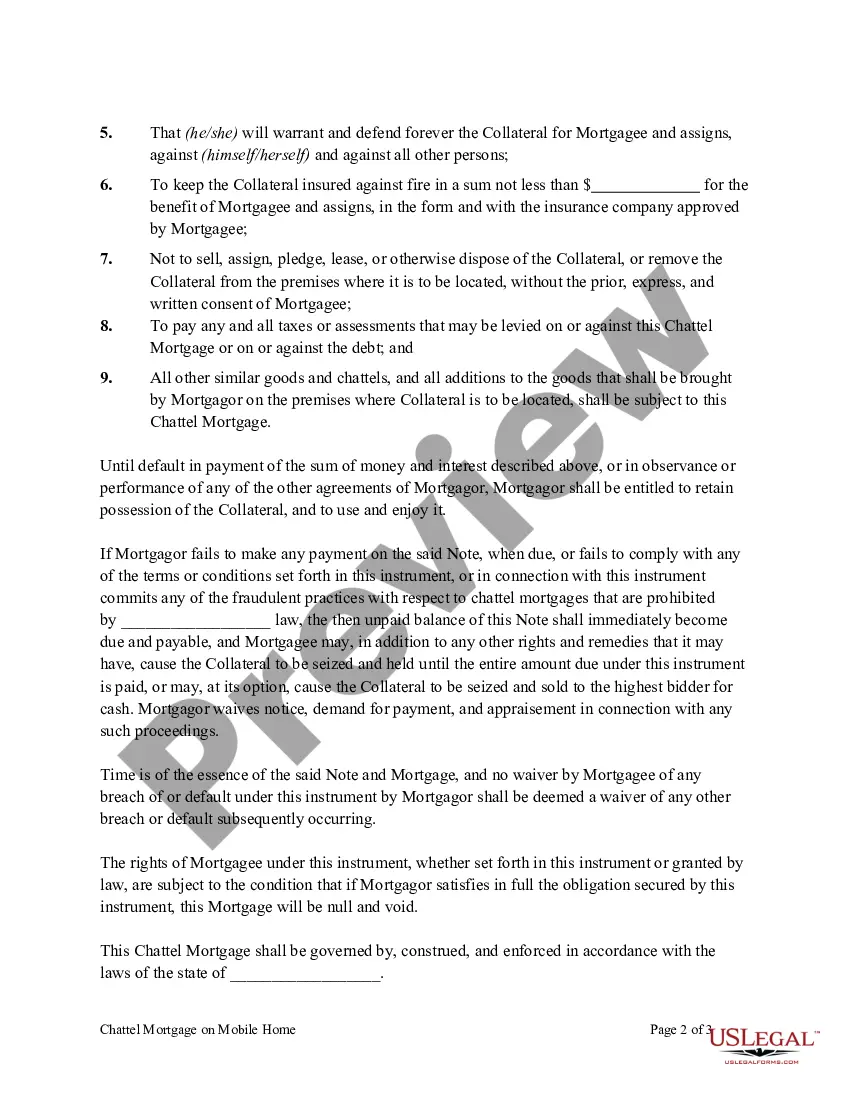
By chattel mortgage, personal property is recorded in the Chattel Mortgage Register as a security for the performance of an obligation. If the movable, instead of being recorded, is delivered to the creditor or a third person, the contract is a pledge and not a chattel mortgage.
A chattel mortgage shall not be valid against any person except the mortgagor, his executors or administrators, unless the possession of the property is delivered to and retained by the mortgagee or unless the mortgage is recorded in the office of the register of deeds of the province in which the mortgagor resides at ...
