Board Meeting Corporate Formula In Utah
Description

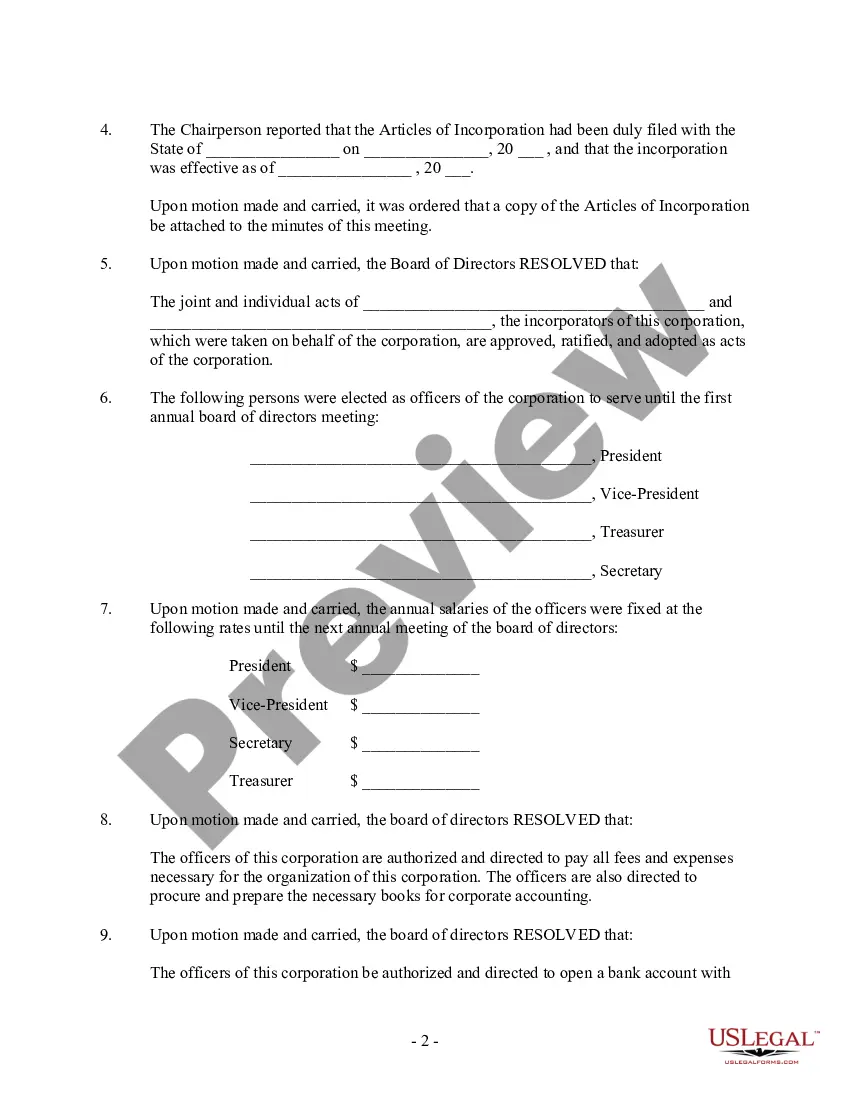
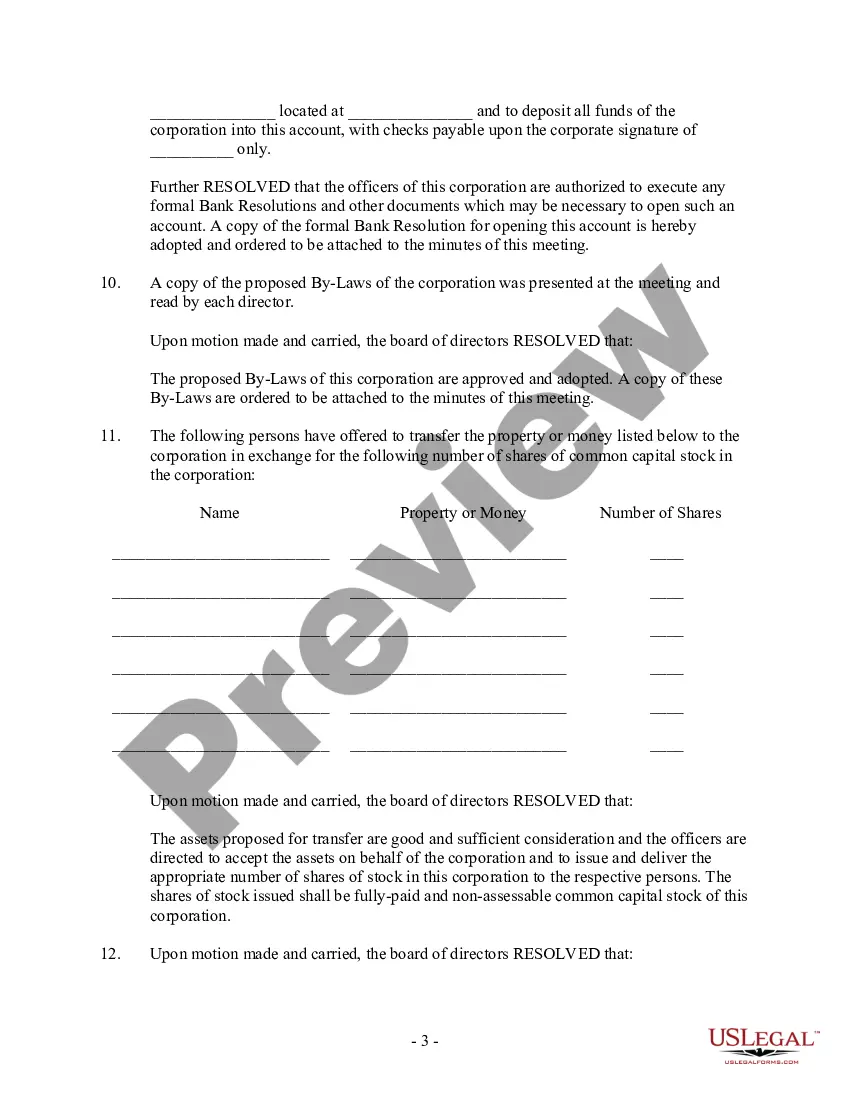
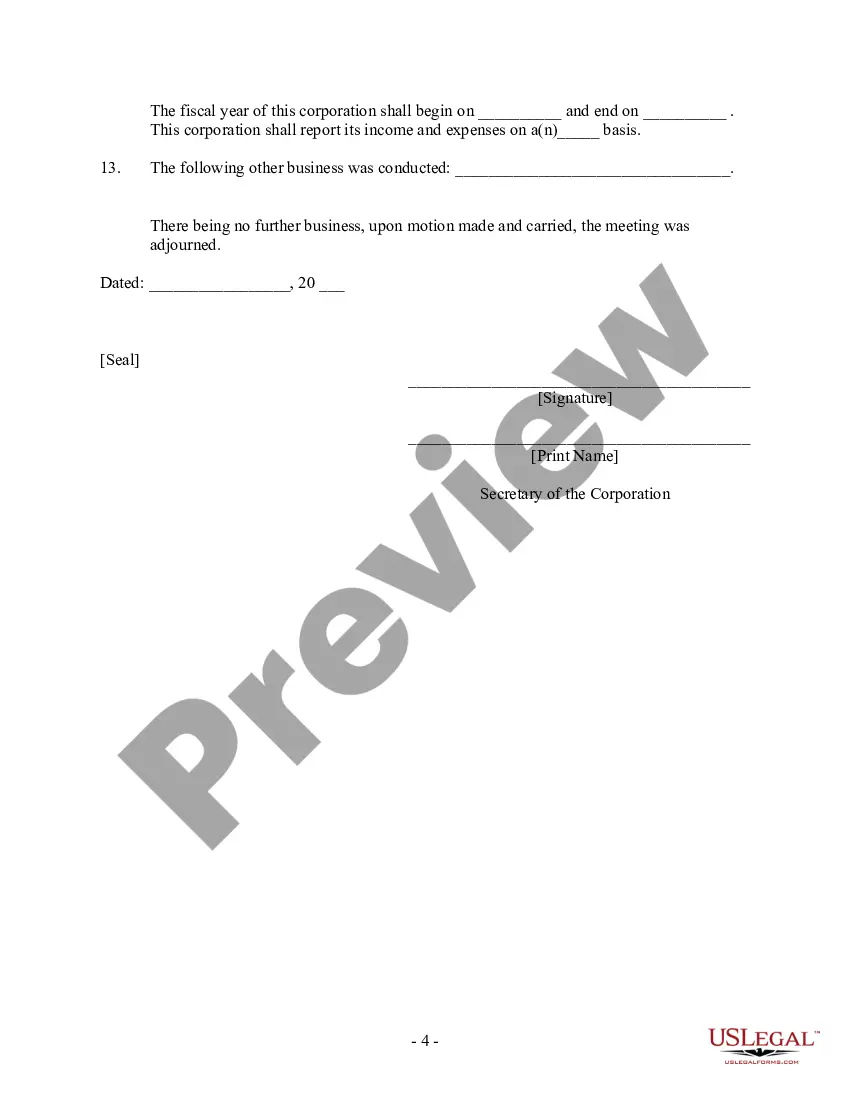

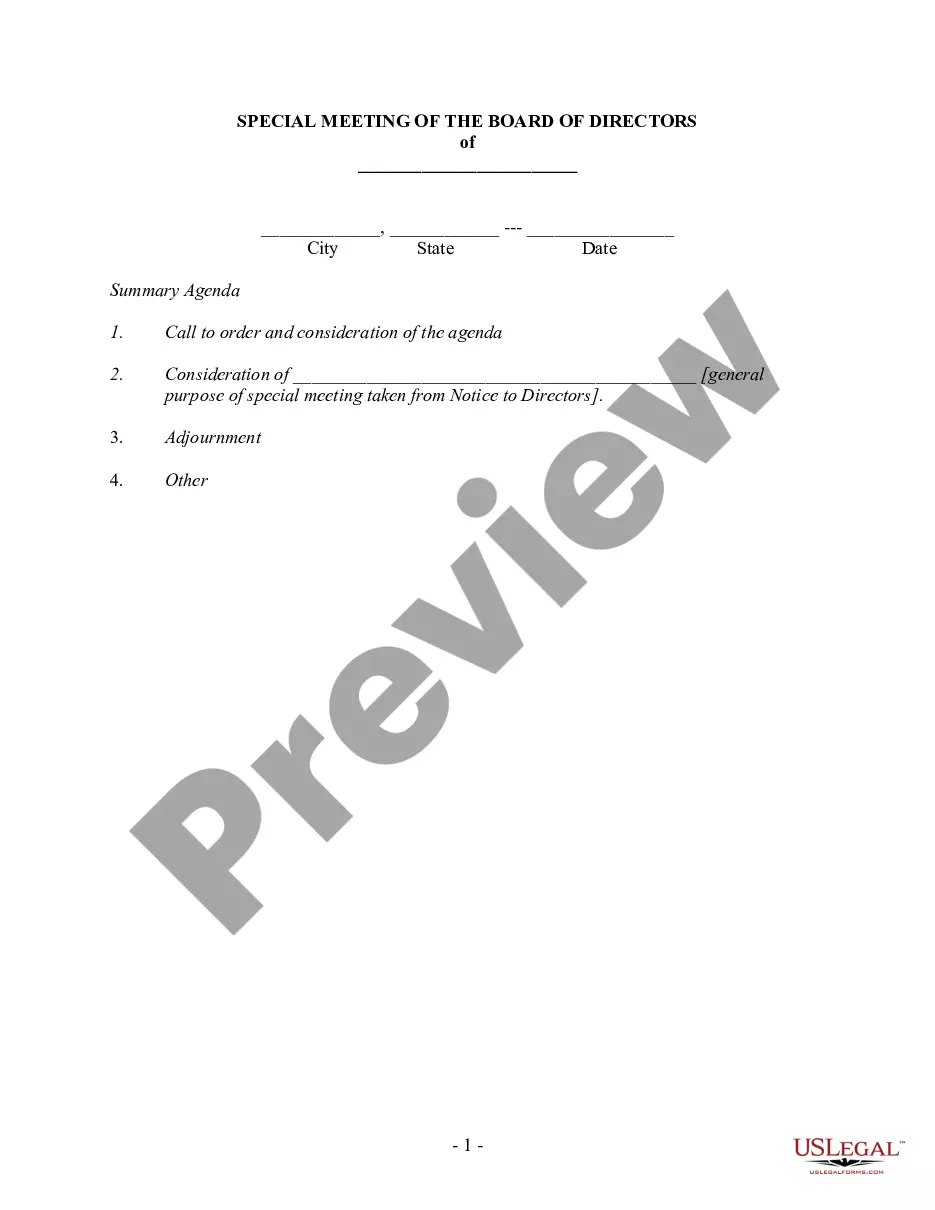
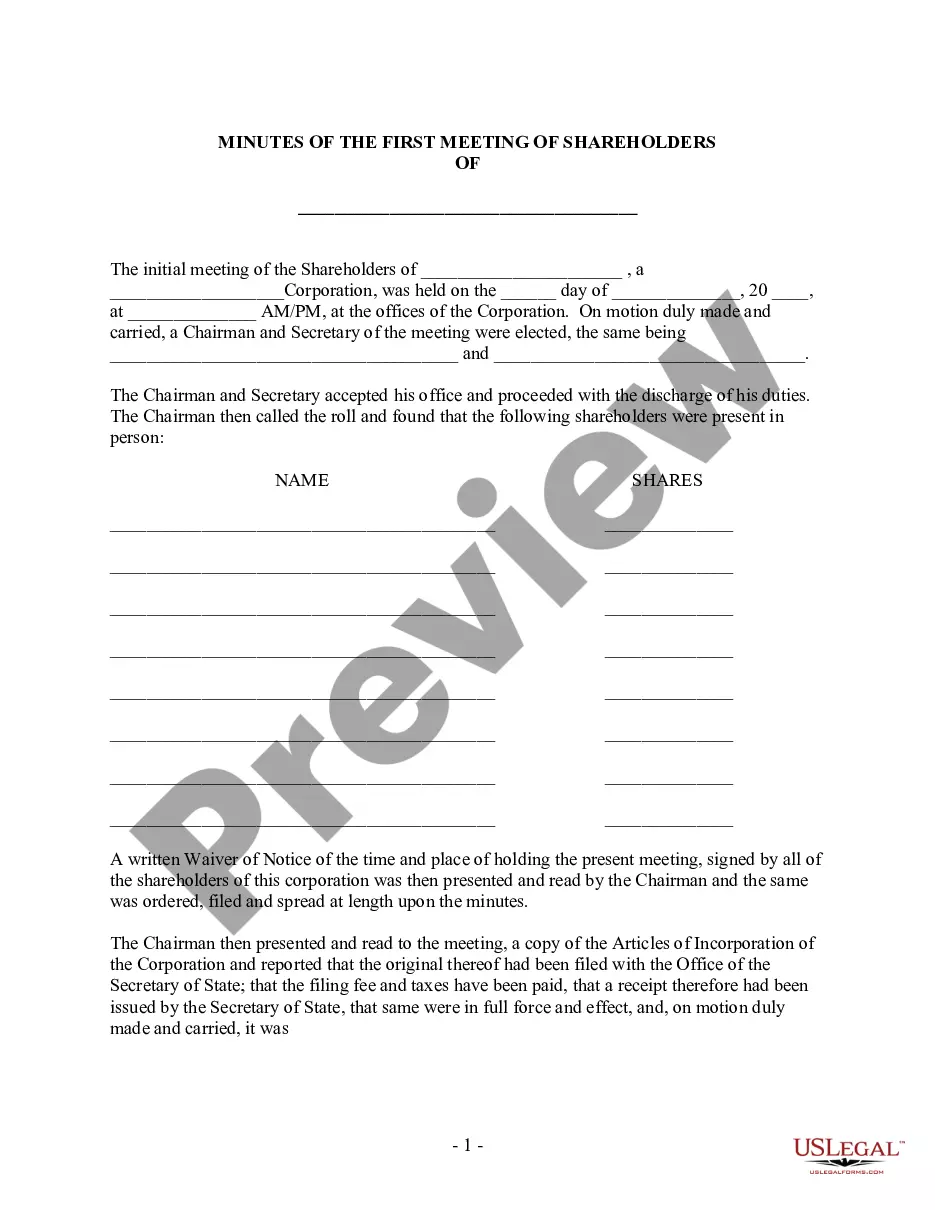
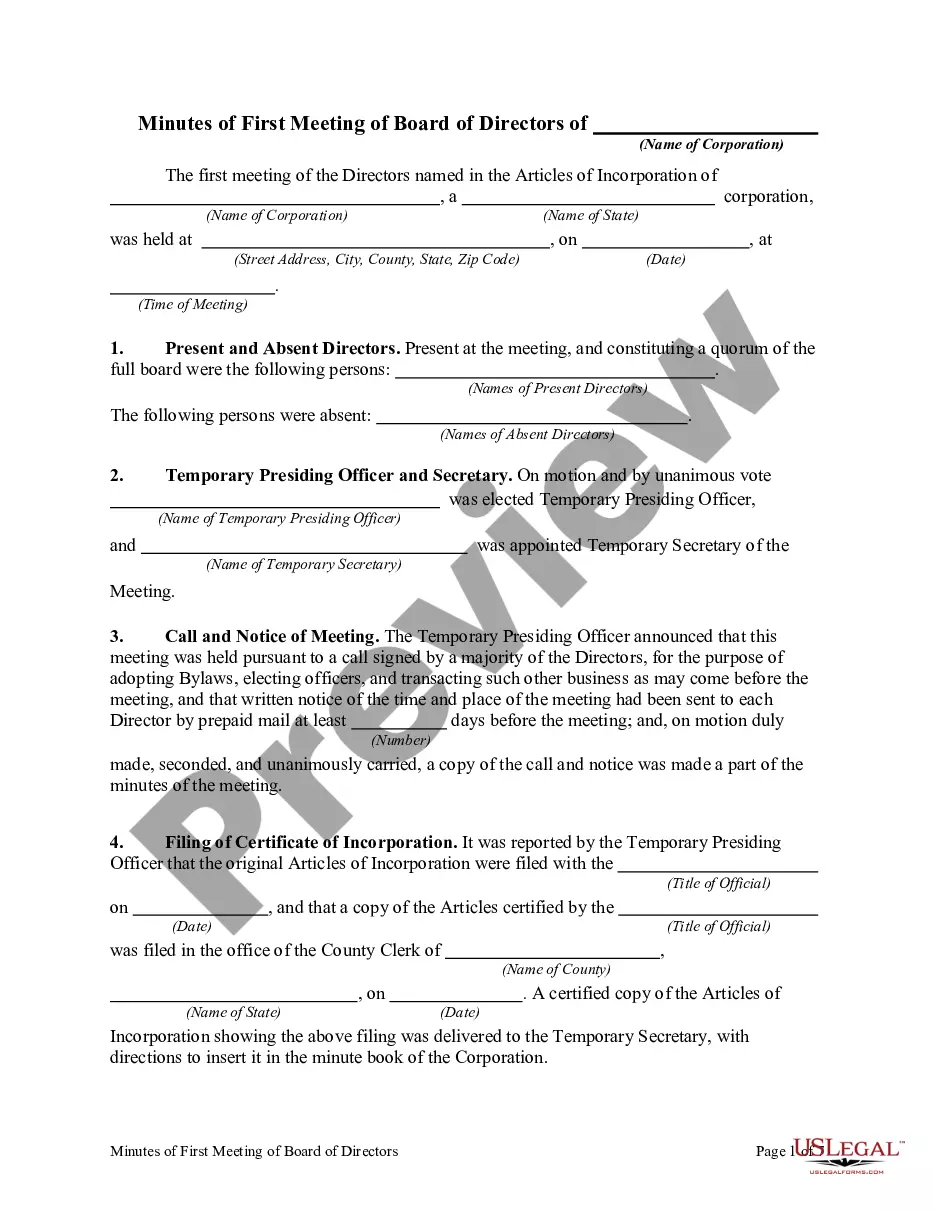
Get your form ready online
Our built-in tools help you complete, sign, share, and store your documents in one place.
Make edits, fill in missing information, and update formatting in US Legal Forms—just like you would in MS Word.
Download a copy, print it, send it by email, or mail it via USPS—whatever works best for your next step.
Sign and collect signatures with our SignNow integration. Send to multiple recipients, set reminders, and more. Go Premium to unlock E-Sign.
If this form requires notarization, complete it online through a secure video call—no need to meet a notary in person or wait for an appointment.
We protect your documents and personal data by following strict security and privacy standards.

Make edits, fill in missing information, and update formatting in US Legal Forms—just like you would in MS Word.

Download a copy, print it, send it by email, or mail it via USPS—whatever works best for your next step.

Sign and collect signatures with our SignNow integration. Send to multiple recipients, set reminders, and more. Go Premium to unlock E-Sign.

If this form requires notarization, complete it online through a secure video call—no need to meet a notary in person or wait for an appointment.

We protect your documents and personal data by following strict security and privacy standards.
Looking for another form?

Form popularity
FAQ
In an opinion recently published by California's Second Appellate District — Tuli v. Specialty Surgical Center of Thousand Oaks, LLC — the Court confirmed that the business judgment rule (as described above) applies in LLCs too.
Most management actions are protected from judicial scrutiny by the business judgement rule: absent bad faith, fraud, or breach of a fiduciary duty, the judgement of the managers of a corporation is conclusive.
The business judgment rule protects companies from frivolous lawsuits by assuming that, unless proved otherwise, management is acting in the interests of the corporation and its stakeholders. The rule assumes that managers will not make optimal decisions all the time.
For detailed formation steps, see our Utah Corporation formation guide. Step 1 – Name your Utah corporation. Step 2 – Appoint directors. Step 3 – Choose a Utah registered agent. Step 4 – File the Utah Articles of Incorporation. Step 5 – Create corporate bylaws. Step 6 – Draft a shareholder agreement.
Your rules should, at a minimum, provide the following specifications. Date and time of the annual meeting. Indicate when you want the annual shareholders' meeting to be. Meeting place. Special meetings. Meeting quorum. Meeting notice. Voting and proxies. Action without a meeting. Organization of the meeting.
The owners of a corporation are called “shareholders.” The persons who manage the business and affairs of a corporation are called “directors.” However, state corporate law does provide for shareholders to enter into shareholders' agreements to eliminate the directors and provide for shareholder management.
The rule is a defense to a claim of liability for corporate actions.
Under this standard, a court will uphold the decisions of a director as long as they are made (1) in good faith, (2) with the care that a reasonably prudent person would use, and (3) with the reasonable belief that the director is acting in the best interests of the corporation.
