Board Meeting Corporate Format In Philadelphia
Description


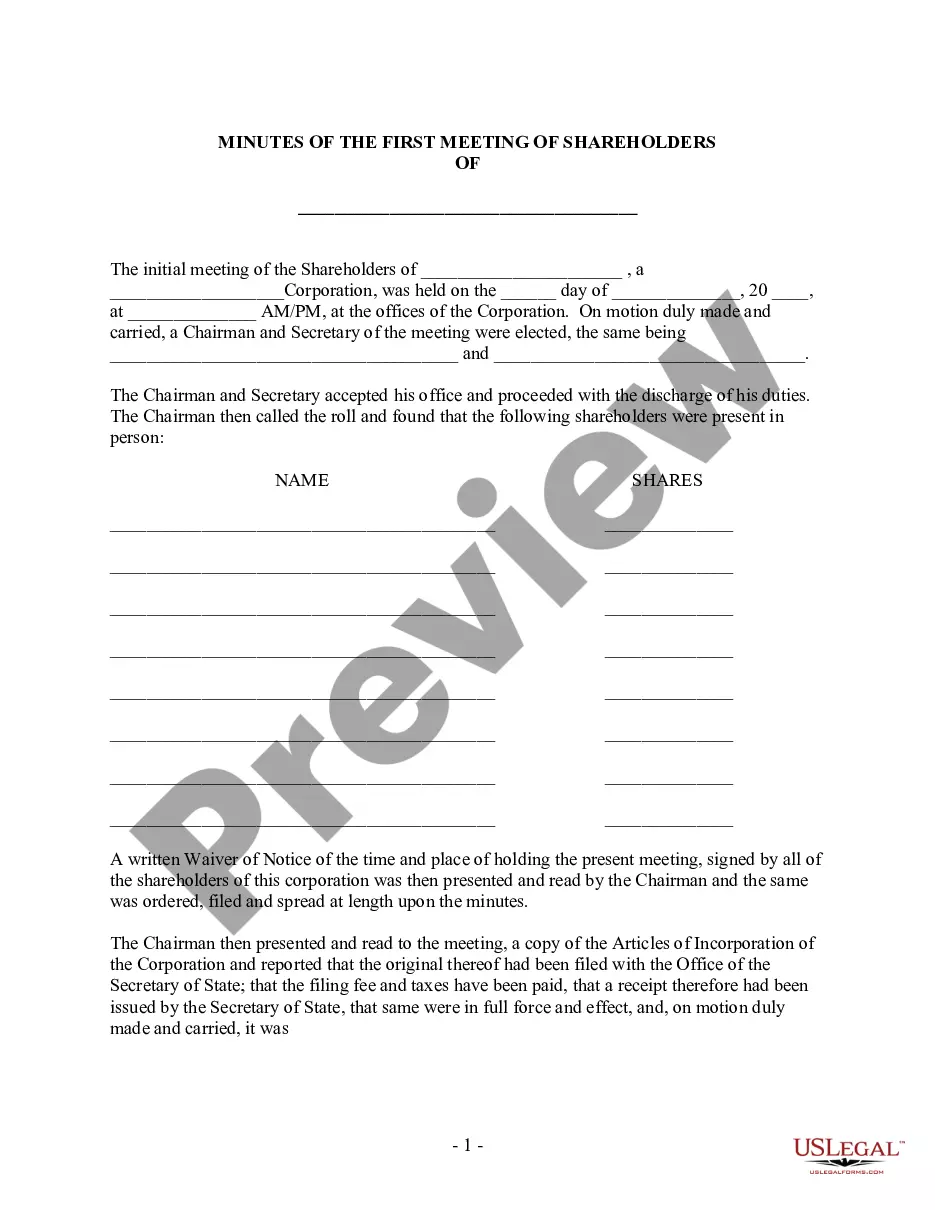
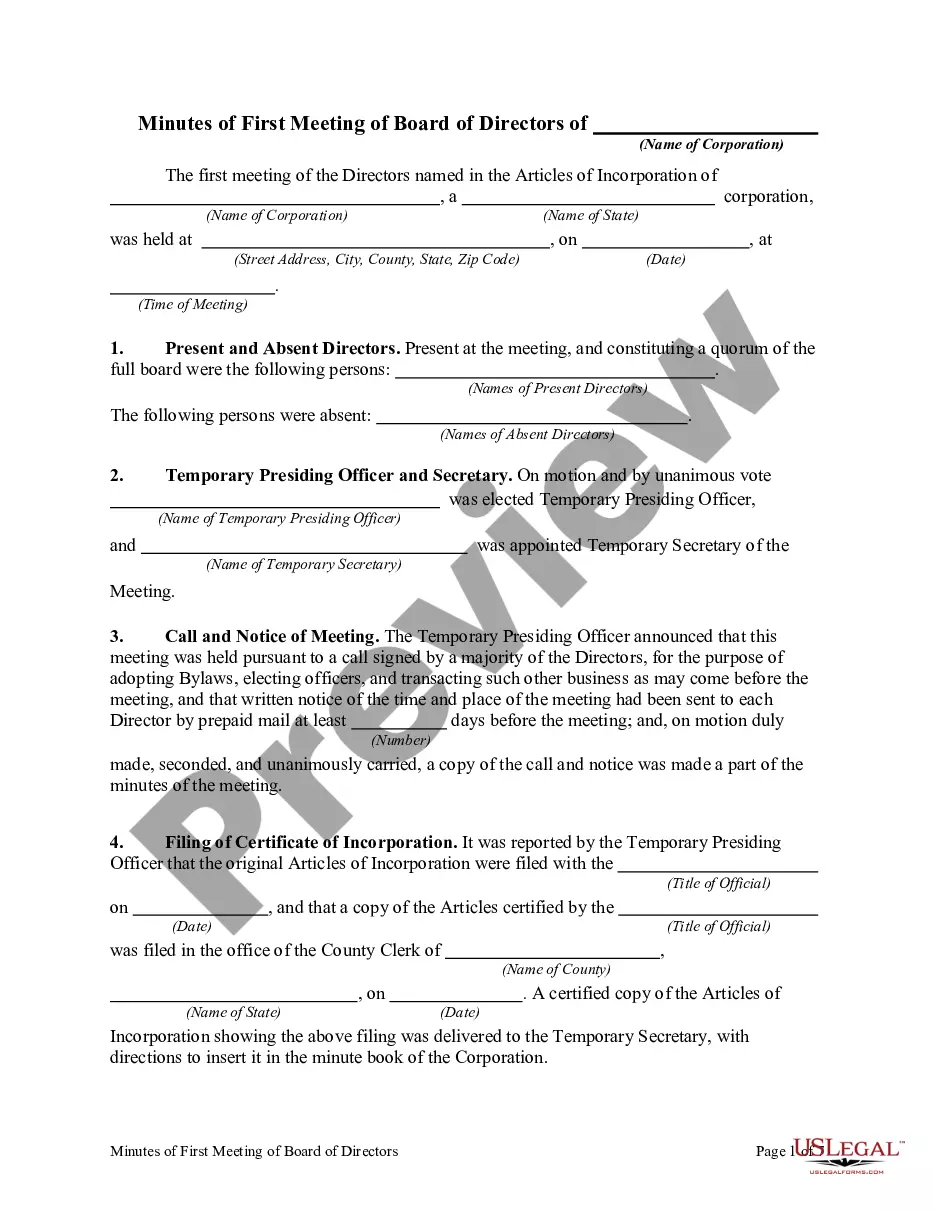
Get your form ready online
Our built-in tools help you complete, sign, share, and store your documents in one place.
Make edits, fill in missing information, and update formatting in US Legal Forms—just like you would in MS Word.
Download a copy, print it, send it by email, or mail it via USPS—whatever works best for your next step.
Sign and collect signatures with our SignNow integration. Send to multiple recipients, set reminders, and more. Go Premium to unlock E-Sign.
If this form requires notarization, complete it online through a secure video call—no need to meet a notary in person or wait for an appointment.
We protect your documents and personal data by following strict security and privacy standards.

Make edits, fill in missing information, and update formatting in US Legal Forms—just like you would in MS Word.

Download a copy, print it, send it by email, or mail it via USPS—whatever works best for your next step.

Sign and collect signatures with our SignNow integration. Send to multiple recipients, set reminders, and more. Go Premium to unlock E-Sign.

If this form requires notarization, complete it online through a secure video call—no need to meet a notary in person or wait for an appointment.

We protect your documents and personal data by following strict security and privacy standards.
Looking for another form?
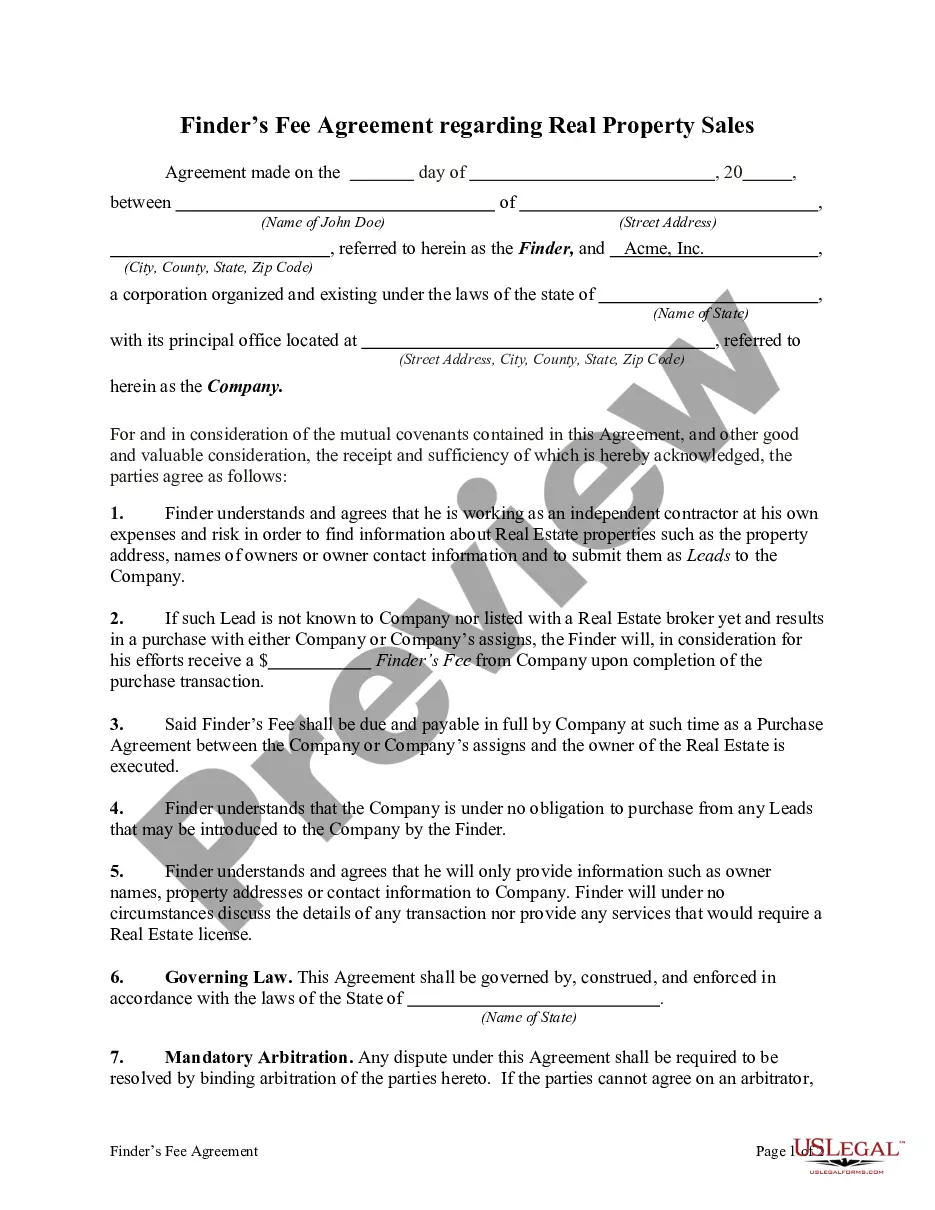

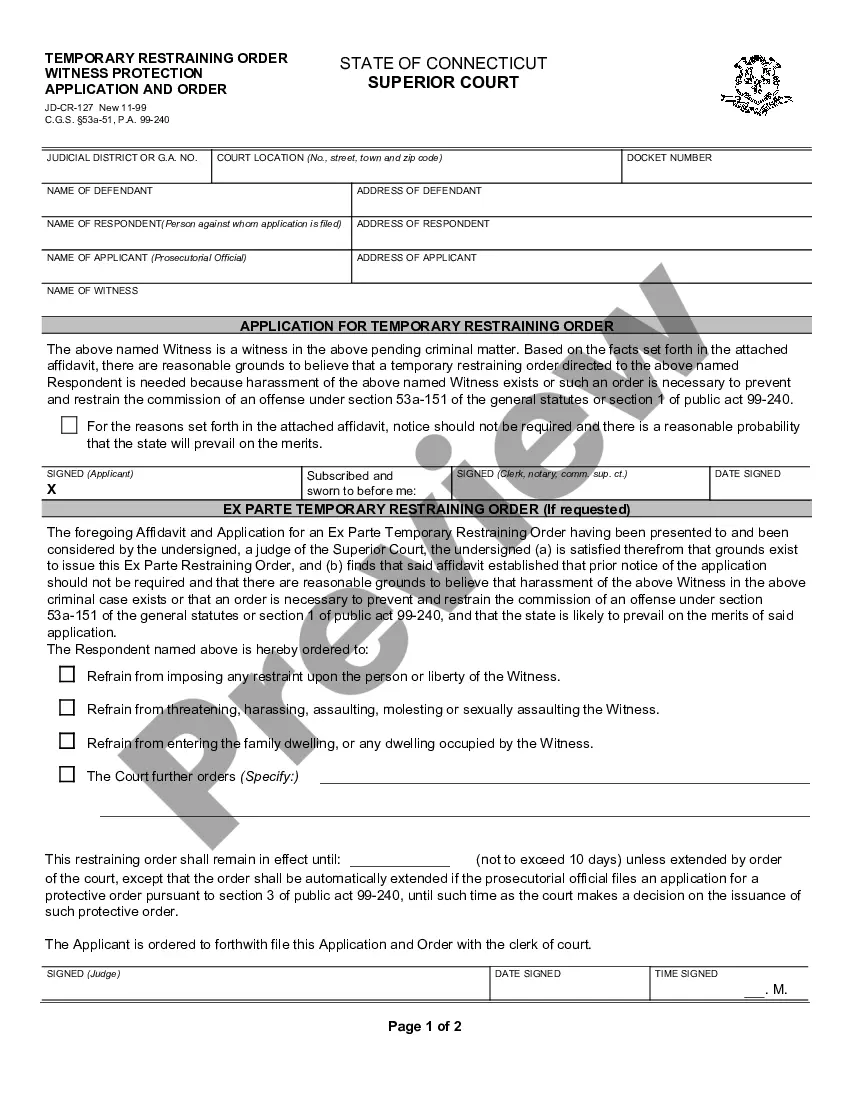
Form popularity
FAQ
What to include when writing meeting minutes? Meeting basics like name, place, date and time ... List of meeting participants. Meeting purpose. Agenda items. Next meeting date and place. Documents to be included in the meeting report. Key action items.
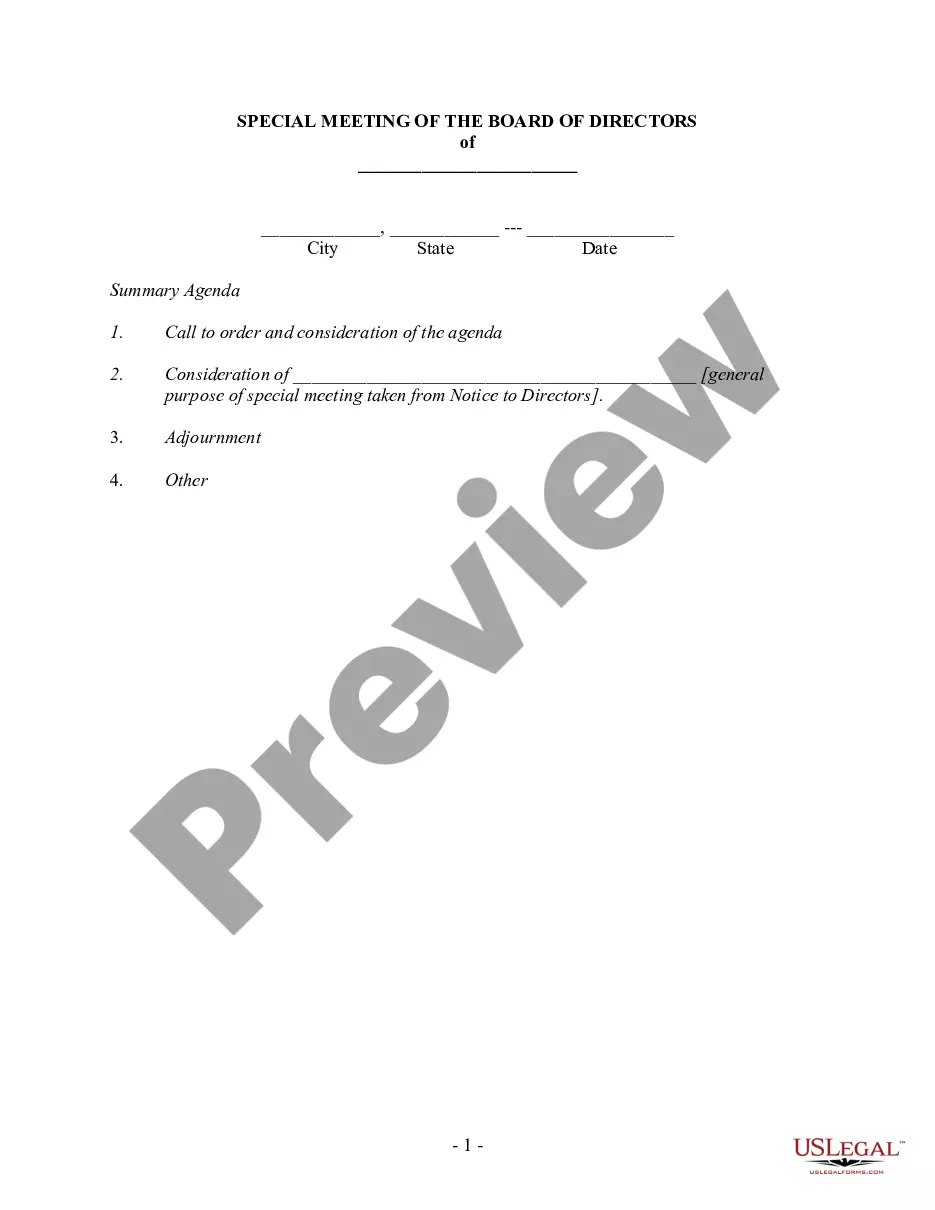
Here's how to do it effectively. Clarify meeting objectives. The first step in writing a meeting agenda is to clearly define any goals. Invite participant input. Outline key questions for discussion. Define each task's purpose. Allocate time for agenda items. Assign topic facilitators. Write the meeting agenda.
Start a meeting properly Opening board meeting script usually means addressing issues of personal or perfunctory nature, such as thanking retiring members and welcoming visitors and other members. “We want to thank members' names for being present at/making a contribution to this organization's name board meeting.”
The structure of a meeting is defined as the systematic organization of its components, aimed at maximizing productivity, ensuring clarity, and fostering participation. Key elements of meeting structure include the development of agendas, allocation of roles and responsibilities, and adherence to time frames.
Notice is hereby given that a meeting of the Board of Directors of the (Company Name) will be held at (Time) on (Day of the Week), the (Date in words) at (Board Meeting Address), to interalia consider the following business as under:-. 3.
What to include in a meeting agenda Clarify and define goals. Ask participants for input. List key questions for discussion. Identify the purpose of each task. Allocate time to spend on each agenda item. Identify who leads each topic. End each meeting with a review.
How to write a meeting agenda in 5 steps Define the meeting's objective. When building an agenda, think about why you are having the meeting to begin with. Determine who needs to attend. Gather input from team members. Prioritize agenda items. Assign clear roles and responsibilities.
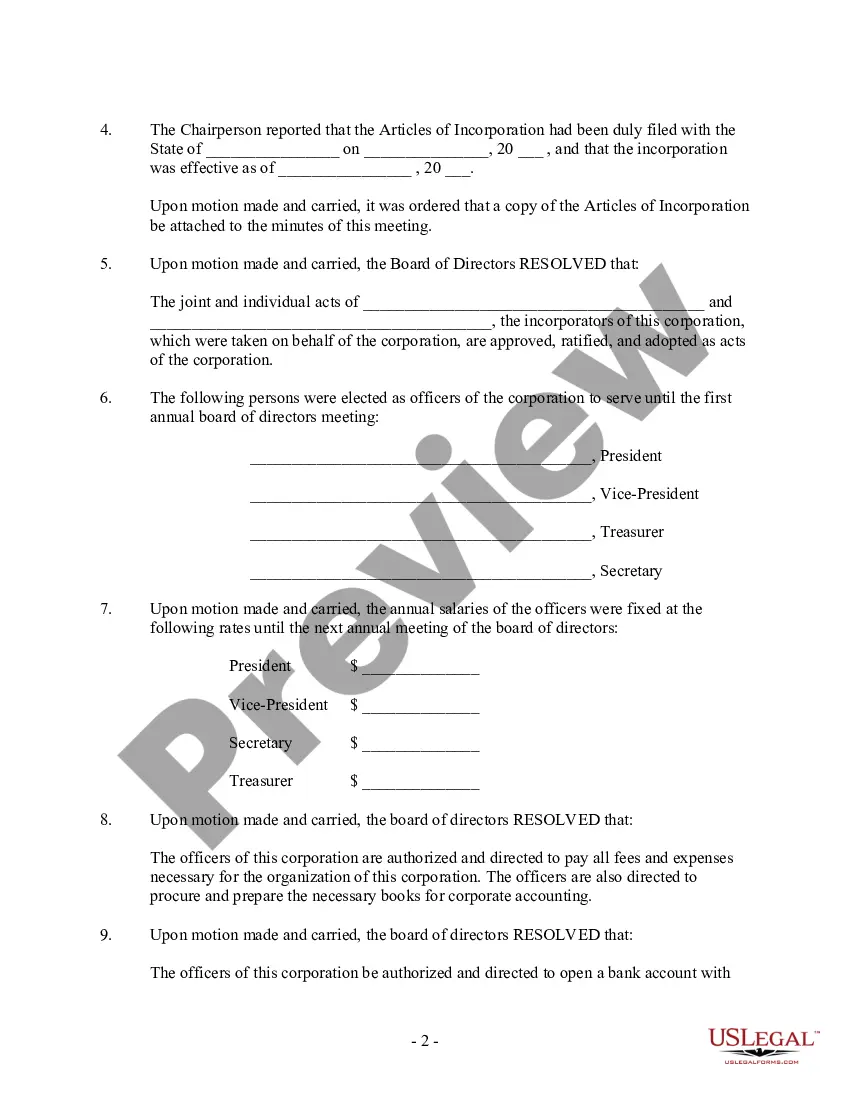
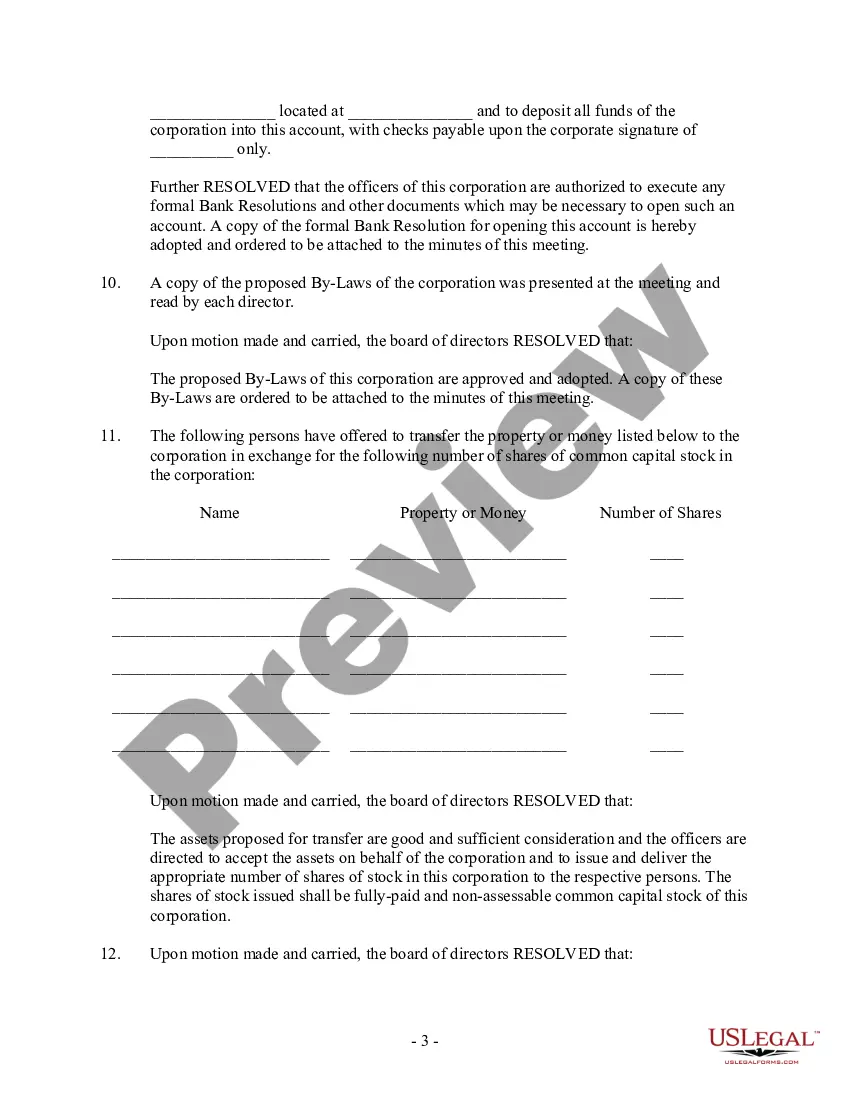
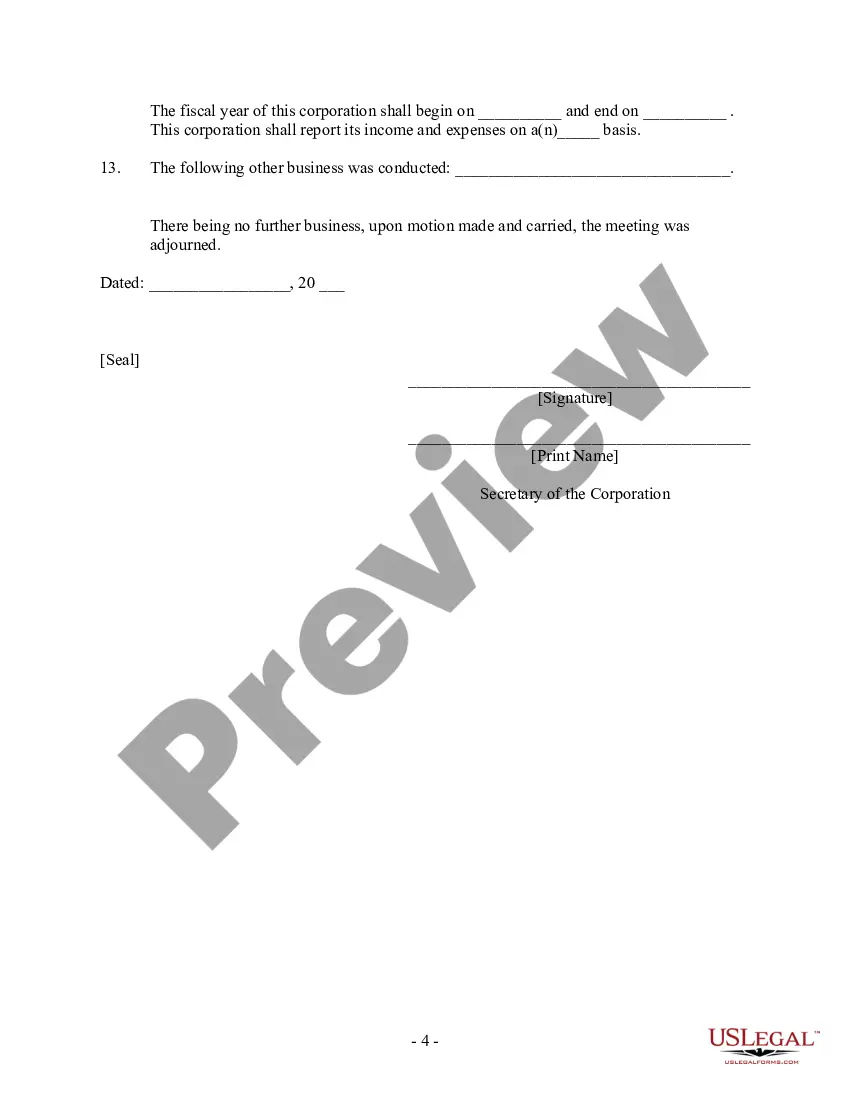
This document needs to be signed by: or another person who is authorized to take minutes and/or record official corporate action. There is no requirement that the signature be witnessed or notarized.
Robert's Rules of Order lay out the following steps for running a meeting: Call the meeting to order. Take roll call. Read and approve past meeting minutes. Review reports. Address high-priority agenda items. Deal with any unfinished business. Cover new items of business. Adjourn the meeting.
Most board meeting agendas follow a classic meeting structure: Calling meeting to order – ensure you have quorum. Approve the agenda and prior board meeting minutes. Executive and committee reports – allow 25% of time here for key topic discussion. Old/new/other business. Close the meeting and adjourn.