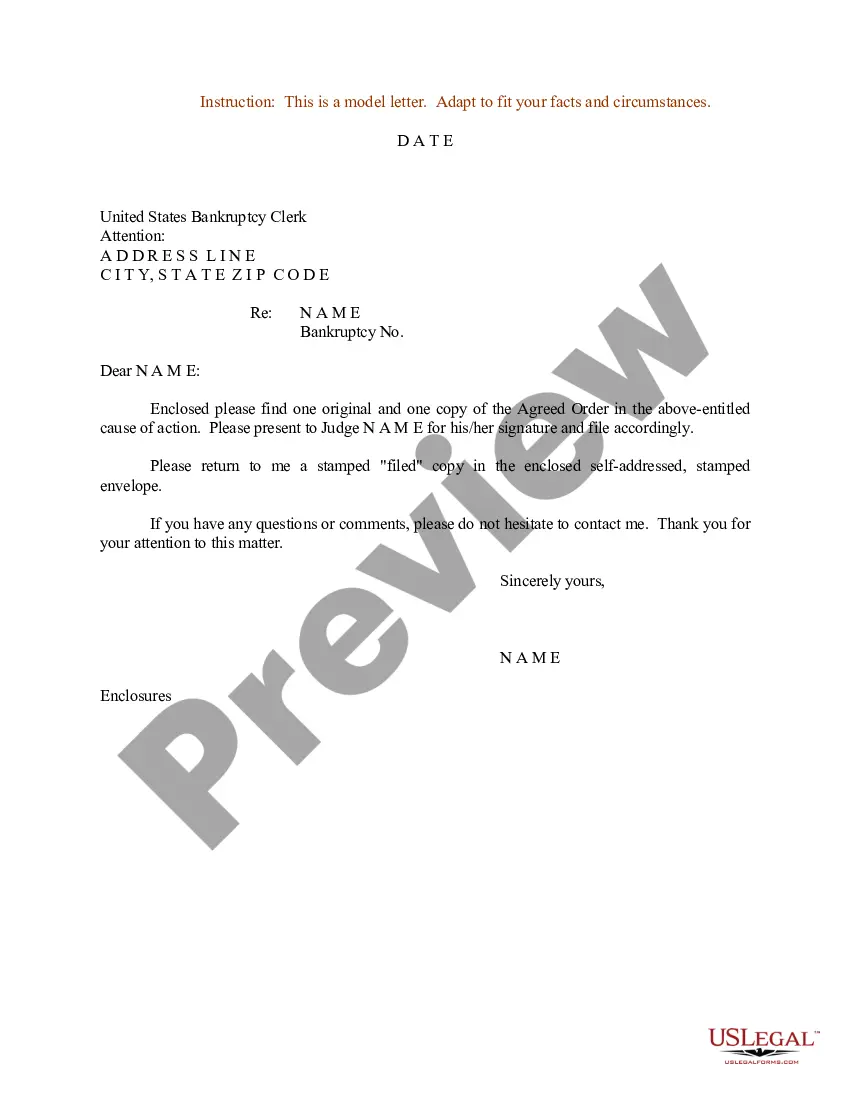
Sample Order For Judge To Sign In Ohio
Description


Get your form ready online
Our built-in tools help you complete, sign, share, and store your documents in one place.
Make edits, fill in missing information, and update formatting in US Legal Forms—just like you would in MS Word.
Download a copy, print it, send it by email, or mail it via USPS—whatever works best for your next step.
Sign and collect signatures with our SignNow integration. Send to multiple recipients, set reminders, and more. Go Premium to unlock E-Sign.
If this form requires notarization, complete it online through a secure video call—no need to meet a notary in person or wait for an appointment.
We protect your documents and personal data by following strict security and privacy standards.

Make edits, fill in missing information, and update formatting in US Legal Forms—just like you would in MS Word.

Download a copy, print it, send it by email, or mail it via USPS—whatever works best for your next step.

Sign and collect signatures with our SignNow integration. Send to multiple recipients, set reminders, and more. Go Premium to unlock E-Sign.

If this form requires notarization, complete it online through a secure video call—no need to meet a notary in person or wait for an appointment.

We protect your documents and personal data by following strict security and privacy standards.
Looking for another form?




/webp/1.webp)

Form popularity
FAQ
Motions for reconsideration shall be filed within ten calendar days of mailing of the final order.
Application for the writ of mandamus must be by petition, in the name of the state on the relation of the person applying, and verified by affidavit. The court may require notice of it to be given to the defendant, or grant an order to show cause why it should not be allowed, or allow the writ without notice.
Processing Timeline for Ohio Judicial Release Applications Once a petition is accepted for filing, the judge has sixty (60) days to either grant a hearing or deny the motion. If the court decides to grant a hearing on the motion, the hearing must be held no more than 180 days after the motion was filed.
Sometimes, the Judge makes a decision right away. If not, the Judge has 60 days by law to decide the motion.
(2) All cases submitted for determination after a court trial shall be decided within ni nety days from the date the case was subm i tted. (3) All motions shall be ruled upon within one hundred twenty days from the date the moti on was filed, except as otherwi se noted on the report forms.
(2) All cases submitted for determination after a court trial shall be decided within ni nety days from the date the case was subm i tted. (3) All motions shall be ruled upon within one hundred twenty days from the date the moti on was filed, except as otherwi se noted on the report forms.
Final answer: In a letter, an unknown Judge should be addressed as 'Your Honor'. If you know their name, 'Judge Last Name' is also acceptable. In context, a court, the rights of the accused, and fair procedures are all pillars of the rule of law.
A motion to show cause is used to bring one party's failure to comply with a Court order to the Court's attention. The motion to show cause must be completely filled out and must be supported by an Affidavit.
Things You Should Know Write your legal argument by stating the rule and explaining how your facts apply to it. Then, add your signature, a Certificate of Service, and a Notice of Hearing. File your motion with the clerk of court overseeing your case. Then, give copies to each defendant.
Overview. During a civil case, most of your interactions with the judge will be the result of you or the other side filing a written motion. A “motion” is a written request to the judge that asks for a ruling on some issue in the case.
