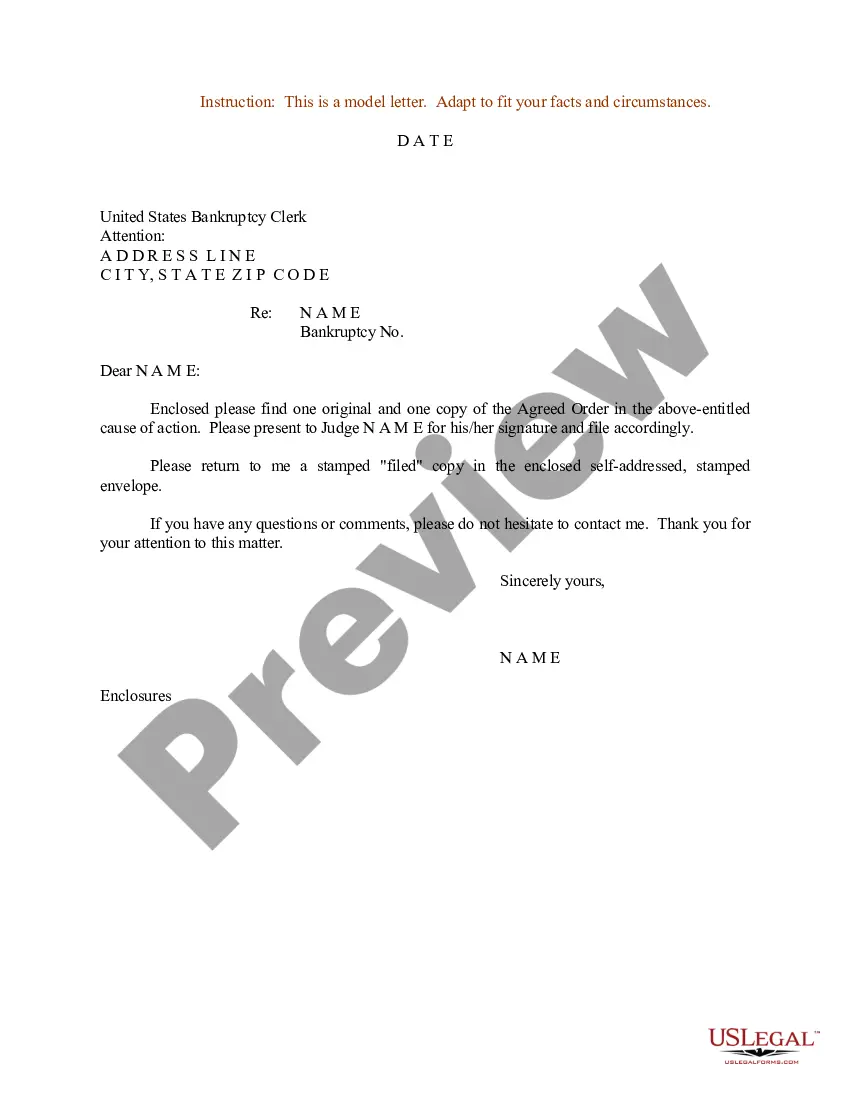
Sample Letter Judge With Proposed Order In Florida
Description


Get your form ready online
Our built-in tools help you complete, sign, share, and store your documents in one place.
Make edits, fill in missing information, and update formatting in US Legal Forms—just like you would in MS Word.
Download a copy, print it, send it by email, or mail it via USPS—whatever works best for your next step.
Sign and collect signatures with our SignNow integration. Send to multiple recipients, set reminders, and more. Go Premium to unlock E-Sign.
If this form requires notarization, complete it online through a secure video call—no need to meet a notary in person or wait for an appointment.
We protect your documents and personal data by following strict security and privacy standards.

Make edits, fill in missing information, and update formatting in US Legal Forms—just like you would in MS Word.

Download a copy, print it, send it by email, or mail it via USPS—whatever works best for your next step.

Sign and collect signatures with our SignNow integration. Send to multiple recipients, set reminders, and more. Go Premium to unlock E-Sign.

If this form requires notarization, complete it online through a secure video call—no need to meet a notary in person or wait for an appointment.

We protect your documents and personal data by following strict security and privacy standards.
Looking for another form?





Form popularity
FAQ
If you cannot find the name and title of the recipient, you can use a generic salutation instead. A generic salutation is a general way of addressing a person or a group of people, such as "Dear Sir or Madam", "To Whom It May Concern", or "Dear Hiring Manager".
Either “Judge” or “The Honorable” is acceptable.
Yes, but all letters, email or other written communications sent to a judge should be filed with the clerk and provided to the attorneys or litigants, and will become public record.
Final answer: In a letter, an unknown Judge should be addressed as 'Your Honor'. If you know their name, 'Judge Last Name' is also acceptable. In context, a court, the rights of the accused, and fair procedures are all pillars of the rule of law.
Please submit hard copies of proposed orders, copies, and envelopes directly to the judge's office. In the E-Filing portal, Polk County has no selection for orders or proposed orders. If a proposed order is attached to an electronically filed motion, it will be treated only as an attachment and filed ingly.
If you are asked to write a character letter for someone, it can be helpful to keep the following tips in mind when creating your letter: Address Your Letter to the Judge. Establish a Clear Relationship with the Defendant. Be Truthful. Be Positive. Include a Discussion of the Crime. Do Not Suggest Penalties for the Crime.
You can address the judge to “The Honorable First Name Last Name” or “Judge First Name Last Name” or “Judge Last Name.” It is redundant to say “Honorable Judge” so use either “Judge” or “Honorable.”
A proposed order is a legal document that outlines the terms of a court order that one party proposes to the court for approval.
Below are the Polk county phone numbers to contact each division directly. To inquire about any of the services that the county provides (permitting, starting water services, indigent healthcare), please call (863) 534-6000. To view the county organizational chart, click below.

