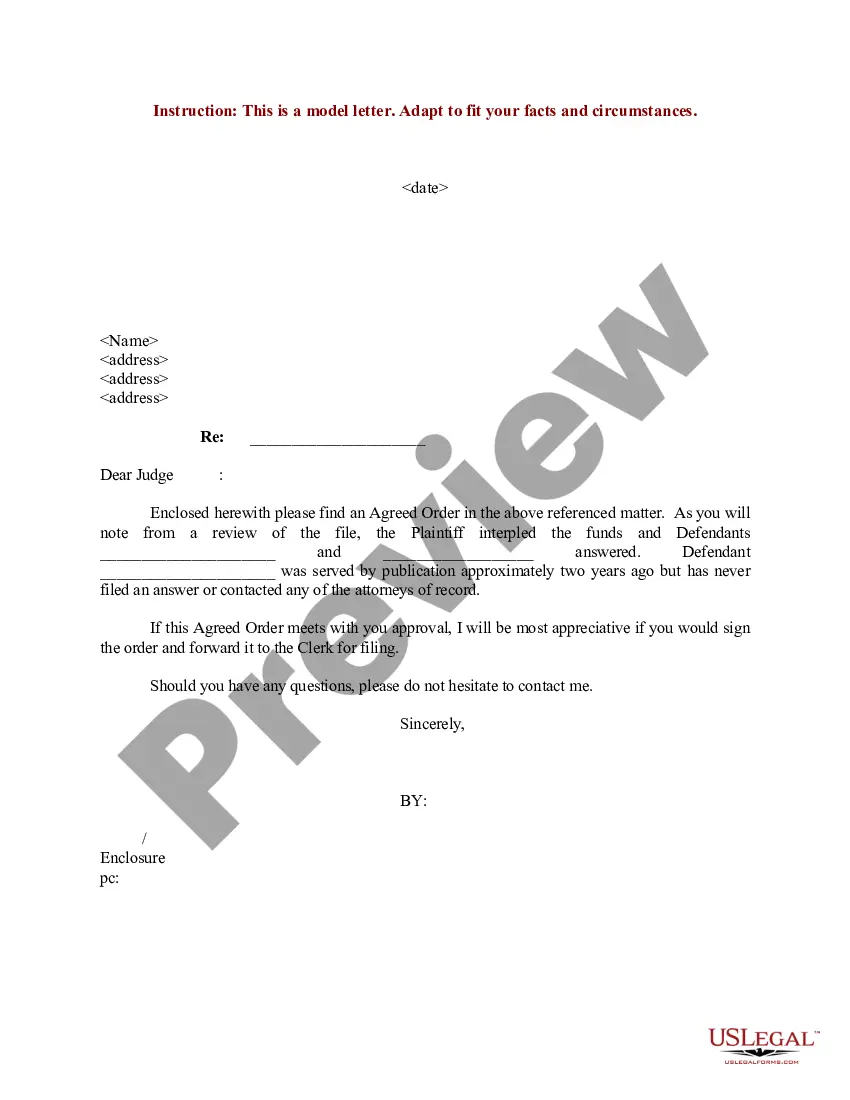
Sample Letter To Judge For Guardianship In Arizona
Description
Get your form ready online
Our built-in tools help you complete, sign, share, and store your documents in one place.
Make edits, fill in missing information, and update formatting in US Legal Forms—just like you would in MS Word.
Download a copy, print it, send it by email, or mail it via USPS—whatever works best for your next step.
Sign and collect signatures with our SignNow integration. Send to multiple recipients, set reminders, and more. Go Premium to unlock E-Sign.
If this form requires notarization, complete it online through a secure video call—no need to meet a notary in person or wait for an appointment.
We protect your documents and personal data by following strict security and privacy standards.

Make edits, fill in missing information, and update formatting in US Legal Forms—just like you would in MS Word.

Download a copy, print it, send it by email, or mail it via USPS—whatever works best for your next step.

Sign and collect signatures with our SignNow integration. Send to multiple recipients, set reminders, and more. Go Premium to unlock E-Sign.

If this form requires notarization, complete it online through a secure video call—no need to meet a notary in person or wait for an appointment.

We protect your documents and personal data by following strict security and privacy standards.
Looking for another form?
Form popularity
FAQ
Introduction: - Introduce yourself (your name and age). - Briefly state the purpose of your letter (to request a change in custody). Body: - Explain Your Situation: Describe your current living situation and why you feel a change is necessary. Be honest about your feelings and experiences. Reasons for Change:
Contact Chambers Law Firm at 714-760-4088 for support from a criminal defense attorney. Start with a Clear Introduction. Introduce Yourself and Establish Credibility. Provide Reasons for Leniency. Tell a Story or Give Specific Examples. Provide Your Contact Information. Not the Same as a Motion to Modify a Sentence.
Here's a list of five specific types of guardianship court evidence that could be necessary for such cases: Document 1: Medical Reports/Evaluations. Document 2: Letters of Recommendation. Document 3: Background Check/Criminal Record. Document 4: Financial Statements. Document 5: Previous Guardianship/Custody Orders.
Having the backing of family and friends through character letters can humanize the defendant in the eyes of the court. It shows the judge that the defendant is valued in their community and that their actions have consequences on others who care for them.
If sufficiently well-written, even one letter could make an impression on a judge. If more than one, or many more than one, this will always make a favorable impression. It is not a guarantee of more favorable treatment at sentencing, but it sure won't hurt.
Tips for Writing a Letter to a Judge: Be Respectful: Use formal language and address the judge appropriately. Be Concise: Keep the letter focused and to the point. Provide Relevant Information: Stick to facts and avoid emotional appeals that lack substance.
Letters from non-lawyers to judges are absolutely to be avoided. They are inappropriate and violate many rules regarding proper communication with judges. Some letters may be in violation of criminal law that prohibits improper efforts to influenc...
1. I hereby declare that I have legal custody of the above named child. 2. I hereby grant my full permission and consent for the temporary guardian to establish a place of residence for my child, and for my child to reside and travel with said temporary guardian.
Sample Format for a Character Letter First Paragraph: Explain who you are. Second Paragraph: Explain why you are writing the letter. Third Paragraph: Thank the court, and make your “ask.” State that you are available to confirm the facts in this letter as necessary.