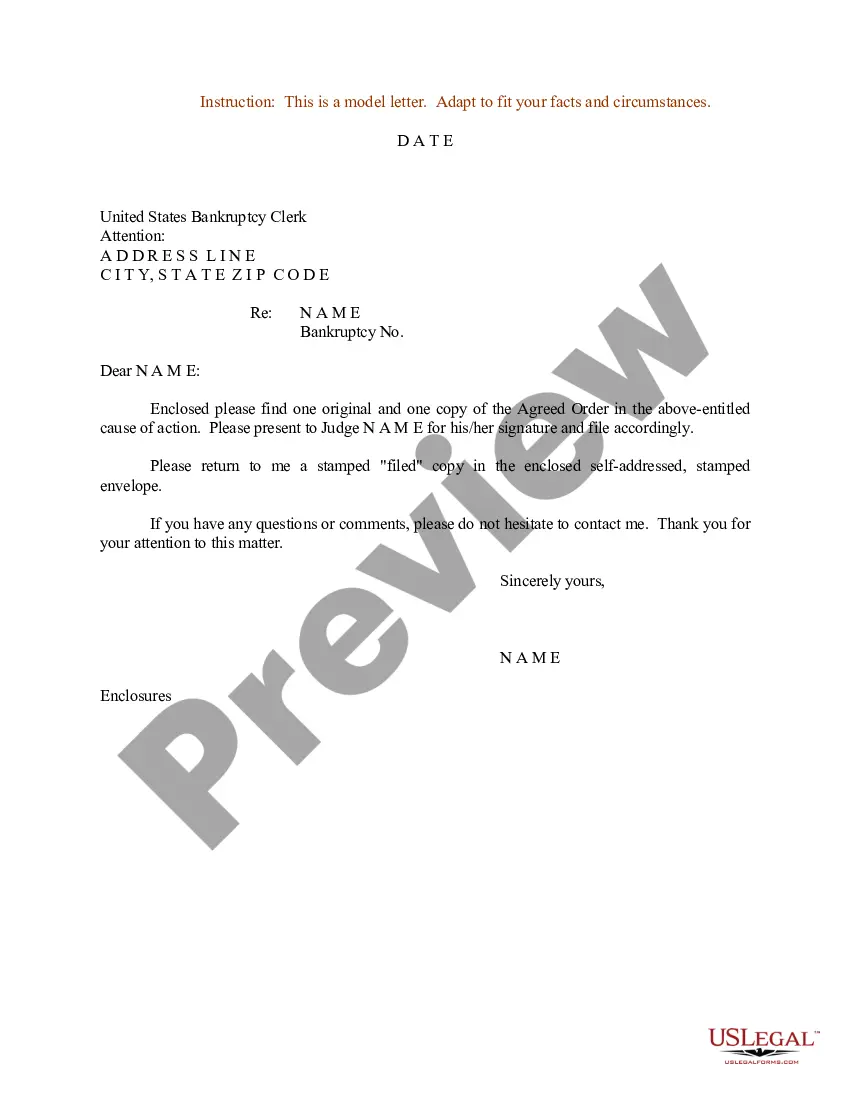
Sample Judge Order With A Debit Card In Arizona
Description


Get your form ready online
Our built-in tools help you complete, sign, share, and store your documents in one place.
Make edits, fill in missing information, and update formatting in US Legal Forms—just like you would in MS Word.
Download a copy, print it, send it by email, or mail it via USPS—whatever works best for your next step.
Sign and collect signatures with our SignNow integration. Send to multiple recipients, set reminders, and more. Go Premium to unlock E-Sign.
If this form requires notarization, complete it online through a secure video call—no need to meet a notary in person or wait for an appointment.
We protect your documents and personal data by following strict security and privacy standards.

Make edits, fill in missing information, and update formatting in US Legal Forms—just like you would in MS Word.

Download a copy, print it, send it by email, or mail it via USPS—whatever works best for your next step.

Sign and collect signatures with our SignNow integration. Send to multiple recipients, set reminders, and more. Go Premium to unlock E-Sign.

If this form requires notarization, complete it online through a secure video call—no need to meet a notary in person or wait for an appointment.

We protect your documents and personal data by following strict security and privacy standards.
Looking for another form?
Form popularity
FAQ
Rule 77 - Trials (a)Setting Cases for Trial. Unless the court has already set a trial on its own or at a resolution management conference or a scheduling conference, any party may file a motion to set a case for trial.
Rule 52 - Findings and Conclusions by the Court; Judgment on Partial Findings (a) Findings and Conclusions (1)Generally. In an action tried on the facts without a jury or with an advisory jury, if requested before trial, the court must find the facts specially and state its conclusions of law separately.
A party may file a motion that requests the court to clarify a ruling if the ruling is confusing or is susceptible to more than one reasonable interpretation.
Tips for an Effective Character Letter To a Judge in California Understand the Purpose of a Character Letter. Use Specific Anecdotes Over General Praise. Address the Impact on the Defendant's Support Network. Maintain Respect For the Court. Respect the Judge's Time. Align Your Expectations with Reality.
Outside of the Supreme Court, always use “The Honorable (full name)” in your correspondence. STATE COURTS Note: States may vary on titles of judges. Check with court or various state court resources to determine proper address and salutation forms, particularly for Chief Judges/Chief Justices.
Follow the order of this format, leaving a space in between each section: Your Information (first thing that goes on the inside of the letter) Name. The Date. The Judge's Information. Honorable Judge First Name Last Name. What the Letter Is Going to Address. Salutation. Body. Signature.
A stipulation and proposed order that parties may use to memorialize and enforce their pretrial agreements on the admissibility or authenticity of evidence, including documents or electronically stored information (ESI), in federal litigation.
Rule 26 - Proposed Orders, Decrees, and Judgments (a)Definitions. A "proposed order" means any order, decree, or judgment that has not been signed by a judicial officer. (b)Generally. This rule rather than Civil Rule 5.1(d) applies to the submission of proposed orders.
If the proposed order needs to be served on parties, DO NOT include a proof of service page on the back of the proposed order. Instead, LBR 9021-1(b)(3) provides that the party who lodges an order must first serve and file a "Notice of Lodgment".
The Proposed Judgment is a document for the judge to sign if he or she wants to grant your Motion for Summary Judgment.

