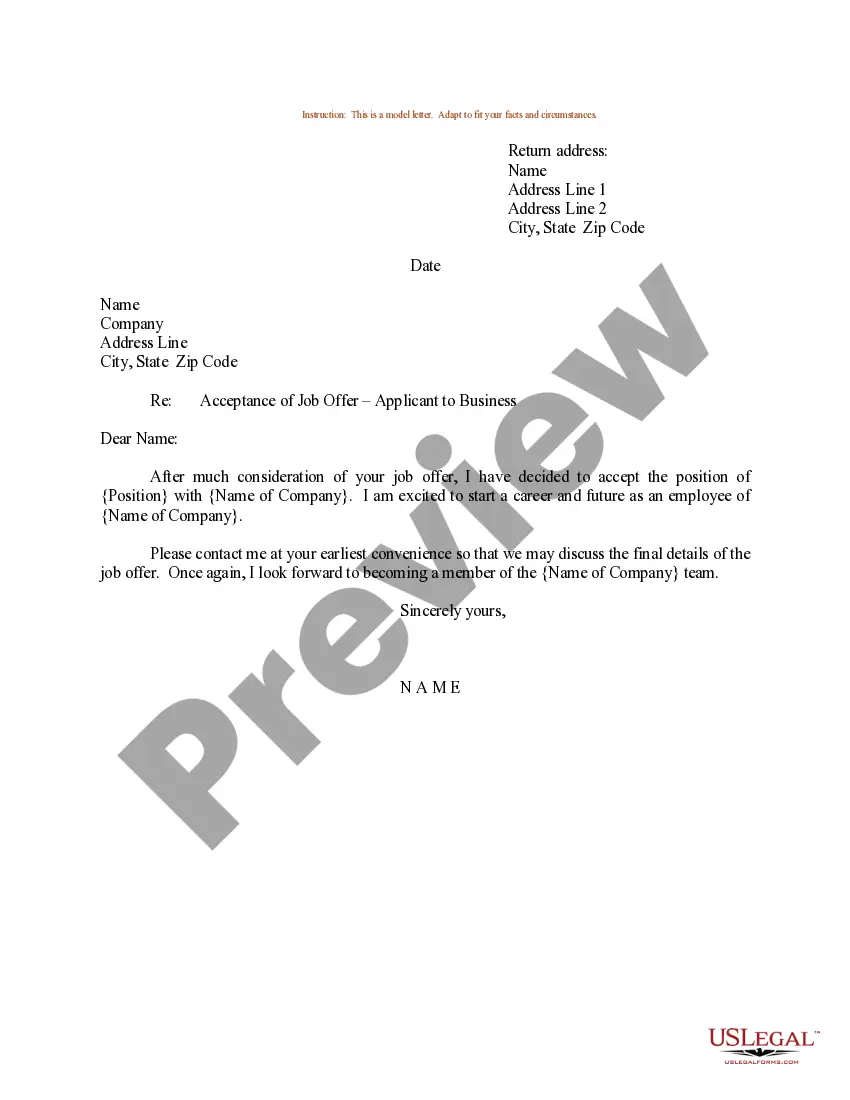
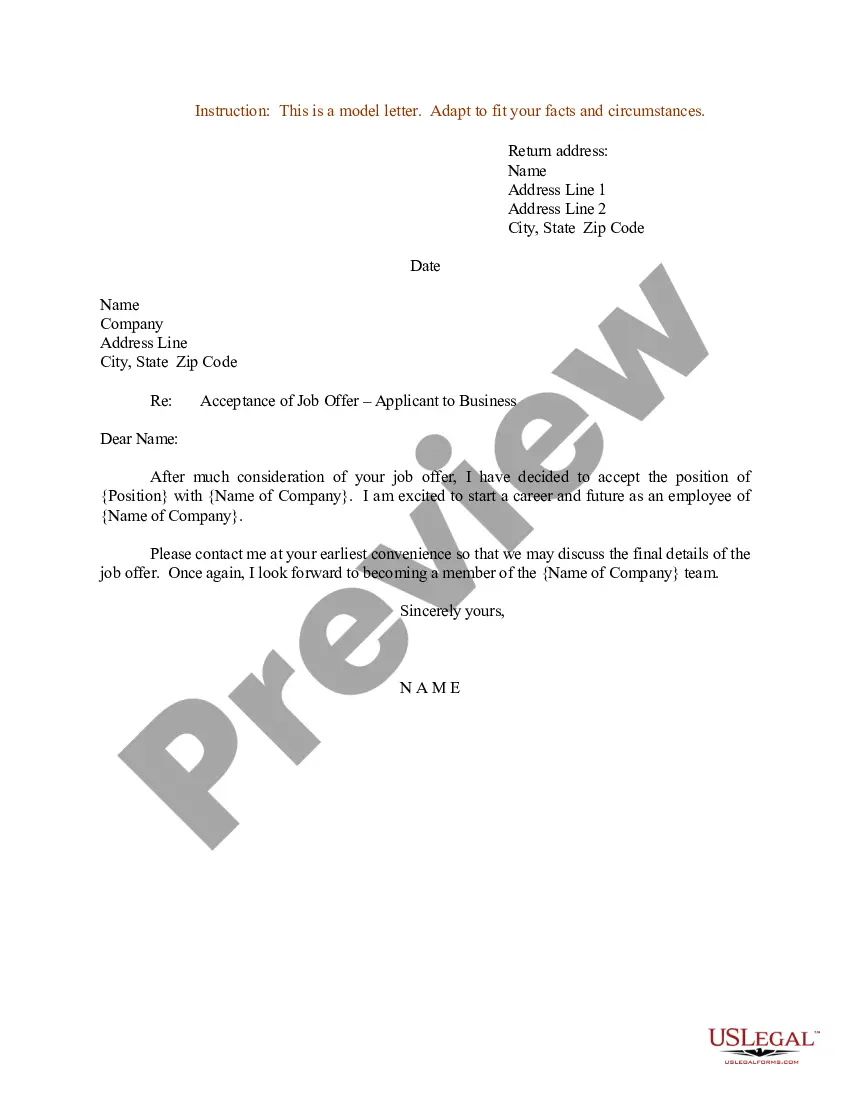
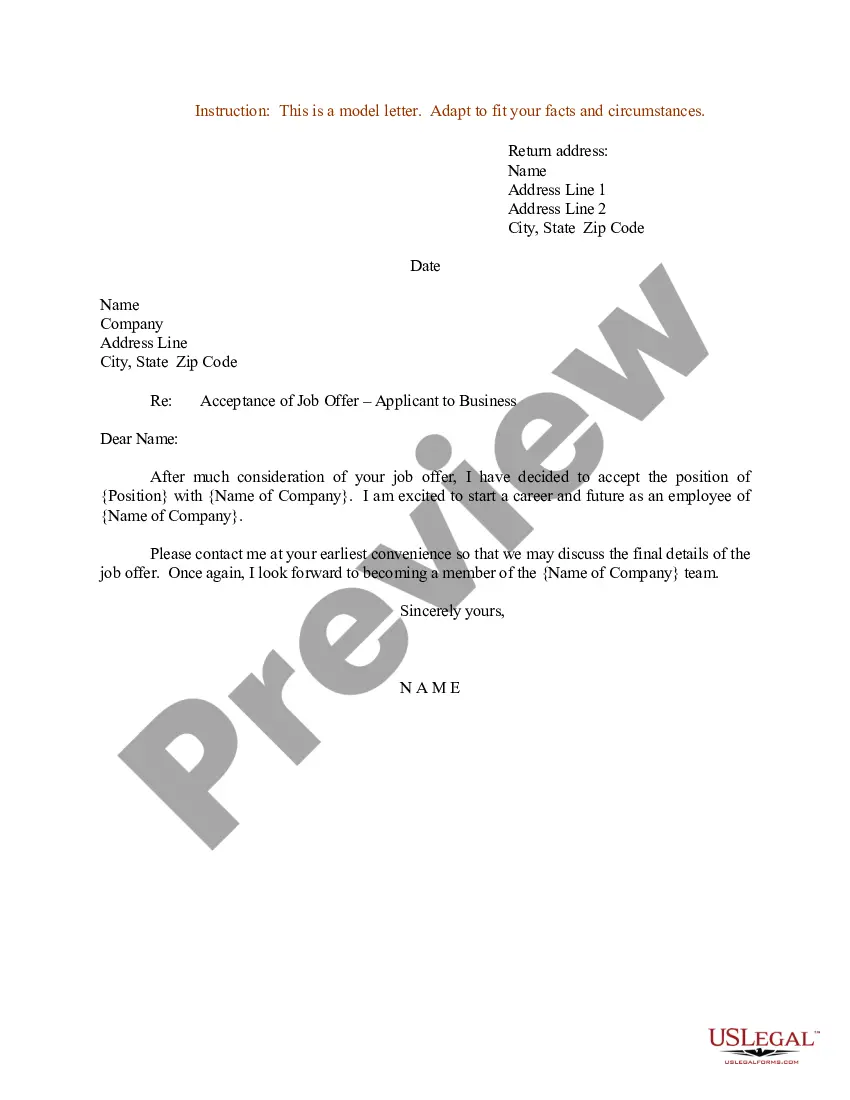
Military Acceptance Letter With 50 In Chicago
Description
Get your form ready online
Our built-in tools help you complete, sign, share, and store your documents in one place.
Make edits, fill in missing information, and update formatting in US Legal Forms—just like you would in MS Word.
Download a copy, print it, send it by email, or mail it via USPS—whatever works best for your next step.
Sign and collect signatures with our SignNow integration. Send to multiple recipients, set reminders, and more. Go Premium to unlock E-Sign.
If this form requires notarization, complete it online through a secure video call—no need to meet a notary in person or wait for an appointment.
We protect your documents and personal data by following strict security and privacy standards.

Make edits, fill in missing information, and update formatting in US Legal Forms—just like you would in MS Word.

Download a copy, print it, send it by email, or mail it via USPS—whatever works best for your next step.

Sign and collect signatures with our SignNow integration. Send to multiple recipients, set reminders, and more. Go Premium to unlock E-Sign.

If this form requires notarization, complete it online through a secure video call—no need to meet a notary in person or wait for an appointment.

We protect your documents and personal data by following strict security and privacy standards.
Looking for another form?



Form popularity
FAQ
Thank you for protecting our country and fighting for our freedom. You deserve every honor for your hard work and sacrifice in serving our country. Thank you for keeping us safe and working to protect our country and our way of life. Thank you for serving our country with courage and strength.
Be clear and concise. If the subject is long, try to revise and shorten the subject; if shortening is not feasible, align the second line under the first word of the subject. Body text begins on the second line below the last line in the subject element and is flush with the left margin.
Double-space between paragraphs and bullets and between lines in memorandums of a single paragraph of eight lines or less. Do not use a complimentary close for memorandums. Margins should be 2 inches from the top and 1 inch side and bottom margins on the first page.
Sign your name and, if you feel comfortable, include your address so they can write back. Example Structure: Dear (Soldier's Name), I hope this letter finds you well. My name is (Your Name), and I'm from (Your Location). I just wanted to take a moment to thank you for your service and sacrifice.
Suggested topics include expressing gratitude for their service, sharing hopeful messages, well wishes, and positive thoughts. Share about yourself, family, hobbies, work, school, pets, travel, interests, etc.
Regardless of whether you're enlisted or not, you always address a service member by their rank's title of address, followed by their last name. Title of address refers to the official designation for addressing a given rank. In some cases, like for majors, the rank and the type of address are identical.