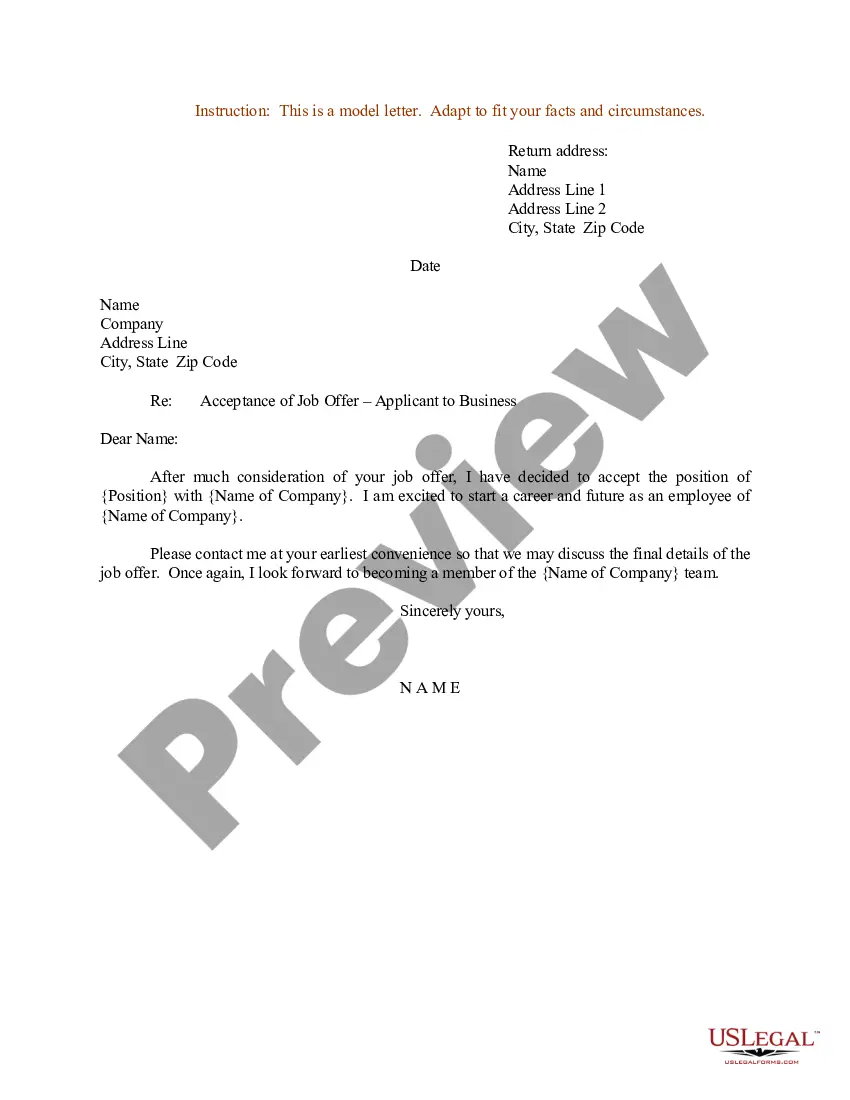
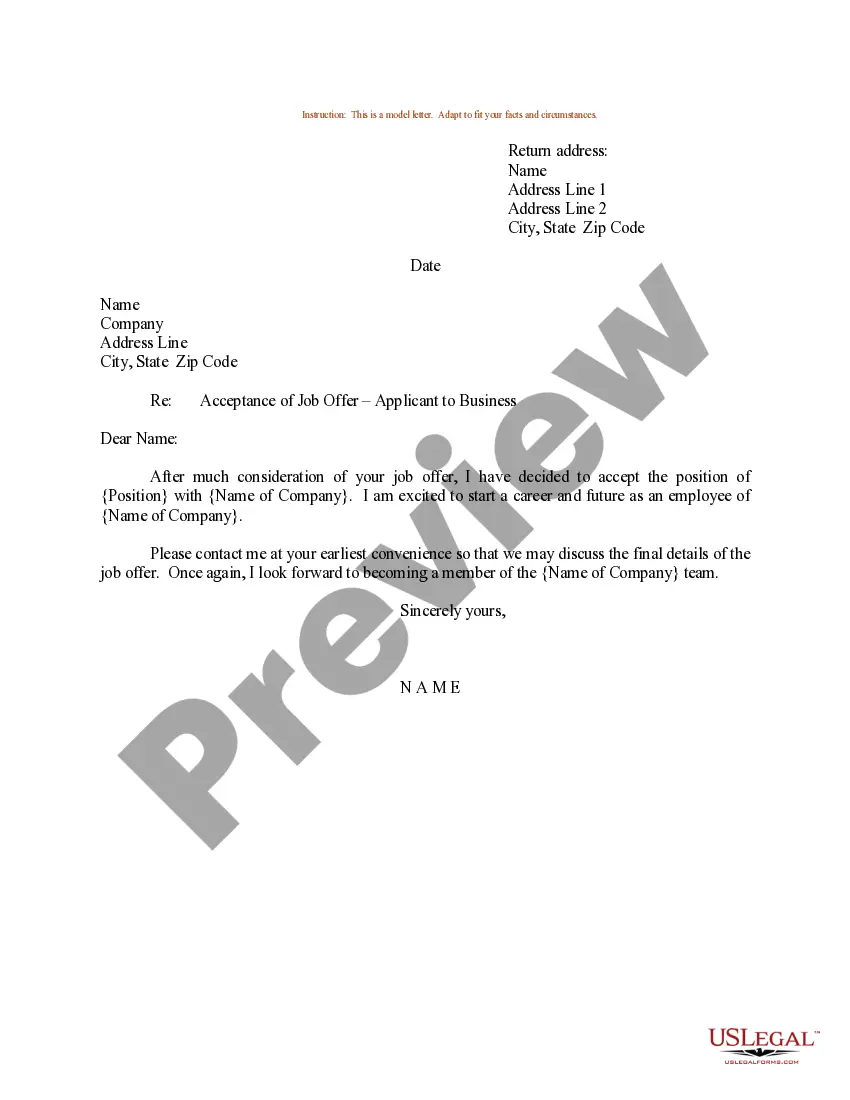
Offer Acceptance Letter With Notice Period In Wake
Description
Get your form ready online
Our built-in tools help you complete, sign, share, and store your documents in one place.
Make edits, fill in missing information, and update formatting in US Legal Forms—just like you would in MS Word.
Download a copy, print it, send it by email, or mail it via USPS—whatever works best for your next step.
Sign and collect signatures with our SignNow integration. Send to multiple recipients, set reminders, and more. Go Premium to unlock E-Sign.
If this form requires notarization, complete it online through a secure video call—no need to meet a notary in person or wait for an appointment.
We protect your documents and personal data by following strict security and privacy standards.

Make edits, fill in missing information, and update formatting in US Legal Forms—just like you would in MS Word.

Download a copy, print it, send it by email, or mail it via USPS—whatever works best for your next step.

Sign and collect signatures with our SignNow integration. Send to multiple recipients, set reminders, and more. Go Premium to unlock E-Sign.

If this form requires notarization, complete it online through a secure video call—no need to meet a notary in person or wait for an appointment.

We protect your documents and personal data by following strict security and privacy standards.
Looking for another form?








Form popularity
FAQ
In most cases, you can decline a job offer after you have accepted it. If you've signed an employment agreement, check the legal implications before you withdraw your acceptance. If you can, it's better to have a conversation in person or on the phone to explain why you have decided not to take the job.
Unless you're signing a contract of employment or are being given some kind of sign on bonus that needs to be repaid, there is nothing to stop you from accepting a job offer and then backing out.
Yes, you can. The contract comes into effect as soon as its signed and exchanged. Therefore you can resign to a job you have signed the contract for but have not yet started.
Follow these steps to write a resignation acceptance letter: Use the right formatting and structure. Include the date and contact information. Include a salutation. Accept the resignation. Include the final date of employment. Add other information. Express appreciation. Add a complimentary close.
The first step is verbal acceptance of a verbal offer. This is followed by the formal contract which you need to sign. You should not resign until the second step (formal contract signed and returned) is complete.
Make a formal statement of acceptance Include a formal statement that you accept the offered position and agree to the terms of employment listed in the offer letter. Be sure to include the job title in your statement. You can also make specific mention of some of the important terms like compensation and start date.
Do not resign until you have a signed offer letter. Check Your Current Employment Contract: Understand any notice period you are required to give. This is typically two weeks but can vary based on your role or company policy.
Always wait for formal offer in writing before you put in your notice at your current job. Your new job is not guaranteed until that point.
How to write a 30-day notice Write your name, job title and date. State that the document is a letter of resignation. Include your last day of employment. Show your appreciation for the position. Explain any open projects or next steps. Print and sign the document.