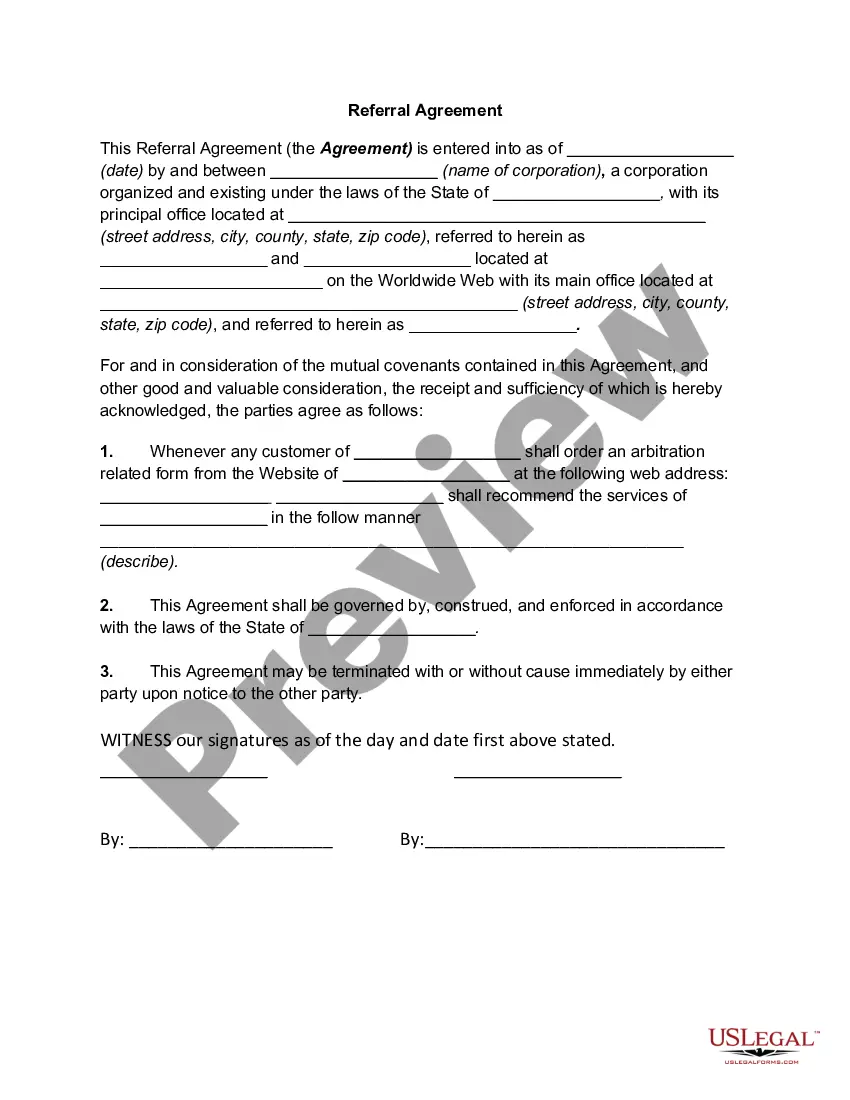
Client Referral Agreement For Services In Utah
Description
Get your form ready online
Our built-in tools help you complete, sign, share, and store your documents in one place.
Make edits, fill in missing information, and update formatting in US Legal Forms—just like you would in MS Word.
Download a copy, print it, send it by email, or mail it via USPS—whatever works best for your next step.
Sign and collect signatures with our SignNow integration. Send to multiple recipients, set reminders, and more. Go Premium to unlock E-Sign.
If this form requires notarization, complete it online through a secure video call—no need to meet a notary in person or wait for an appointment.
We protect your documents and personal data by following strict security and privacy standards.

Make edits, fill in missing information, and update formatting in US Legal Forms—just like you would in MS Word.

Download a copy, print it, send it by email, or mail it via USPS—whatever works best for your next step.

Sign and collect signatures with our SignNow integration. Send to multiple recipients, set reminders, and more. Go Premium to unlock E-Sign.

If this form requires notarization, complete it online through a secure video call—no need to meet a notary in person or wait for an appointment.

We protect your documents and personal data by following strict security and privacy standards.
Looking for another form?



Form popularity
FAQ
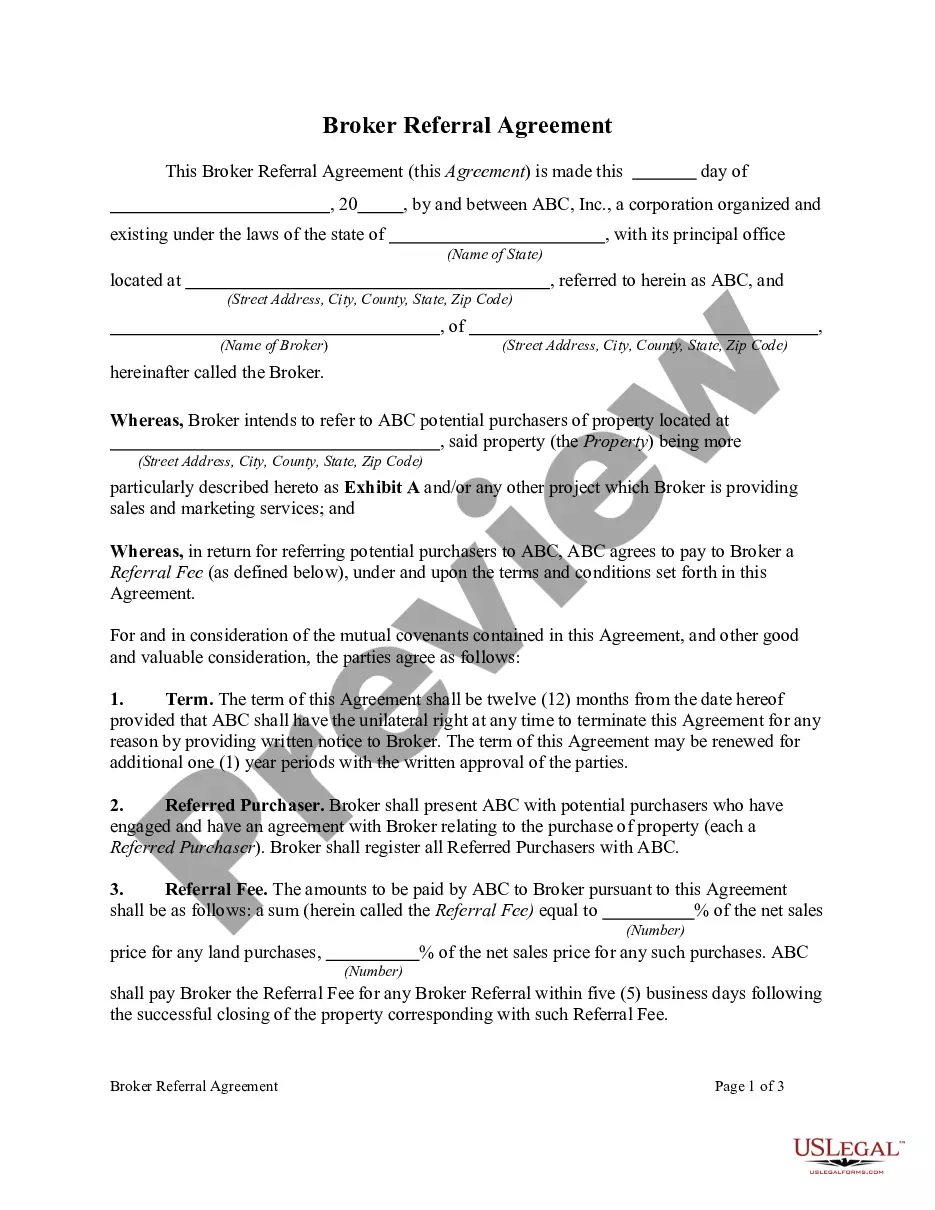
Exclusivity You may want to include an exclusivity clause that prevents your referral partner from entering into similar arrangements with other businesses. On the other hand, your referral partner may want to prevent you from entering into other arrangements.
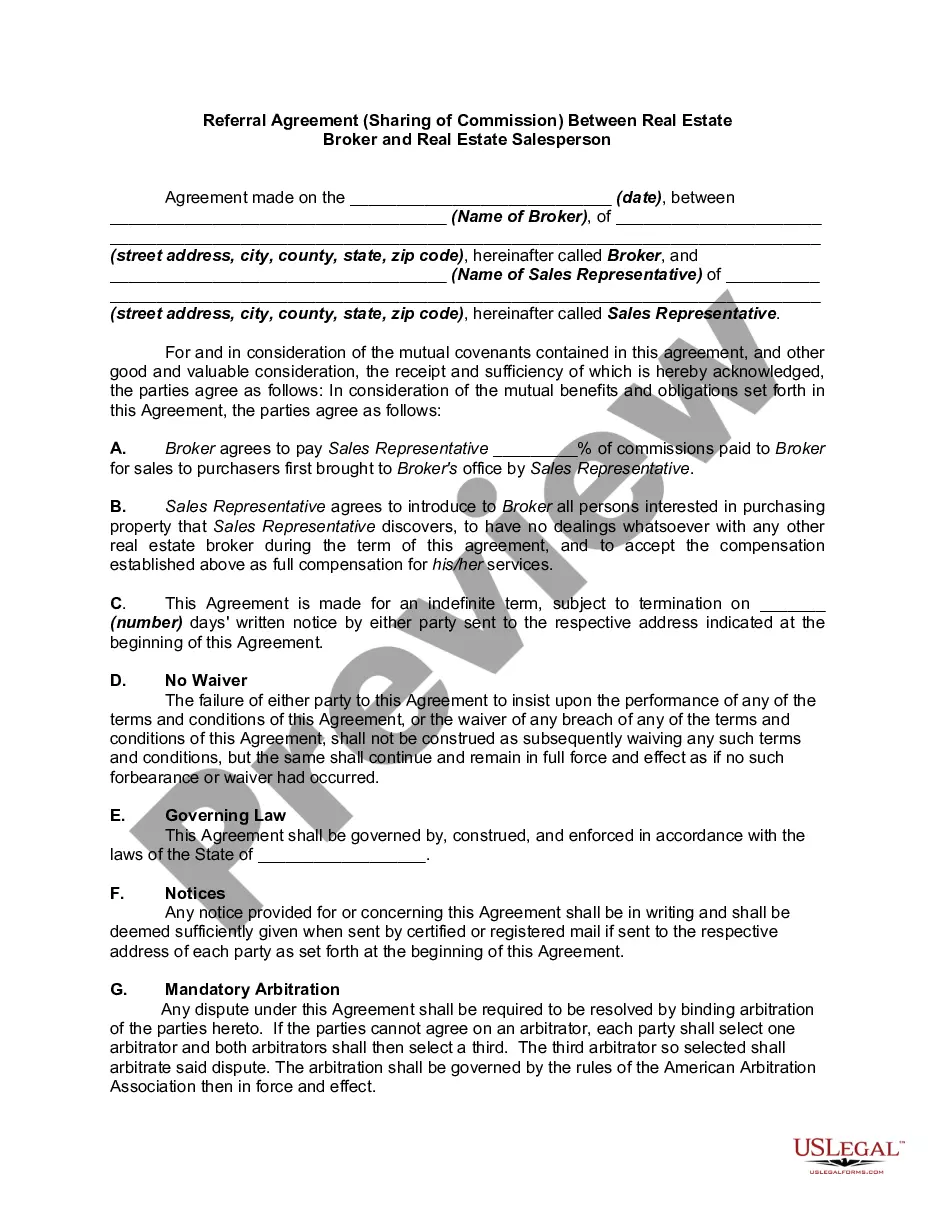
An Introduction Agency Agreement, also known as a referral agreement, is a contract between two parties: one who introduces or refers potential clients and the company receiving the new clients.
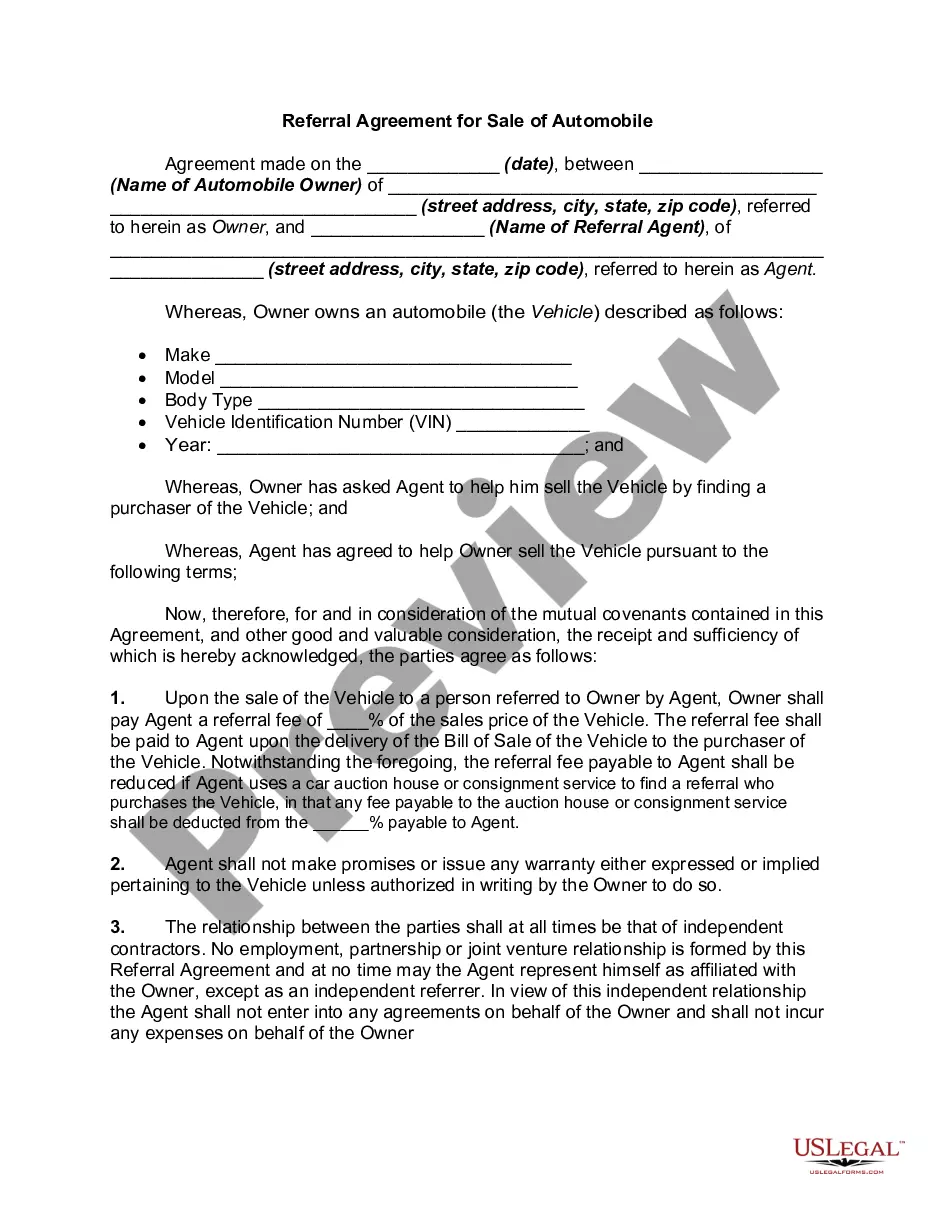
A referral agreement is a formal contract between two businesses that outlines the terms and conditions of a referral program. It sets the stage for one party to recommend the products or services of the other party to potential customers, and receive benefits for these referrals.
Parts of a referral agreement Date. The date should appear at the beginning and end of the contract. Names and roles of the parties involved. Identify the parties to the agreement. Duration of the agreement. State how long the agreement will last. Consideration. Acceptance.
2 What to include in a referral agreement A referral agreement should cover several aspects, such as the scope and duration of the agreement, the referral process and criteria, compensation and payment terms, performance and quality standards, as well as confidentiality and non-compete clauses.
What does Referral arrangement mean? Any arrangement to refer or recommend a client to a third party or to be introduced to a client by a third party.
Parts of a referral agreement Date. The date should appear at the beginning and end of the contract. Names and roles of the parties involved. Identify the parties to the agreement. Duration of the agreement. State how long the agreement will last. Consideration. Acceptance.
The effectiveness of your referral program can vary widely based on industry, product, target audience, and various other factors. However, a good referral rate often falls between 2% to 5% of the total customer base. This means that 2% to 5% of your customers actively refer others to your business.