Client Referral Agreement For Services In Santa Clara
Description
Get your form ready online
Our built-in tools help you complete, sign, share, and store your documents in one place.
Make edits, fill in missing information, and update formatting in US Legal Forms—just like you would in MS Word.
Download a copy, print it, send it by email, or mail it via USPS—whatever works best for your next step.
Sign and collect signatures with our SignNow integration. Send to multiple recipients, set reminders, and more. Go Premium to unlock E-Sign.
If this form requires notarization, complete it online through a secure video call—no need to meet a notary in person or wait for an appointment.
We protect your documents and personal data by following strict security and privacy standards.

Make edits, fill in missing information, and update formatting in US Legal Forms—just like you would in MS Word.

Download a copy, print it, send it by email, or mail it via USPS—whatever works best for your next step.

Sign and collect signatures with our SignNow integration. Send to multiple recipients, set reminders, and more. Go Premium to unlock E-Sign.

If this form requires notarization, complete it online through a secure video call—no need to meet a notary in person or wait for an appointment.

We protect your documents and personal data by following strict security and privacy standards.
Looking for another form?





Form popularity
FAQ
The effectiveness of your referral program can vary widely based on industry, product, target audience, and various other factors. However, a good referral rate often falls between 2% to 5% of the total customer base. This means that 2% to 5% of your customers actively refer others to your business.
Maybe you call them clients, members, guests, patients, residents… the list can go on and on. Some people say that the term “client” implies a long-term relationship.
1 Identify the need for a referral. 2 Research and select potential referrals. 3 Discuss and obtain consent from your client. 4 Make the referral and document the process. 5 Support your client during the transition. 6 Evaluate and adjust the referral as needed. 7 Here's what else to consider.
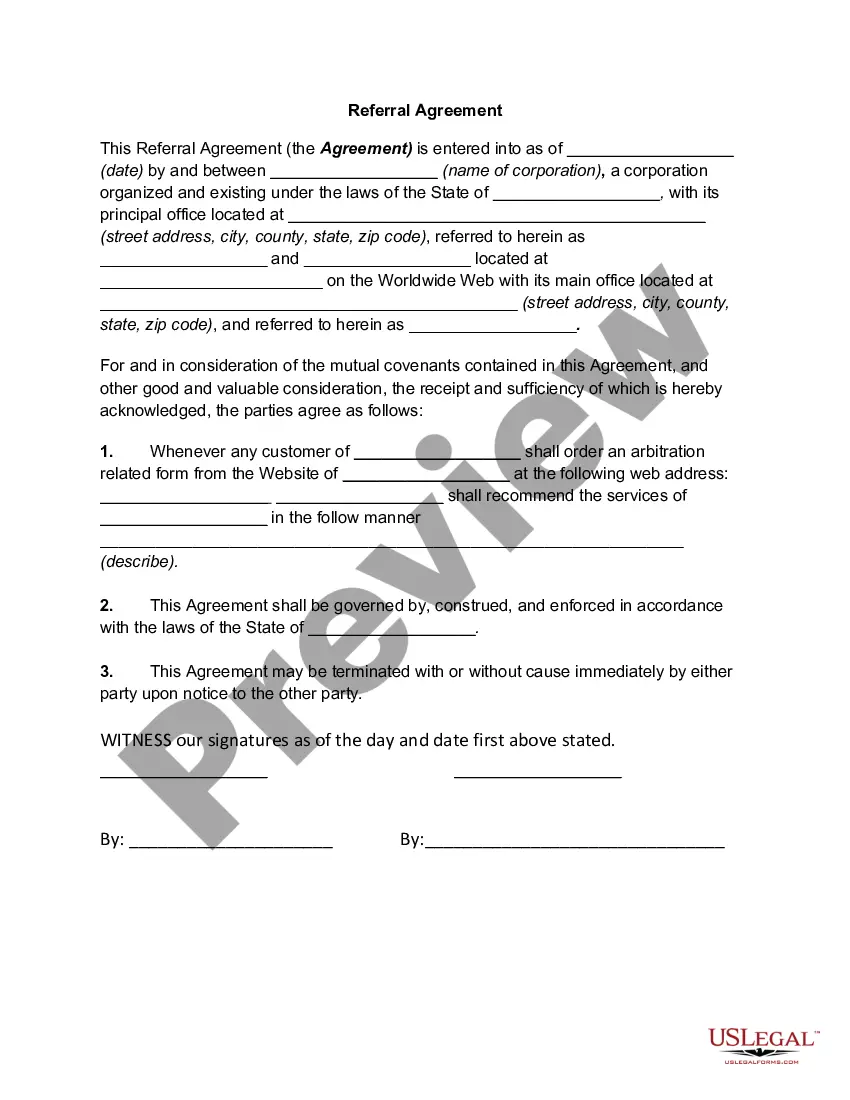
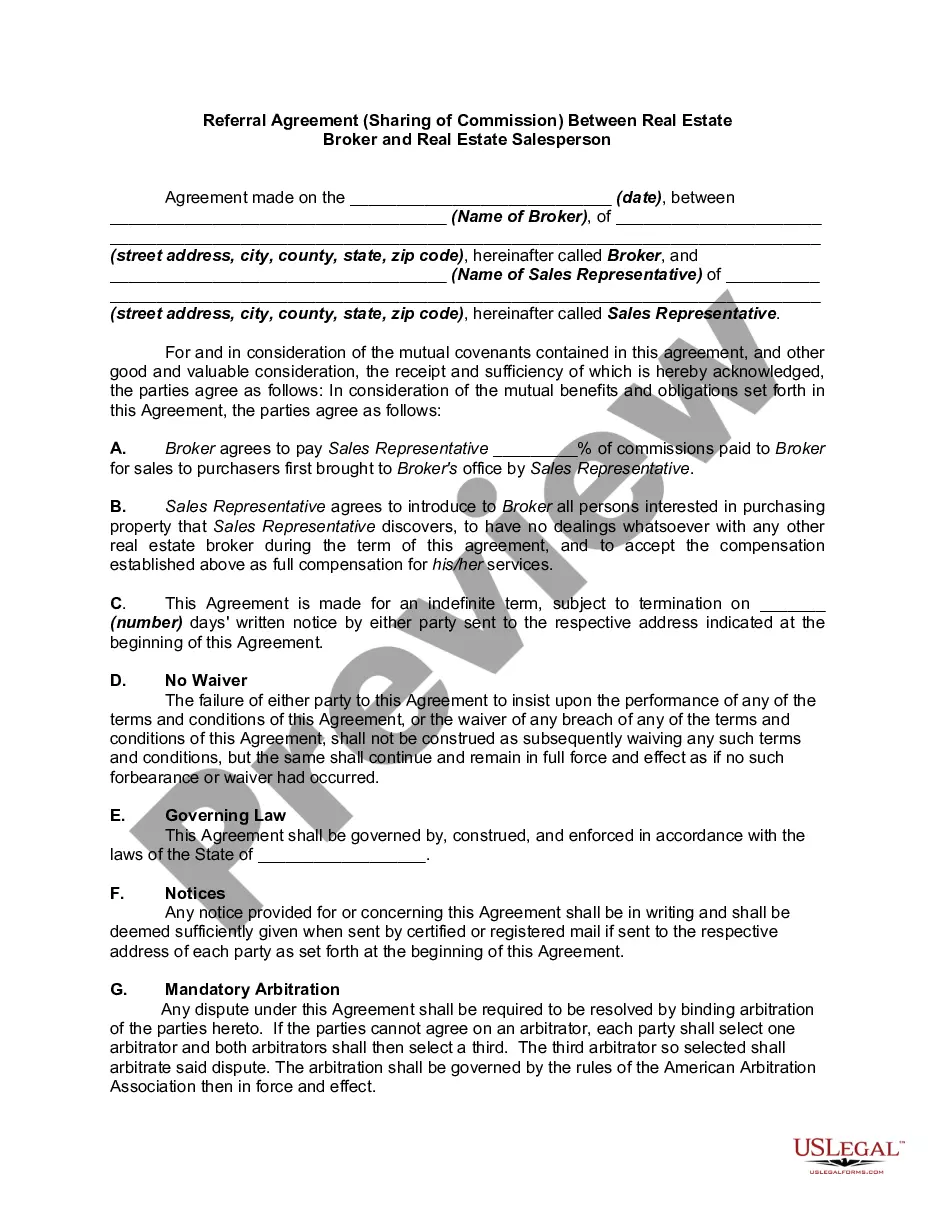
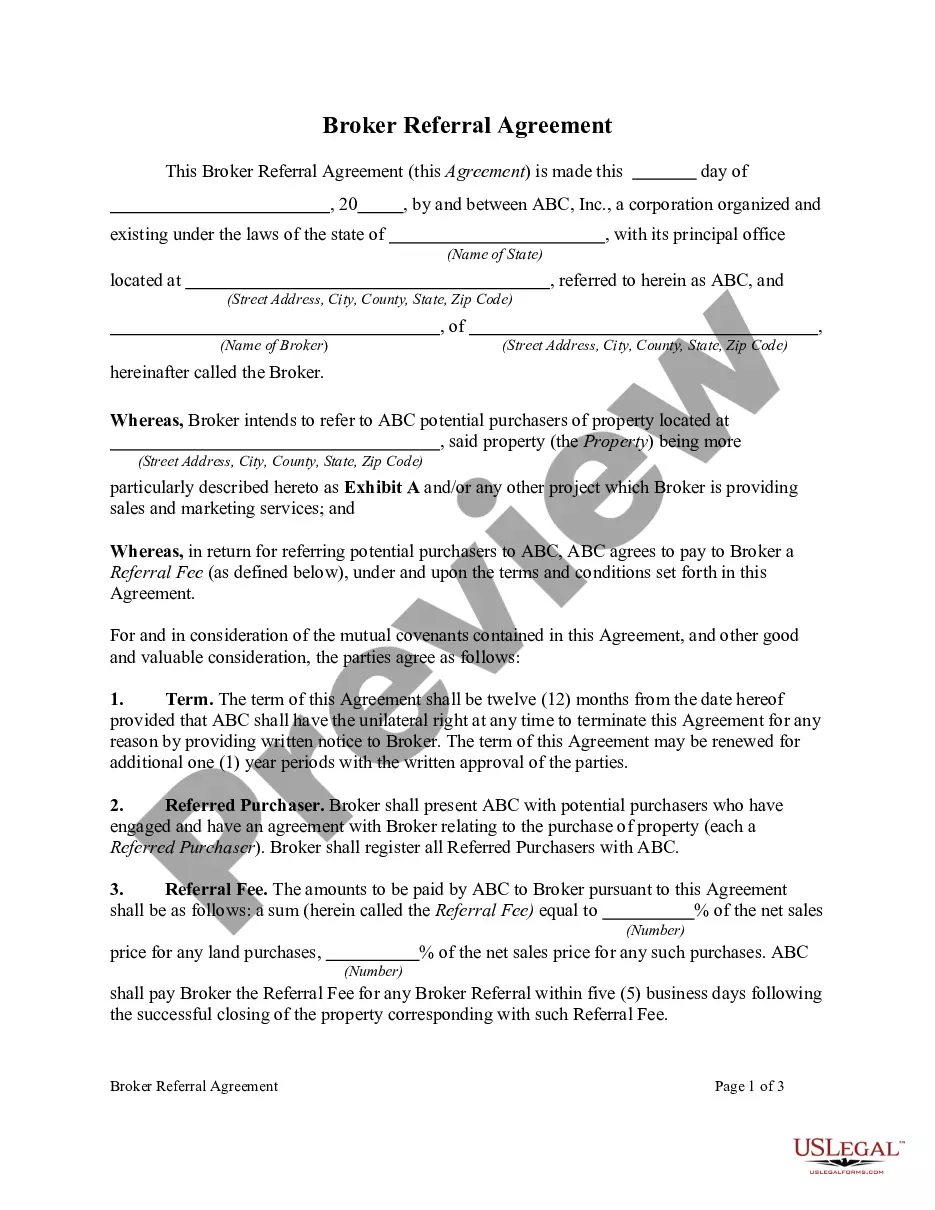
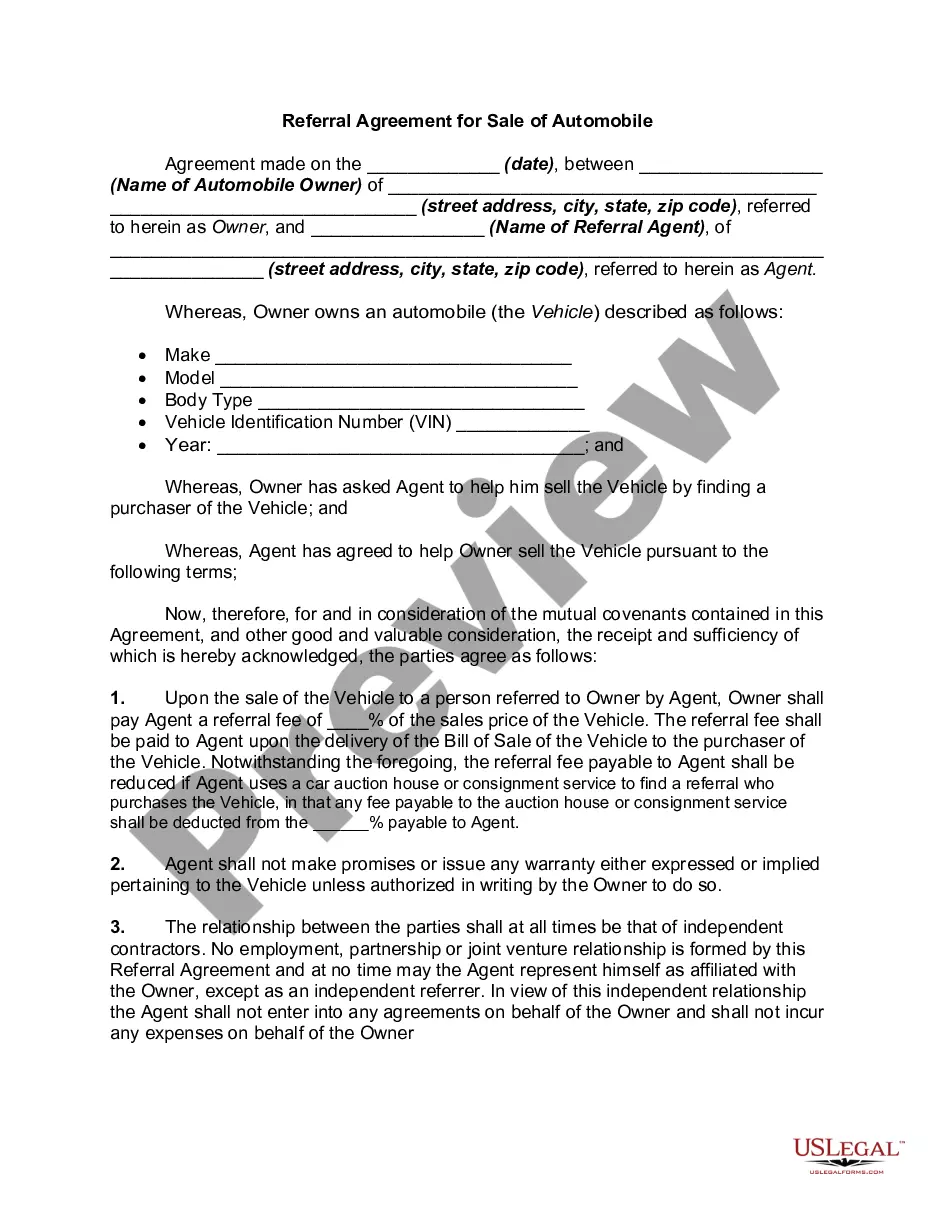
Parts of a referral agreement Date. The date should appear at the beginning and end of the contract. Names and roles of the parties involved. Identify the parties to the agreement. Duration of the agreement. State how long the agreement will last. Consideration. Acceptance.
7 steps to a successful referral program Identify and understand your audience. A successful referral program relies on a deep knowledge of your audience. Personalize your incentives. Promote your program. Enable participants with technology. Manage your workflow. Monitor the program. Assess and adjust your program.
Here is how to write an effective letter of referral: Include both addresses. Write a brief introduction. Give an overview of the applicant's strengths. Share a story of the applicant. Add a closing statement. Leave a signature.
1 Identify the need for a referral. 2 Research and select potential referrals. 3 Discuss and obtain consent from your client. 4 Make the referral and document the process. 5 Support your client during the transition. 6 Evaluate and adjust the referral as needed. 7 Here's what else to consider.
A referral rate is the number of referred purchases as a percentage of the number of your total purchases. The global average referral rate is 2.3% while the electronics and gadgets industry has the highest referral rate of 3.4%. A 2% referral rate is considered a good referral rate for any industry.
How do I create a referral program? Get clear about your goals. Make a list of your existing customer referral sources. Make an outreach plan. Determine the referral incentives you'll offer. Tell your customers about it. Track the referrals and rewards.