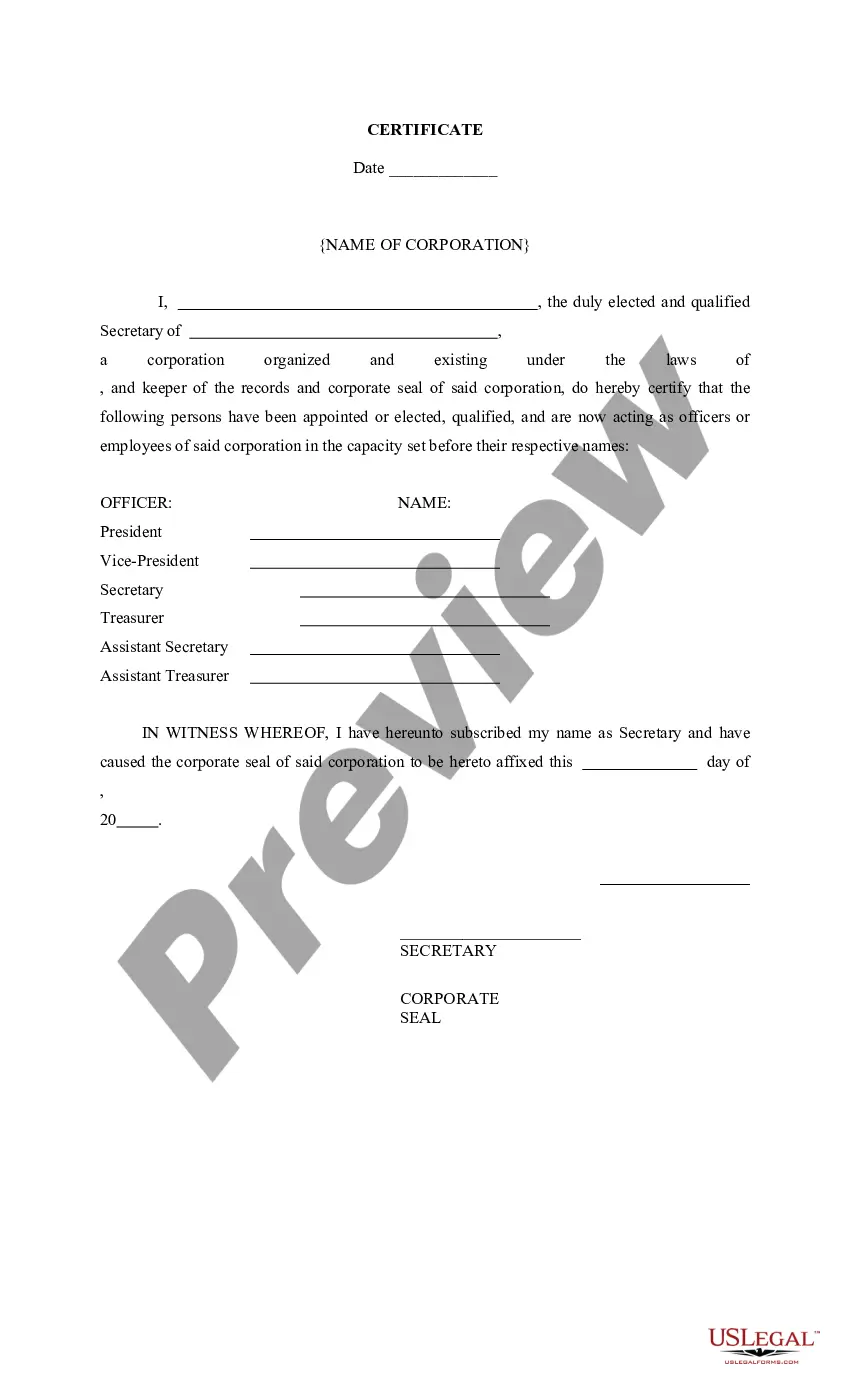
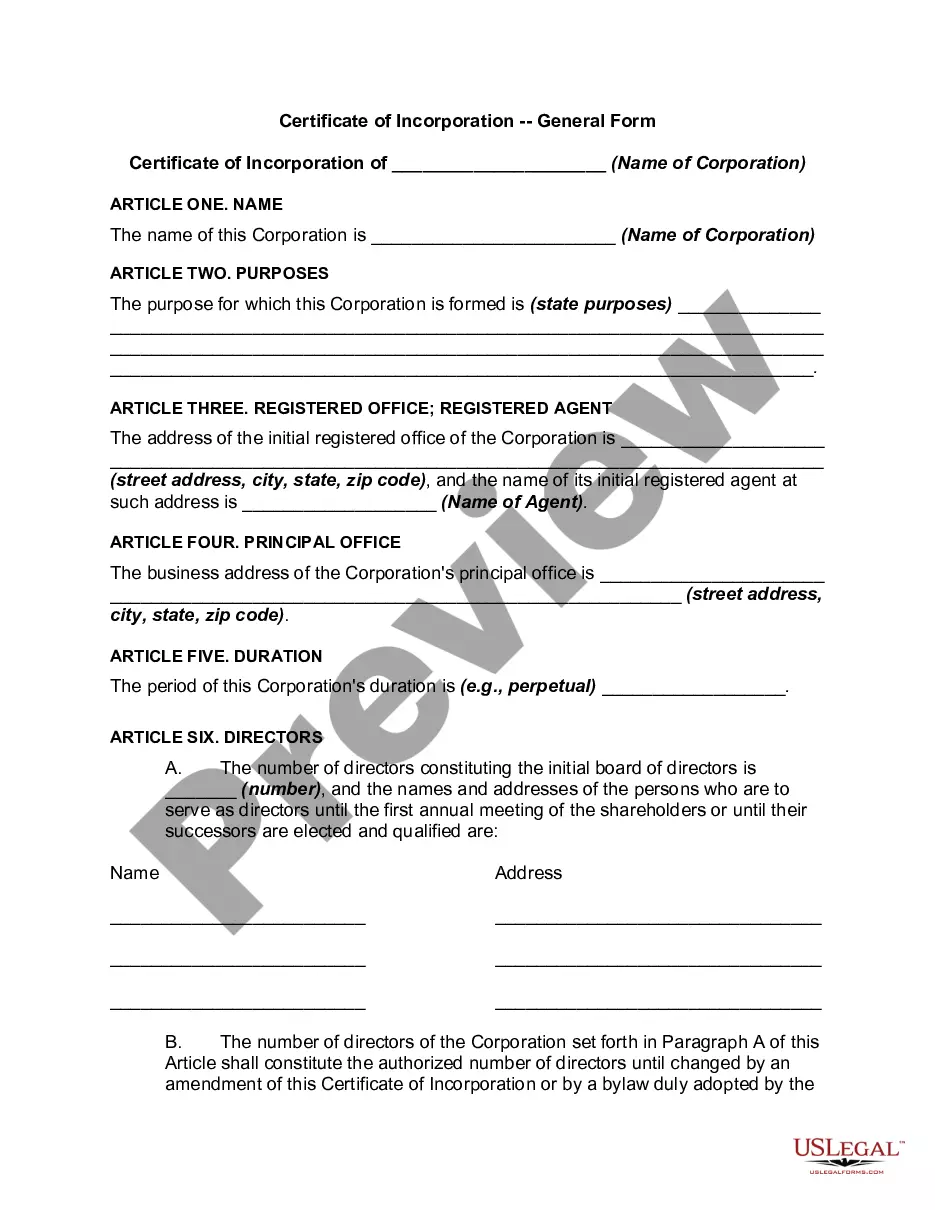
Corporation Corporate Officer Format In Nassau
Description

Get your form ready online
Our built-in tools help you complete, sign, share, and store your documents in one place.
Make edits, fill in missing information, and update formatting in US Legal Forms—just like you would in MS Word.
Download a copy, print it, send it by email, or mail it via USPS—whatever works best for your next step.
Sign and collect signatures with our SignNow integration. Send to multiple recipients, set reminders, and more. Go Premium to unlock E-Sign.
If this form requires notarization, complete it online through a secure video call—no need to meet a notary in person or wait for an appointment.
We protect your documents and personal data by following strict security and privacy standards.

Make edits, fill in missing information, and update formatting in US Legal Forms—just like you would in MS Word.

Download a copy, print it, send it by email, or mail it via USPS—whatever works best for your next step.

Sign and collect signatures with our SignNow integration. Send to multiple recipients, set reminders, and more. Go Premium to unlock E-Sign.

If this form requires notarization, complete it online through a secure video call—no need to meet a notary in person or wait for an appointment.

We protect your documents and personal data by following strict security and privacy standards.
Looking for another form?


Form popularity
FAQ
The Bahamas is recognized as a tax haven because of its favorable financial environment. This includes the absence of corporate and personal income taxes, no capital gains tax, and a historically strong commitment to banking secrecy. The Bahamas is also known for being politically stable.
Taxation is a critical factor when incorporating in The Bahamas. IBCs benefit from a tax-exempt status on income tax, corporate tax, capital gains, inheritance, and wealth tax. This exemption can be a significant advantage for your operations, especially if your business activities are conducted outside The Bahamas.
To incorporate a company in the Bahamas, you must choose a company name, decide on the company structure, register your business with the Registrar General's Department, and comply with all regulatory documentation including shareholder and director information.
Officers are usually appointed by a corporation's board of directors ing to its internal policies. There are many corporate officer titles, such as Chief Executive Officer (CEO) and Chief Financial Officer (CFO).
When starting a business in The Bahamas, it is necessary for non-Bahamians or Permanent Residents to submit a detailed Project Proposal to the Bahamas Investment Authority. This ensures that you have the government's approval and ensuring that the business aligns with national economic interests.
The corporate officers are high-level management executives. They have responsibility for carrying out the board's initiatives and policies through their day-to-day decisions and management of the company. Unless prohibited by the corporation's bylaws or state law, officers may also be shareholders or directors.
Usually, the bylaws will provide for several corporate officers. The most common are the president, vice president, secretary and treasurer. The president usually makes decisions of corporate policy and operations. The vice president assumes the president's functions in his or her absence.
An “officer” of a company includes the following: (i) a director; (ii) a general manager; (iii) general business manager; (iv) vice general manager; (v) Assistant general manager; (vi) Any person who fills one of the above roles in the company, even if his title is different; (vi) Any other manager who reports directly ...
In general, the duties of each officer are set forth in the bylaws or, to the extent consistent with the bylaws, are prescribed by the board of directors. Usually, the bylaws will provide for several corporate officers. The most common are the president, vice president, secretary and treasurer.
The corporate officers are high-level management executives. They have responsibility for carrying out the board's initiatives and policies through their day-to-day decisions and management of the company. Unless prohibited by the corporation's bylaws or state law, officers may also be shareholders or directors.