Annual Board Directors Template For Nonprofits In North Carolina
Description

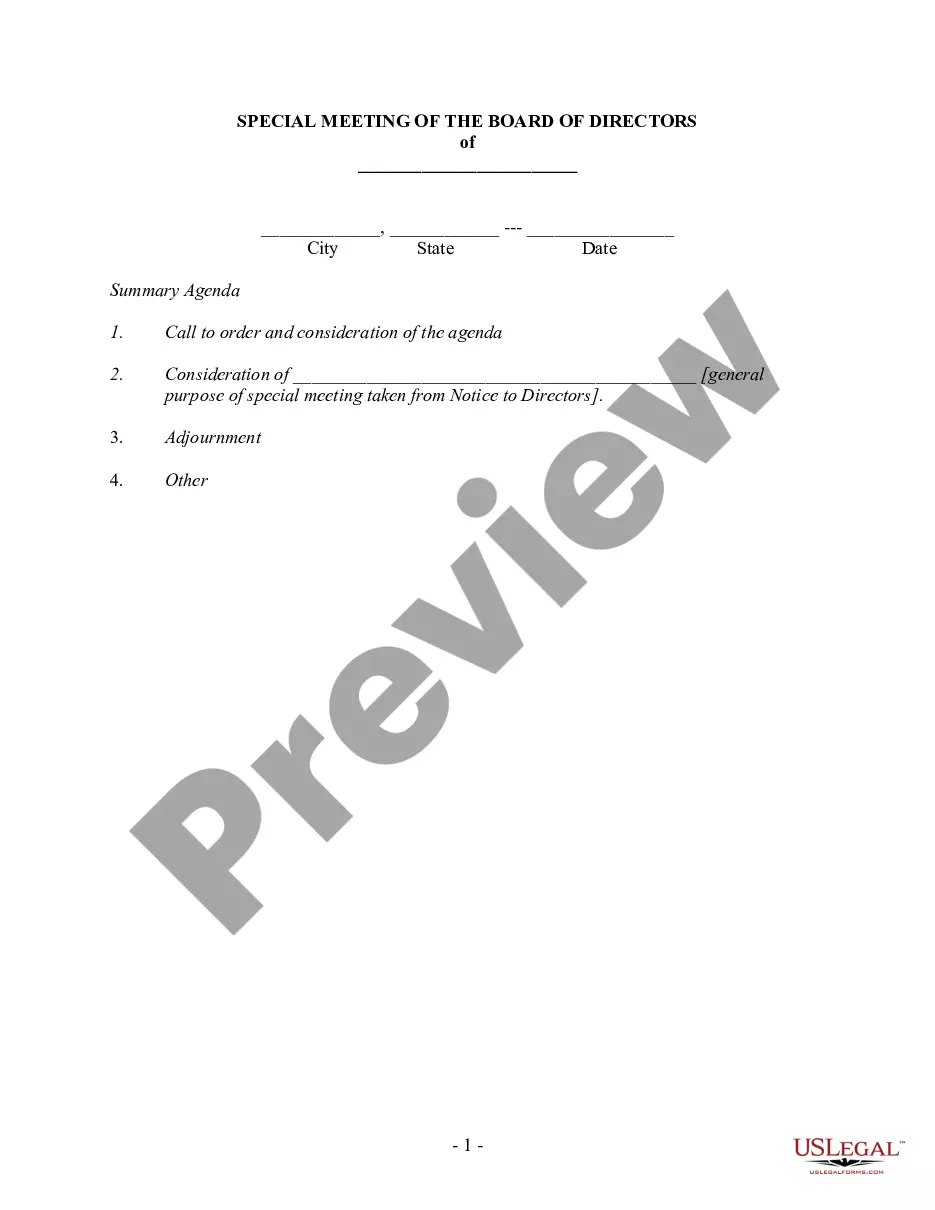


Get your form ready online
Our built-in tools help you complete, sign, share, and store your documents in one place.
Make edits, fill in missing information, and update formatting in US Legal Forms—just like you would in MS Word.
Download a copy, print it, send it by email, or mail it via USPS—whatever works best for your next step.
Sign and collect signatures with our SignNow integration. Send to multiple recipients, set reminders, and more. Go Premium to unlock E-Sign.
If this form requires notarization, complete it online through a secure video call—no need to meet a notary in person or wait for an appointment.
We protect your documents and personal data by following strict security and privacy standards.

Make edits, fill in missing information, and update formatting in US Legal Forms—just like you would in MS Word.

Download a copy, print it, send it by email, or mail it via USPS—whatever works best for your next step.

Sign and collect signatures with our SignNow integration. Send to multiple recipients, set reminders, and more. Go Premium to unlock E-Sign.

If this form requires notarization, complete it online through a secure video call—no need to meet a notary in person or wait for an appointment.

We protect your documents and personal data by following strict security and privacy standards.
Looking for another form?
Form popularity
FAQ
The IRS generally requires a minimum of three board members for every nonprofit, but does not dictate board term length. What is important to remember is that board service terms aren't intended to be perpetual, and are typically one to five years. Service terms must be outlined in the nonprofit bylaws.
North Carolina law requires only one board member, but best practices recommend that you have at least five; a minimum of seven is preferable. As you recruit board members, make sure they are aware of their roles and responsibilities.
Most corporations, including nonprofit corporations, need to file an annual report. Nonprofit annual reports are a formality for accountability. Stakeholders, board members, donors, beneficiaries, and volunteers with your nonprofit have the right to know what you've done and what you intend to do in the future.
Not all charitable nonprofits are required to conduct an independent audit. Circumstances that may trigger the requirement for an independent audit include: Federal, state, and local governments may request a copy of the organization's audited financial statements.
Seek Strategically and Ye Shall Find 1. Ask current board for nominations or recommendations. 2. Ask staff for recommendations. 3. Consider current donors. 4. Consider current dedicated and active volunteers. 5. Reach out to community leaders who care about your cause. 6. Contact local community organizations. 7. 8.
How to gain an appointment to a board of directors Select the type of board to serve. Search for openings. Select the right company. Familiarize yourself with the directors. Conduct in-depth research on the board and company. Network at special events. Request an appointment. Craft a high-quality resume or CV for an interview.
Express your interest: If you are interested in joining the board of a specific organization, reach out to the current board members or the executive director and express your interest. They may have information on how to get involved and what the process is for joining the board.
Start by looking at: Start with your dedicated and active volunteers. Consider your donors. Ask your current board and staff for nominations or recommendations. Reach out to those beyond your nonprofit, like youth, or people in business or from other organizations.
All nonprofits, including public charity 501(c)(3)s, are required to have a board of directors. Some organizations also have a membership that participates in governance. You've likely seen nonprofits like this. You may have even been a member of such a nonprofit.
