Annual Board Directors Template For Nonprofits In Montgomery
Description

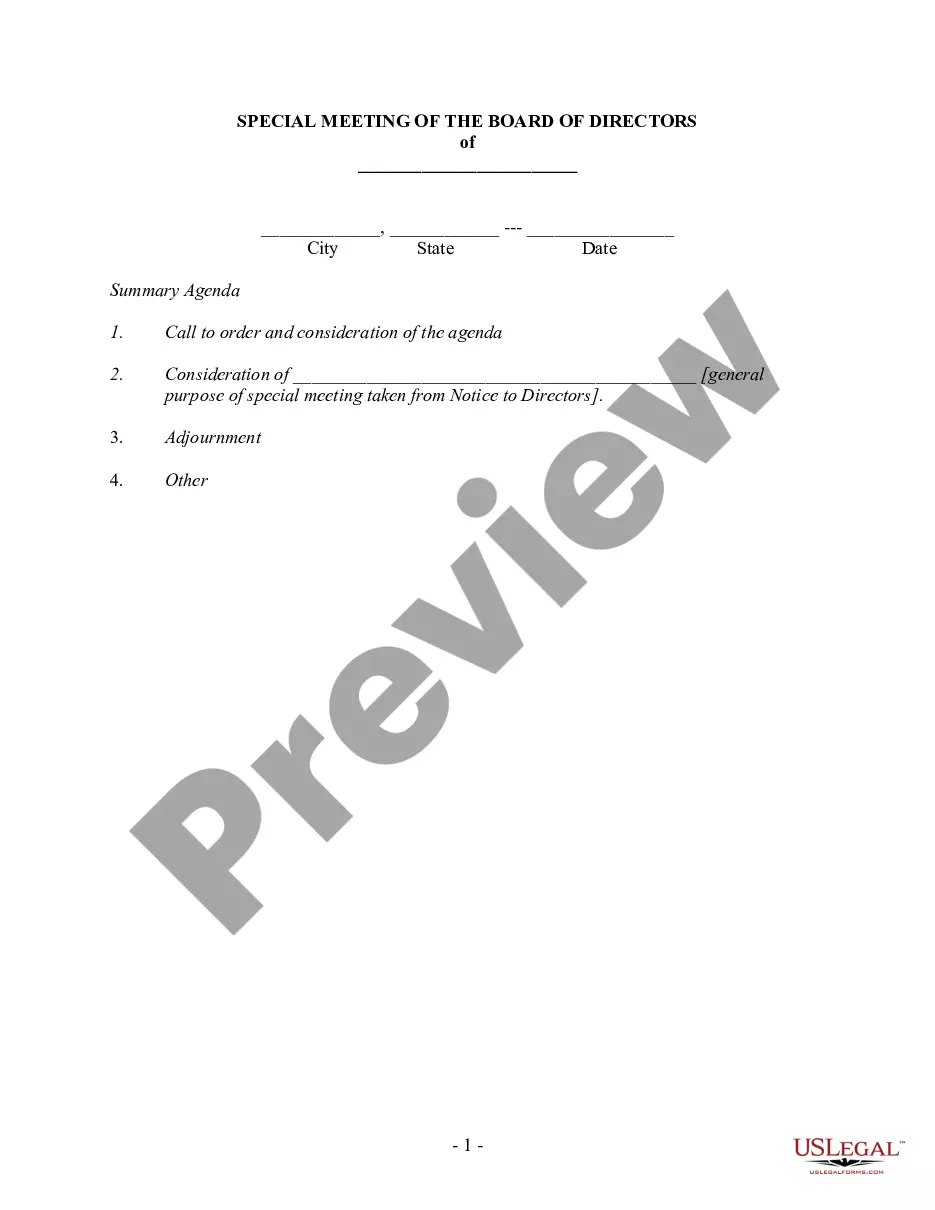


Get your form ready online
Our built-in tools help you complete, sign, share, and store your documents in one place.
Make edits, fill in missing information, and update formatting in US Legal Forms—just like you would in MS Word.
Download a copy, print it, send it by email, or mail it via USPS—whatever works best for your next step.
Sign and collect signatures with our SignNow integration. Send to multiple recipients, set reminders, and more. Go Premium to unlock E-Sign.
If this form requires notarization, complete it online through a secure video call—no need to meet a notary in person or wait for an appointment.
We protect your documents and personal data by following strict security and privacy standards.

Make edits, fill in missing information, and update formatting in US Legal Forms—just like you would in MS Word.

Download a copy, print it, send it by email, or mail it via USPS—whatever works best for your next step.

Sign and collect signatures with our SignNow integration. Send to multiple recipients, set reminders, and more. Go Premium to unlock E-Sign.

If this form requires notarization, complete it online through a secure video call—no need to meet a notary in person or wait for an appointment.

We protect your documents and personal data by following strict security and privacy standards.
Looking for another form?






Form popularity
FAQ
The quick answer is "no." Although you can technically incorporate without a board of directors, it's not advisable. Having a board provides critical accountability and legal protection for you and your nonprofit.
Nonprofit board member positions There are usually four Officers: President or Board Chair, Vice President or Vice Chair, Secretary, and Treasurer, and the terms unique to each will be defined in the nonprofit's bylaws. The president is the head of the board.
Nonprofit charities are under the jurisdiction of state and national laws, so they must comply with both legal systems. With that in mind, the federal government requires a minimum of three board members to acquire coveted 501c3 tax-exempt status.
Federal and state-level laws, as well as a company's incorporation documents, require public and private corporations in the U.S. to have boards of directors (BoDs). Although private LLCs do not have the same requirements, some choose to elect a board of directors after incorporating.
Yes, in order to satisfy state and IRS regulations for tax-exempt status, all 501c3 nonprofit organizations will need a board of directors.
All corporations, regardless of the state, must have a shareholder-elected Board of Directors. An LLC is not required to have a Board of Directors, but can adopt this form of management if the members (the owners of the LLC) choose to do so.
Nonprofit charities are under the jurisdiction of state and national laws, so they must comply with both legal systems. With that in mind, the federal government requires a minimum of three board members to acquire coveted 501c3 tax-exempt status.
There are legal, ethical, and practical reasons to build a board when a nonprofit is created. These reasons create the foundation for good governance and are explained in-depth in this article from BoardSource. All nonprofit organizations need a board.
Any number of offices may be held by the same person unless the articles or bylaws provide otherwise, except that no person serving as the secretary, the treasurer, or the chief financial officer may serve concurrently as the president or chair of the board.
How to Write a Nonprofit Annual Report Gather Information. First, gather the salient details of your nonprofit. Define the Report's Structure and Content. Once all your data is available, draft the report's structure. Craft a Compelling Narrative. Turn your data into a story. Incorporate Visuals and Data. Review and Edit.

