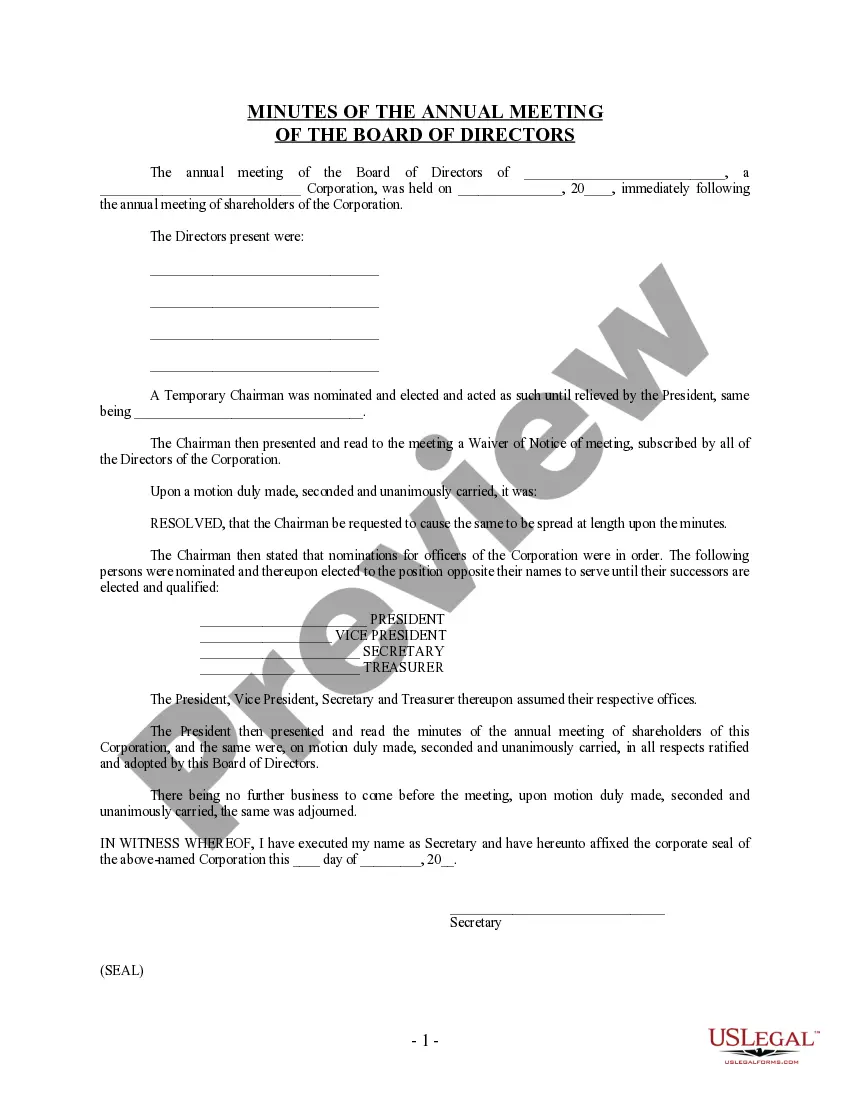
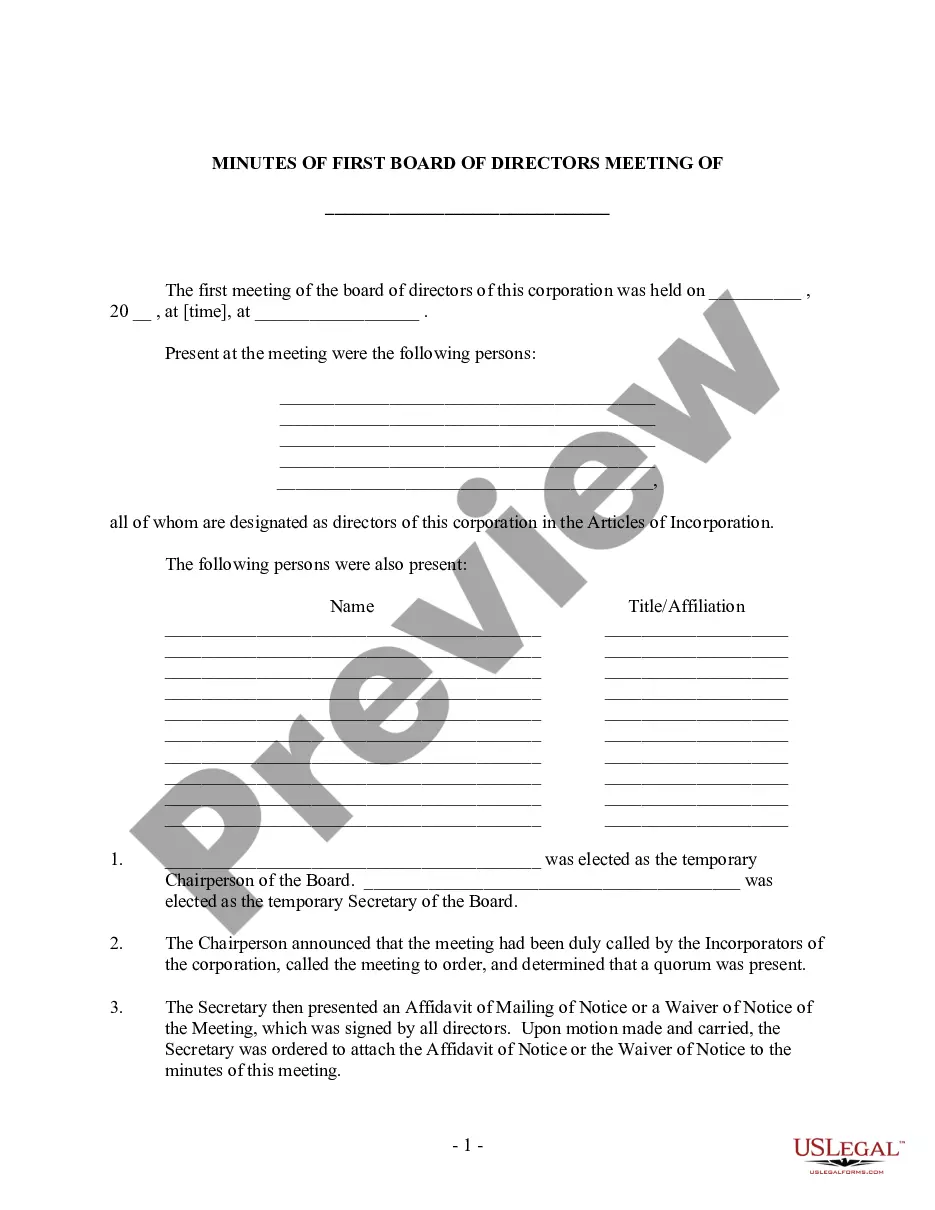
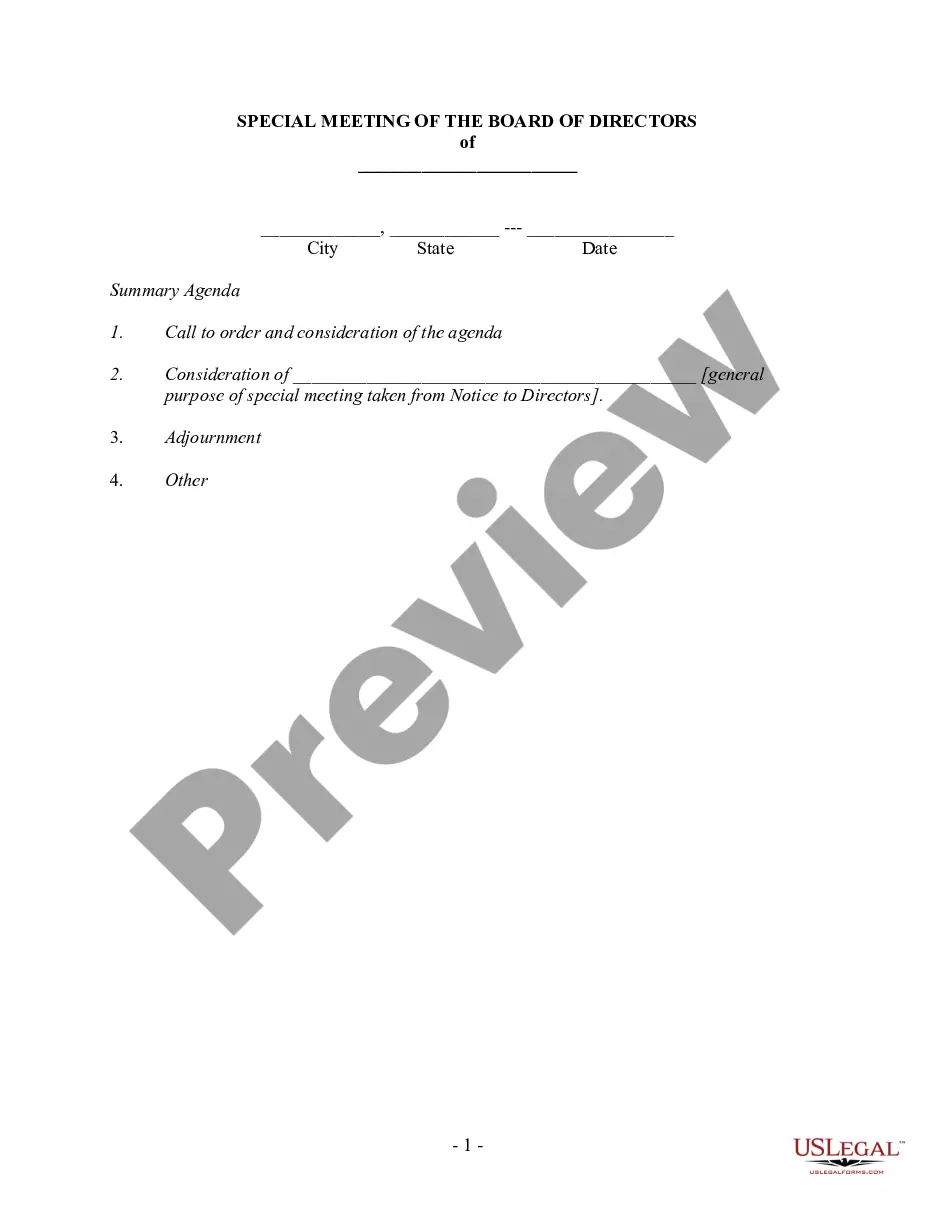
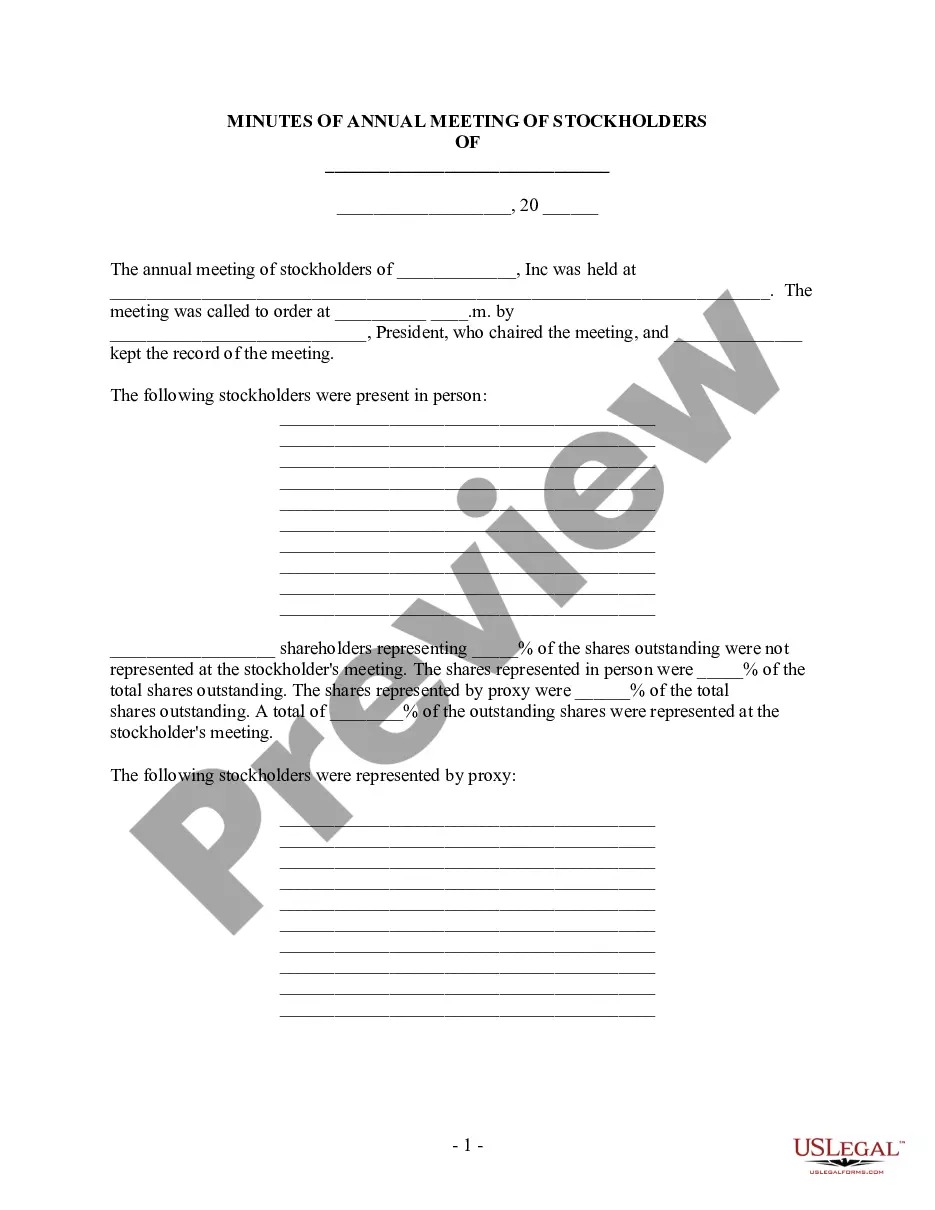
Business Meeting Format Agenda In Minnesota
Description
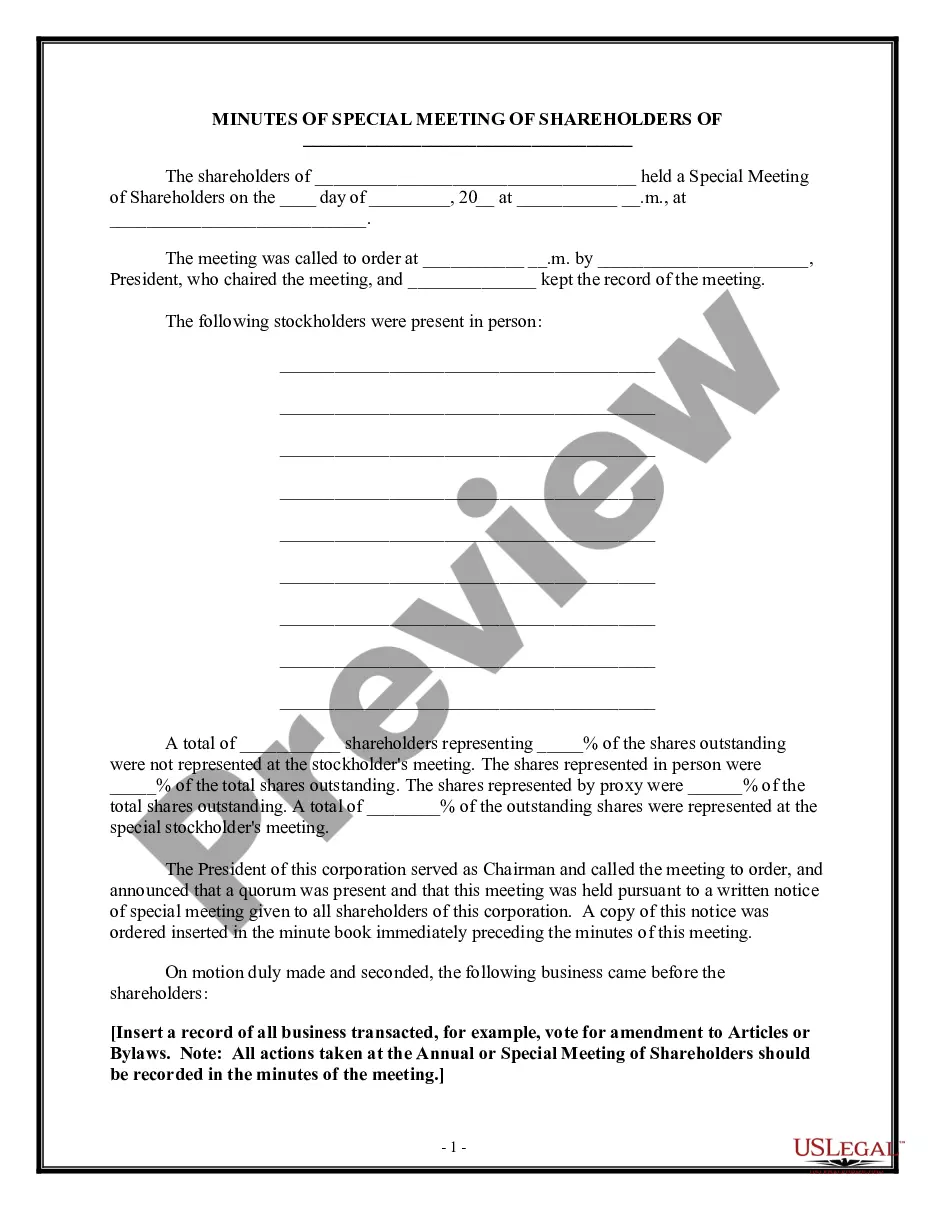
Get your form ready online
Our built-in tools help you complete, sign, share, and store your documents in one place.
Make edits, fill in missing information, and update formatting in US Legal Forms—just like you would in MS Word.
Download a copy, print it, send it by email, or mail it via USPS—whatever works best for your next step.
Sign and collect signatures with our SignNow integration. Send to multiple recipients, set reminders, and more. Go Premium to unlock E-Sign.
If this form requires notarization, complete it online through a secure video call—no need to meet a notary in person or wait for an appointment.
We protect your documents and personal data by following strict security and privacy standards.

Make edits, fill in missing information, and update formatting in US Legal Forms—just like you would in MS Word.

Download a copy, print it, send it by email, or mail it via USPS—whatever works best for your next step.

Sign and collect signatures with our SignNow integration. Send to multiple recipients, set reminders, and more. Go Premium to unlock E-Sign.

If this form requires notarization, complete it online through a secure video call—no need to meet a notary in person or wait for an appointment.

We protect your documents and personal data by following strict security and privacy standards.
Looking for another form?
Form popularity
FAQ
The Open Meeting Law (Minnesota Statutes Chapter 13D) requires public bodies to meet in open session unless otherwise permitted and provide meeting notices to the public. This law applies to both state-level public bodies and local public bodies, such as county boards, city councils, and school boards.
How to Form an S Corp in Minnesota Name your Minnesota LLC. Appoint a registered agent in Minnesota. File Minnesota Articles of Organization. Create an operating agreement. Apply for an EIN. Apply for S Corp status with IRS Form 2553.
Step 1: Name Your Minnesota LLC. Step 2: Choose a Registered Agent. Step 3: File the Minnesota Articles of Organization. Step 4: Create an Operating Agreement. Step 5: File Form 2553 to Elect Minnesota S Corp Tax Designation.
Only individuals, certain trusts, and estates can be shareholders. This means no partnerships or corporations can own an S Corporation. There's a maximum of 100 shareholders. If you are the only shareholder, this isn't an issue, but it's good to know if you plan to expand.
The structure of a business meeting is an outline of specific activities that helps a team to progress and be effective. Following a business meeting structure can help ensure that the team keeps its focus on a topic and accomplishes the objective of a meeting.
7 Step Meeting Process Clarify Aim/Purpose. Assign Roles. Review Agenda. Work through Agenda. Review meeting record. Plan Next Steps and Next Agenda. Evaluate.
Make Sure You Have These 7 Items on Your Next Meeting Agenda Meeting name. Date and time of the meeting. Specific agenda items. Amount of time for each agenda item. Name next to each agenda item. Meeting introduction. Meeting wrap-up. Learn how to run effective meetings.
The structure of a meeting is defined as the systematic organization of its components, aimed at maximizing productivity, ensuring clarity, and fostering participation. Key elements of meeting structure include the development of agendas, allocation of roles and responsibilities, and adherence to time frames.
The 5Ps are Purpose, Participants, Process, Payoff, and Preparation (some suggest it should be 6Ps including Pizza). Purpose: Every meeting should have a clear purpose, which must be more specific than just a subject line calling for a 'daily meeting' (why should the team meet daily?).
The agenda should include the meeting's goal, a list of topics to be discussed with their purposes, time allocations, and assigned facilitators. This structure provides a clear roadmap for the meeting, ensuring that all important points are covered.