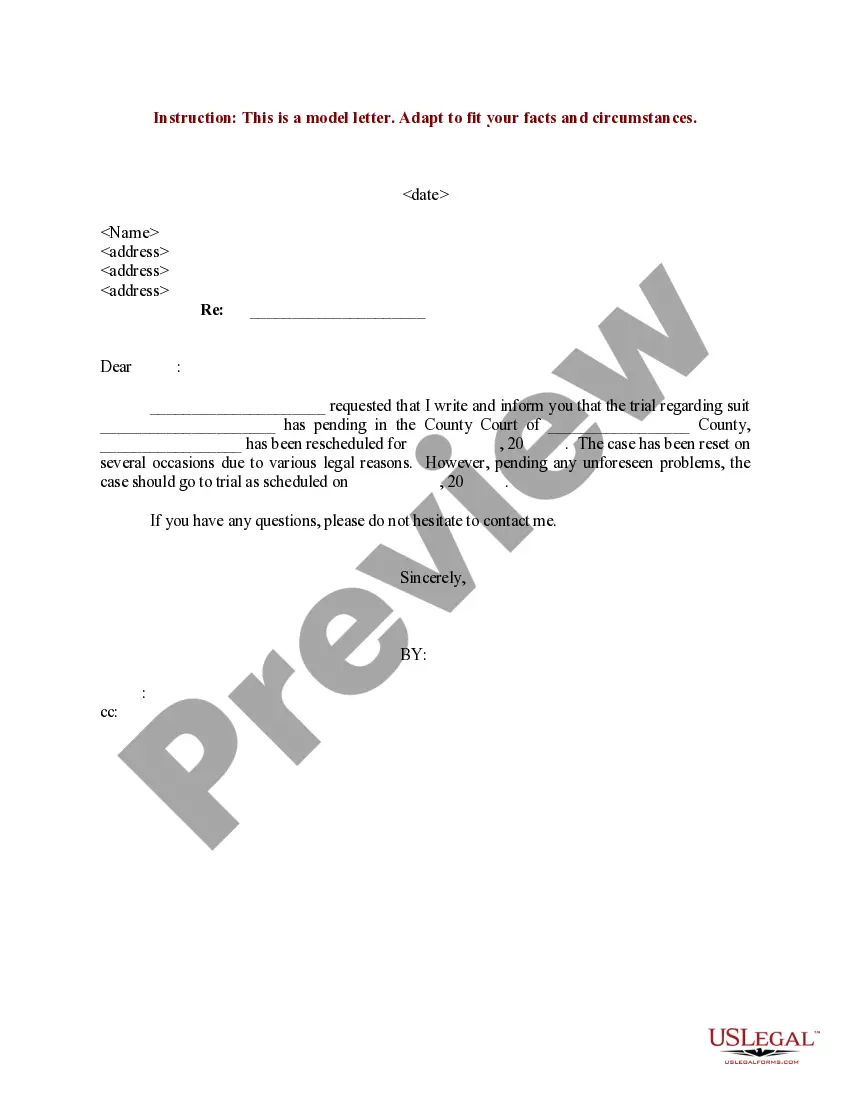
Sample Email To Client For Company Introduction In Dallas
Description

Get your form ready online
Our built-in tools help you complete, sign, share, and store your documents in one place.
Make edits, fill in missing information, and update formatting in US Legal Forms—just like you would in MS Word.
Download a copy, print it, send it by email, or mail it via USPS—whatever works best for your next step.
Sign and collect signatures with our SignNow integration. Send to multiple recipients, set reminders, and more. Go Premium to unlock E-Sign.
If this form requires notarization, complete it online through a secure video call—no need to meet a notary in person or wait for an appointment.
We protect your documents and personal data by following strict security and privacy standards.

Make edits, fill in missing information, and update formatting in US Legal Forms—just like you would in MS Word.

Download a copy, print it, send it by email, or mail it via USPS—whatever works best for your next step.

Sign and collect signatures with our SignNow integration. Send to multiple recipients, set reminders, and more. Go Premium to unlock E-Sign.

If this form requires notarization, complete it online through a secure video call—no need to meet a notary in person or wait for an appointment.

We protect your documents and personal data by following strict security and privacy standards.
Looking for another form?






Form popularity
FAQ
Here are the steps for writing an effective business introduction email template: Write a compelling subject line. Create a personalised greeting. Introduce yourself. Explain the purpose of the email. Add a call-to-action. Use a professional closing. Include your professional signature. Proofread and edit your email.
Hello, I'm Your Name, and I am passionate about industry/field. With number years of experience in relevant experience, I have developed a deep understanding of the industry and have successfully navigated complex challenges. I am known for my ability to achievement or project and my strong leadership skills.
Step-by-step instructions on writing an introduction email Keep the subject line short and informative. Start with a greeting. Add an opening sentence. Introduce both parties. Tell them why you are introducing them. Excuse yourself from the thread. End with a closing that sounds like you.
8 tips for writing a professional email 1 Include the topic in the subject line. The first thing your recipient sees in their inbox is your email's subject line. 2 Address the recipient properly. 3 Keep it focused. 4 Include your signature. 5 Proofread. 6 Avoid a casual tone. 7 Watch your words. 8 Make your directions clear.
How do you start a professional email greeting? You should start a professional email with a greeting and the name and title of the recipient (e.g., “Dear Mr. Walken”). Then, you should include an introductory line like I hope this email finds you well, followed by the body of the email.
To open a professional email effectively, you should: Start with a clear, concise greeting. Common options include ``Dear (Name),'' ``Hello (Name),'' or simply ``Good morning/afternoon.'' Use the recipient's full name, unless you have an established relationship that allows for a more casual greeting.
How to write an introductory email? 8 Easy Steps Write a compelling subject line. Tailor your greeting to the situation. Make your first line about them. Explain the reason for reaching out. Provide them with value. Add a call to action. Thank them for their time. Follow-up after a while.