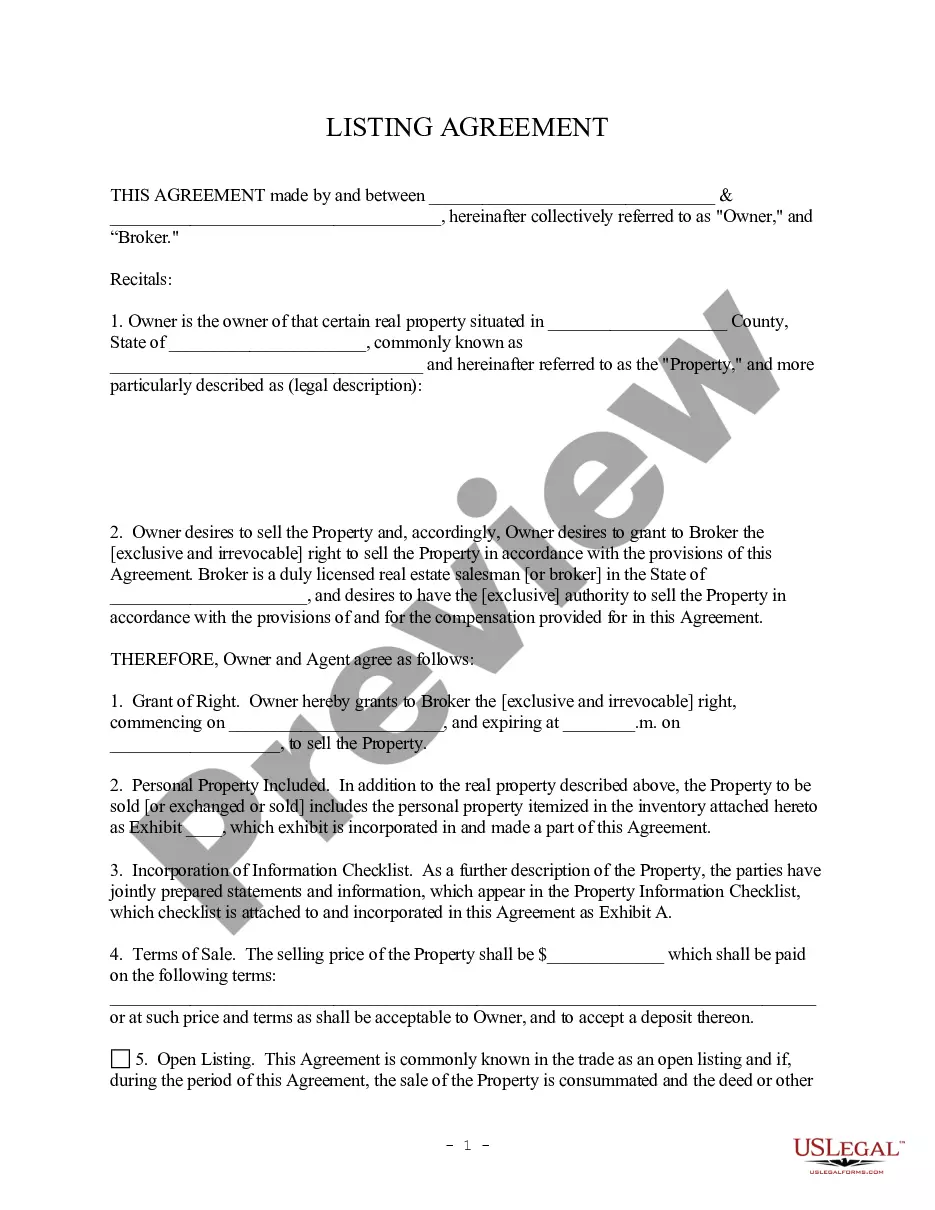
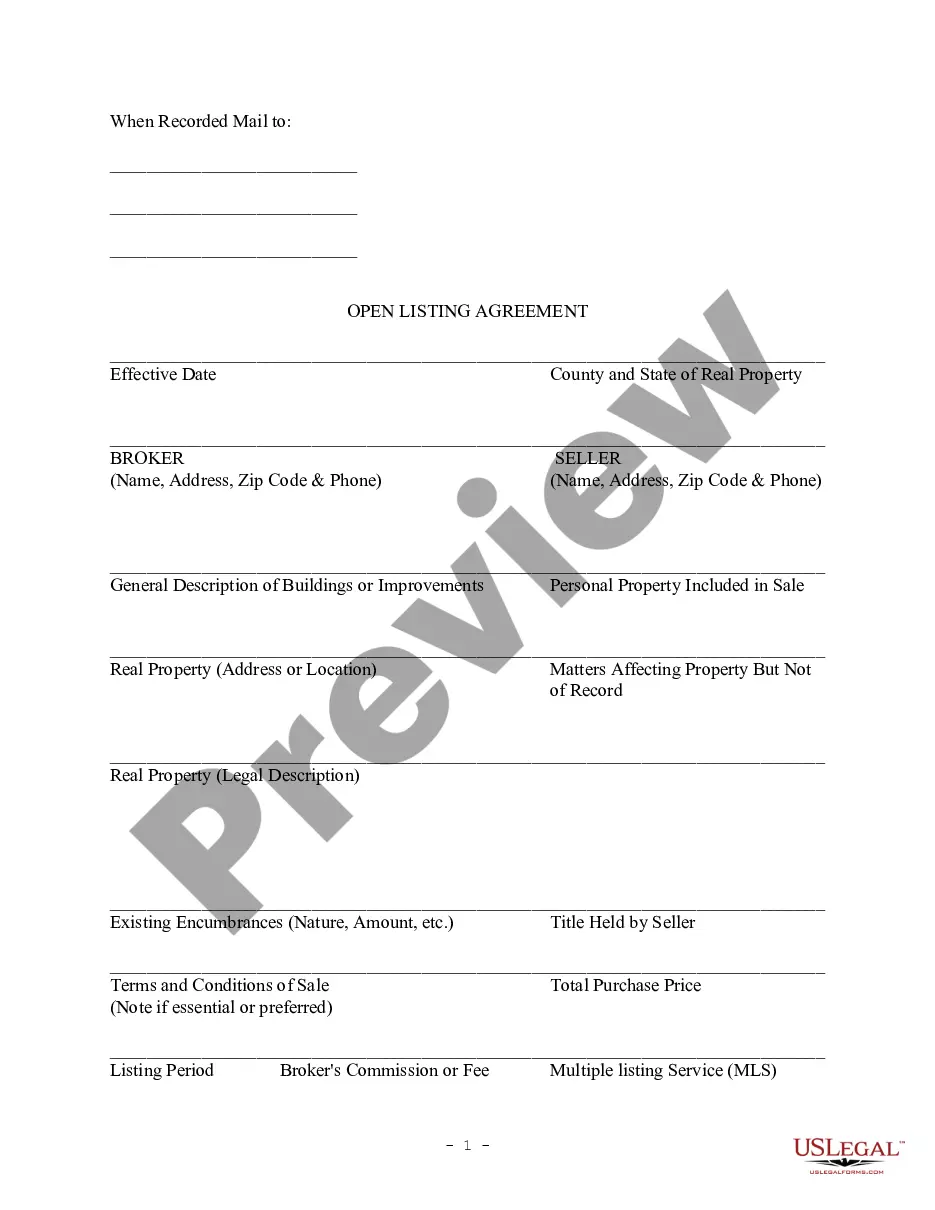
Listing Agreement Document For Rental Property In Maryland
Description
Get your form ready online
Our built-in tools help you complete, sign, share, and store your documents in one place.
Make edits, fill in missing information, and update formatting in US Legal Forms—just like you would in MS Word.
Download a copy, print it, send it by email, or mail it via USPS—whatever works best for your next step.
Sign and collect signatures with our SignNow integration. Send to multiple recipients, set reminders, and more. Go Premium to unlock E-Sign.
If this form requires notarization, complete it online through a secure video call—no need to meet a notary in person or wait for an appointment.
We protect your documents and personal data by following strict security and privacy standards.

Make edits, fill in missing information, and update formatting in US Legal Forms—just like you would in MS Word.

Download a copy, print it, send it by email, or mail it via USPS—whatever works best for your next step.

Sign and collect signatures with our SignNow integration. Send to multiple recipients, set reminders, and more. Go Premium to unlock E-Sign.

If this form requires notarization, complete it online through a secure video call—no need to meet a notary in person or wait for an appointment.

We protect your documents and personal data by following strict security and privacy standards.
Looking for another form?

Form popularity
FAQ
Writing your own contracts is perfectly possible, and legal. But it's also an incredibly bad idea. There's two reasons for this: Property law is complicated. Because it's such a fundamental part of legislation, it's often lots and lots of different laws layered on top of each other.
You can make an offer on your own. You don't have to deal with a realtor.
The contract must be in writing and there must be an offer and an acceptance of said offer. In order for a real estate contract to be enforceable by law, it is required to be in writing. 2. The contract must have mutual assent and legal purpose.
Why You Need a Business Contract Lawyer. If you're asking whether you need a lawyer to draft a contract, legally, the answer is no. Anyone can draft a contract on their own and as long as the elements above are included and both parties are legally competent and consent to the agreement, it is generally lawful.
The 'easy' way to assign the contract is to have a one page document stating that for some consideration, the 'buyer' transfers/assigns the contract to a new 'buyer'. Executing (signing) the assignment and receiving 'consideration' (eg $2000 or whatever) would then extinguish your rights to the contract.
Not all real estate contracts are assignable. Certain properties, such as those sold by government entities or banks as REOs, often have clauses that prevent assignment.
