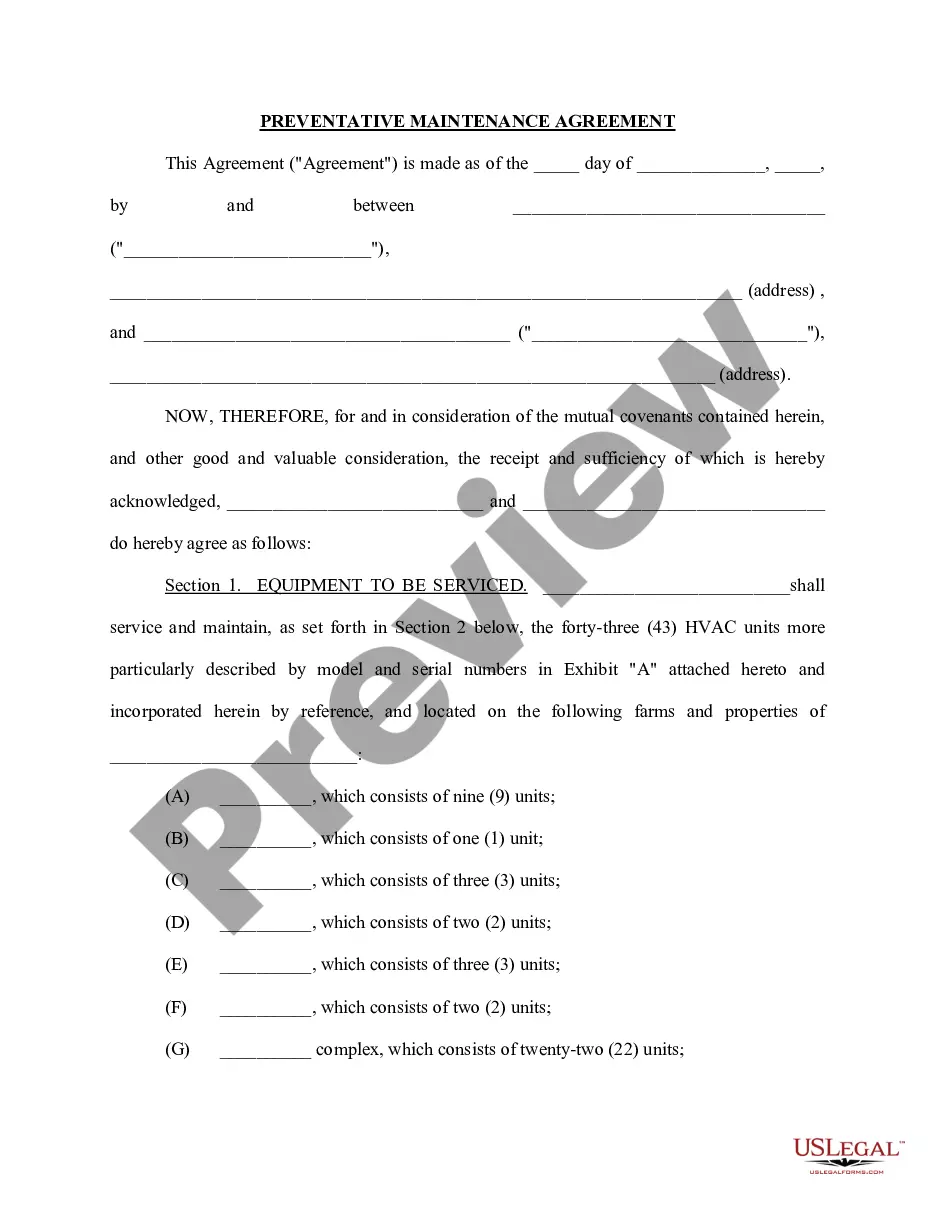
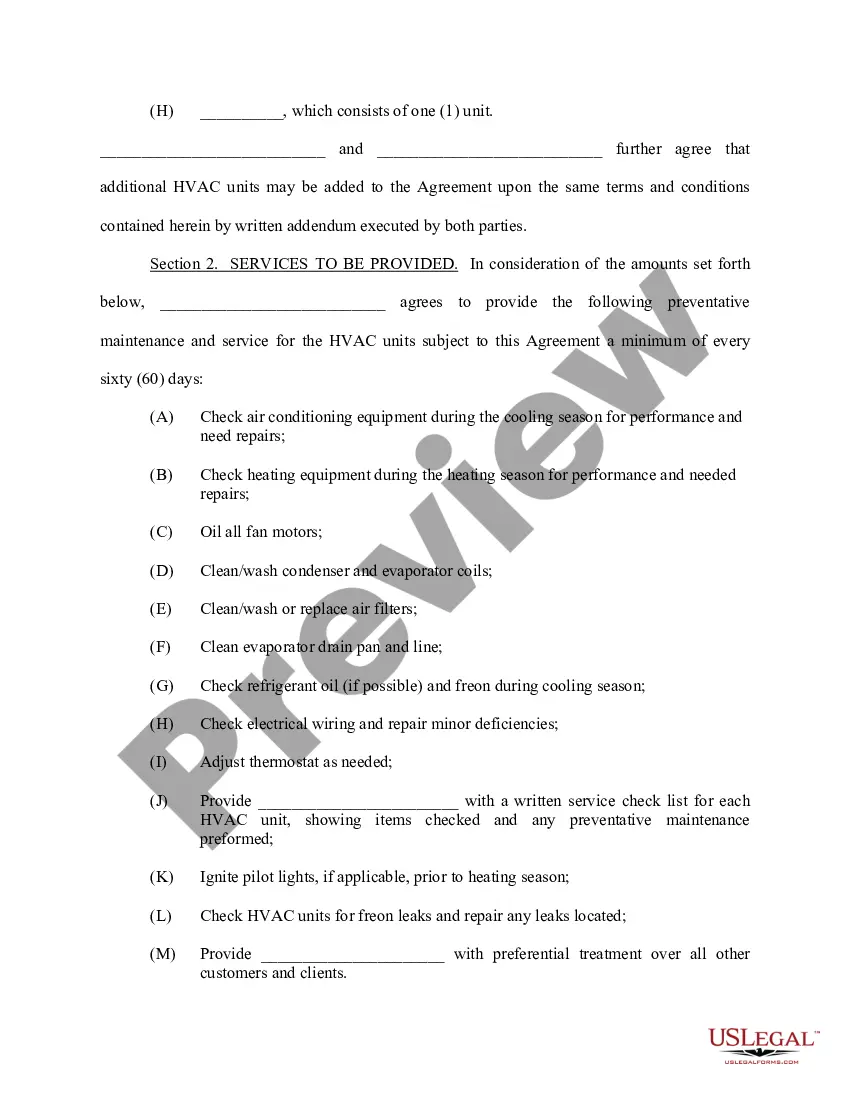
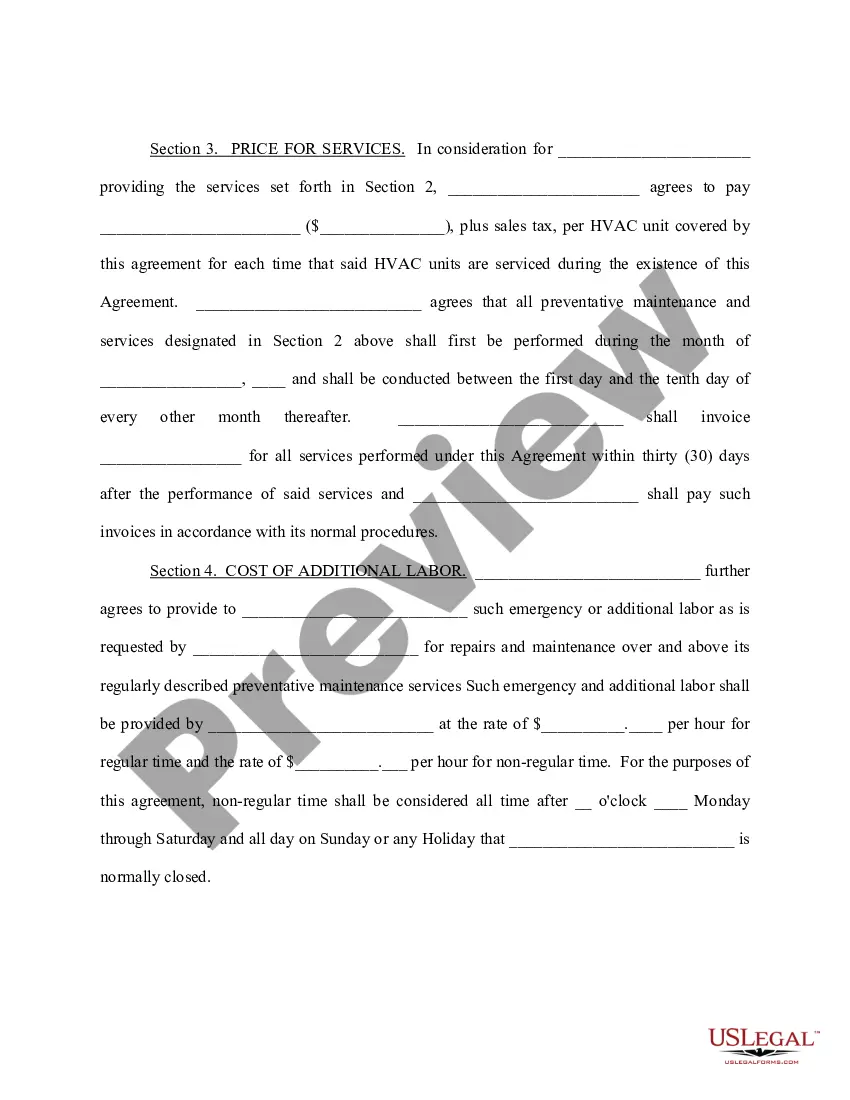
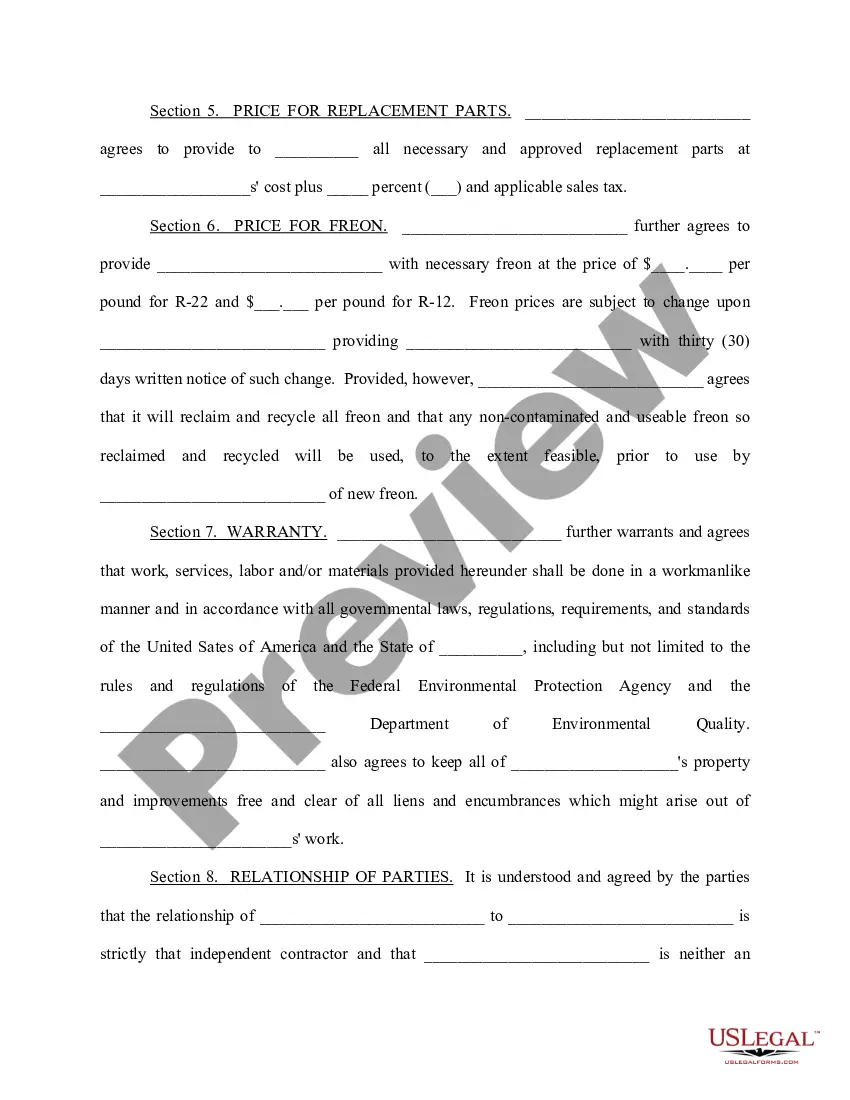
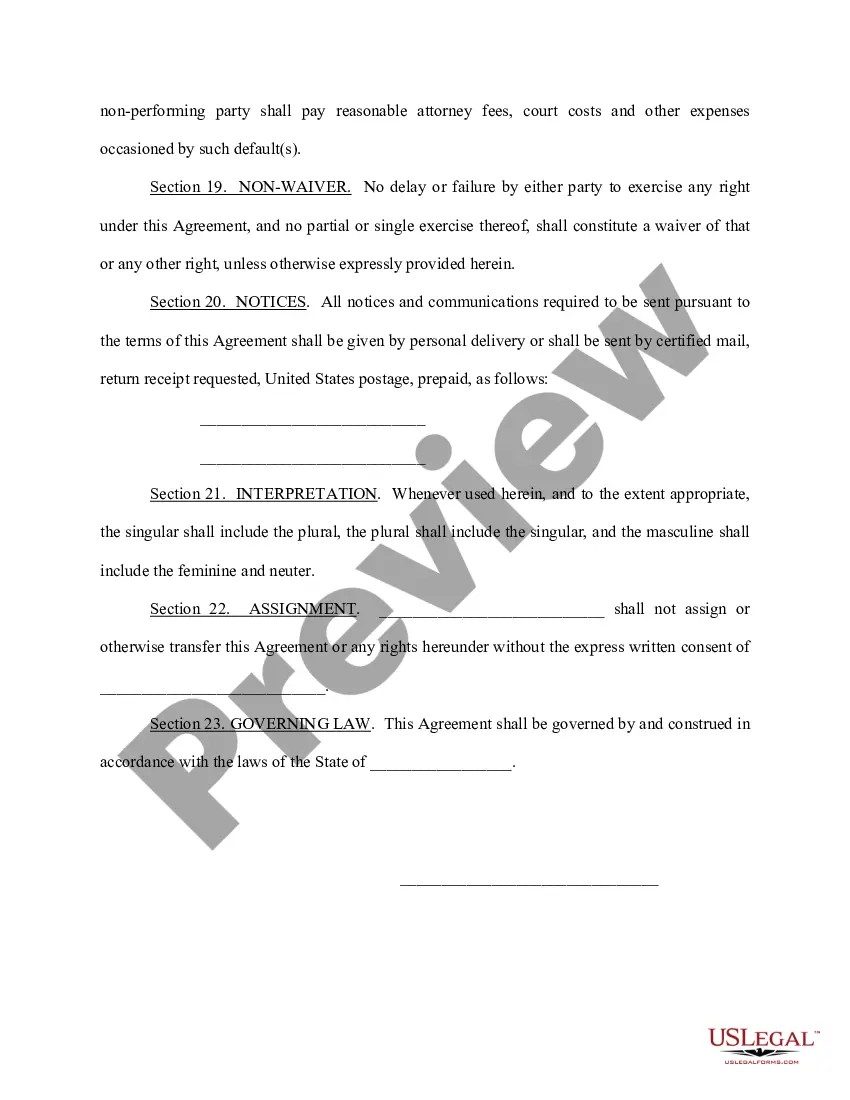
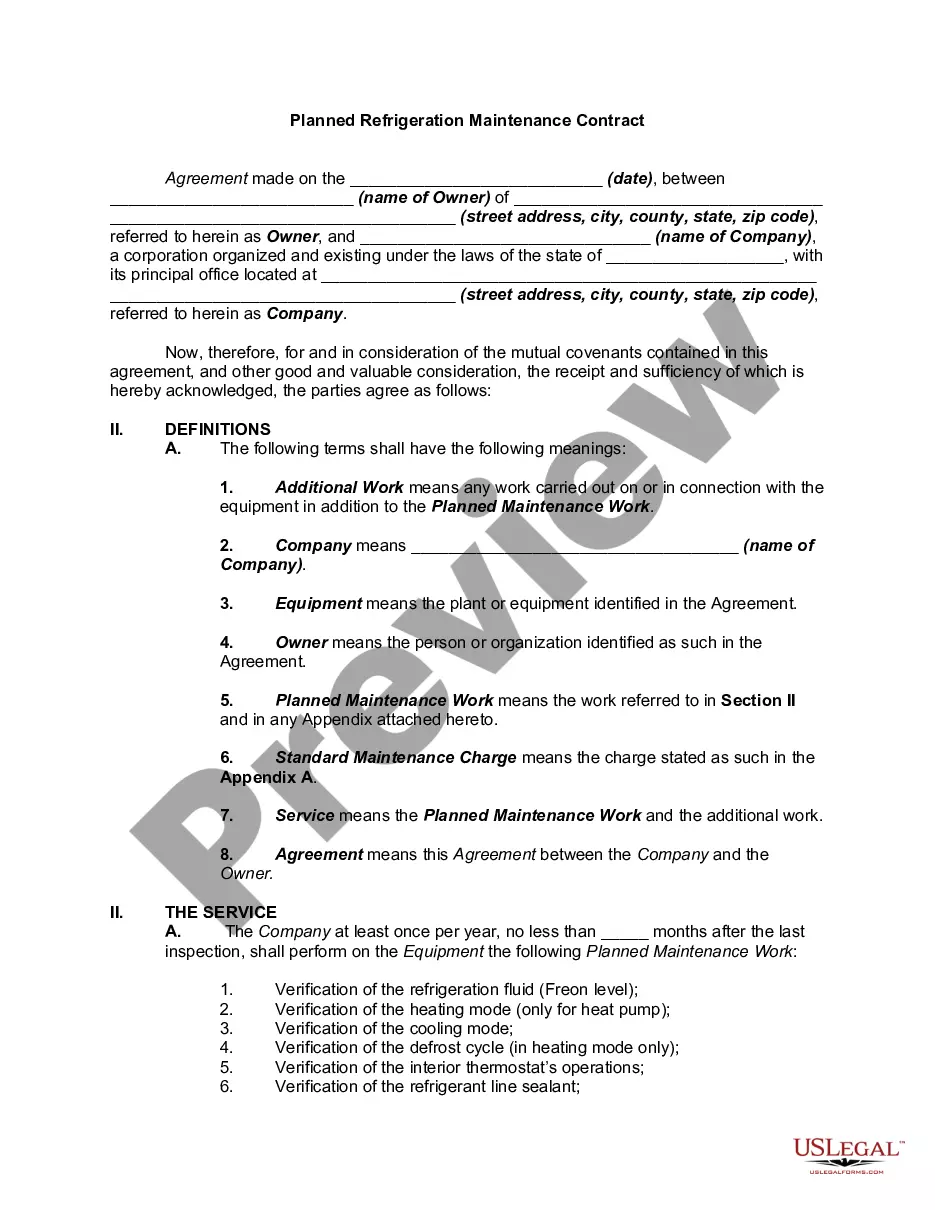
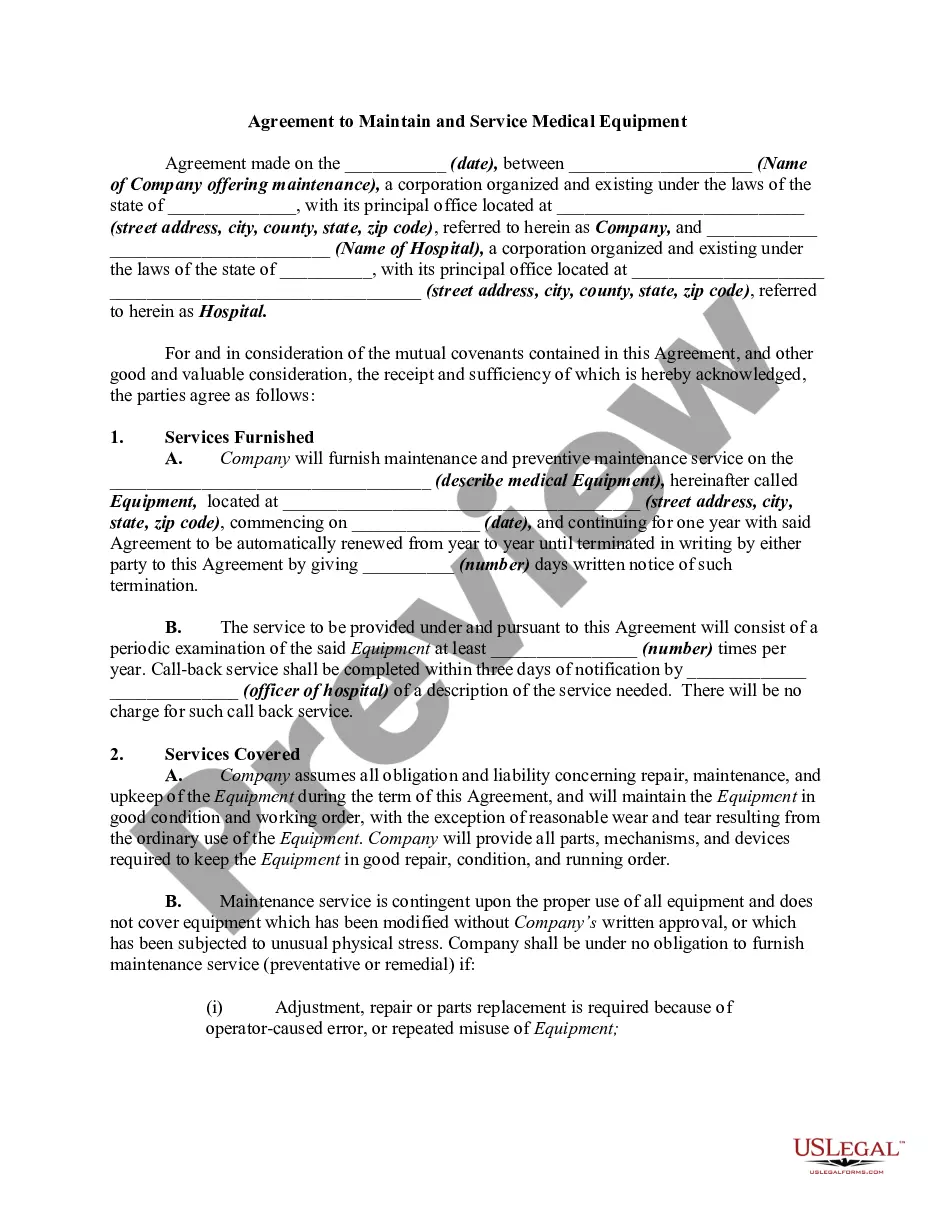
Maintenance Agreement Equipment Template With Example In Wake
Description
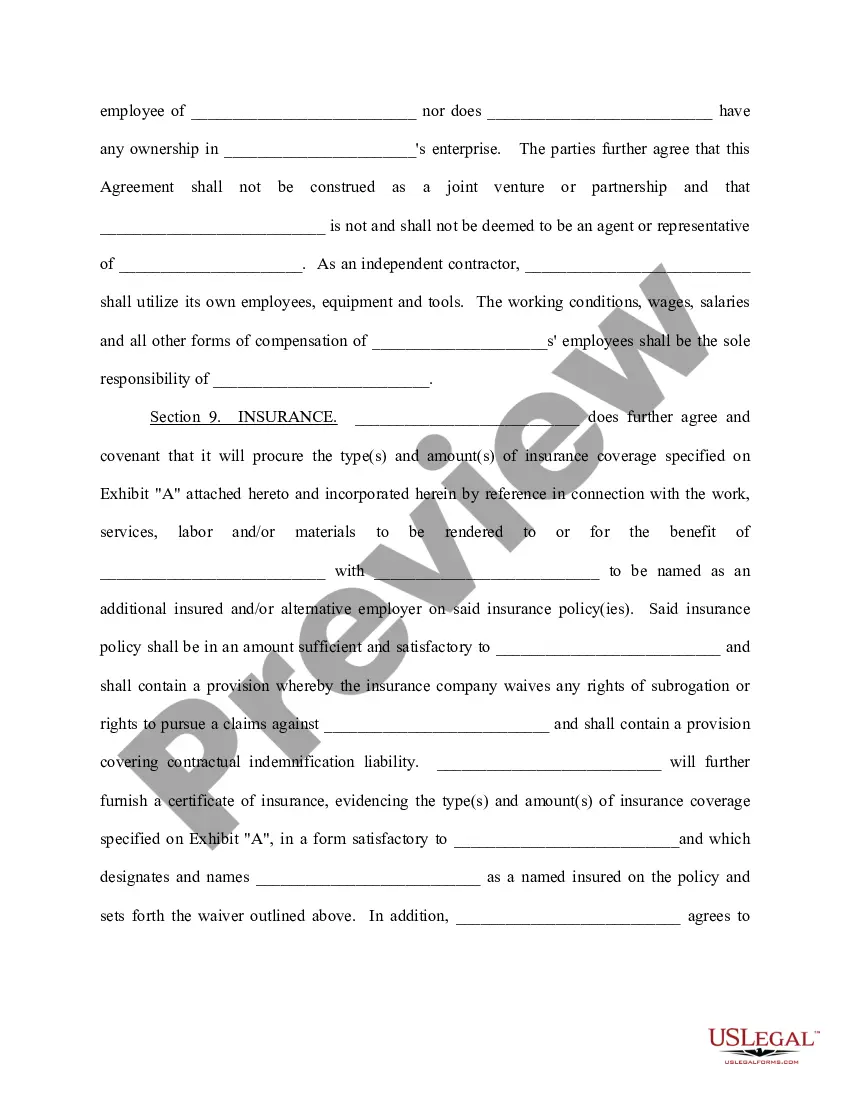
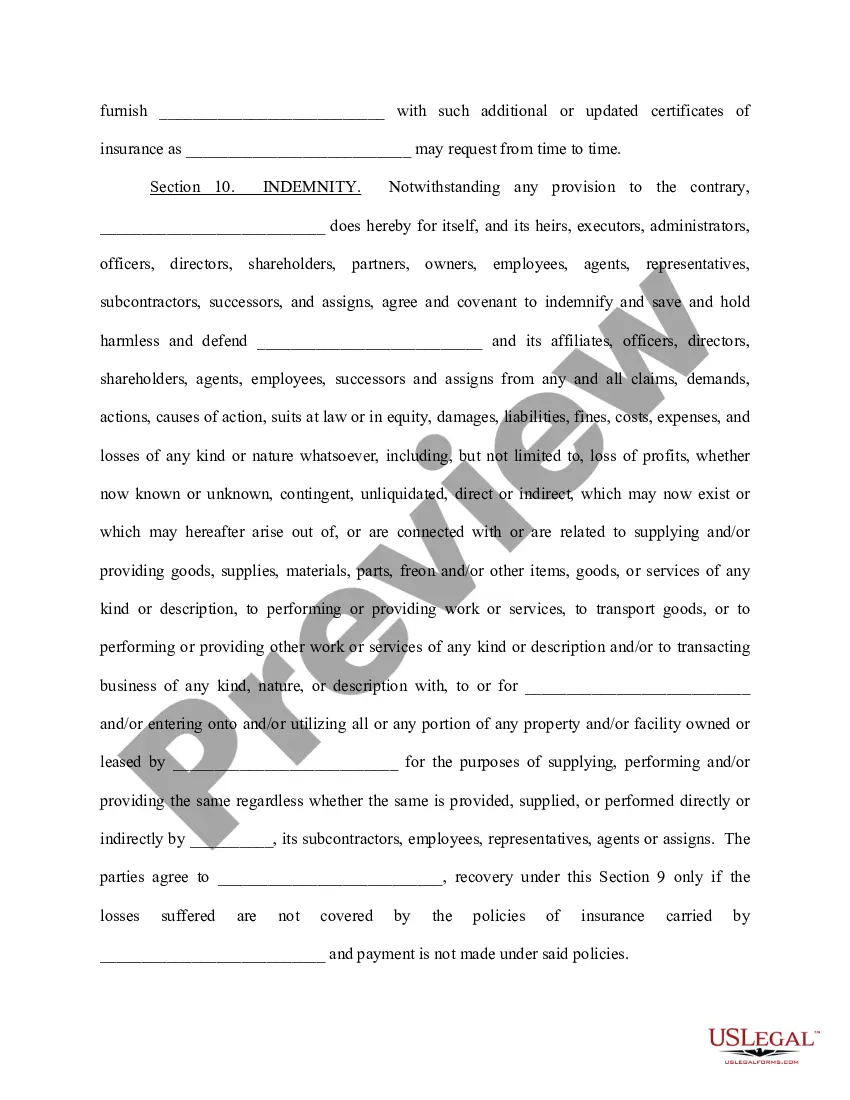
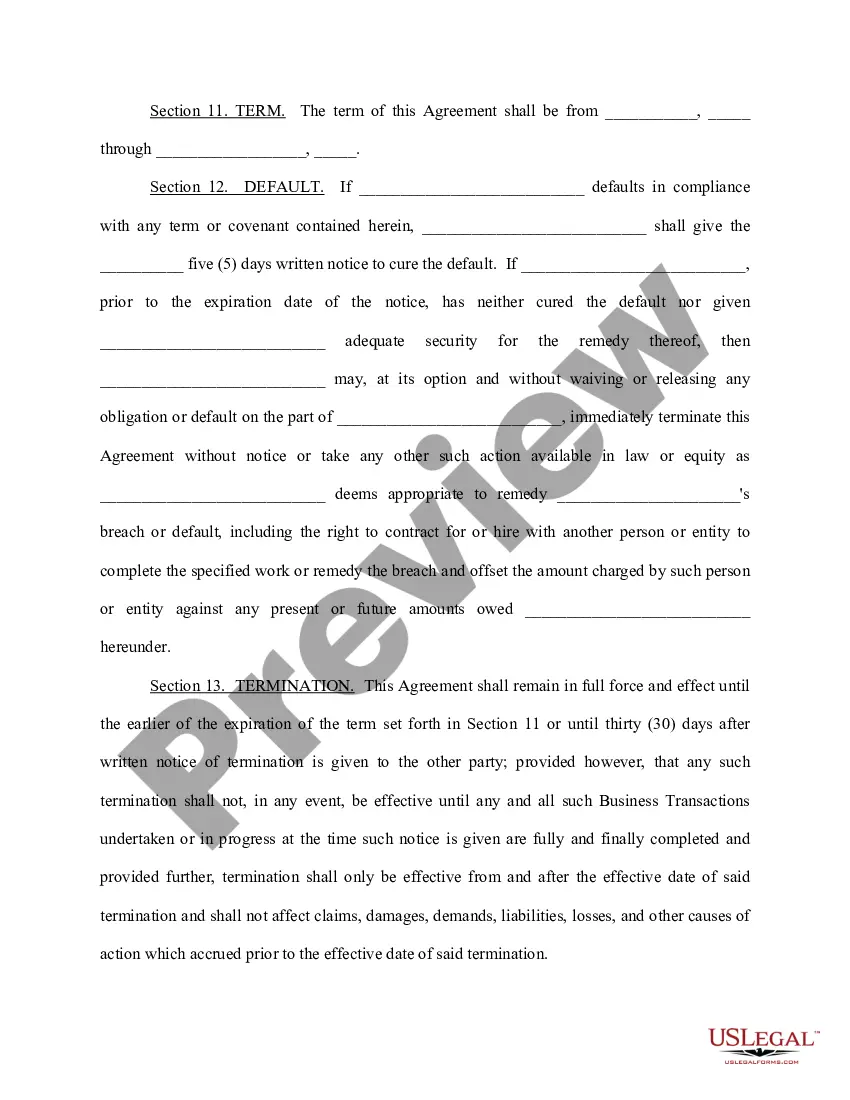
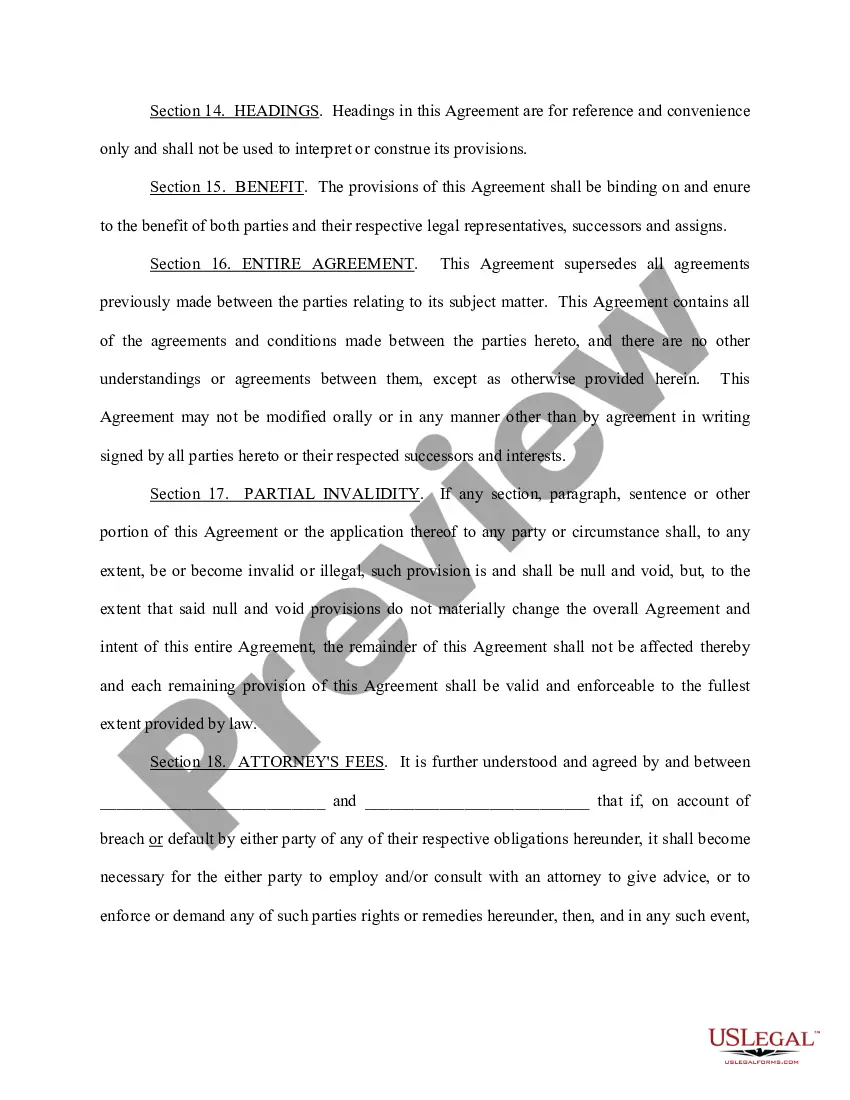
Get your form ready online
Our built-in tools help you complete, sign, share, and store your documents in one place.
Make edits, fill in missing information, and update formatting in US Legal Forms—just like you would in MS Word.
Download a copy, print it, send it by email, or mail it via USPS—whatever works best for your next step.
Sign and collect signatures with our SignNow integration. Send to multiple recipients, set reminders, and more. Go Premium to unlock E-Sign.
If this form requires notarization, complete it online through a secure video call—no need to meet a notary in person or wait for an appointment.
We protect your documents and personal data by following strict security and privacy standards.

Make edits, fill in missing information, and update formatting in US Legal Forms—just like you would in MS Word.

Download a copy, print it, send it by email, or mail it via USPS—whatever works best for your next step.

Sign and collect signatures with our SignNow integration. Send to multiple recipients, set reminders, and more. Go Premium to unlock E-Sign.

If this form requires notarization, complete it online through a secure video call—no need to meet a notary in person or wait for an appointment.

We protect your documents and personal data by following strict security and privacy standards.
Looking for another form?










Form popularity
FAQ
Here's a list of standard fields that you should include in your lease agreement: Tenant information. Include each tenant's full name and contact information. Rental property description. Security deposit. Monthly rent amount. Utilities. Lease term. Policies. Late fees.
An equipment lease agreement form is a contract where the owner (lessor) allows another party (lessee) to use their equipment in exchange for periodic payments. This agreement outlines the terms, conditions, and responsibilities of both parties, ensuring clarity and legal protection.
The agreement should include the following: Full and correct names. Your company should be listed as the lessor and your customer as the lessee. List the rented-out equipment. Rental duration terms. Rental rate. Late charges. Security deposit. Equipment usage guidelines. Repair and replacement.
How to draft a contract between two parties: A step-by-step checklist Know your parties. Agree on the terms. Set clear boundaries. Spell out the consequences. Specify how you will resolve disputes. Cover confidentiality. Check the legality of the contract. Open it up to negotiation.
How do I write a Service Agreement? State how long the services are needed. Include the state where the work is taking place. Provide the contractor's and client's information. Describe the service being provided. Outline the compensation. State the agreement's terms. Include any additional clauses.
A service agreement is an agreement between you and your provider that makes it clear what you have both agreed to. It is covered by Australian Consumer Law. The NDIA recommends having a written service agreement so participants and providers are clear about what each party has agreed to.
How to Write a Maintenance Contract Draw up a section for official definitions at the beginning of the contract. Lay out the maintenance services to be performed early in the contract. Discuss the compensation structure agreed upon for services. Draft a section discussing any warranties or promises made by either party.
Here are 6 essential steps you can follow: Make a list of all your machines and equipment. Classify them ing to their level of criticality. Define a plan for each category of machines. Consult manufacturer information. Define when, who, and what will be necessary to make it work. Manage your maintenance plan.
Steps to creating an effective maintenance plan Detail the work that you'll need to do on each asset. Schedule the work – Use a dating frequency, running hours, or measures that will provide insight into the condition of an asset. Add workers or contractors – including the estimated working hours. Add spare parts.
To create an effective maintenance schedule and ensure that equipment is always reviewed, maintained and replaced as needed, follow these four steps. List All the Equipment to Maintain. Identify Maintenance Activities. Determine the Frequency of Maintenance. Define Maintenance Dates.