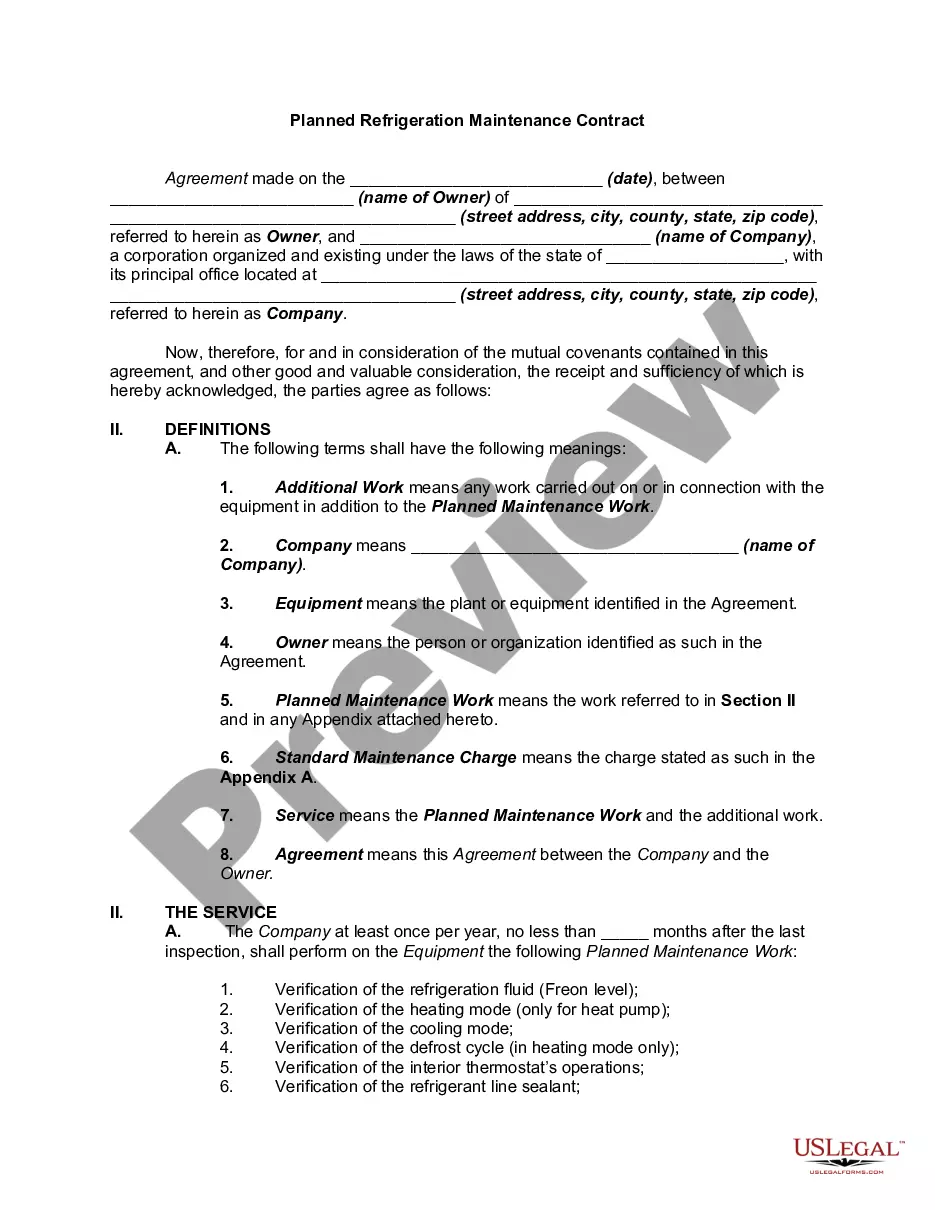
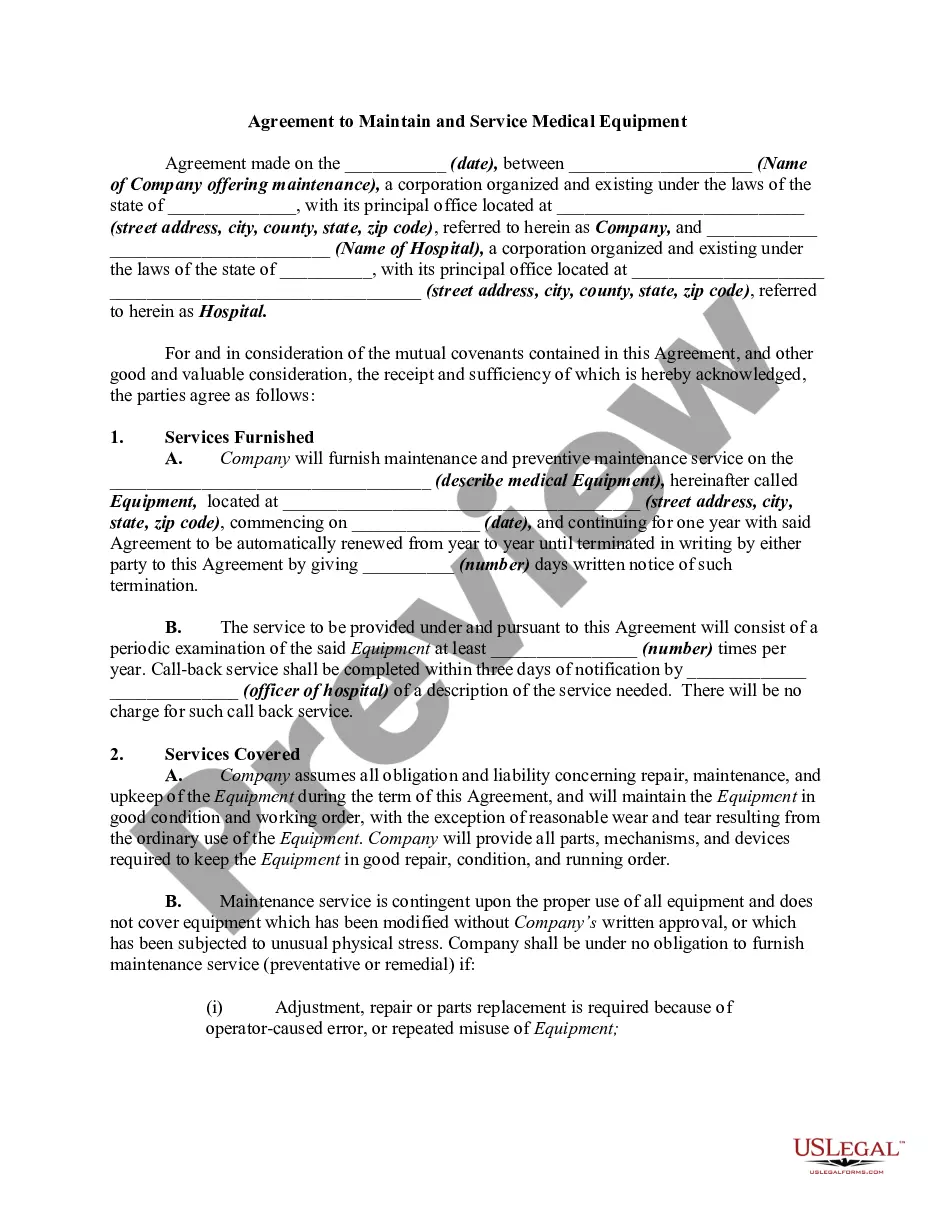
Maintenance Agreement Equipment Template For Construction In Miami-Dade
Description

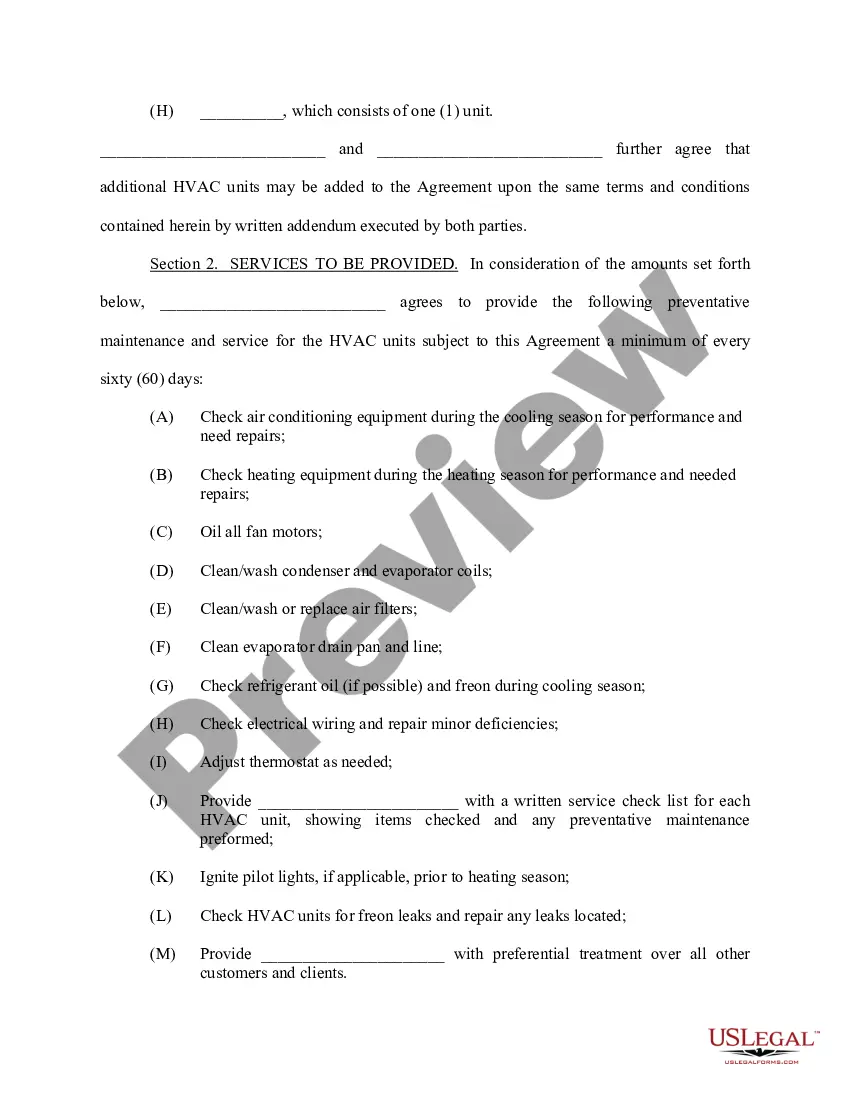
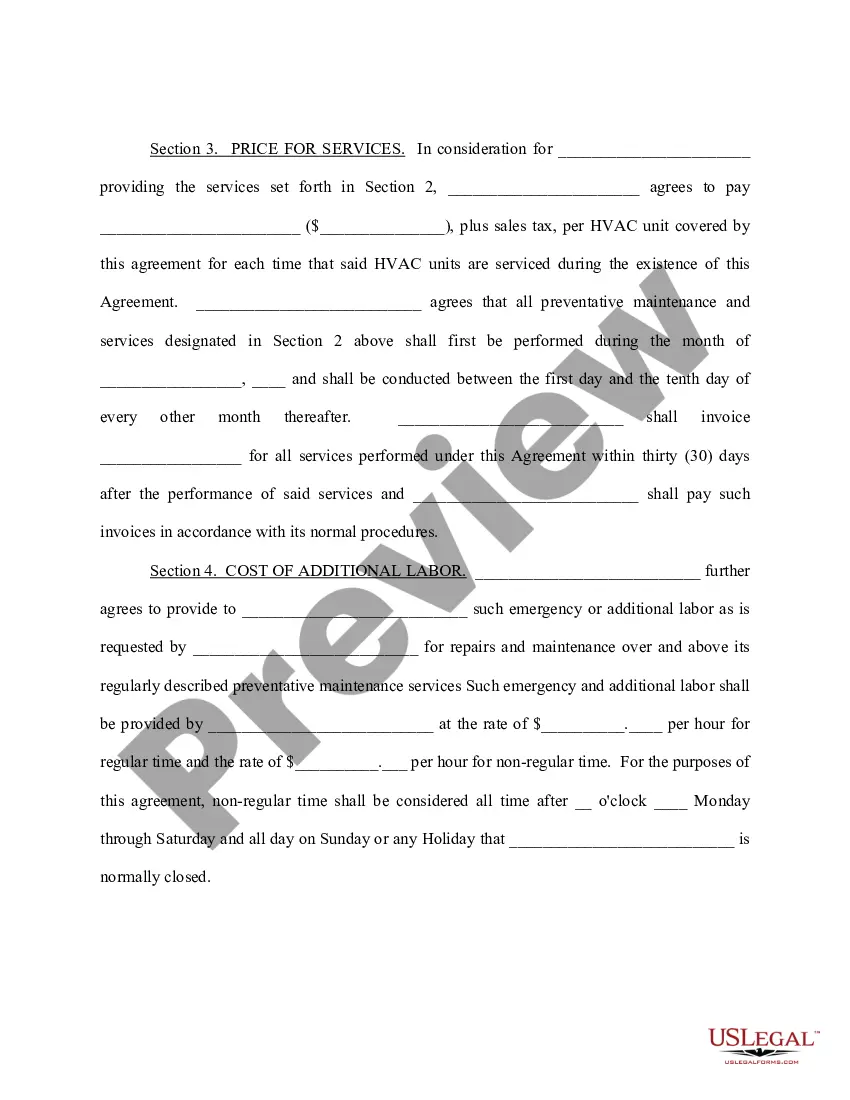
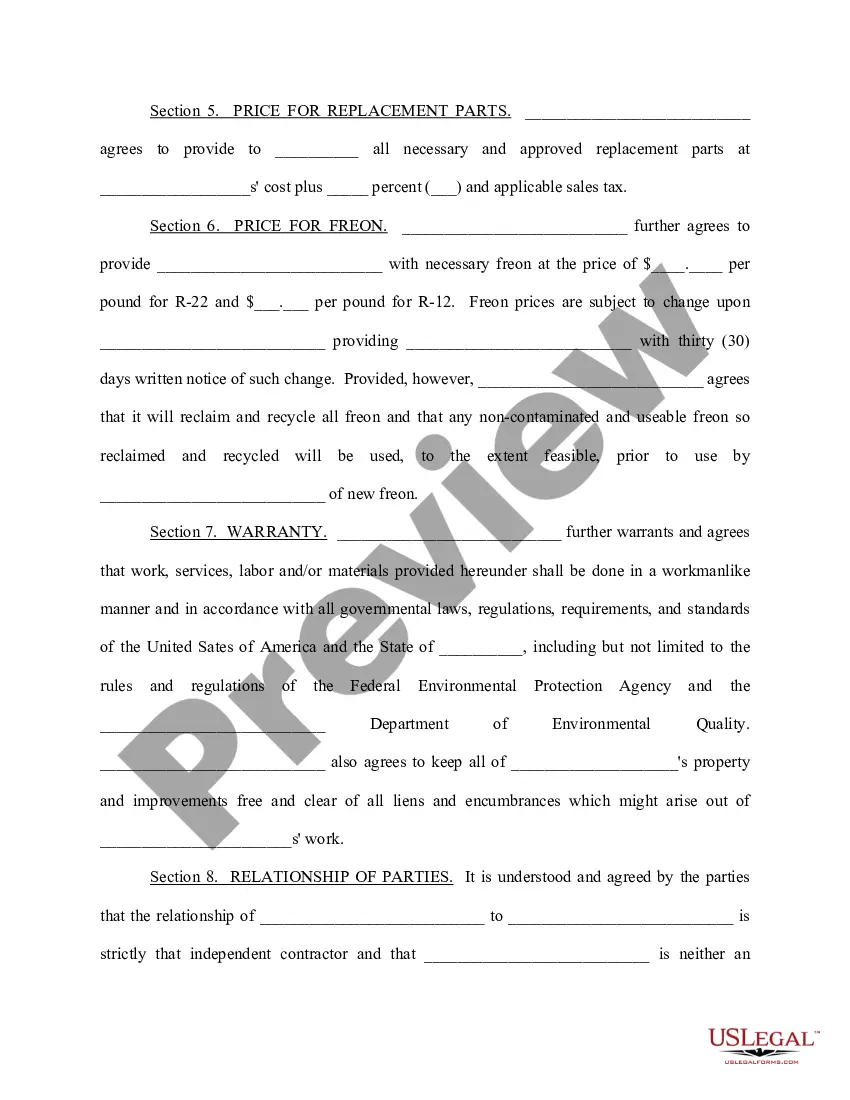
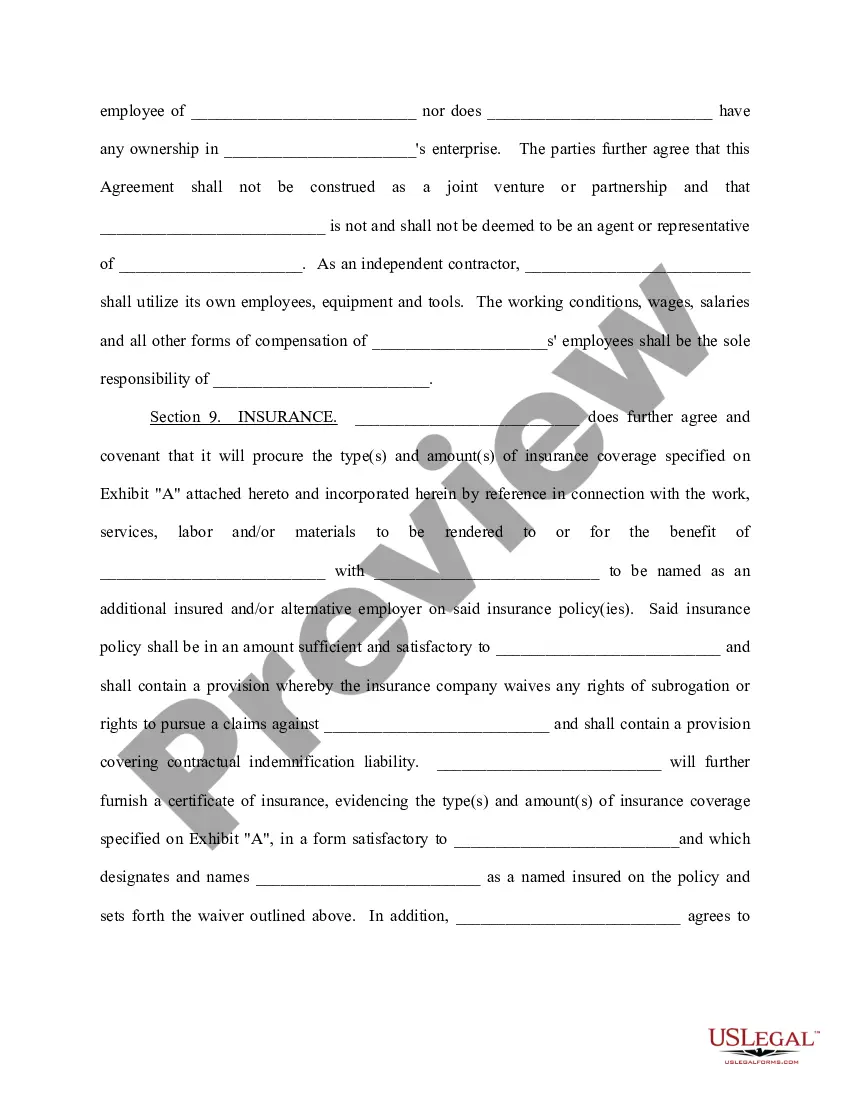
Get your form ready online
Our built-in tools help you complete, sign, share, and store your documents in one place.
Make edits, fill in missing information, and update formatting in US Legal Forms—just like you would in MS Word.
Download a copy, print it, send it by email, or mail it via USPS—whatever works best for your next step.
Sign and collect signatures with our SignNow integration. Send to multiple recipients, set reminders, and more. Go Premium to unlock E-Sign.
If this form requires notarization, complete it online through a secure video call—no need to meet a notary in person or wait for an appointment.
We protect your documents and personal data by following strict security and privacy standards.

Make edits, fill in missing information, and update formatting in US Legal Forms—just like you would in MS Word.

Download a copy, print it, send it by email, or mail it via USPS—whatever works best for your next step.

Sign and collect signatures with our SignNow integration. Send to multiple recipients, set reminders, and more. Go Premium to unlock E-Sign.

If this form requires notarization, complete it online through a secure video call—no need to meet a notary in person or wait for an appointment.

We protect your documents and personal data by following strict security and privacy standards.
Looking for another form?






Form popularity
FAQ
How to Write a Maintenance Contract Draw up a section for official definitions at the beginning of the contract. Lay out the maintenance services to be performed early in the contract. Discuss the compensation structure agreed upon for services. Draft a section discussing any warranties or promises made by either party.
To contact the Department of Regulatory and Economic Resources about code enforcement issues, please reach the following: Building. Phone: 786-315-2424. Fax: 786-315-2912 or 786-315-2548. Environmental. Phone: 305-372-6902. Neighborhood Compliance Violations. Phone: 786-315-2552. Notice regarding anonymous complaints.
How to Create a Preventive Maintenance Schedule Step 1: Prioritize Assets by Maintenance Needs. Step 2: Identify a schedule based on maintenance triggers. Step 3: Prioritize maintenance tasks. Step 4: Assign responsibility for maintenance tasks. Step 5: Document work with preventive maintenance checklists.
An annual maintenance contract is a great way to cover basic maintenance needs, while a comprehensive maintenance contract covers any additional replacement parts, labor, or transportation costs that come up while technicians are performing routine maintenance.
Write the contract in six steps Start with a contract template. Open with the basic information. Describe in detail what you have agreed to. Include a description of how the contract will be ended. Write into the contract which laws apply and how disputes will be resolved. Include space for signatures.
Acceptance of an offer: After one party makes an offer, it's up to the other party to accept it. If someone offers you $600 to walk their dogs, for example, you enter into a contractual agreement the moment you accept their offer in exchange for your services.
Specify governing law. Identify the working relationship. Clearly define the scope of work. Specify what benefits, if any, the contractor will receive. Assign intellectual property. Include confidentiality clauses. Include a termination clause.
The IRS requires contractors to fill out a Form W-9, a request for a Taxpayer Identification Number and Certification, which you should keep on file for at least four years after the hiring. This form is used to request the correct name and Taxpayer Identification Number, or TIN, of the worker or their entity.
Write the contract in six steps Start with a contract template. Open with the basic information. Describe in detail what you have agreed to. Include a description of how the contract will be ended. Write into the contract which laws apply and how disputes will be resolved. Include space for signatures.
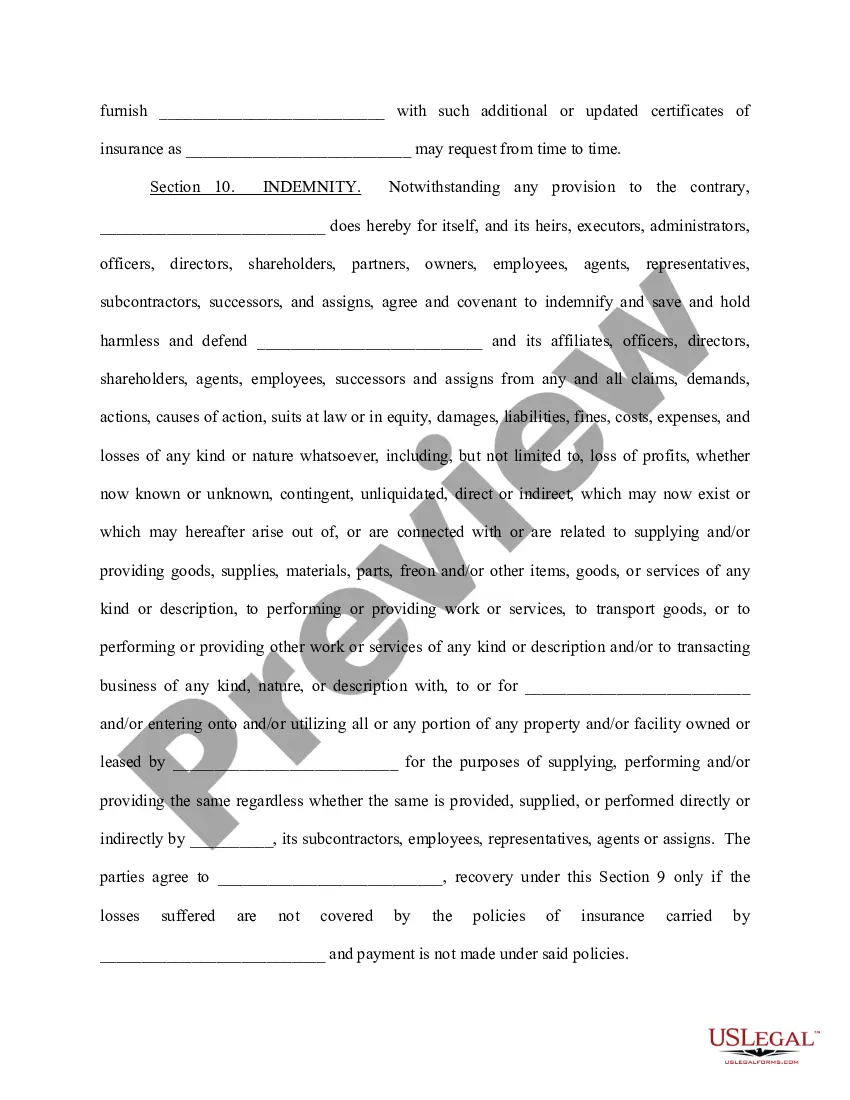
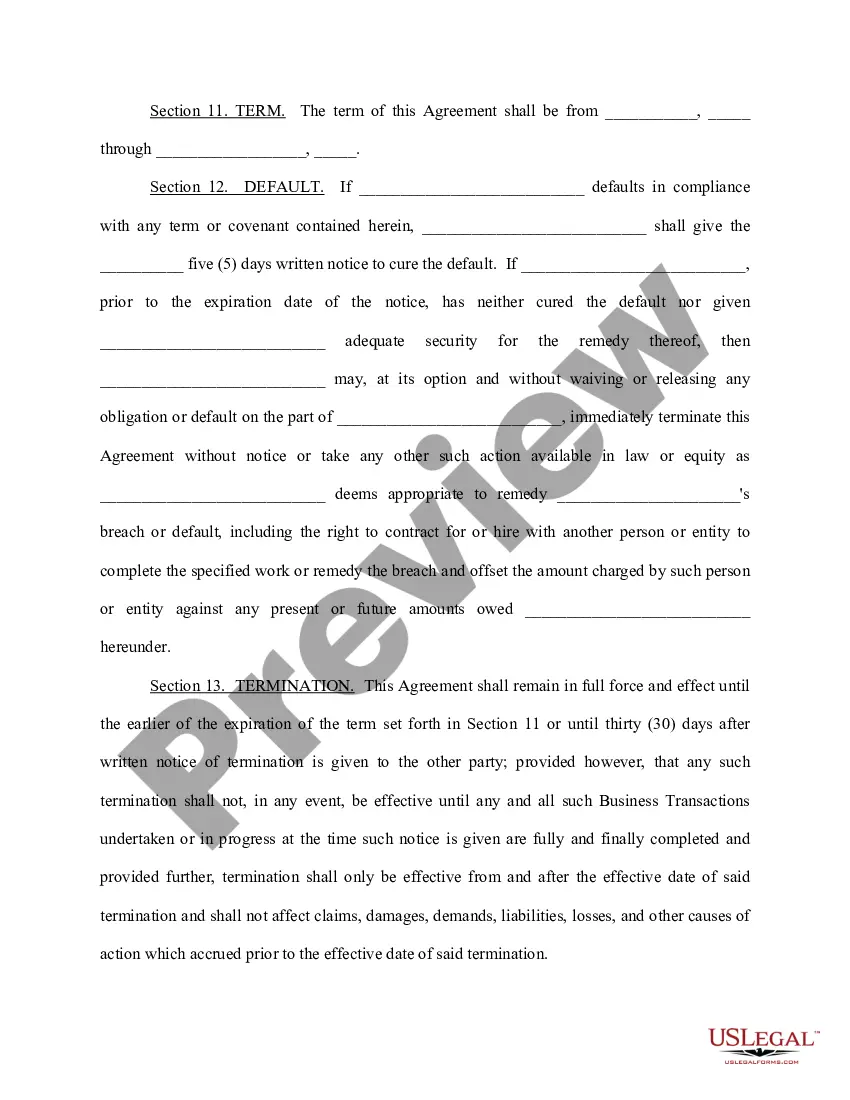
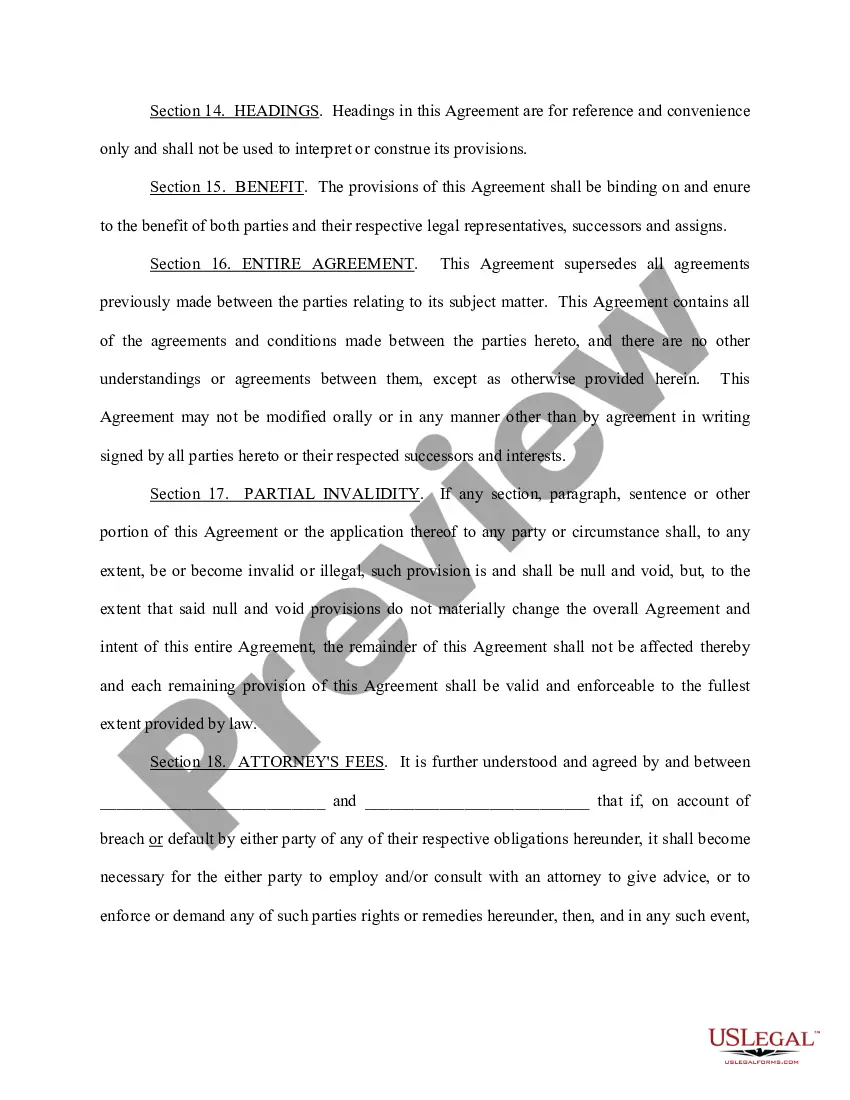
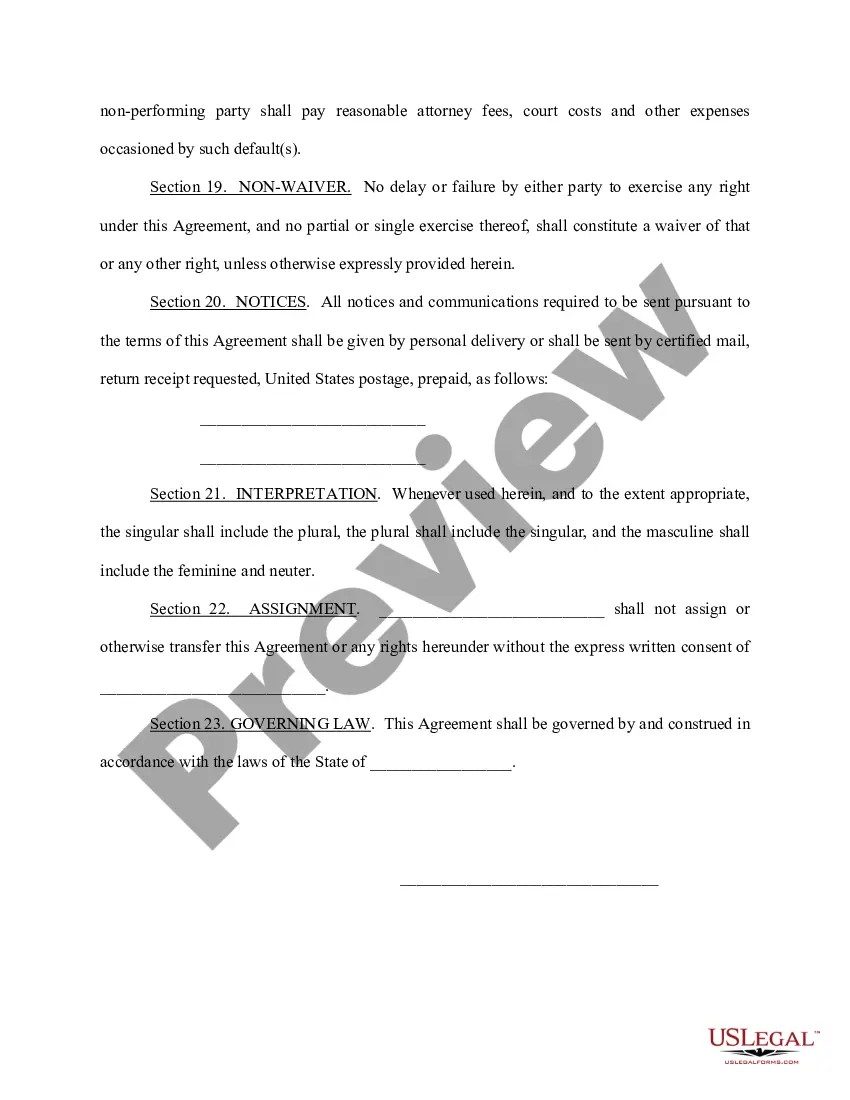
A maintenance agreement outlines the steps one party will undertake to insure the upkeep, repair, serviceability of another party's property. Maintenance contracts are commonly used by companies that take care of vehicle fleets, industrial equipment, office and apartment buildings, computer networks, etc.
