Force Director To Resign In Salt Lake
Description

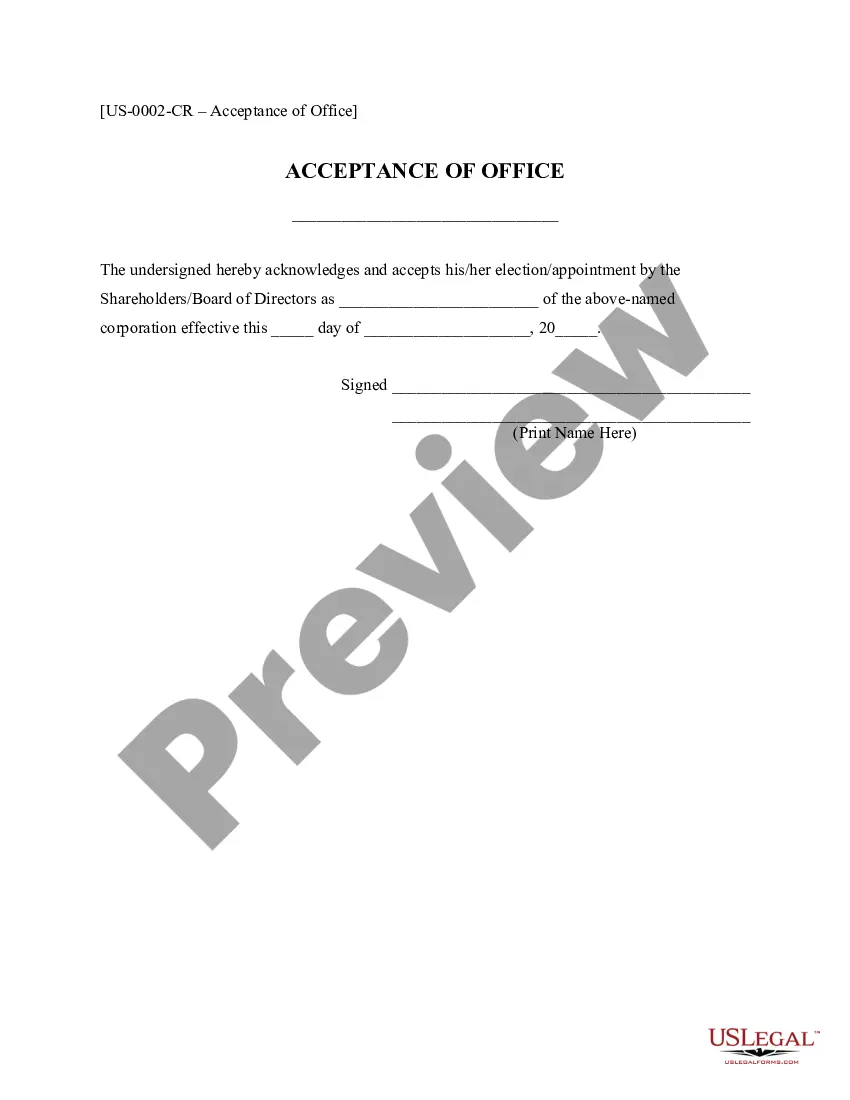
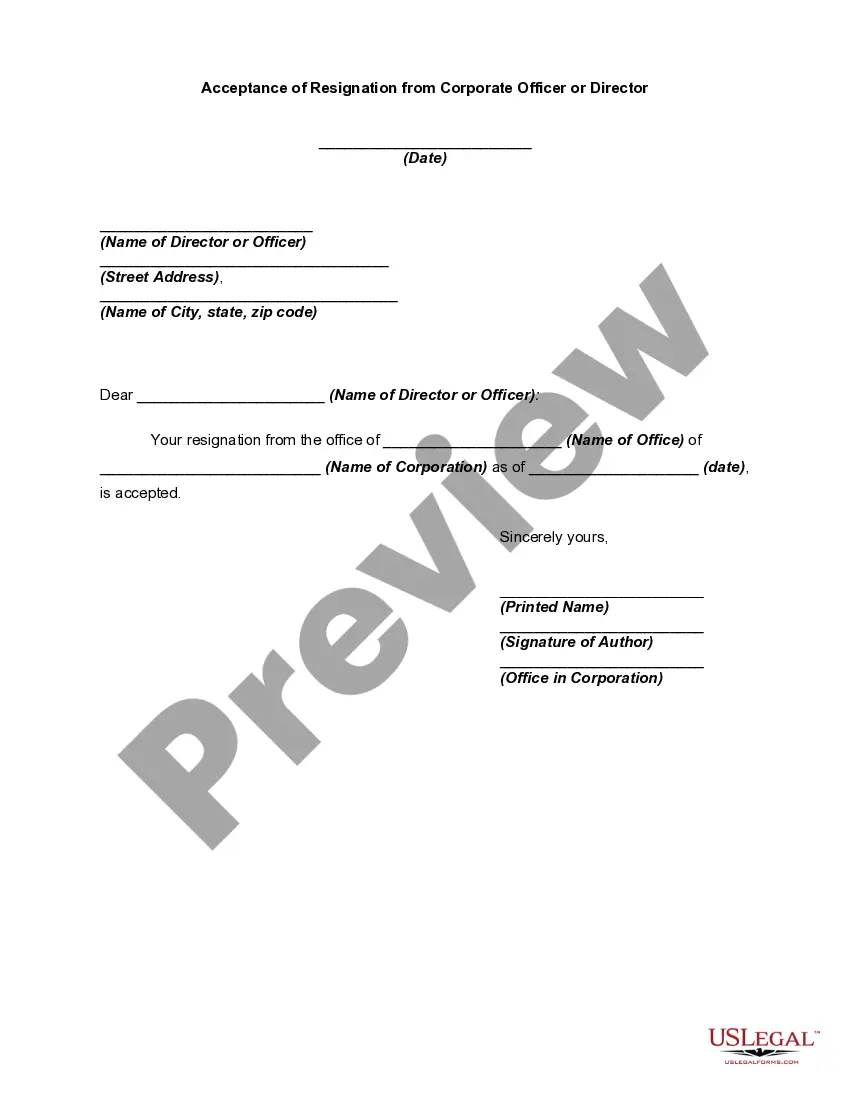
Get your form ready online
Our built-in tools help you complete, sign, share, and store your documents in one place.
Make edits, fill in missing information, and update formatting in US Legal Forms—just like you would in MS Word.
Download a copy, print it, send it by email, or mail it via USPS—whatever works best for your next step.
Sign and collect signatures with our SignNow integration. Send to multiple recipients, set reminders, and more. Go Premium to unlock E-Sign.
If this form requires notarization, complete it online through a secure video call—no need to meet a notary in person or wait for an appointment.
We protect your documents and personal data by following strict security and privacy standards.

Make edits, fill in missing information, and update formatting in US Legal Forms—just like you would in MS Word.

Download a copy, print it, send it by email, or mail it via USPS—whatever works best for your next step.

Sign and collect signatures with our SignNow integration. Send to multiple recipients, set reminders, and more. Go Premium to unlock E-Sign.

If this form requires notarization, complete it online through a secure video call—no need to meet a notary in person or wait for an appointment.

We protect your documents and personal data by following strict security and privacy standards.
Looking for another form?








Form popularity
FAQ
Sec. 7.5 (a) Any officer may resign at any time upon written notice of resignation to the Board, the President, or the Secretary. Any such resignation shall take effect upon receipt of such notice or at any later time specified therein.
By regulation, each branch of the military authorizes Unqualified Resignations. Officers must make a request, and if approved, the officer receives an honorable discharge upon receipt of separation orders.
A director may resign from his office by giving a notice in writing to the company and the Board shall on receipt of such notice take note of the same and the company shall intimate the Registrar in such manner, within such time and in such form as may be prescribed and shall also place the fact of such resignation in ...
If one cannot persuade a corporate director to resign, then one does not ``force'' a resignation. Instead: The shareholders vote to remove the director; or If permitted by the corporation's bylaws, the other directors vote to remove the director in question. Disclaimer:
One way is to write a letter to the board and ask to read it out loud at your final board meeting. The board should include your letter as part of the board meeting minutes. The other way is to follow the chain of command. Tell the board chair first, then the executive director and then the whole board.
You simply resign. Submit a written statement to the board of directors informing them of your resignation and its effective date. Resigning won't cut off anyone's right to try and sue you for wrongful acts you committed while you were an officer.
In most cases, one or more directors will submit written charges to remove an officer to the secretary of the corporation, but a shareholder can also submit charges. The written charges usually need to be accompanied by a petition signed by at least 5% of the corporation's members.
How to write a resignation letter as an executive Include all relevant contact information and the date. Write a salutation. Explain the reason for your letter. Express your gratitude. Offer to help with the transition. End on a positive note. Include a sign off.
So, the answer to the question is: Yes, a director can be forced out – but the exact scenario depends on the protocols you establish from day one.
Jake Maxwell - Deputy Director - Salt Lake City Corporation | LinkedIn.

