Trial Continuance Without Evidence In Houston
Description

Get your form ready online
Our built-in tools help you complete, sign, share, and store your documents in one place.
Make edits, fill in missing information, and update formatting in US Legal Forms—just like you would in MS Word.
Download a copy, print it, send it by email, or mail it via USPS—whatever works best for your next step.
Sign and collect signatures with our SignNow integration. Send to multiple recipients, set reminders, and more. Go Premium to unlock E-Sign.
If this form requires notarization, complete it online through a secure video call—no need to meet a notary in person or wait for an appointment.
We protect your documents and personal data by following strict security and privacy standards.

Make edits, fill in missing information, and update formatting in US Legal Forms—just like you would in MS Word.

Download a copy, print it, send it by email, or mail it via USPS—whatever works best for your next step.

Sign and collect signatures with our SignNow integration. Send to multiple recipients, set reminders, and more. Go Premium to unlock E-Sign.

If this form requires notarization, complete it online through a secure video call—no need to meet a notary in person or wait for an appointment.

We protect your documents and personal data by following strict security and privacy standards.
Looking for another form?








Form popularity
FAQ
Common examples of reasons to request continuance include: Service of process not made upon a defendant. In civil cases, all defendants must be adequately served with legal documents. If the service of process fails, the court may grant a continuance to allow the defendant time to prepare a defense.
Rule 21 requires the clerk on the filing of the motion to make the proper entries concerning it on the motion docket, and renders such filing and entry sufficient notice, since the motion is one in a pending suit.
A criminal action may be continued on the written motion of the State or of the defendant, upon sufficient cause shown; which cause shall be fully set forth in the motion. A continuance may be only for as long as is necessary.
Continuance Without a Finding (CWOF) is common in cases where the evidence supports a guilty finding. This is when the defendant acknowledges guilt for pleading purposes, but the court does not enter a guilty finding. Instead, it continues the case which will be dismissed upon completion of certain conditions.
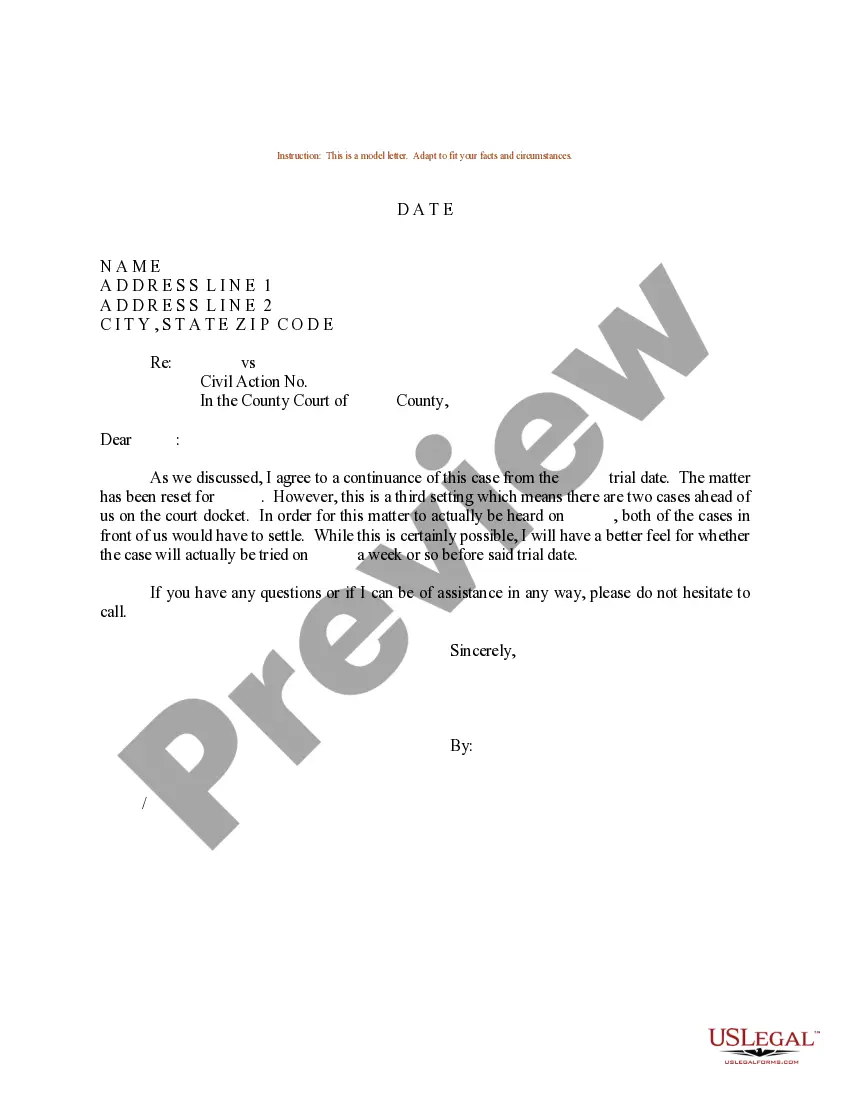
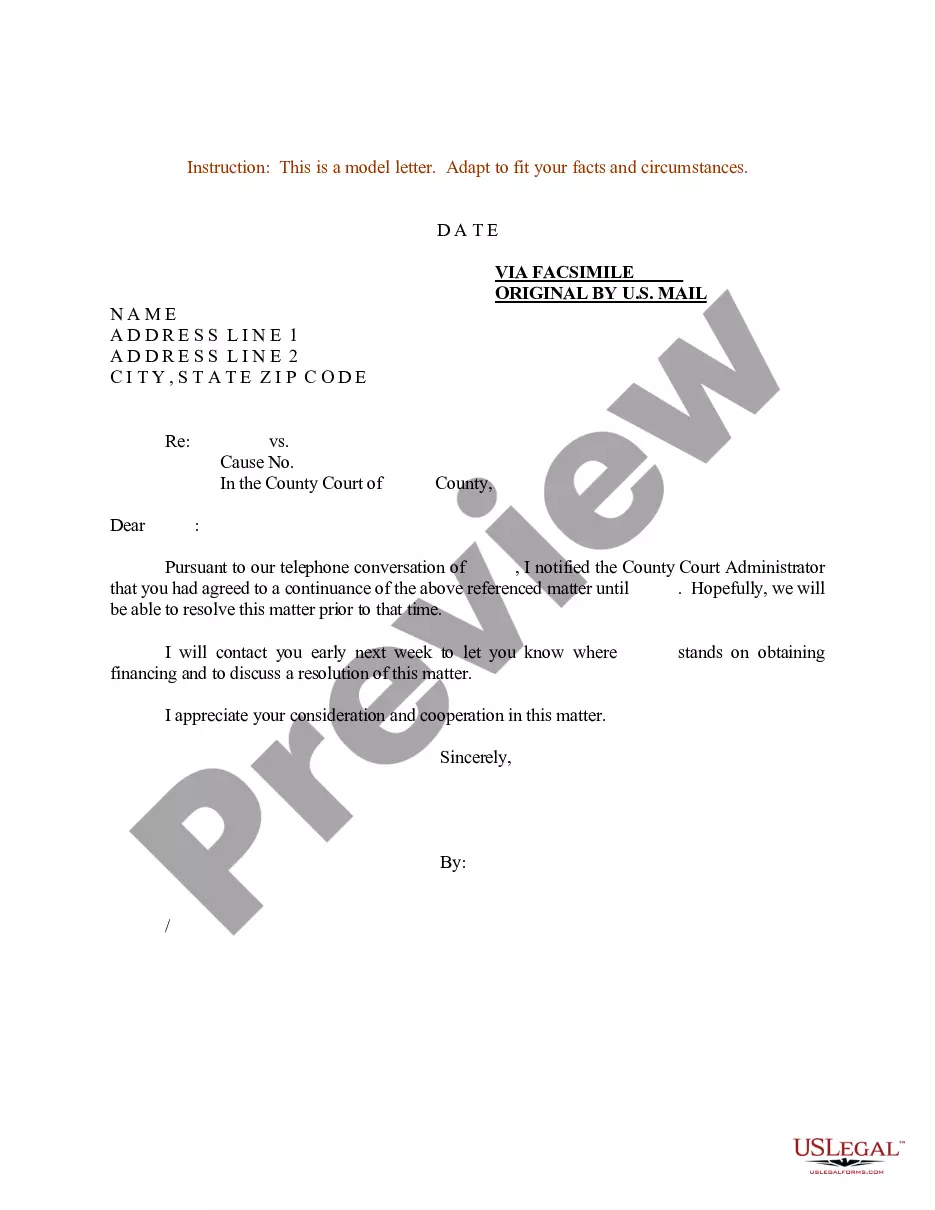
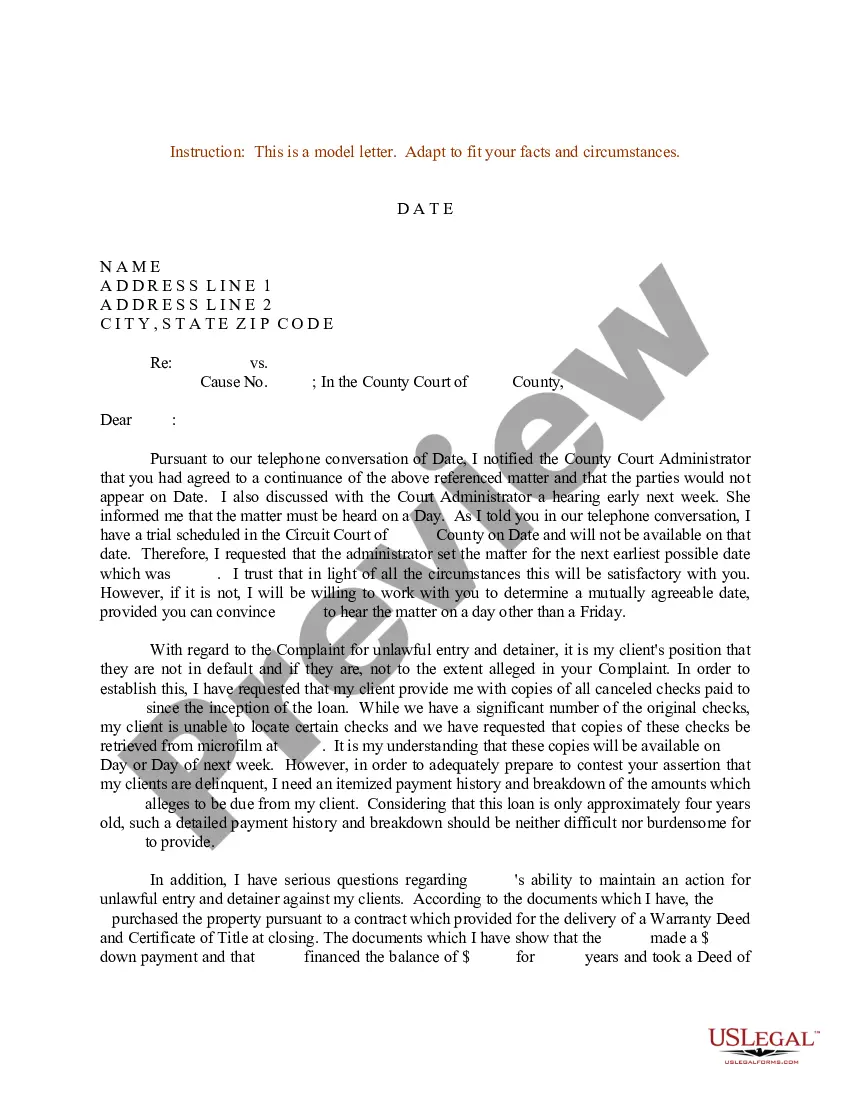
A request for a continuance in Texas involves submitting a written motion to the court, typically accompanied by a valid reason such as illness, scheduling conflicts, or the unavailability of a crucial witness, to delay a scheduled court hearing or trial.
Sometimes, a continuance can be agreed upon by both parties, which makes it more likely that the court will grant the continuance request. If the other side does not agree to a continuance, then you will need to convince the judge.
Example: In a custody hearing, the plaintiff has had no visitation with his son. The defendant wants to request a continuance of 4 weeks. A continuance of 4 weeks means that the plaintiff may not see his son for four more weeks.
The request must be in writing, but it does not have to be a sworn affidavit. It must state fully the reason or cause for the motion. The judge determines if the motion contains sufficient cause to grant a continuance. This type of continuance may be only for as long as is necessary.
The timelines for filing an appeal in Texas family law cases are strict. Typically, a Notice of Appeal must be filed within 30 days after the trial court's judgment is signed, but certain extensions may apply depending on other post-trial motions.
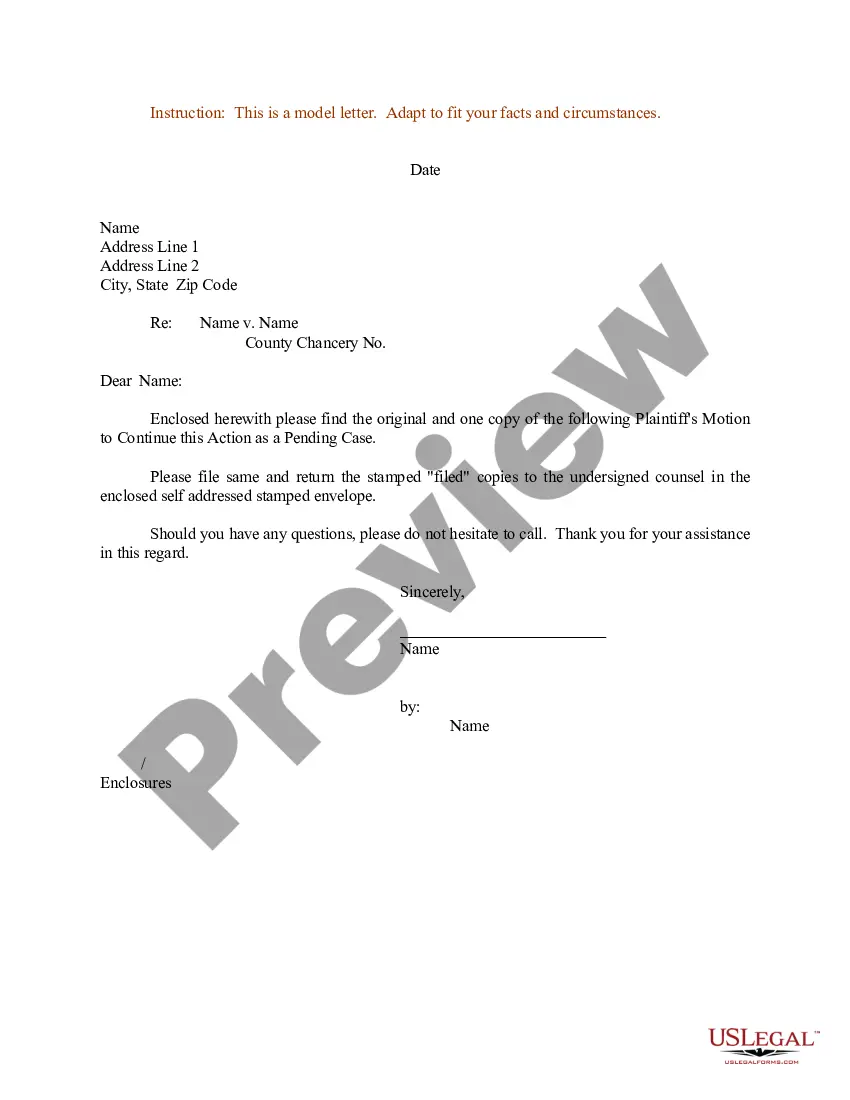
Continuances of any hearing may be accomplished by filing a Motion for Continuance at least twenty-four (24) business hours prior to the scheduled court date. The motion is filed in the Clerk of Court's office. Case Number as it appears on the Complaint and Summons you received from the Clerk of Court.
