Termination Of Contract Without Cause In Michigan
Description
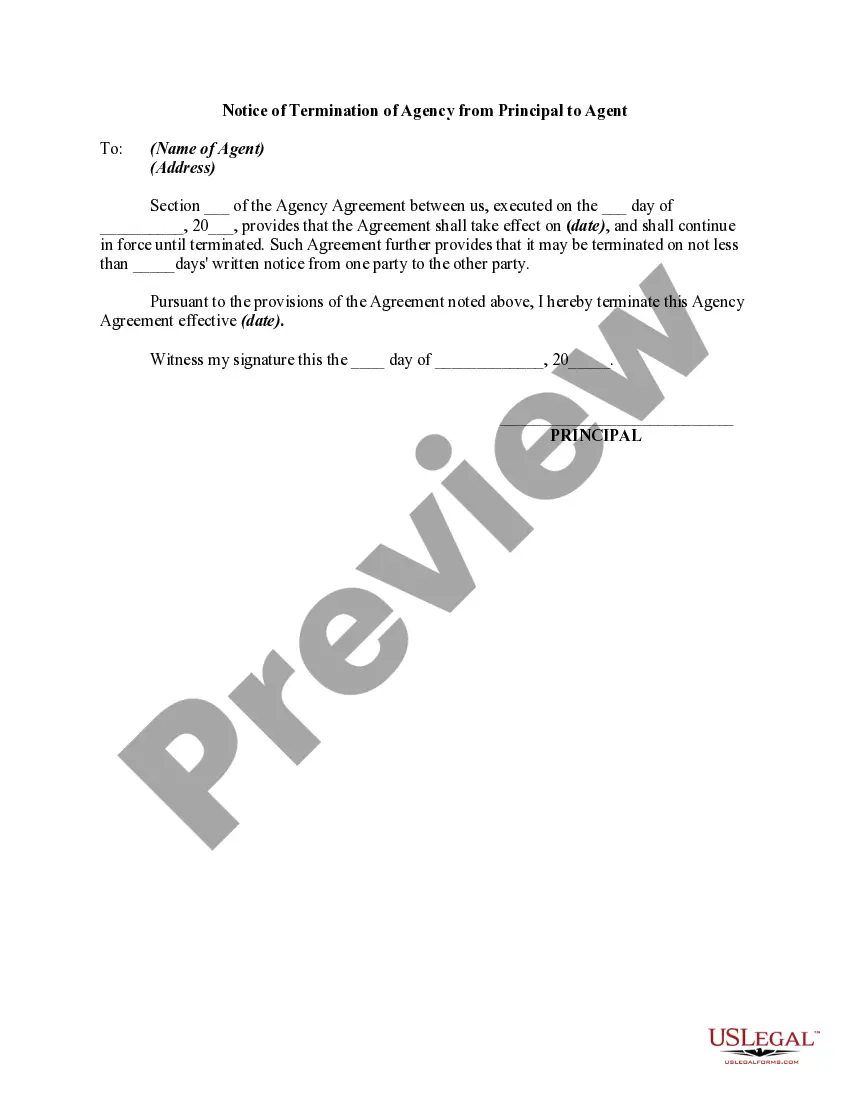
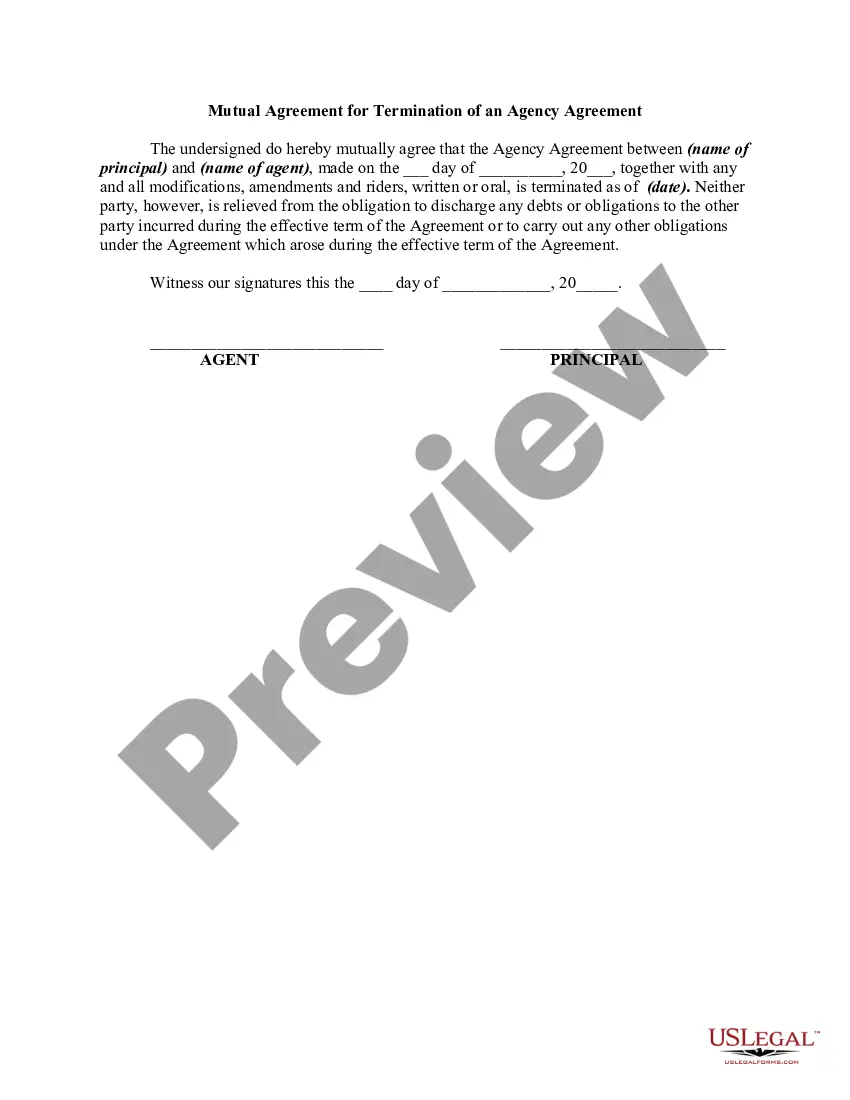
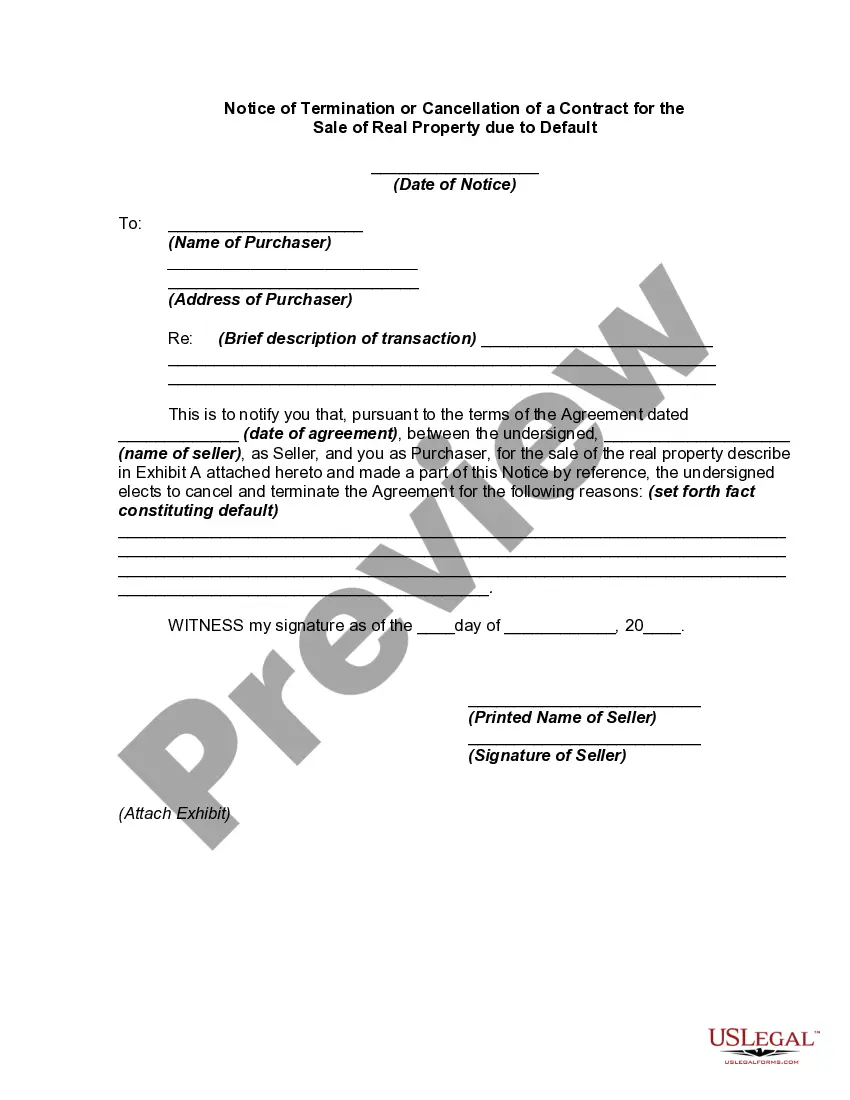

Get your form ready online
Our built-in tools help you complete, sign, share, and store your documents in one place.
Make edits, fill in missing information, and update formatting in US Legal Forms—just like you would in MS Word.
Download a copy, print it, send it by email, or mail it via USPS—whatever works best for your next step.
Sign and collect signatures with our SignNow integration. Send to multiple recipients, set reminders, and more. Go Premium to unlock E-Sign.
If this form requires notarization, complete it online through a secure video call—no need to meet a notary in person or wait for an appointment.
We protect your documents and personal data by following strict security and privacy standards.

Make edits, fill in missing information, and update formatting in US Legal Forms—just like you would in MS Word.

Download a copy, print it, send it by email, or mail it via USPS—whatever works best for your next step.

Sign and collect signatures with our SignNow integration. Send to multiple recipients, set reminders, and more. Go Premium to unlock E-Sign.

If this form requires notarization, complete it online through a secure video call—no need to meet a notary in person or wait for an appointment.

We protect your documents and personal data by following strict security and privacy standards.
Looking for another form?





Form popularity
FAQ
Yes, Michigan follows the at-will employment doctrine, which means that employers can terminate employees at any time and for any reason, as long as it is not discriminatory or retaliatory.
Yes. Most states are ``at will employment'' states, which means either party (employee or employee) can terminate the employment at any time without stating a reason.
A Termination Without Cause clause is a contractual provision that allows one or both parties to terminate the agreement without stating a specific reason or cause, typically upon providing advance written notice and subject to certain conditions or consequences.
Michigan follows the at-will doctrine, which means employers have the right to terminate employees for any reason, as long as the decision is not discriminatory or retaliatory.
Protecting Your Rights as an Employee In California, employers are not required to provide a reason for terminating an employee under the doctrine of at-will employment, as outlined in Labor Code Section 2922.
What is a termination without cause in Ontario? Termination without cause in Ontario refers to the situation where an employee is let go or fired from their job for reasons that are not related to serious misconduct. An employer does not need a good or fair reason to end the employment relationship with an employee.
Gather evidence—collect any documentation, emails, performance evaluations, or other relevant records supporting your wrongful termination claim. Consult with an employment attorney—schedule a consultation with an experienced employment attorney specializing in California wrongful termination cases.
Whether or not you can successfully sue your employer for wrongful discharge or wrongful termination largely depends on two things: (1) your employment status (at-will, independent contractor, etc.), and (2) the employer's intent or motivation for terminating your employment.
California Is an “At-Will” State California obeys “at-will” employment laws. This means that all employers have the right to terminate employees at will, for almost any reason, or for no reason at all.
Gather evidence—collect any documentation, emails, performance evaluations, or other relevant records supporting your wrongful termination claim. Consult with an employment attorney—schedule a consultation with an experienced employment attorney specializing in California wrongful termination cases.
