Contract Termination For Convenience In Houston
Description

Get your form ready online
Our built-in tools help you complete, sign, share, and store your documents in one place.
Make edits, fill in missing information, and update formatting in US Legal Forms—just like you would in MS Word.
Download a copy, print it, send it by email, or mail it via USPS—whatever works best for your next step.
Sign and collect signatures with our SignNow integration. Send to multiple recipients, set reminders, and more. Go Premium to unlock E-Sign.
If this form requires notarization, complete it online through a secure video call—no need to meet a notary in person or wait for an appointment.
We protect your documents and personal data by following strict security and privacy standards.

Make edits, fill in missing information, and update formatting in US Legal Forms—just like you would in MS Word.

Download a copy, print it, send it by email, or mail it via USPS—whatever works best for your next step.

Sign and collect signatures with our SignNow integration. Send to multiple recipients, set reminders, and more. Go Premium to unlock E-Sign.

If this form requires notarization, complete it online through a secure video call—no need to meet a notary in person or wait for an appointment.

We protect your documents and personal data by following strict security and privacy standards.
Looking for another form?









Form popularity
FAQ
Parties may agree to include a termination for convenience clause in a contract under the freedom of contract principle. However, in some countries and legal jurisdictions they may be statute law or case law which affects the operation or interpretation of such a clause.
A “termination for convenience” clause states that a property owner may terminate a contractor at its convenience for no reason at all. There does not need to be any breach of contract in place. However, the clauses typically require advance notice (such as 30 days).
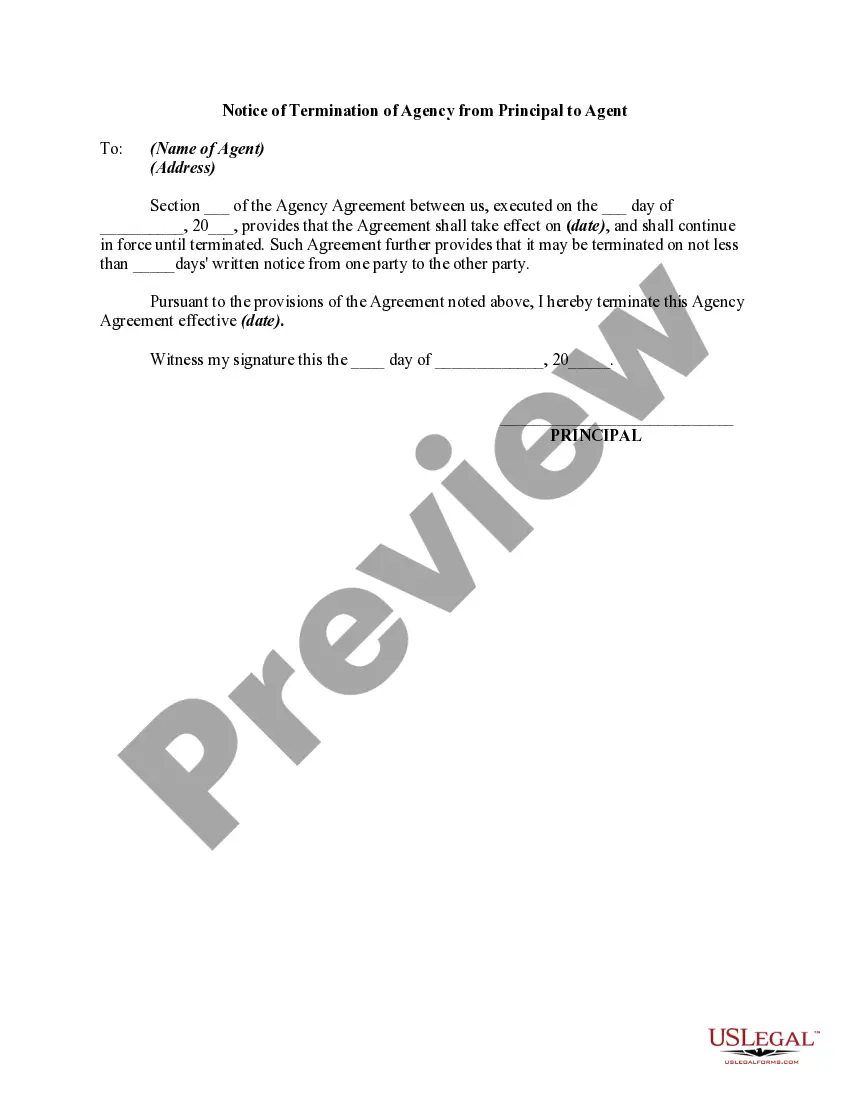
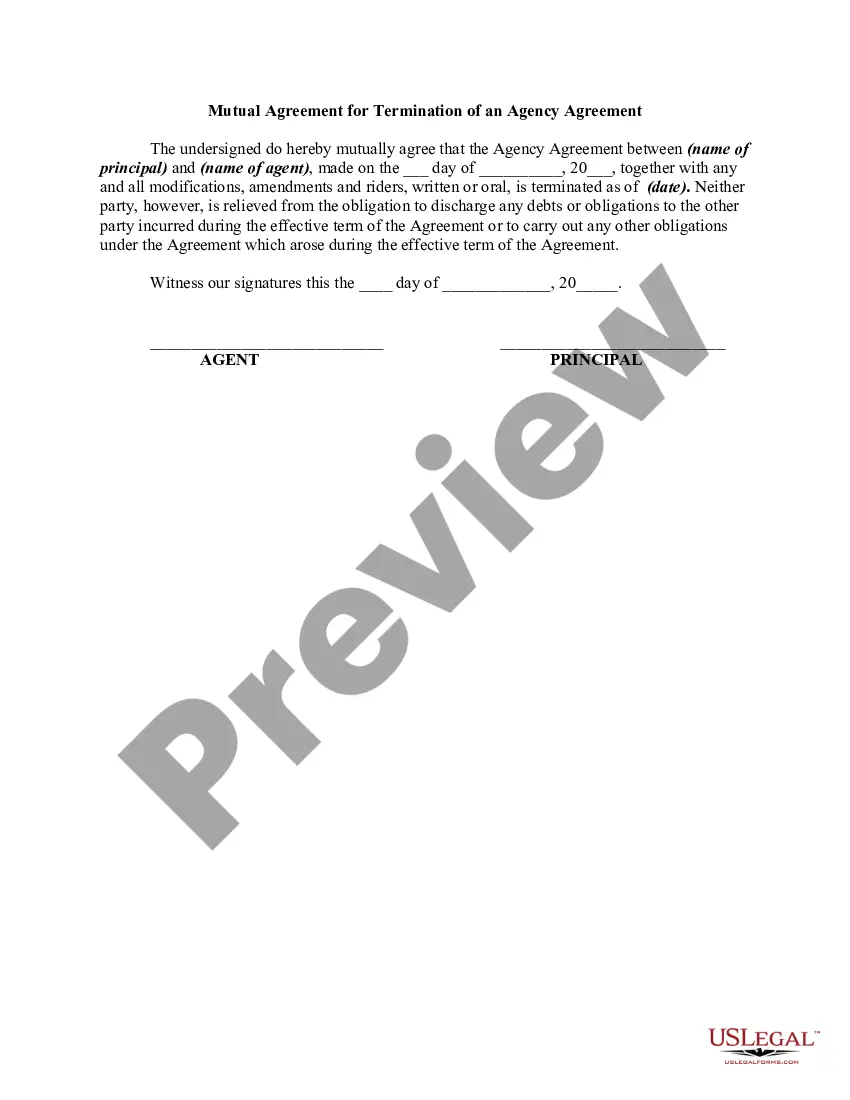
A form notice governed by Texas law terminating an agreement early for convenience. This notice may be used by a party to unilaterally terminate an agreement for convenience under the terms of that agreement.
Unilateral Right to Terminate Without Cause: Termination for convenience clauses generally allow one party, often the government entity, to terminate the contract without needing to establish fault or breach by the other party.
A termination for convenience clause, or "T for C" clause, enables a party to a contract to bring the contract to an end without the need to establish that the other party is in default, for example because the client party's needs have changed, or in order to arrange for another party to complete the contract.
A homeowner may also have a right to cancel a contract after three days in limited, extraordinary, situations. The homeowner's cancellation rights are created by both state and federal laws.
A “termination for convenience” clause states that a property owner may terminate a contractor at its convenience for no reason at all. There does not need to be any breach of contract in place.
A contractual right to terminate an agreement for any reason. It may also be referred to as termination without cause. A right to terminate for convenience usually requires the terminating party to provide a certain period of notice before the termination is effective and usually in writing.
By definition, a termination for convenience allows either party to terminate the contract at any time. There are however some limitations when it comes to using termination for convenience. Primarily, termination must be done in good faith and fair dealing.

