Competition Noncompetition For Us Treasuries In Wake
Description

Get your form ready online
Our built-in tools help you complete, sign, share, and store your documents in one place.
Make edits, fill in missing information, and update formatting in US Legal Forms—just like you would in MS Word.
Download a copy, print it, send it by email, or mail it via USPS—whatever works best for your next step.
Sign and collect signatures with our SignNow integration. Send to multiple recipients, set reminders, and more. Go Premium to unlock E-Sign.
If this form requires notarization, complete it online through a secure video call—no need to meet a notary in person or wait for an appointment.
We protect your documents and personal data by following strict security and privacy standards.

Make edits, fill in missing information, and update formatting in US Legal Forms—just like you would in MS Word.

Download a copy, print it, send it by email, or mail it via USPS—whatever works best for your next step.

Sign and collect signatures with our SignNow integration. Send to multiple recipients, set reminders, and more. Go Premium to unlock E-Sign.

If this form requires notarization, complete it online through a secure video call—no need to meet a notary in person or wait for an appointment.

We protect your documents and personal data by following strict security and privacy standards.
Looking for another form?







Form popularity
FAQ
The FTC Rule was slated to have an effective date of September 4, 2024. However, on August 20, 2024, the United States District Court for the Northern District of Texas granted summary judgment to the plaintiff in Ryan LLC v. FTC, enjoining the FTC from implementing and enforcing its Rule.
The Final Rule requires an employer to provide clear and conspicuous notice to workers subject to a prohibited non-compete, in an individualized communication, that the worker's non-compete clause will not be, and cannot legally be, enforced against the worker.
Scheduled to take effect on September 4, 2024, the Non-Compete Rule banned non-compete agreements, including any agreements that “function or prevent” a worker from seeking or accepting work or operating a business; made it unlawful to enter into, enforce, or attempt to enter into or enforce, a non-compete agreement ...
The case is noteworthy because the Supreme Court has now decisively shut the legal door on non-competition agreements that do not fit within specific statutory exceptions. The federal courts interpreting California law had permitted some non-compete agreements under a narrow-restraint exception.
For senior executives, existing noncompetes can remain in force. Existing noncompetes with workers other than senior executives are not enforceable after the effective date. Fewer than 1% of workers are estimated to be senior executives under the final rule.
Compensation: An employer must offer some benefit to the employee in exchange for limiting future opportunities. For new employees, the job offer itself is generally considered sufficient compensation. Still, existing employees asked to sign a covenant not to compete may be entitled to a raise or promotion.
Under the Noncompete Rule, the FTC adopted a comprehensive ban on new noncompetes with all workers, including senior executives. The final Noncompete Rule provides that it is an unfair method of competition—and therefore a violation of Section 5—for employers to enter into noncompetes with workers.
On April 23, 2024, the Federal Trade Commission issued its long-awaited Final Non-Compete Clause Rule, which operates to ban most post-employment non-compete agreements between employers and their workers.
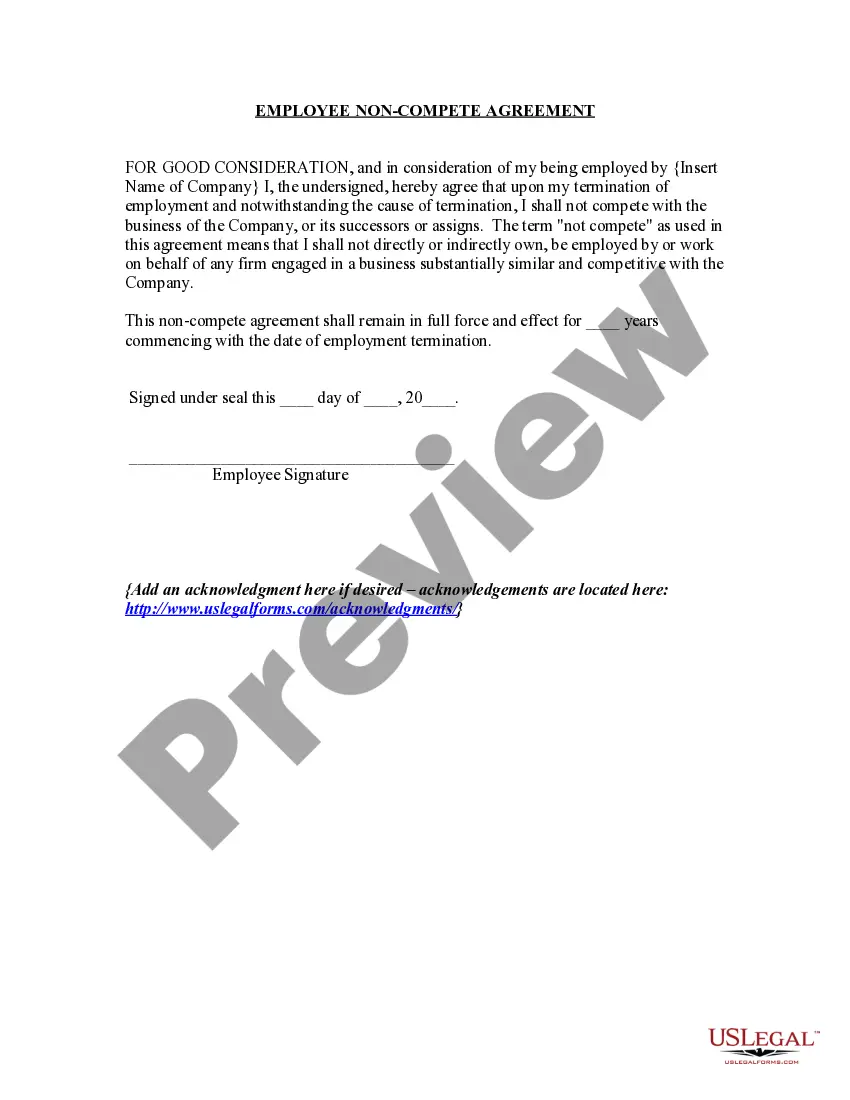
Now that the FTC is permanently enjoined from enforcing the rule, (unless and until a successful FTC appeal), non-competes return to the status quo and are legal and enforceable on the same terms as they were before the FTC passed the non-compete rule.
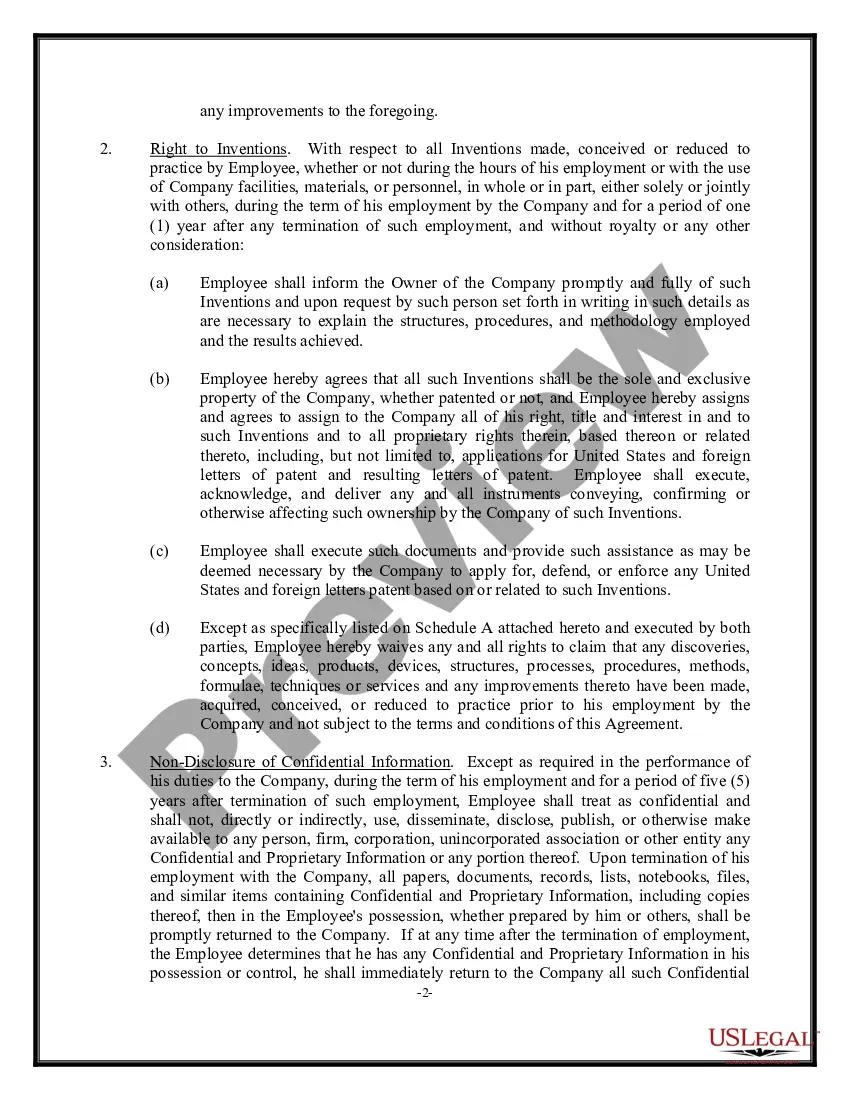
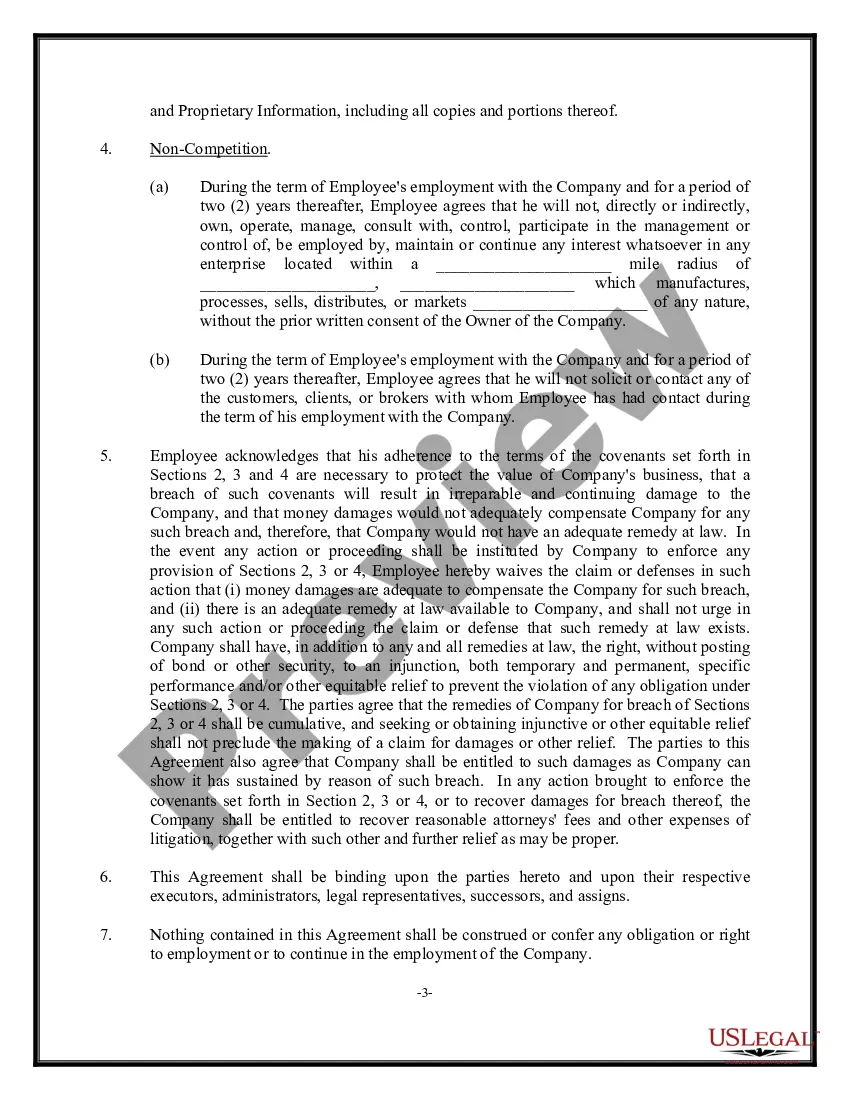
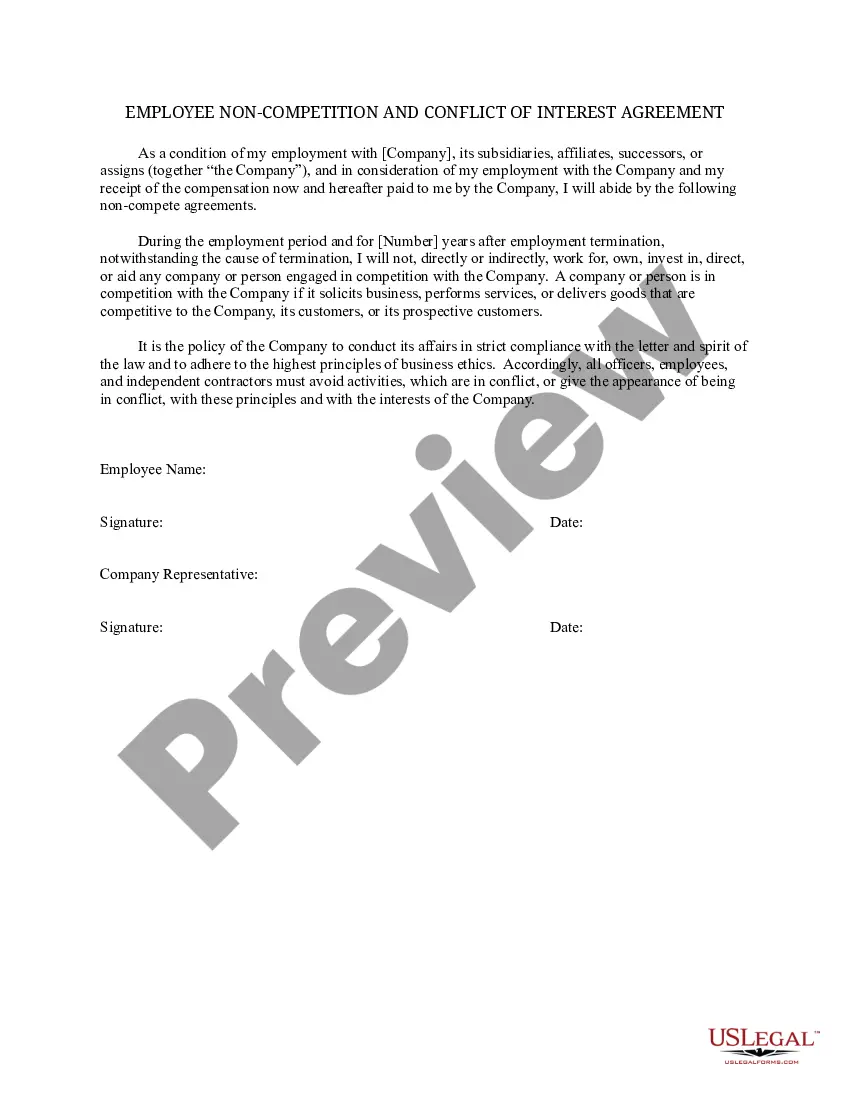
(c) Employee name agrees not to set up in business as a direct competitor of company name within a radius of number miles of company name and location for a period of number and measure of time (e.g., “four months” or “10 years”) following the expiration or termination of this agreement.
