Competition Non Competition For Resources In California
Description

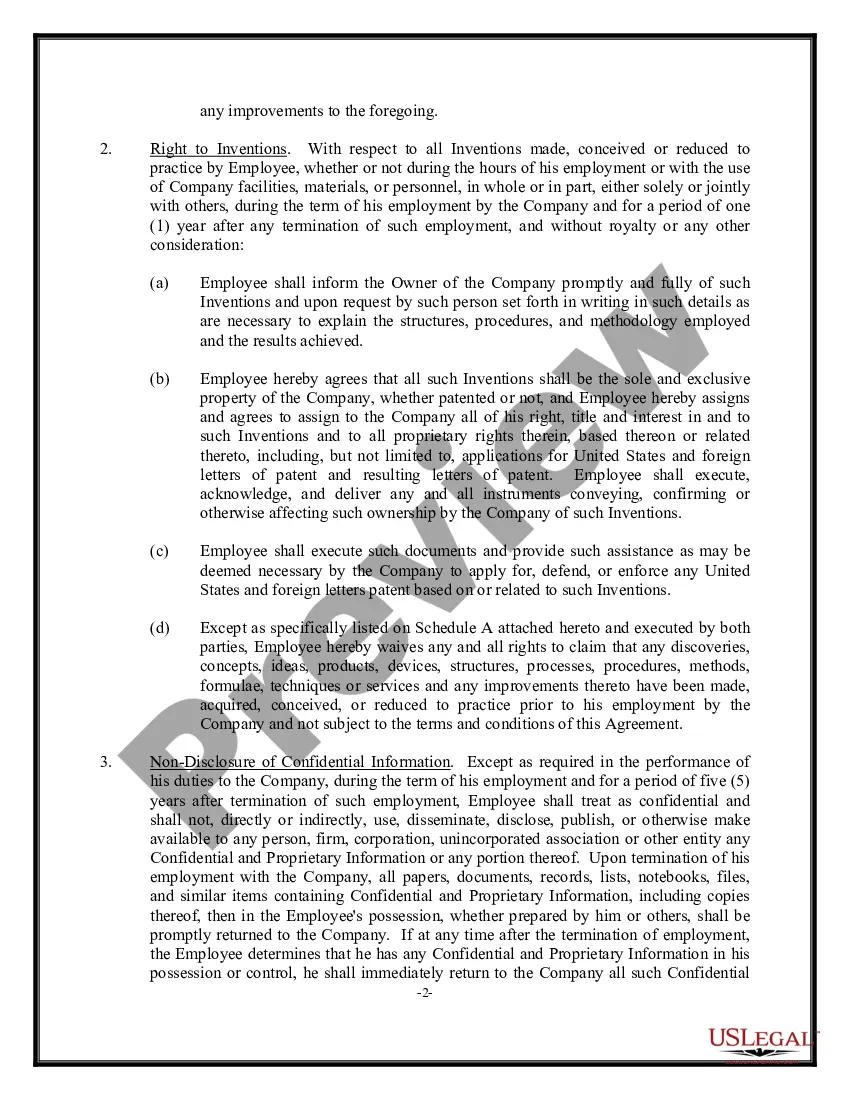
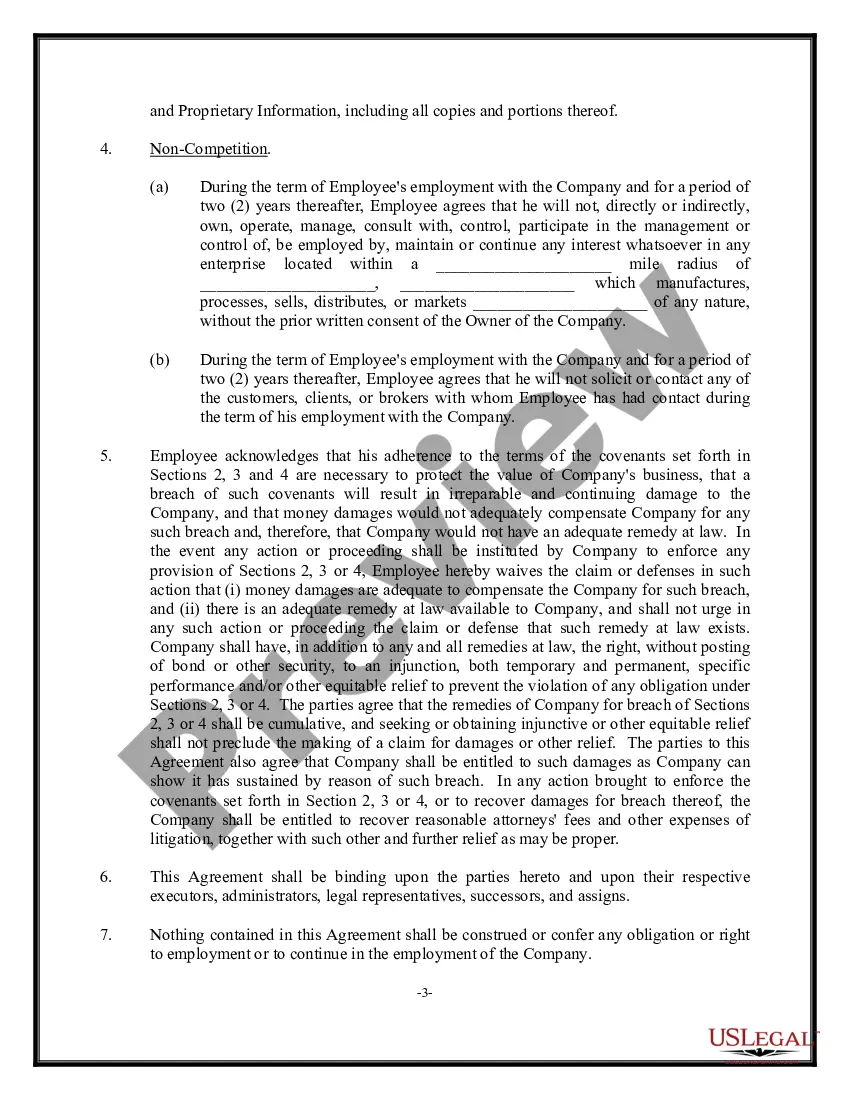
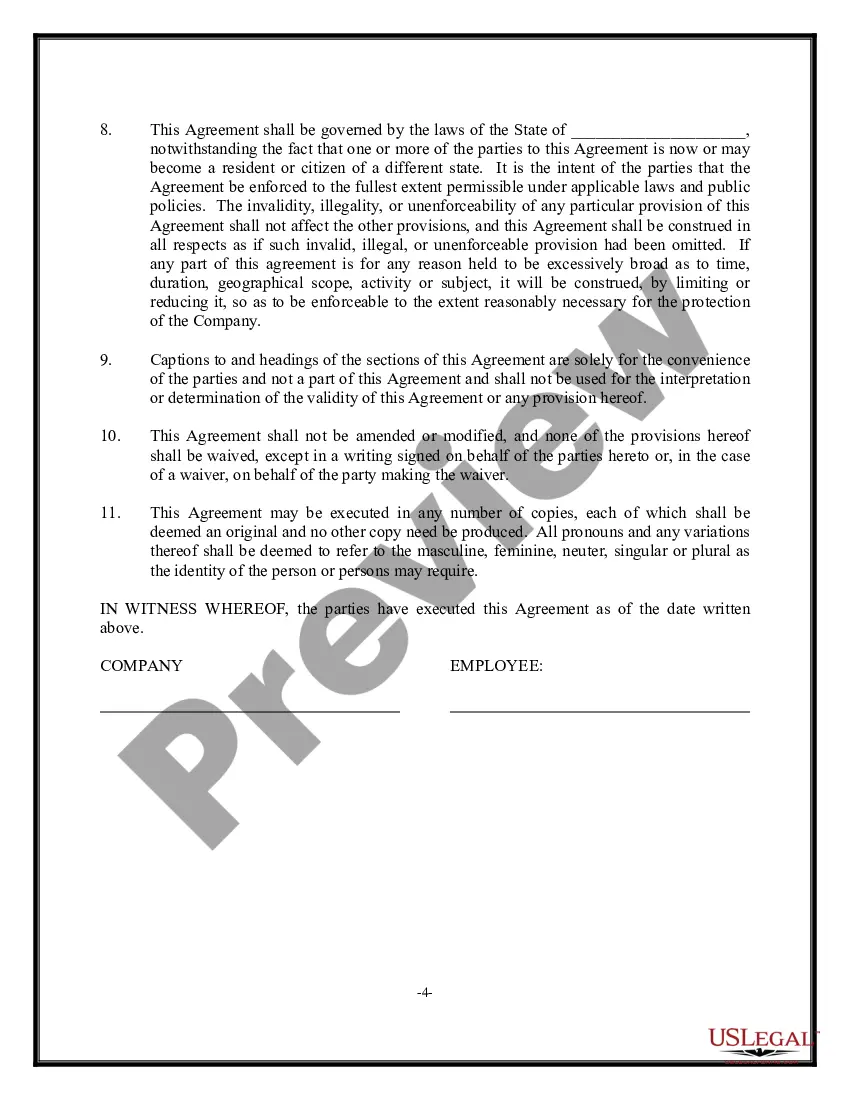
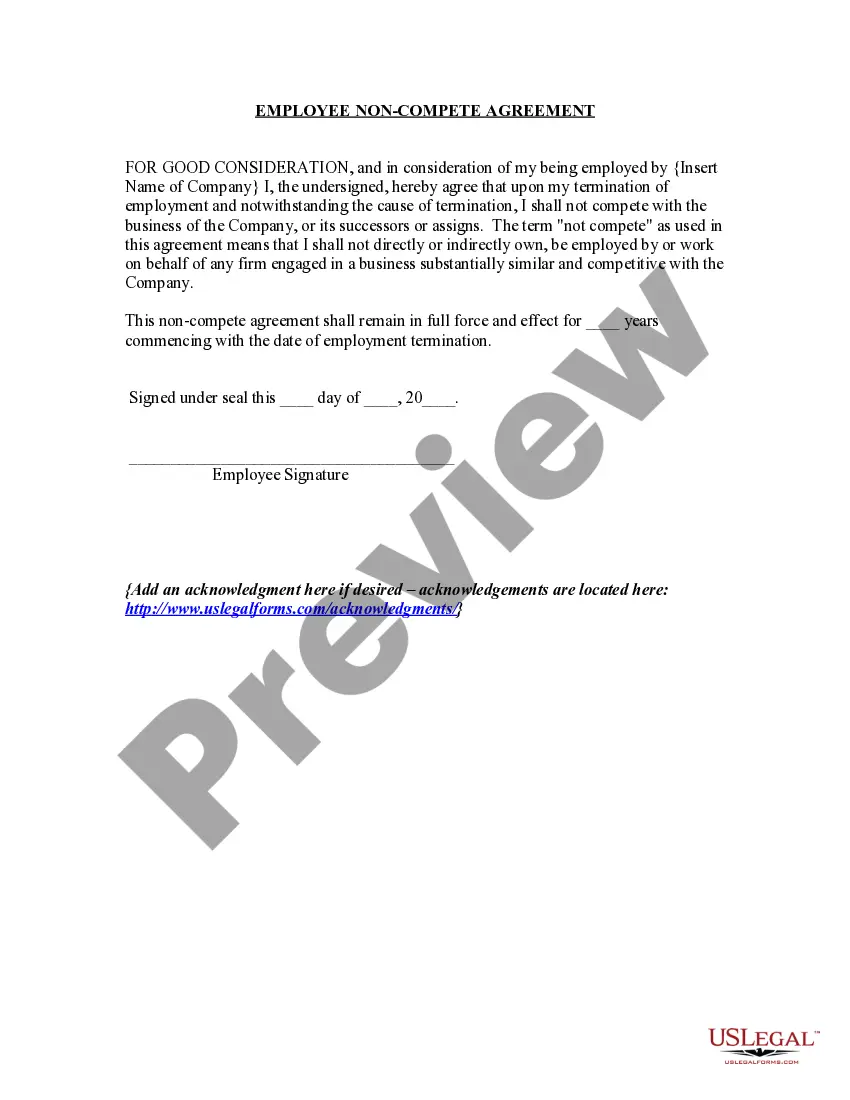
Get your form ready online
Our built-in tools help you complete, sign, share, and store your documents in one place.
Make edits, fill in missing information, and update formatting in US Legal Forms—just like you would in MS Word.
Download a copy, print it, send it by email, or mail it via USPS—whatever works best for your next step.
Sign and collect signatures with our SignNow integration. Send to multiple recipients, set reminders, and more. Go Premium to unlock E-Sign.
If this form requires notarization, complete it online through a secure video call—no need to meet a notary in person or wait for an appointment.
We protect your documents and personal data by following strict security and privacy standards.

Make edits, fill in missing information, and update formatting in US Legal Forms—just like you would in MS Word.

Download a copy, print it, send it by email, or mail it via USPS—whatever works best for your next step.

Sign and collect signatures with our SignNow integration. Send to multiple recipients, set reminders, and more. Go Premium to unlock E-Sign.

If this form requires notarization, complete it online through a secure video call—no need to meet a notary in person or wait for an appointment.

We protect your documents and personal data by following strict security and privacy standards.
Looking for another form?







Form popularity
FAQ
Competitors are other businesses who can offer the same or similar goods and services to your customers.
A competitor is an organisation that offers the same or similar product or service as your own. They may be in the same industry as you or a different one entirely, but it helps to understand that your competitors usually offer something similar to what you're doing.
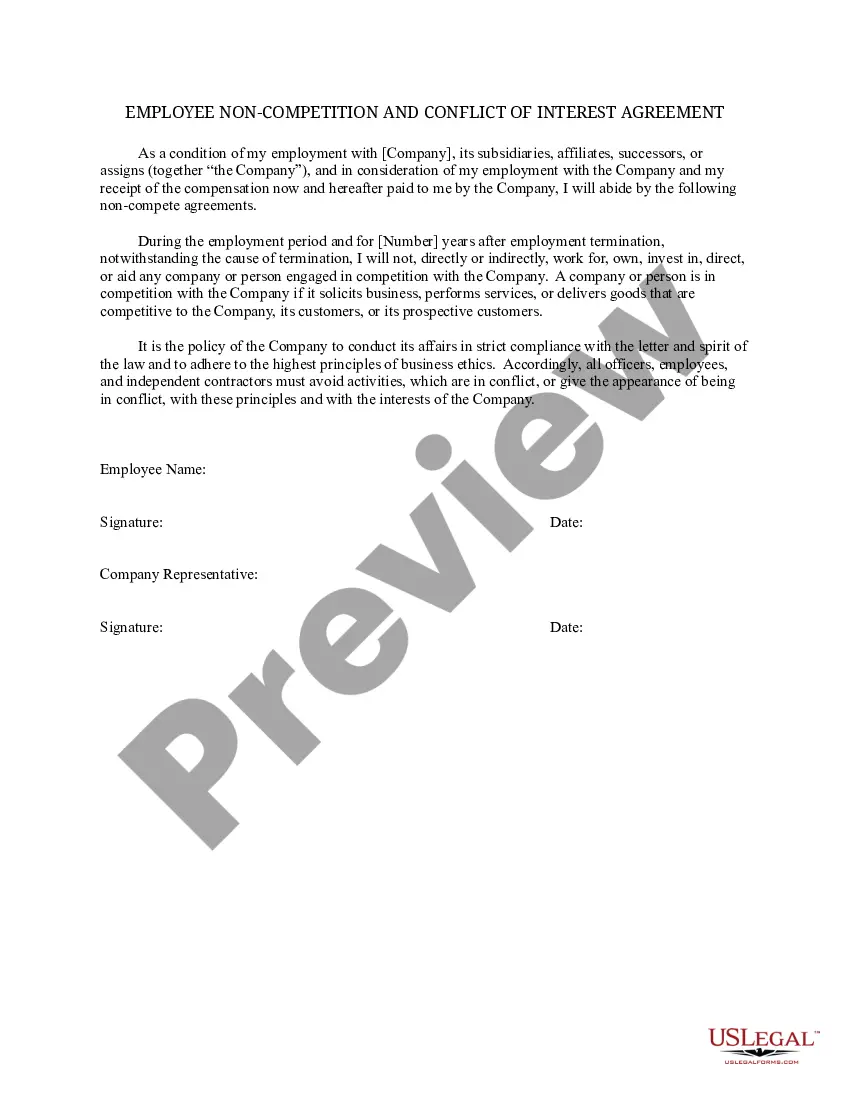
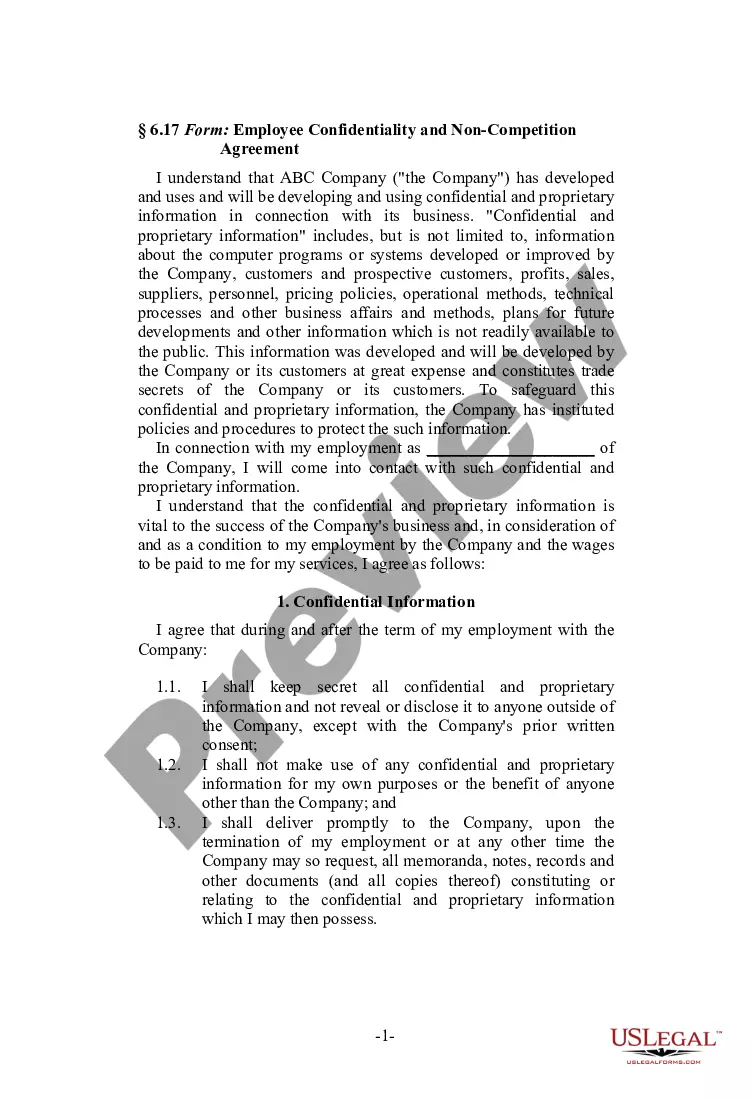
Competitors: The competition must be defined in the agreement. The company doesn't need to list them all, but it should give a general idea of the industry and types of businesses that the employee agrees to not work in. Damages: Employers define the damages they are entitled to if an employee breaches the agreement.
Noncompete agreements are void and prohibited by law in California.
The very basic requirements are that the non-compete must (1) be in writing; (2) be part of an employment contract; (3) be based on valuable consideration; (4) be reasonable in scope of time and of territory; (5) not be against public policy.
The Federal Trade Commission (FTC) defines non-compete agreements as clauses in employment contracts that restrict a worker from working for a competing entity, or starting their own competing business, within a certain geographic area and/or period of time after their employment ends.
Several factors can void or limit the enforceability of a non-compete agreement, including overly broad restrictions, unreasonable time frames or geographical limits, lack of consideration (such as compensation or job opportunities provided in exchange for the agreement), and violation of public policy.
Noncompete agreements are void and prohibited by law in California. QUICK SUMMARY: In California, noncompete agreements that are intended to prevent or restrain an employee from engaging in another lawful possession, trade or business during their employment have long been unenforceable.
