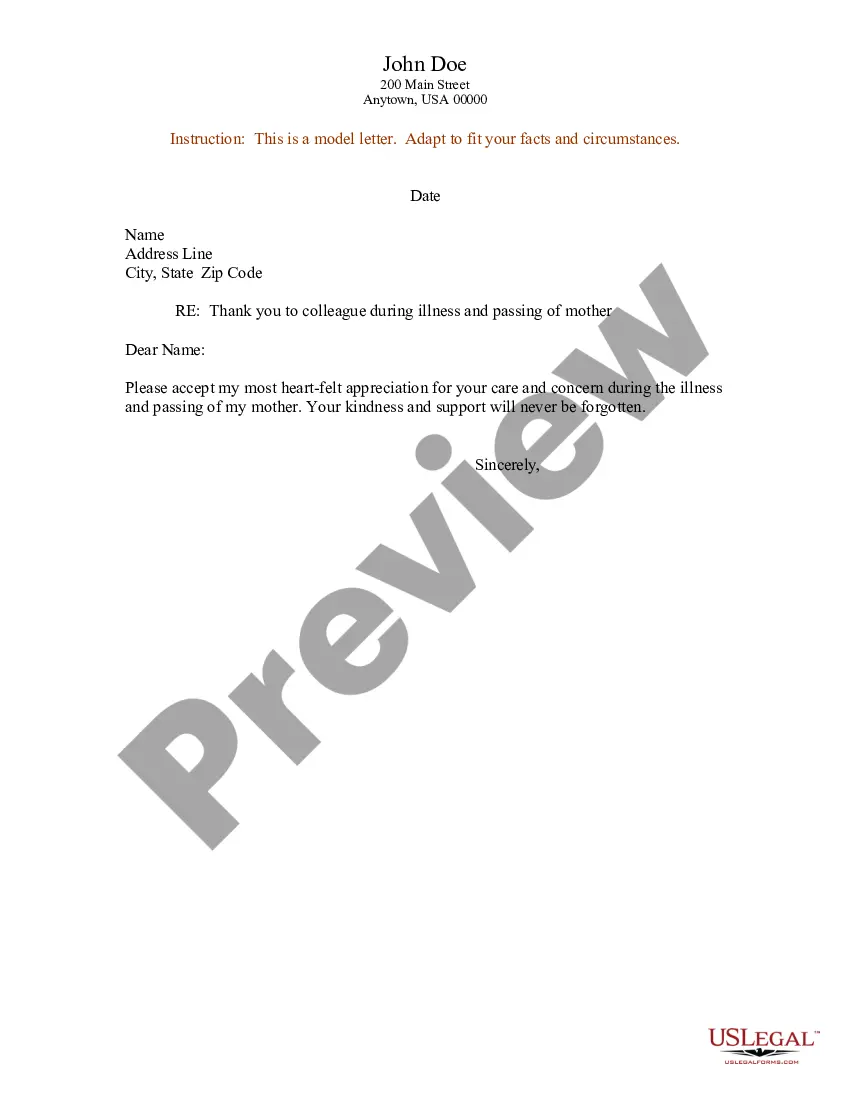
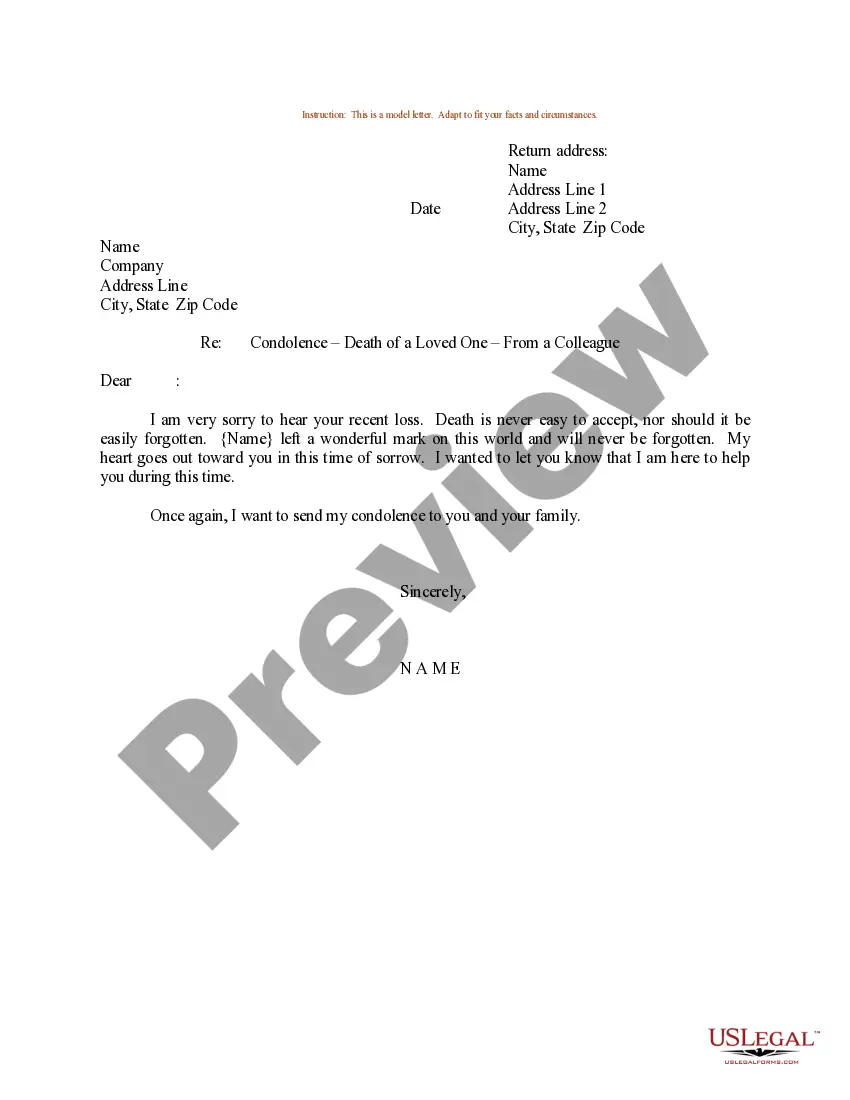
Letter For Condolences In Queens
Description
Get your form ready online
Our built-in tools help you complete, sign, share, and store your documents in one place.
Make edits, fill in missing information, and update formatting in US Legal Forms—just like you would in MS Word.
Download a copy, print it, send it by email, or mail it via USPS—whatever works best for your next step.
Sign and collect signatures with our SignNow integration. Send to multiple recipients, set reminders, and more. Go Premium to unlock E-Sign.
If this form requires notarization, complete it online through a secure video call—no need to meet a notary in person or wait for an appointment.
We protect your documents and personal data by following strict security and privacy standards.

Make edits, fill in missing information, and update formatting in US Legal Forms—just like you would in MS Word.

Download a copy, print it, send it by email, or mail it via USPS—whatever works best for your next step.

Sign and collect signatures with our SignNow integration. Send to multiple recipients, set reminders, and more. Go Premium to unlock E-Sign.

If this form requires notarization, complete it online through a secure video call—no need to meet a notary in person or wait for an appointment.

We protect your documents and personal data by following strict security and privacy standards.
Looking for another form?









Form popularity
FAQ
In Writing For those who do wish to write directly to the royal family member, the letter should begin 'Sir'. It ends with 'I have the honour to remain, Sir, Your Royal Highness's most humble and obedient servant' and then your name. Within the body of the letter, do not use 'you' (singular) or 'your' (singular).
Members of the public seeking information about the Monarchy or Royal Family may contact the Public Information Office by post or by telephone. The office is unable to respond to enquiries submitted by e-mail. Tel (during 9am - 5pm (GMT) Monday to Friday): (+44) (0)20 7930 4832.
For those who do wish to write directly to The Queen, the letter should begin 'Madam' or 'May it please Your Majesty'. It ends with 'I have the honour to remain, Madam, Your Majesty's most humble and obedient subject' and then your name.
There are no physical Books of Condolence at the Royal Residences. An online Book of Condolence for those who wish to leave messages is available on the Royal website: .
Alternatively correspondents may send their formal letter to the member of the Royal Family via the private secretary or lady-in-waiting with a covering letter, saying 'please will you lay my letter before His Majesty or His/Her Royal Highness...'
As a constitutional Monarch, His Majesty does not intervene in any political or personal disputes, and letters asking him to do so will receive a standard reply to this effect. For security reasons, the Correspondence Team are unable to accept any unsolicited gifts which are sent to The King.
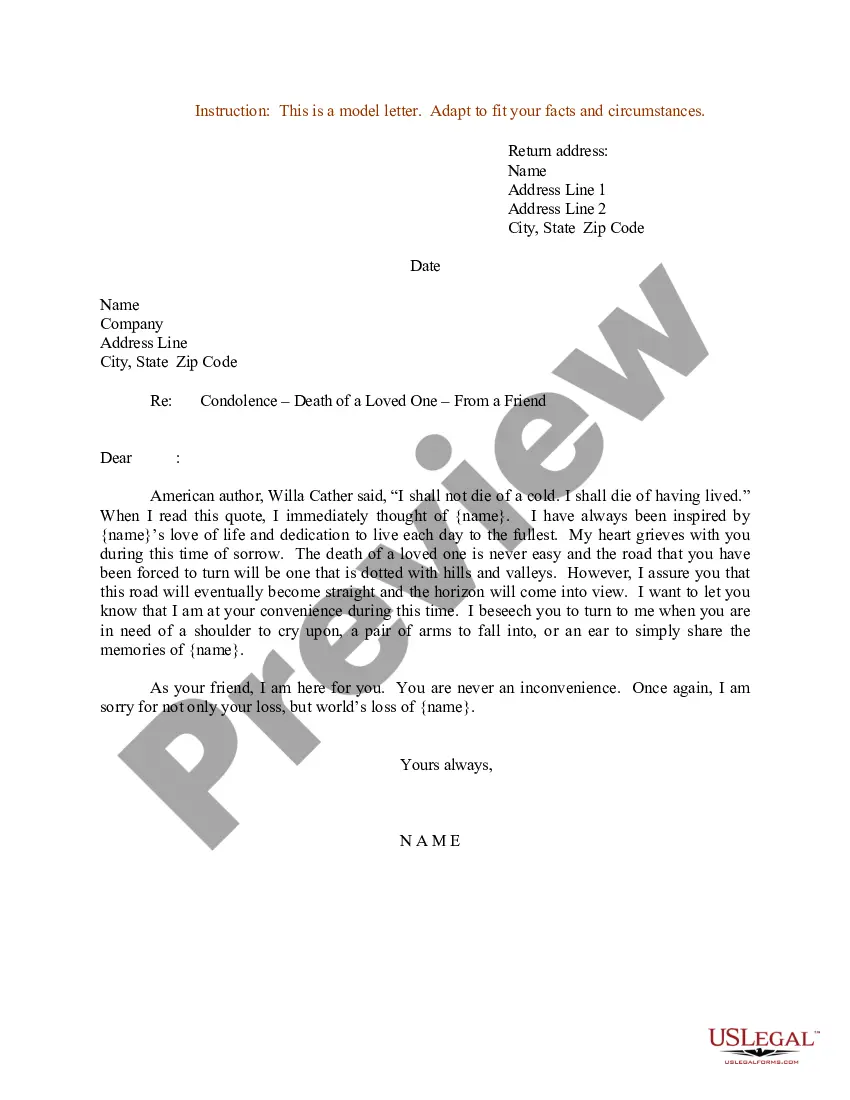
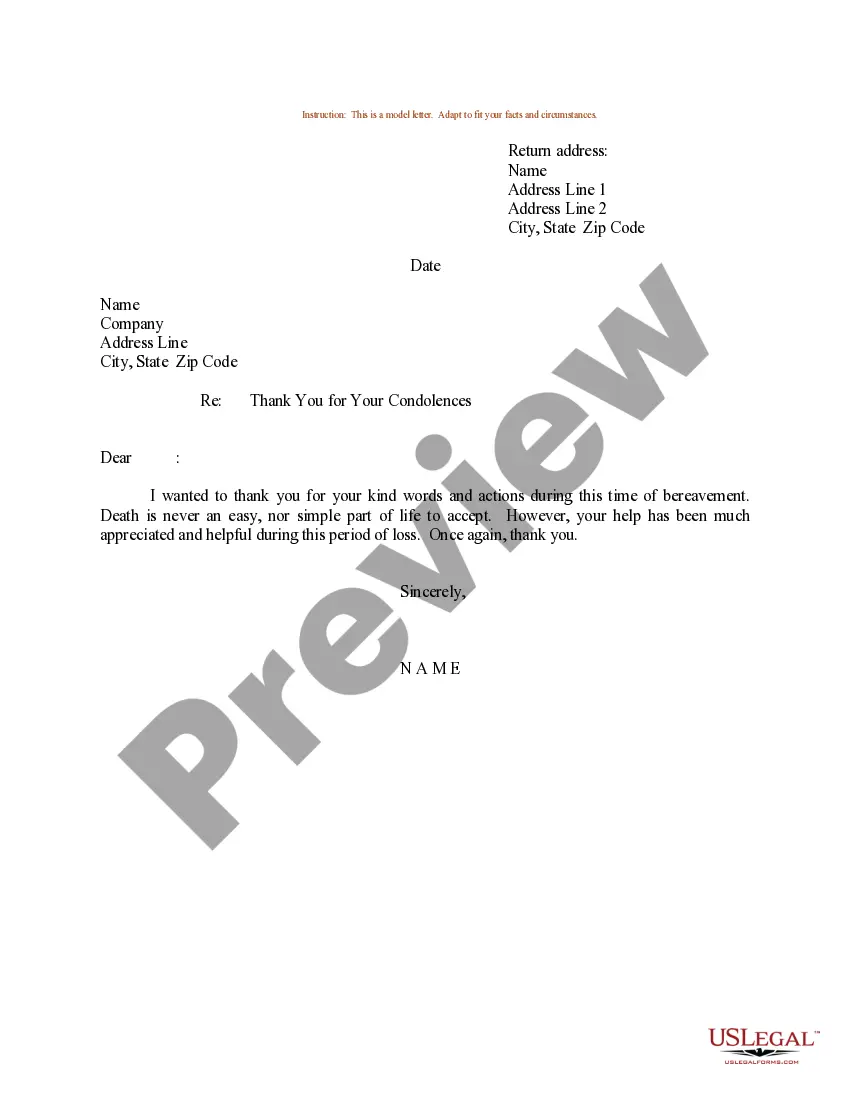
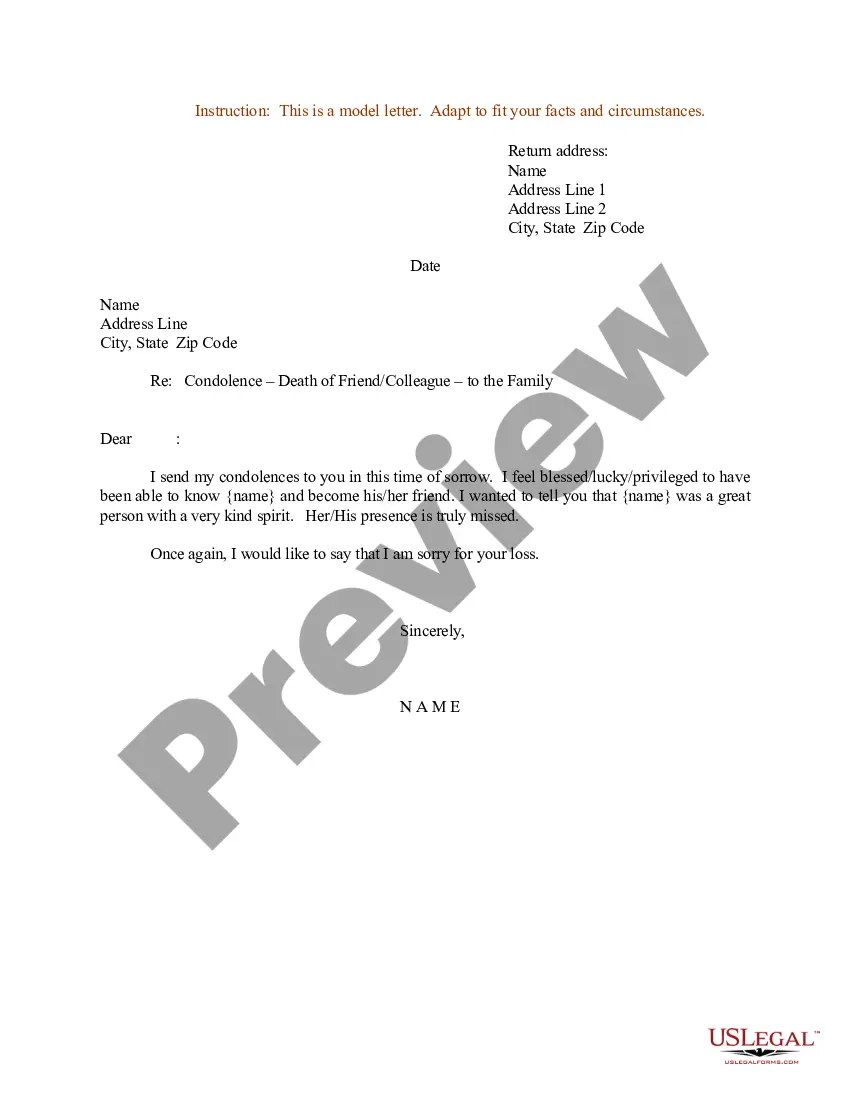
Guidelines for writing condolence letters: Make sure you include the name of the person who died or mention the specific incident that caused sorrow for the person. If you knew the deceased, mention something positive about the person, such as a memory, a short story, or anything else that pays tribute to their life.
I am here to support you.” “My heartfelt condolences for your loss.” “I am here if you need to talk.” “I will remember your co-worker fondly.”
``I'm so very Sorry for your loss.'' ``My heart goes out to you and your family during this difficult time.'' ``You are in my thoughts and prayers.'' ``Sending you love and strength as you navigate through this challenging period.'' ``Please accept my deepest sympathies.'' ``I am here for you if you need anything.''
Talk about how the deceased touched your life. Try to capture what it was about the person that you remembered, appreciated, or respected. You may use humor – the funny stories are often appreciated by the bereaved. Remind the bereaved of their personal strengths you have witnessed.