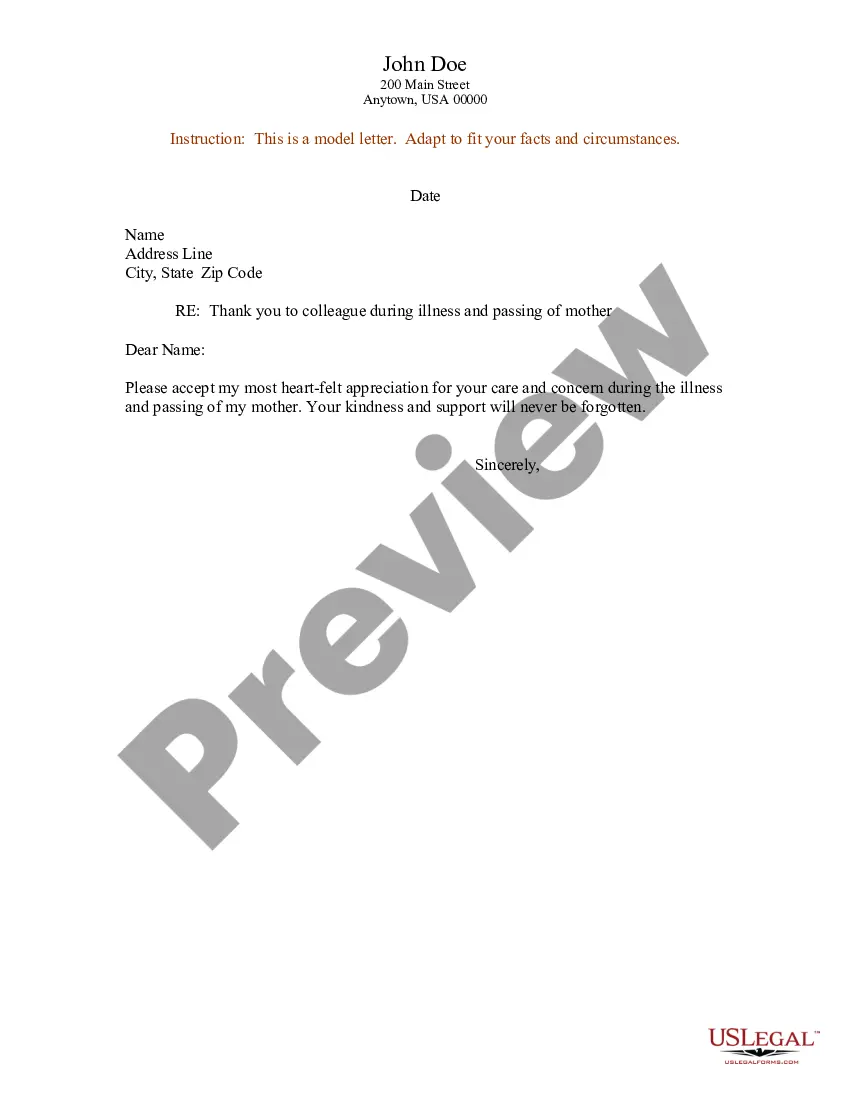
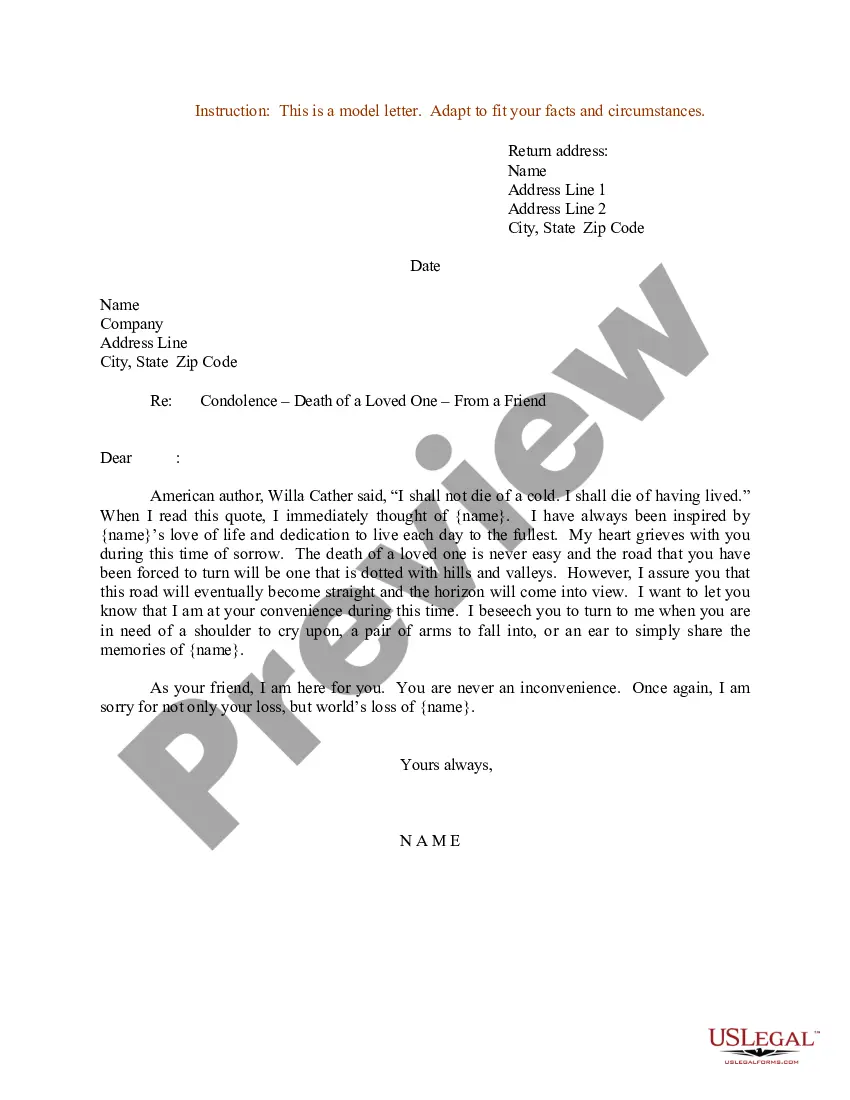
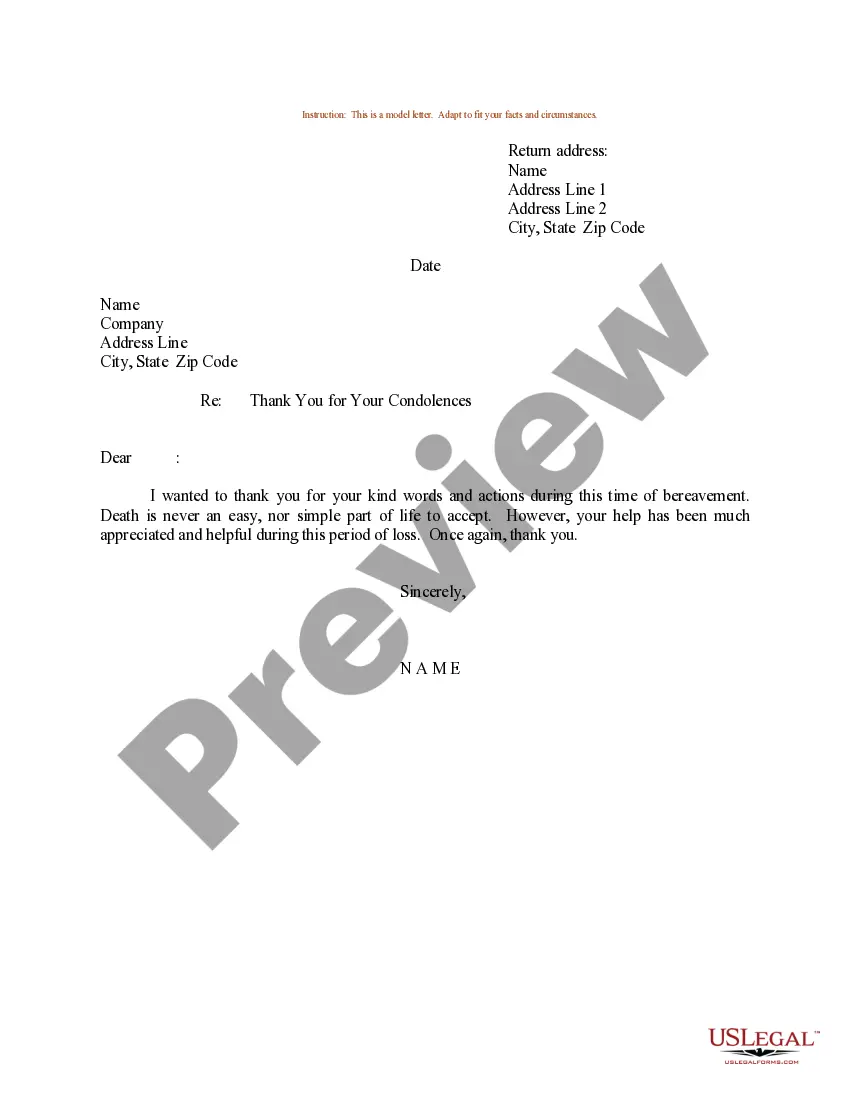
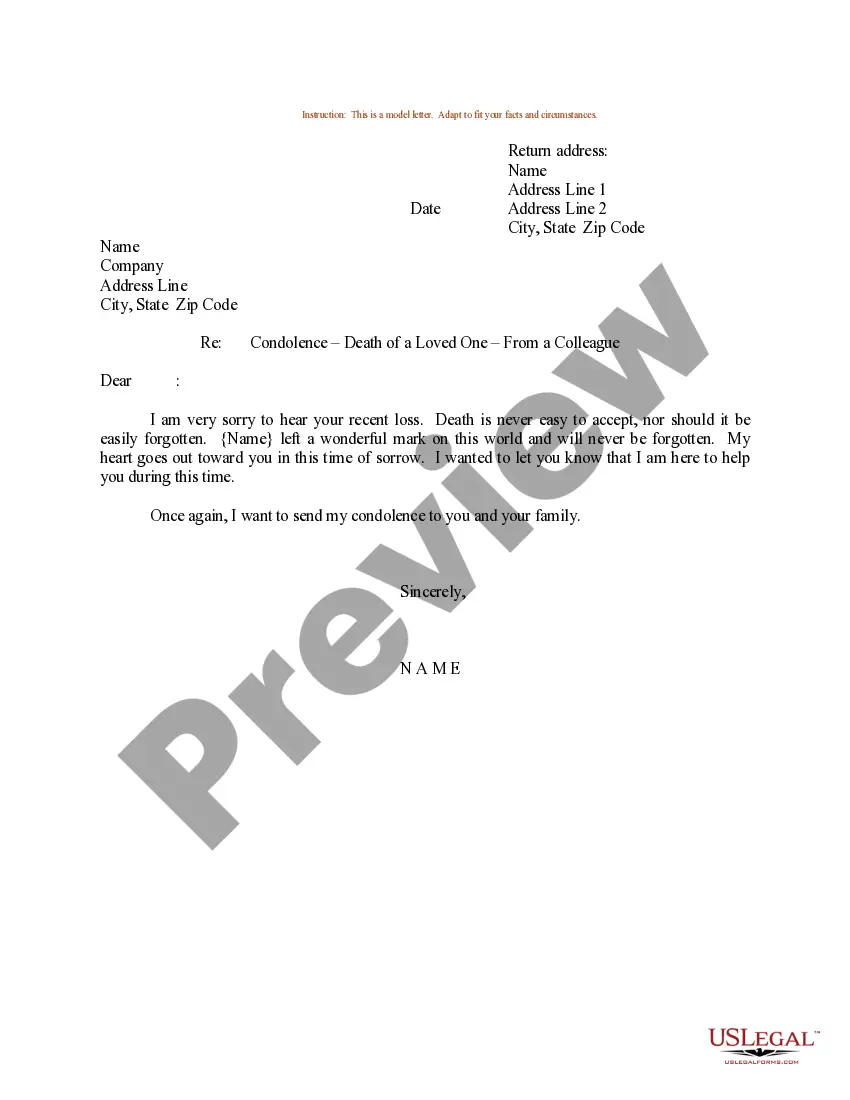
Condolences Letter Formal In North Carolina
Description
Get your form ready online
Our built-in tools help you complete, sign, share, and store your documents in one place.
Make edits, fill in missing information, and update formatting in US Legal Forms—just like you would in MS Word.
Download a copy, print it, send it by email, or mail it via USPS—whatever works best for your next step.
Sign and collect signatures with our SignNow integration. Send to multiple recipients, set reminders, and more. Go Premium to unlock E-Sign.
If this form requires notarization, complete it online through a secure video call—no need to meet a notary in person or wait for an appointment.
We protect your documents and personal data by following strict security and privacy standards.

Make edits, fill in missing information, and update formatting in US Legal Forms—just like you would in MS Word.

Download a copy, print it, send it by email, or mail it via USPS—whatever works best for your next step.

Sign and collect signatures with our SignNow integration. Send to multiple recipients, set reminders, and more. Go Premium to unlock E-Sign.

If this form requires notarization, complete it online through a secure video call—no need to meet a notary in person or wait for an appointment.

We protect your documents and personal data by following strict security and privacy standards.
Looking for another form?









Form popularity
FAQ
Such condolence letters are written strictly in a formal manner on behalf of the organization. A condolence letter is the most effective way to convey your sympathies to the concerned individual.
Talk about how the deceased touched your life. Try to capture what it was about the person that you remembered, appreciated, or respected. You may use humor – the funny stories are often appreciated by the bereaved. Remind the bereaved of their personal strengths you have witnessed.
How to write a condolence letter Write the letter by hand. Keep it short and simple. Express your condolences. Share a memory. Offer your help and support. Close the letter with some thoughtful words.
My heartfelt condolences I was deeply saddened to hear of your recent loss. Please know that I am here for you during this difficult time. Losing someone we love is never easy, but please take comfort in knowing that you are surrounded by people who care about you and want to support you.
I/we were saddened to hear of the death of <insert family member's name>. I/we know that this is a difficult time for you and your family. Words are inadequate at a time like this; however, please know that you and your family are in my/our thoughts.
Don't Say “They're better off now,” or “They're happy now,” or Even “They're in a better place.” Because if you do say this, you better be able to prove it to the griever. Even if the person you are writing to has said one of the above statements to you, it's still best not to say it yourself.
Simple condolence messages "With heartfelt condolences.” "Sending caring thoughts your way.” "I was so saddened to hear of your loss.” "So sorry for your loss.” "Thinking of you.” "Sent with love and remembrance of your loved one.” "With deepest condolences to the name family.”
Guidelines for writing condolence letters: Make sure you include the name of the person who died or mention the specific incident that caused sorrow for the person. If you knew the deceased, mention something positive about the person, such as a memory, a short story, or anything else that pays tribute to their life.
Condolence messages for the loss of a family member I am deeply sorry to hear about the passing of your loved one. My deepest sympathy goes out to you at this difficult time. May happy memories of your family member bring you comfort at this sad time. I am saddened to hear of the loss of your family member.
How to Write a Sympathy Note Acknowledge the loss and refer to the deceased by name. Express your sympathy. Note one or more of the deceased's special qualities. End with a thoughtful hope, wish, or a genuine expression of sympathy.