Stallion Breeding Contract Forms In San Diego
Description
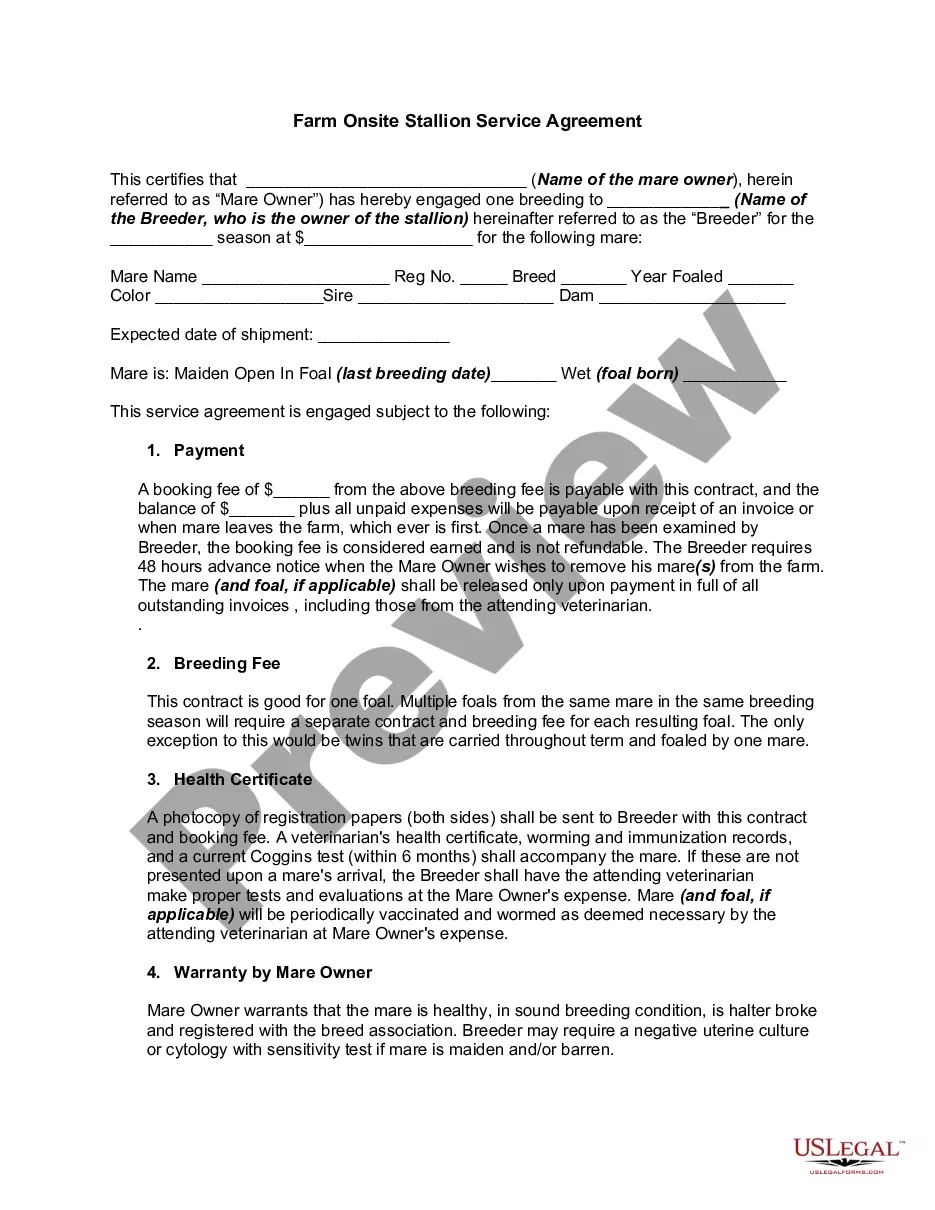
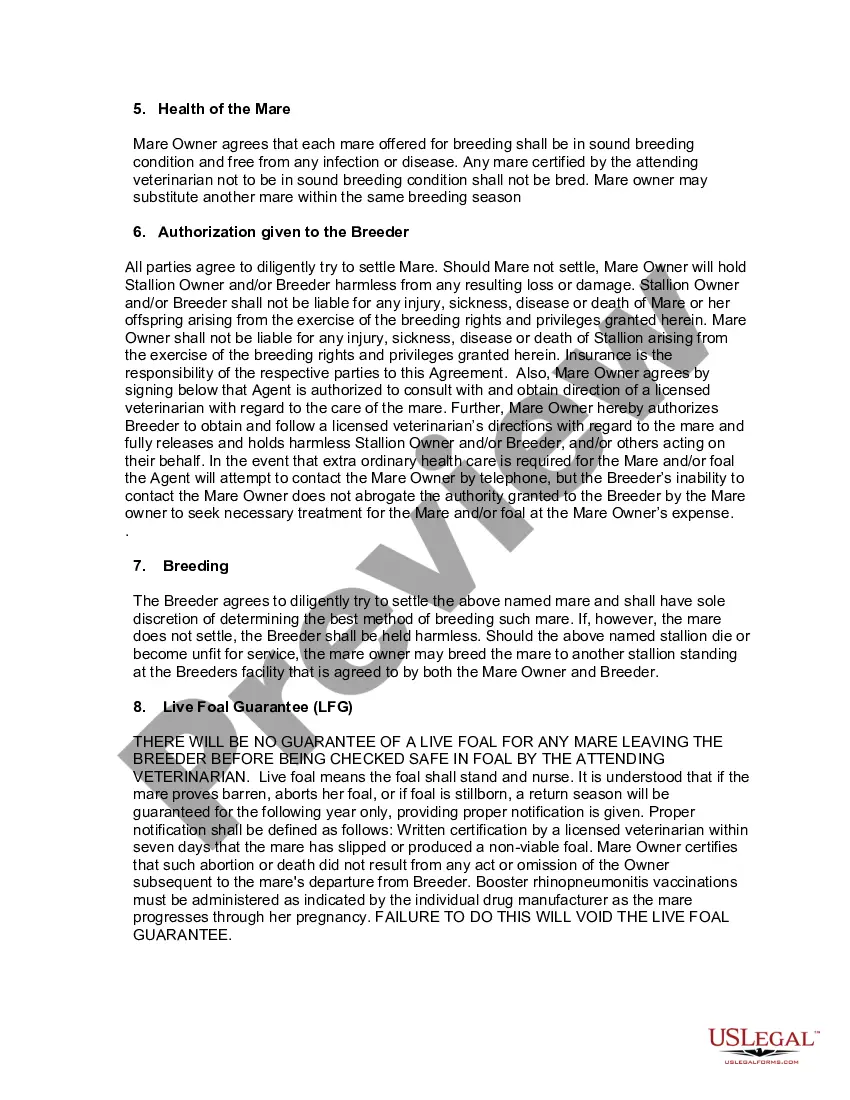
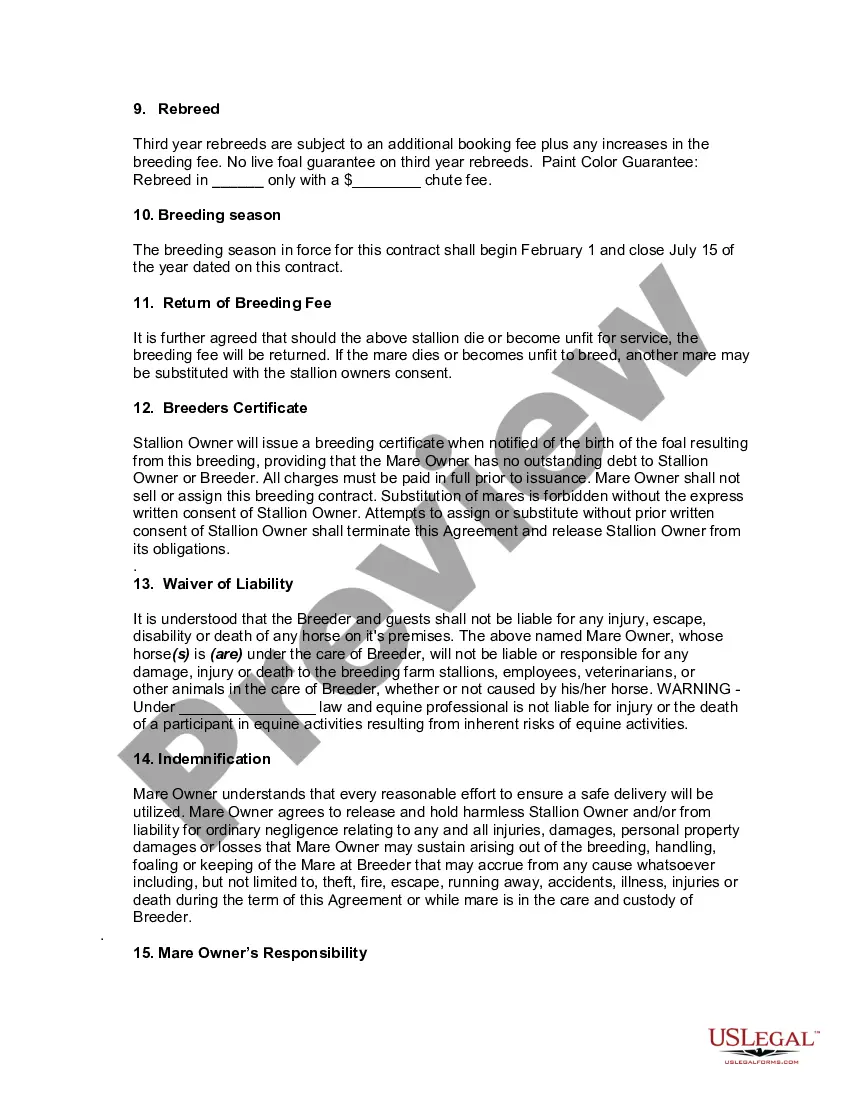
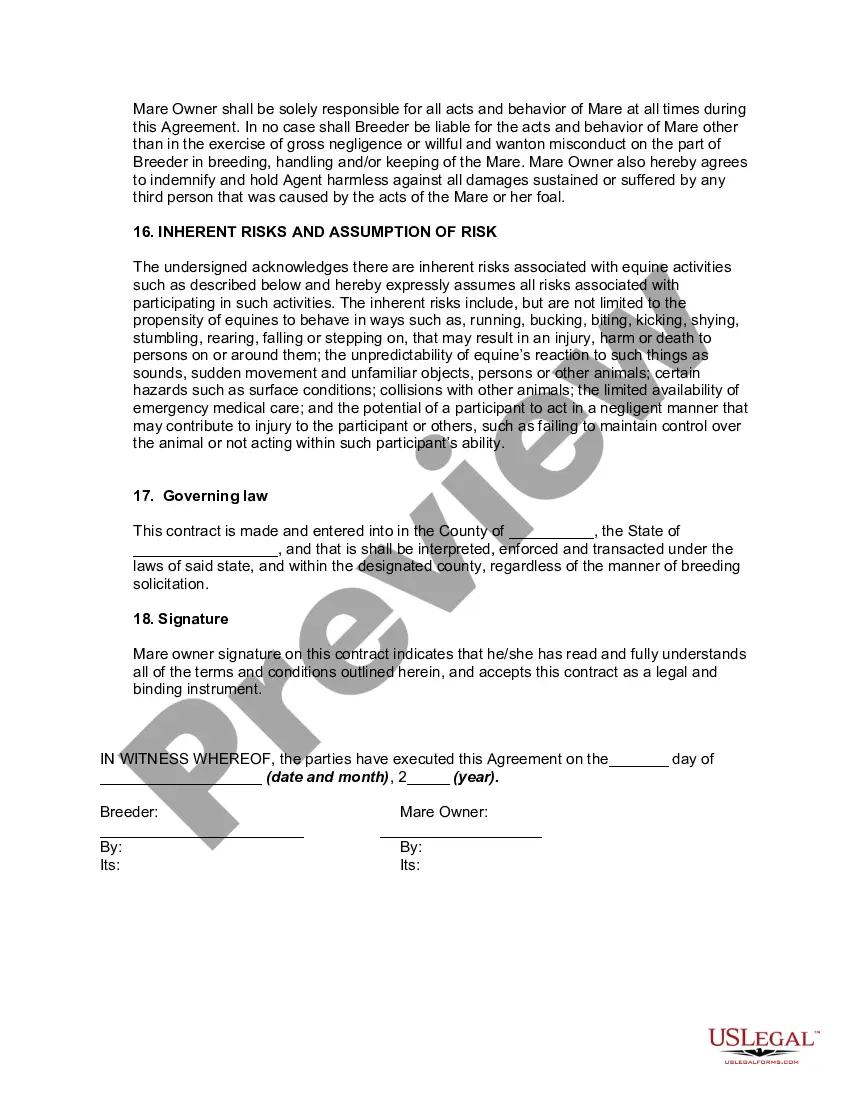
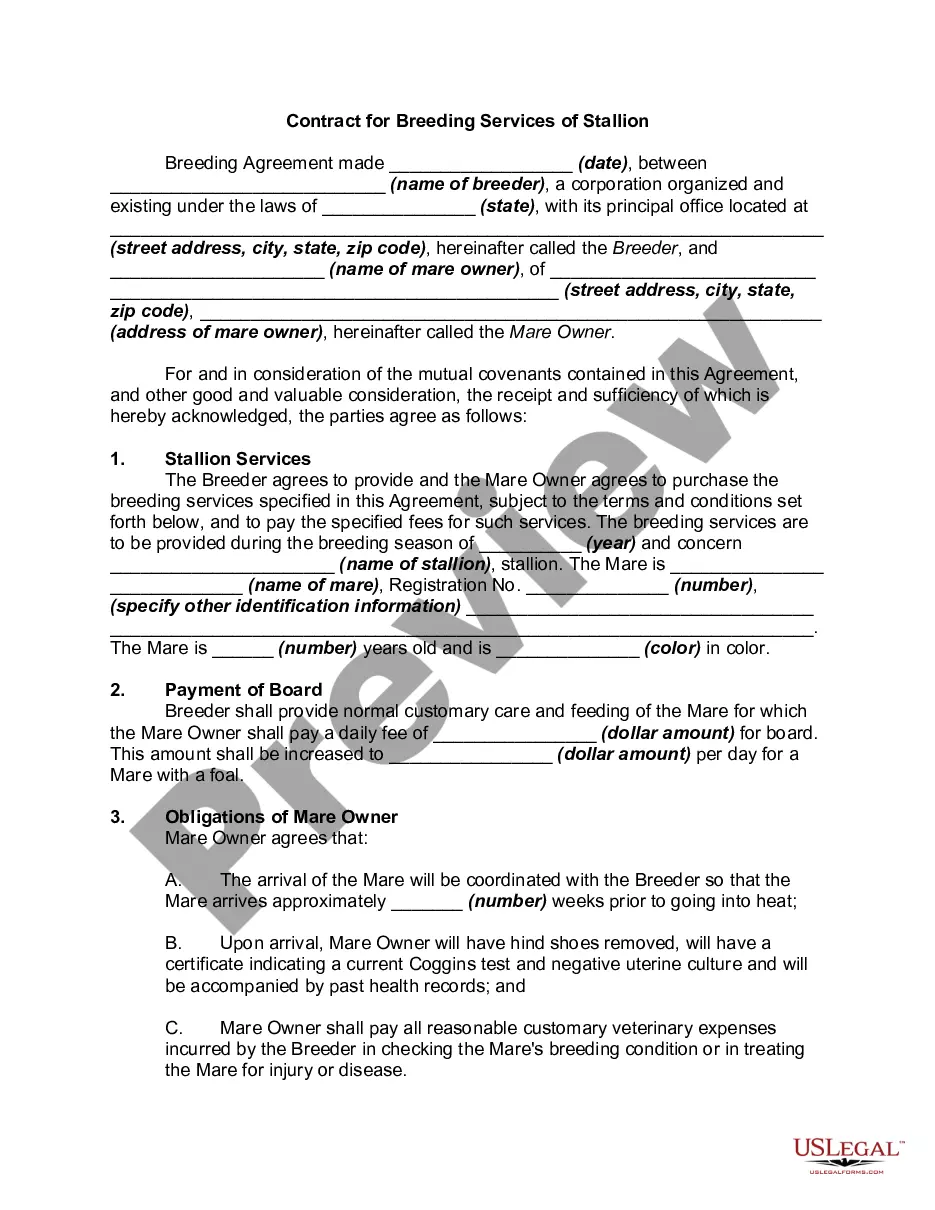
Get your form ready online
Our built-in tools help you complete, sign, share, and store your documents in one place.
Make edits, fill in missing information, and update formatting in US Legal Forms—just like you would in MS Word.
Download a copy, print it, send it by email, or mail it via USPS—whatever works best for your next step.
Sign and collect signatures with our SignNow integration. Send to multiple recipients, set reminders, and more. Go Premium to unlock E-Sign.
If this form requires notarization, complete it online through a secure video call—no need to meet a notary in person or wait for an appointment.
We protect your documents and personal data by following strict security and privacy standards.

Make edits, fill in missing information, and update formatting in US Legal Forms—just like you would in MS Word.

Download a copy, print it, send it by email, or mail it via USPS—whatever works best for your next step.

Sign and collect signatures with our SignNow integration. Send to multiple recipients, set reminders, and more. Go Premium to unlock E-Sign.

If this form requires notarization, complete it online through a secure video call—no need to meet a notary in person or wait for an appointment.

We protect your documents and personal data by following strict security and privacy standards.
Looking for another form?

Form popularity
FAQ
Despite early breeding (between two and five years) having yielded some good results anecdotally, most horse owners, breeders and equine veterinarians hold that the best age to breed a mare is in the 5 to 10 years of age range, with the caveat that the mare should have her first foal well before the age of 10 if she is ...
Mature stallions can breed two or three mares a day throughout a long breeding season and maintain a good level of fertility, but young stallions should not be expected to handle this level of work.
Breeders and managers can pursue a degree in equine science or animal science, but employers often accept experience in the industry instead of a degree. Entry-level positions include grooms positions and internships in the breeding industry.
Frozen semen requires insemination within hours of ovulation so the mares must be very carefully watched. You should budget $800-$1300 per cycle in veterinary costs to do fresh cooled or a very carefully timed live cover. For frozen semen $1200-$1600 is not uncommon.
8 Steps for Breeding Your Mare Step 1: Consider the mare's overall health. Step 2: Schedule a breeding soundness examination and address any problems. Step 3: Get the mare cycling. Step 4: Track the mare's estrous cycle to know when she's ovulating. Step 5: Determine when to breed the mare.
8 Steps for Breeding Your Mare Step 1: Consider the mare's overall health. Step 2: Schedule a breeding soundness examination and address any problems. Step 3: Get the mare cycling. Step 4: Track the mare's estrous cycle to know when she's ovulating. Step 5: Determine when to breed the mare.
Pasture mating, hand mating and artificial insemination are the three methods used, with variations of each. Breed registry regulations vary regarding the use of artificial insemination.
A stallion used for breeding is known as a stud.
Mares typically ovulate around seven days after giving birth. If the mare's uterus is not recovering in a timely manner, or if there is any infection post-partum, this cycle will likely not be viable time for breeding.
Stallions may always be “on,” but that doesn't mean they can constantly breed. After all, they do need time to eat, sleep, exercise, and socialize. A stallion can typically cover one to three mares a day and about 30 to 40 mares in one year.
