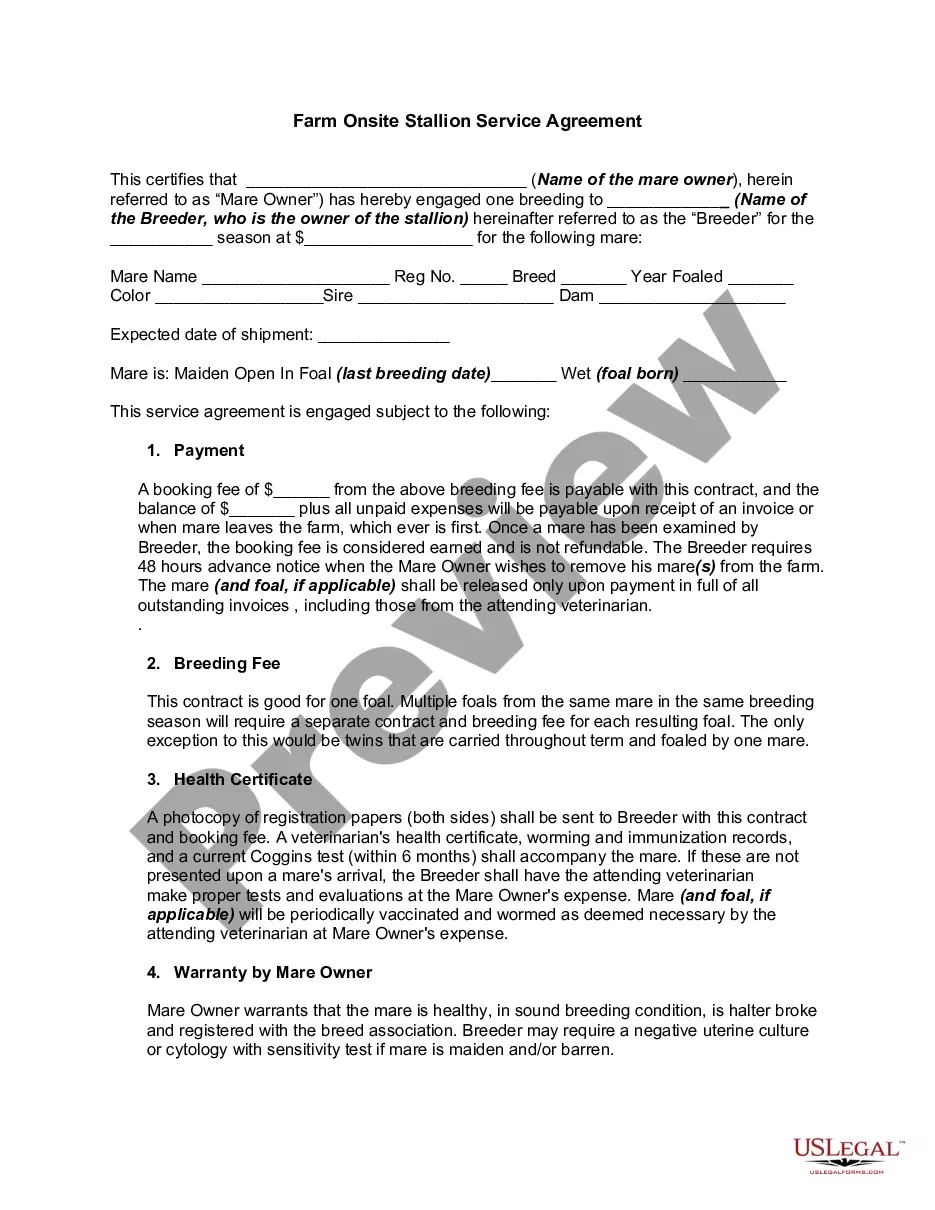
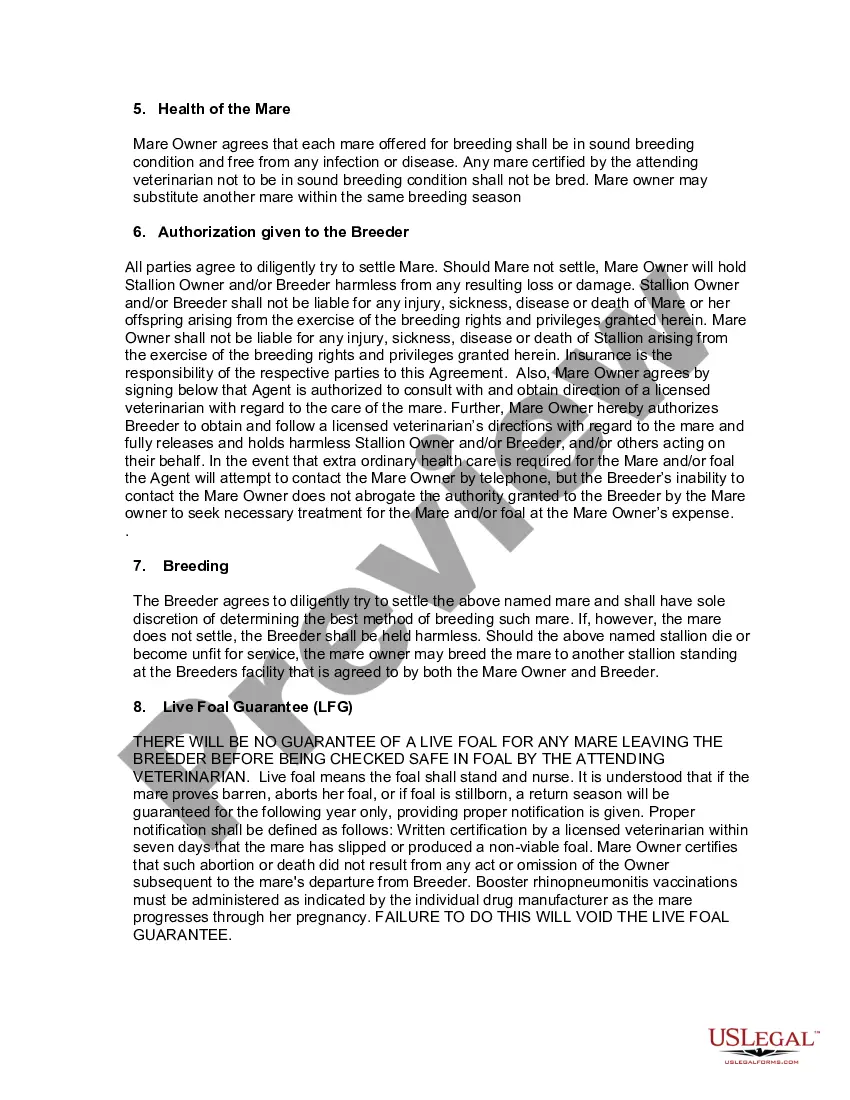
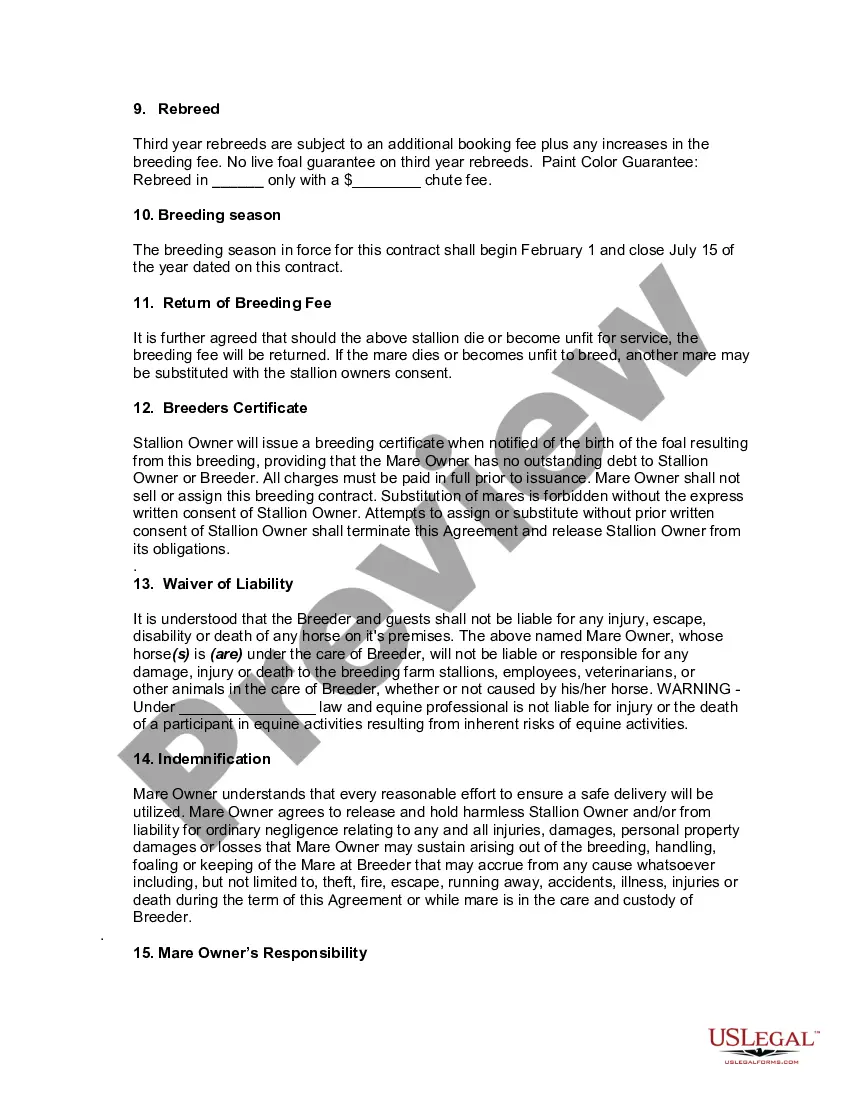
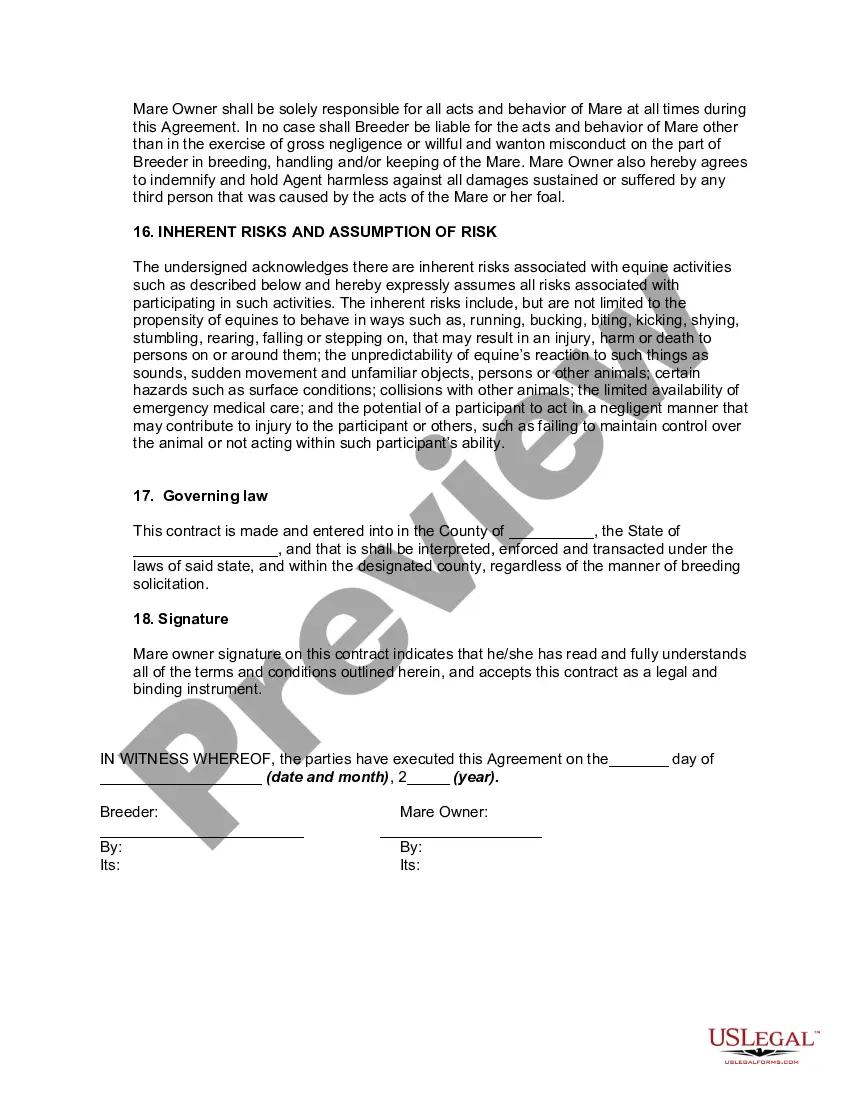
Breeding Contract For Horses In San Bernardino
Description
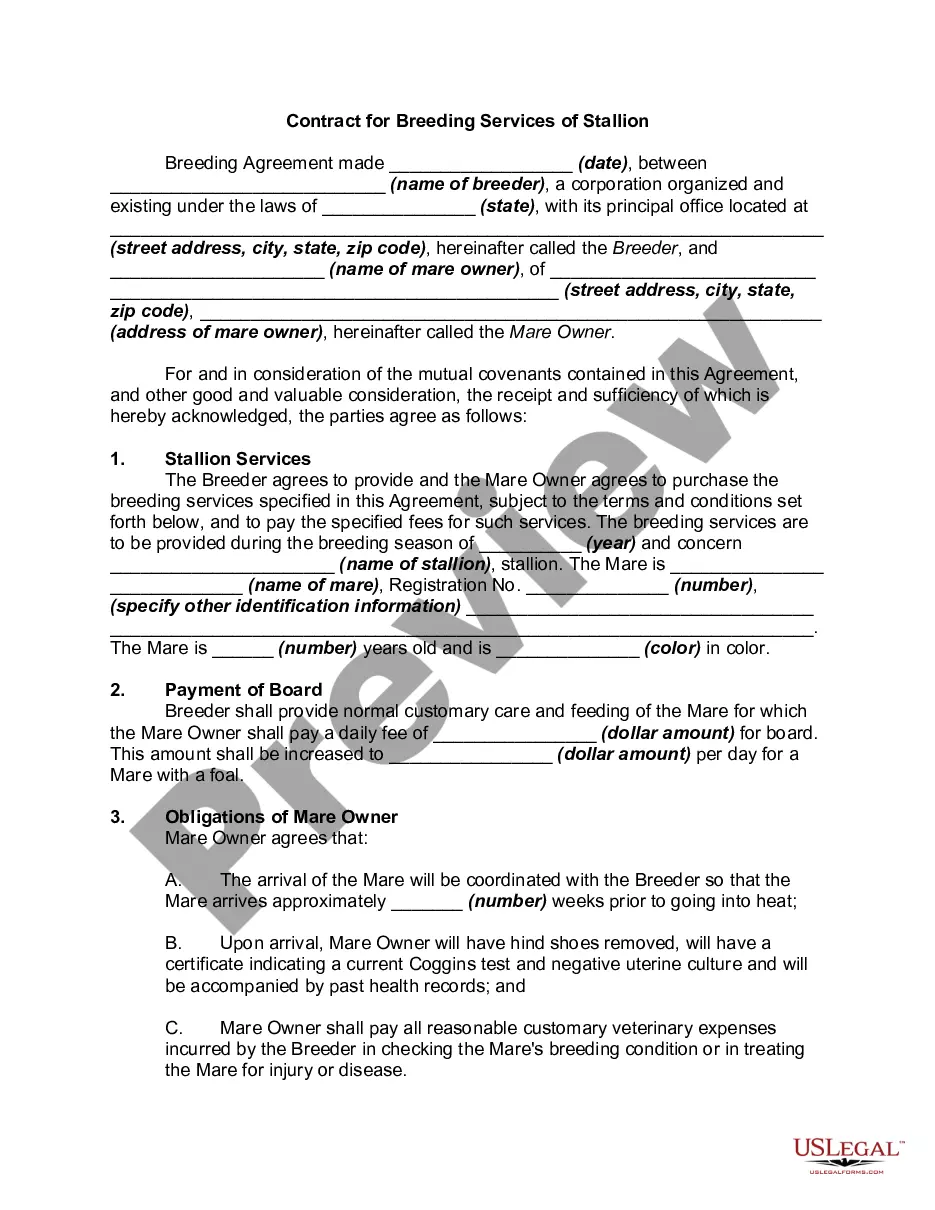
Get your form ready online
Our built-in tools help you complete, sign, share, and store your documents in one place.
Make edits, fill in missing information, and update formatting in US Legal Forms—just like you would in MS Word.
Download a copy, print it, send it by email, or mail it via USPS—whatever works best for your next step.
Sign and collect signatures with our SignNow integration. Send to multiple recipients, set reminders, and more. Go Premium to unlock E-Sign.
If this form requires notarization, complete it online through a secure video call—no need to meet a notary in person or wait for an appointment.
We protect your documents and personal data by following strict security and privacy standards.

Make edits, fill in missing information, and update formatting in US Legal Forms—just like you would in MS Word.

Download a copy, print it, send it by email, or mail it via USPS—whatever works best for your next step.

Sign and collect signatures with our SignNow integration. Send to multiple recipients, set reminders, and more. Go Premium to unlock E-Sign.

If this form requires notarization, complete it online through a secure video call—no need to meet a notary in person or wait for an appointment.

We protect your documents and personal data by following strict security and privacy standards.
Looking for another form?

Form popularity
FAQ
Horses are seasonal breeders, usually cycling from late spring to early fall each year. During the colder months of the year, when the days are shorter, mares will be in the anestrus, or non-cycling phase and the ovaries will be small; mares will not be fertile or capable of breeding during this period.
The estrous cycle in most mares starts to normalize in late April or early May until August - the normal breeding season for horses. During this time, the mare will have an estrous cycle of 21 days (±3 days). The estrous cycle is composed of two phases: the estrous phase (in heat) and the diestrous phase (out of heat).
Like cats, mare cycle during periods of long daylight length. This is thought to be an evolutionary development to ensure that the mare will give birth at the most hospitable time, this being in Spring. Given these factors, a mare can only have one pregnancy a year and will usually only have one foal in a given year.
A mare's reproductive system is affected by the seasons. Daylight is the controlling factor that causes a mare to come into heat in early spring. Breeding season kicks off in mid-February and runs through early June in the Northern hemisphere.
Although the mare continues to ovulate regularly every 21 days throughout the breeding season, the length of estrus (sexual receptivity) varies from 2–8 days, and the length of diestrus varies ingly to maintain a 21-day interval.
Breeders and managers can pursue a degree in equine science or animal science, but employers often accept experience in the industry instead of a degree. Entry-level positions include grooms positions and internships in the breeding industry.
