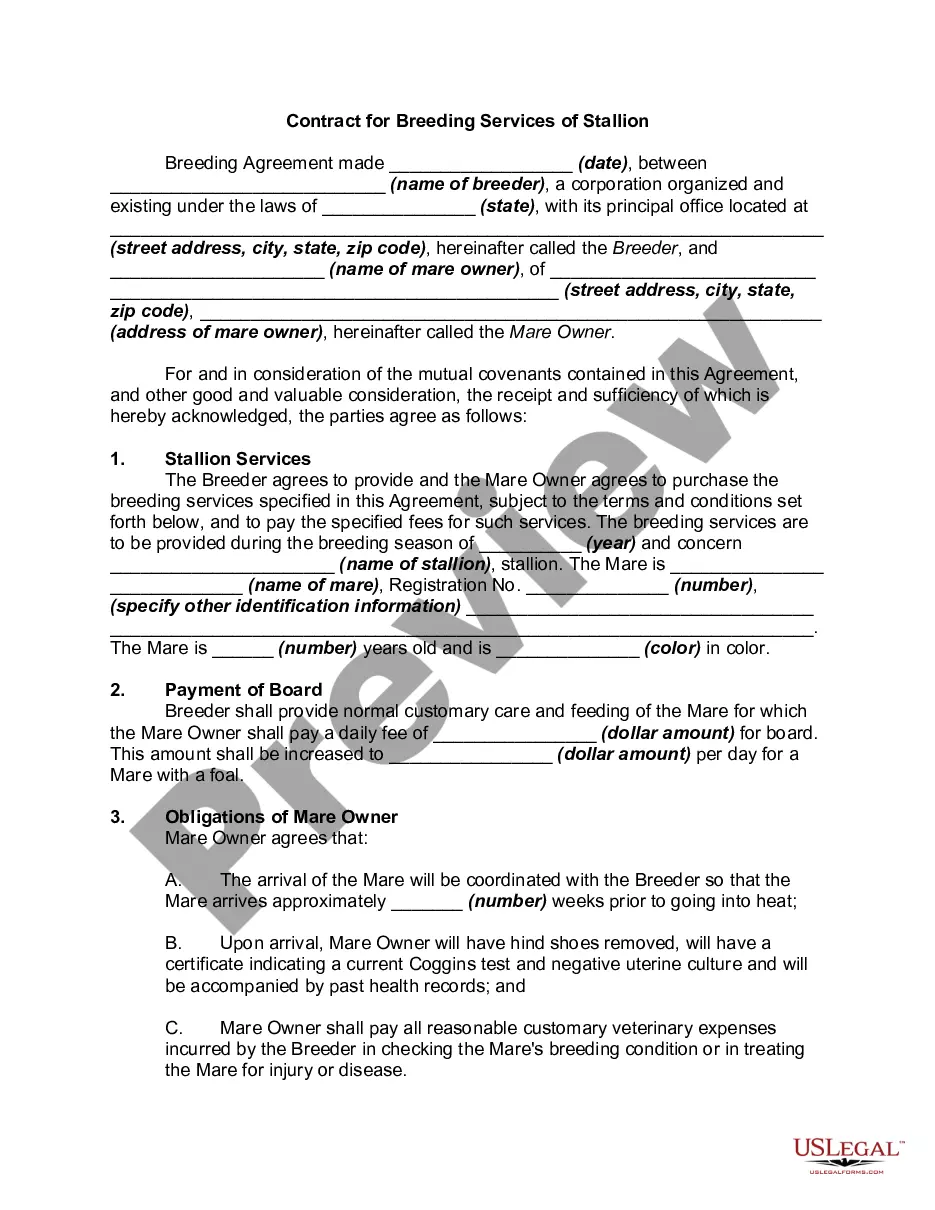
Stallion Breeding Contract Forms In Florida
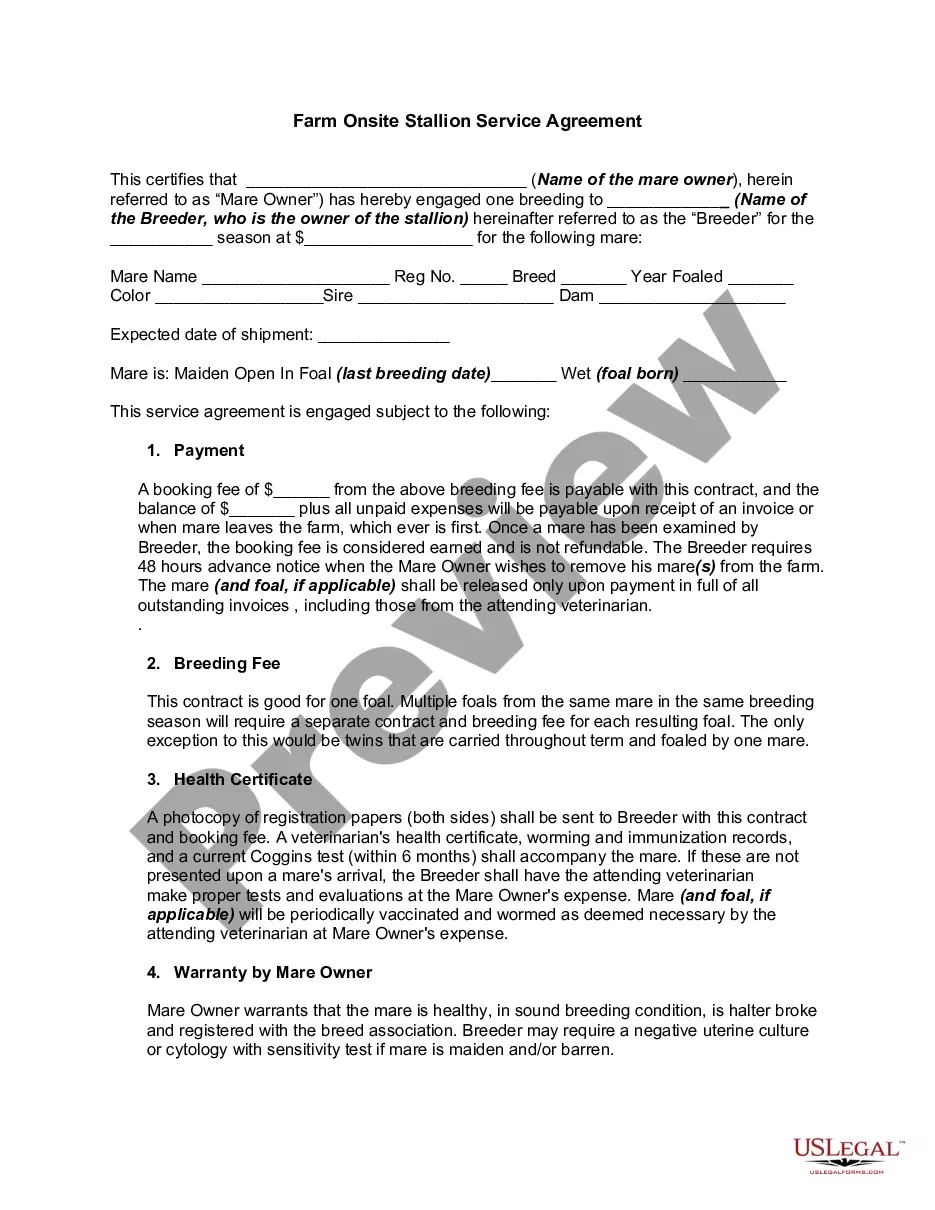
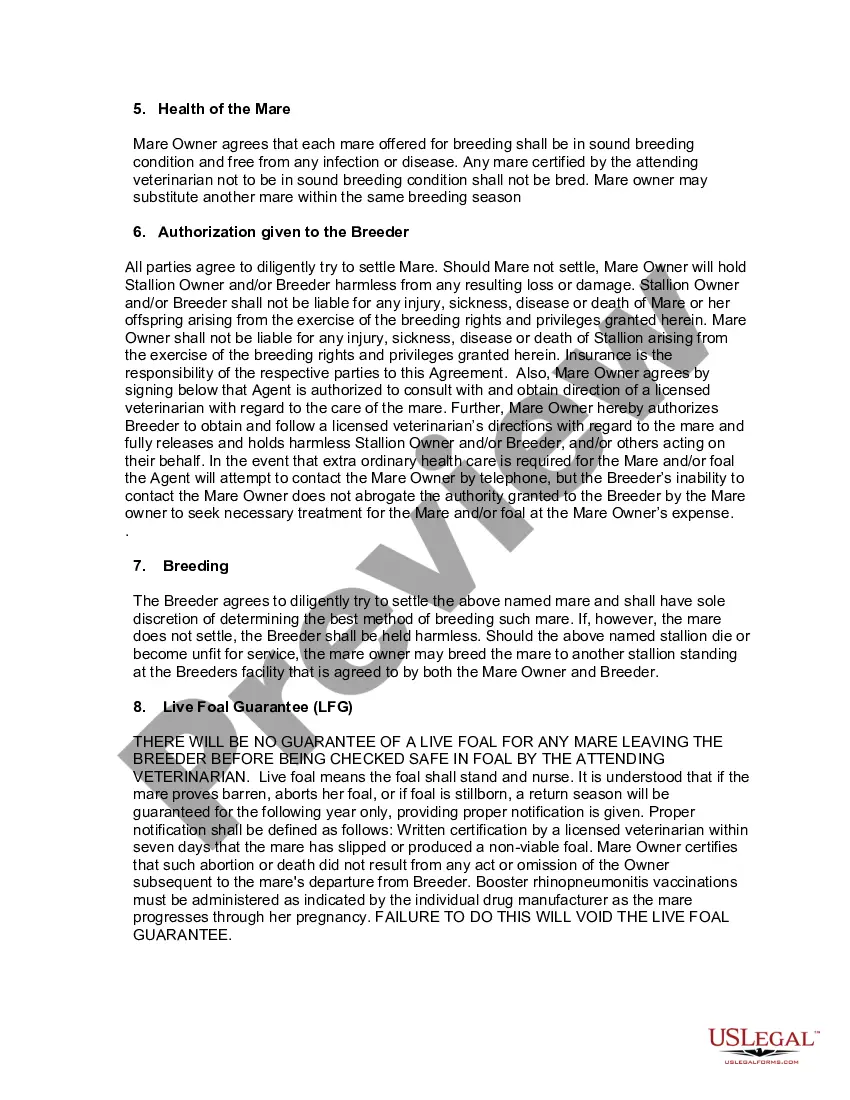
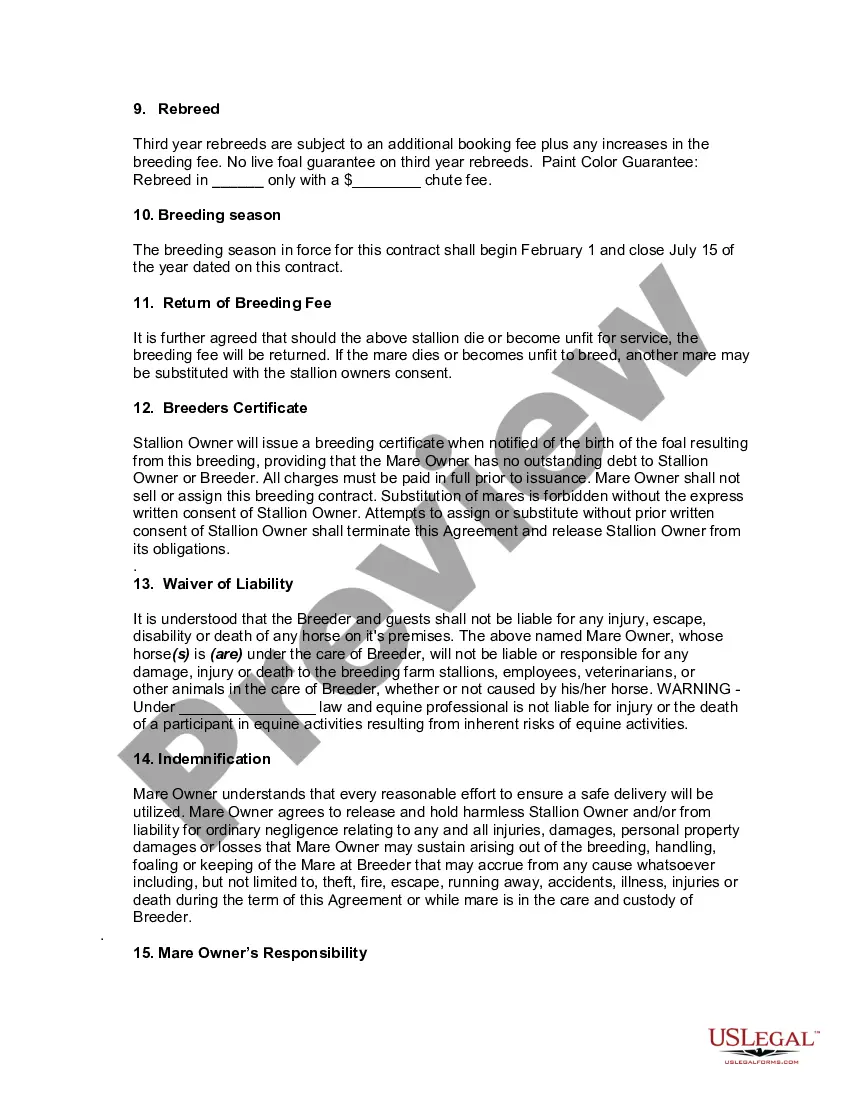
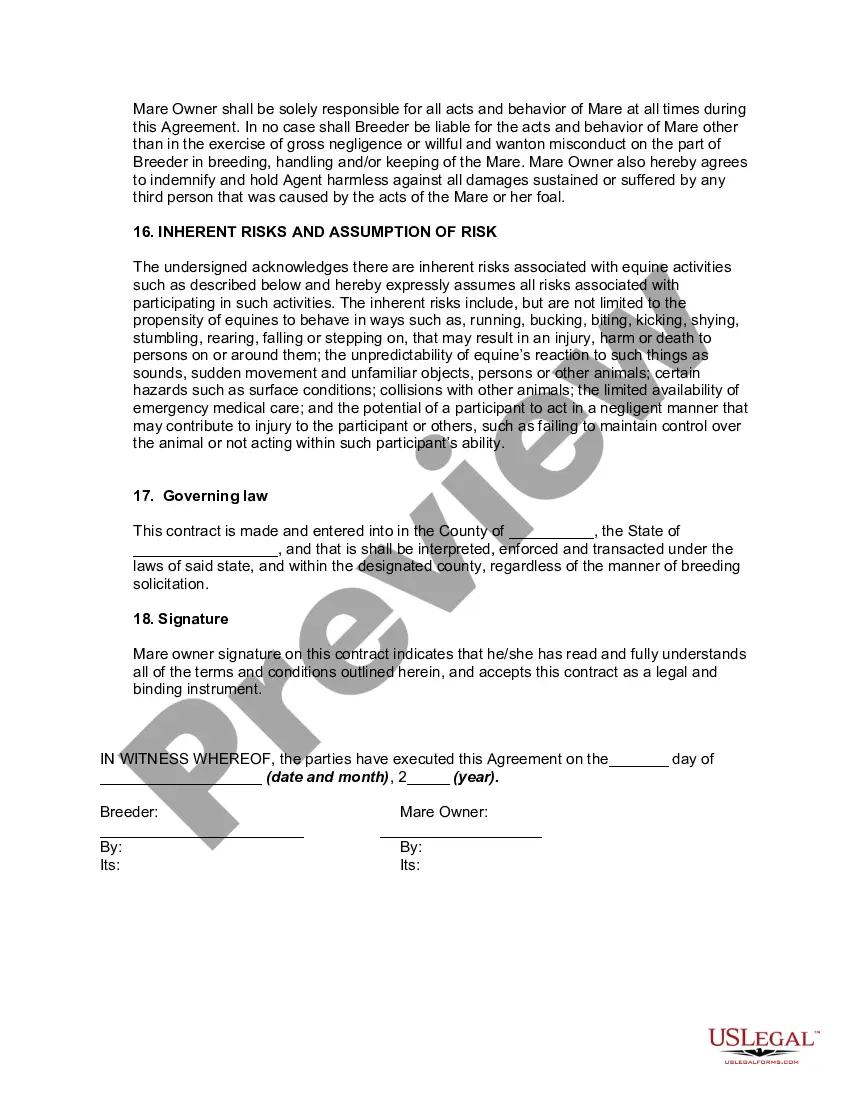
Description
Get your form ready online
Our built-in tools help you complete, sign, share, and store your documents in one place.
Make edits, fill in missing information, and update formatting in US Legal Forms—just like you would in MS Word.
Download a copy, print it, send it by email, or mail it via USPS—whatever works best for your next step.
Sign and collect signatures with our SignNow integration. Send to multiple recipients, set reminders, and more. Go Premium to unlock E-Sign.
If this form requires notarization, complete it online through a secure video call—no need to meet a notary in person or wait for an appointment.
We protect your documents and personal data by following strict security and privacy standards.

Make edits, fill in missing information, and update formatting in US Legal Forms—just like you would in MS Word.

Download a copy, print it, send it by email, or mail it via USPS—whatever works best for your next step.

Sign and collect signatures with our SignNow integration. Send to multiple recipients, set reminders, and more. Go Premium to unlock E-Sign.

If this form requires notarization, complete it online through a secure video call—no need to meet a notary in person or wait for an appointment.

We protect your documents and personal data by following strict security and privacy standards.
Looking for another form?








Form popularity
FAQ
Stallions will typically remain fertile beyond their 20th year of age. The age that stallions stop producing spermatozoa will vary between stallions. It is important that semen is routinely evaluated on all stallions, especially when using older stallions because of the expected decrease of semen production with age.
There are no strict education requirements to become a breeder. Individuals can learn the scientific concepts and techniques involved in breeding by completing an animal science bachelor's degree program. Relevant coursework includes animal nutrition, genetics, husbandry, and horse management.
Breeders and managers can pursue a degree in equine science or animal science, but employers often accept experience in the industry instead of a degree. Entry-level positions include grooms positions and internships in the breeding industry.
A. Most yearlings and two-year-olds can and will breed under good circumstances. There's probably not a horse practice without a firsthand story of the pregnant filly that was only with a colt until a year of age. So for sure, many fairly young colts can be fertile.
Mature stallions can breed two or three mares a day throughout a long breeding season and maintain a good level of fertility, but young stallions should not be expected to handle this level of work.
Often self-employed, the breeder must master the management of an agricultural structure (administrative and economic management), but the job also requires sales and communication skills to successfully promote and market the horses bred.
A male horse is a stallion; during the conception and breeding process, he is called the sire.
Sire and dam: A sire is a horse's father, a dam its mother. To produce and to sire: A mare produces foals; stallions sire foals; stallions do not produce foals.
A broodmare is a mare used for breeding.
DAMSIRE Also known as the broodmare sire – the sire of the dam of a horse, or maternal grandsire. DISTAFF The female or dam's side of the pedigree. ENTIRE Male horse over three years old which has not been castrated, also known as a stallion.
