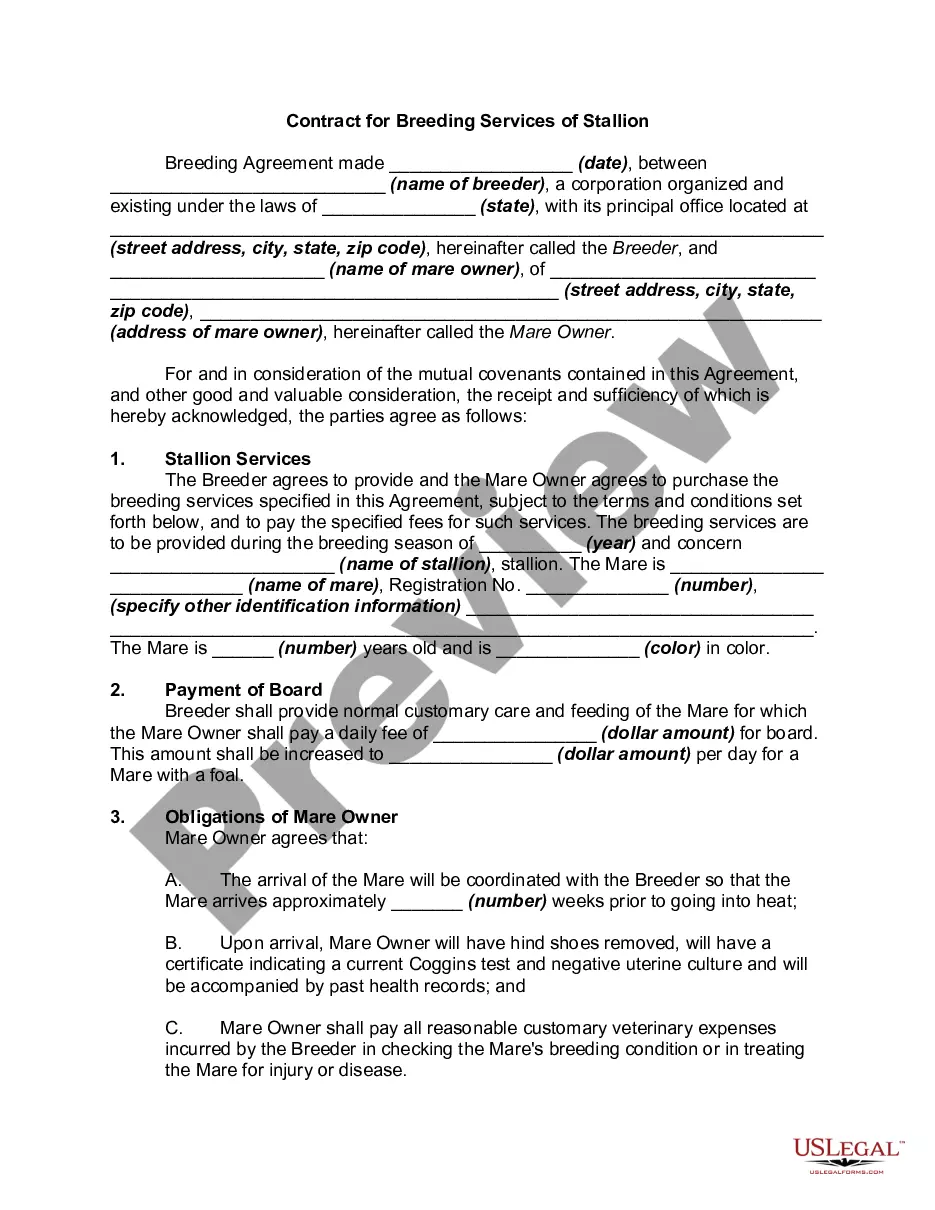
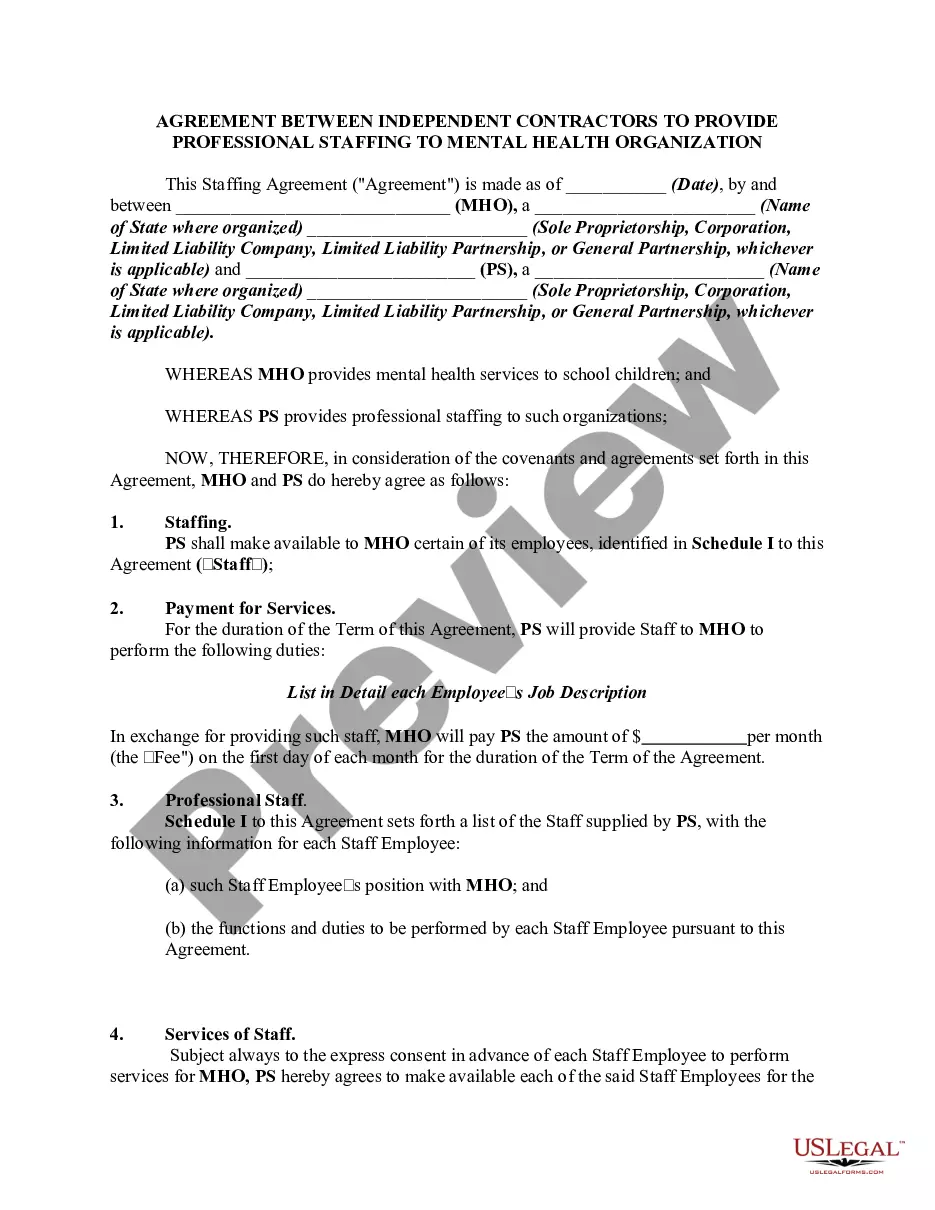
Stallion Breeding Contract Forms In Allegheny
Description
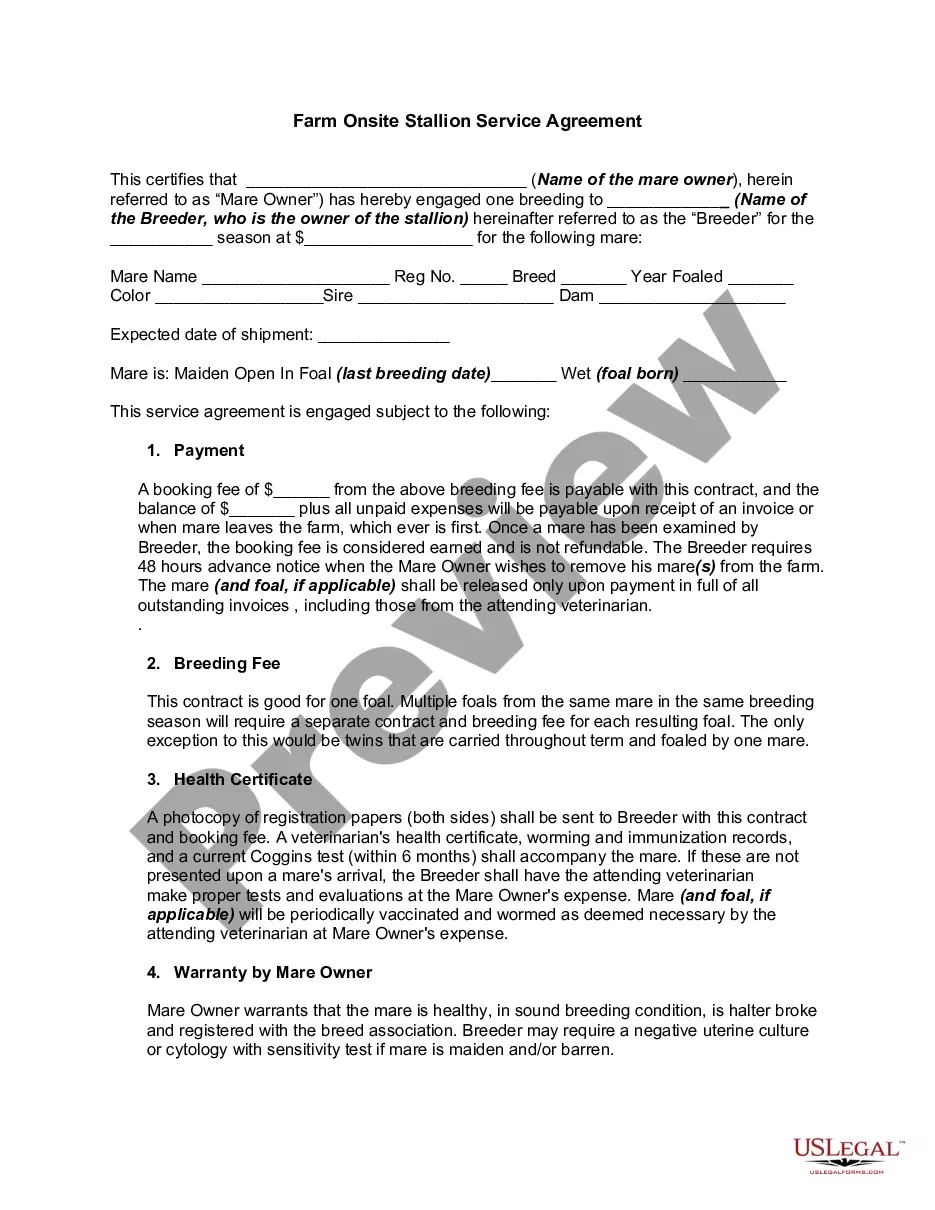
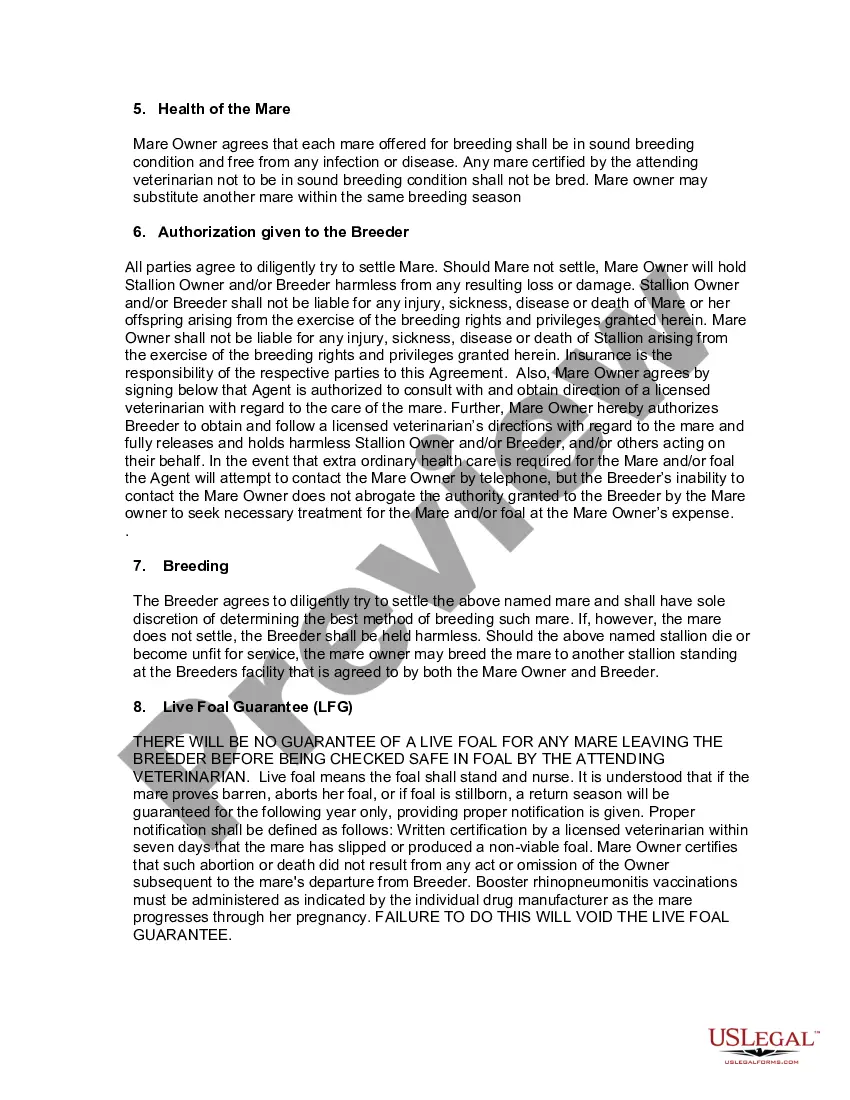
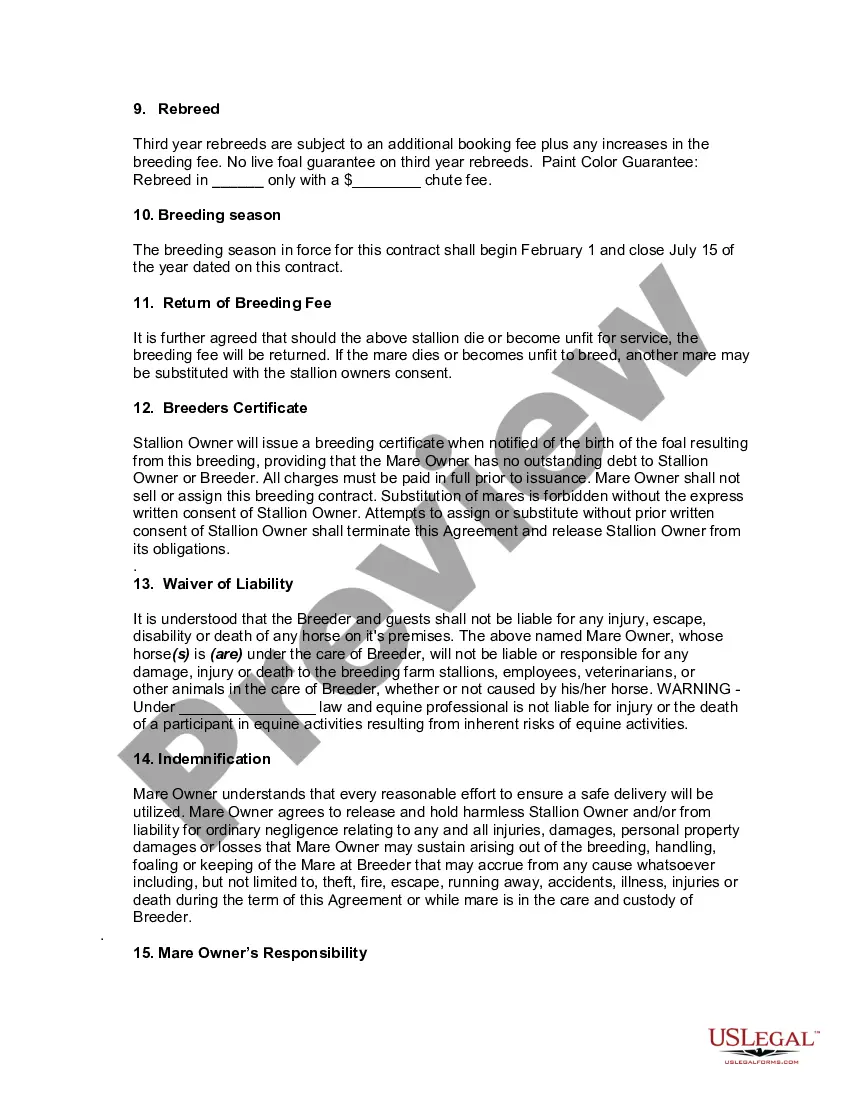
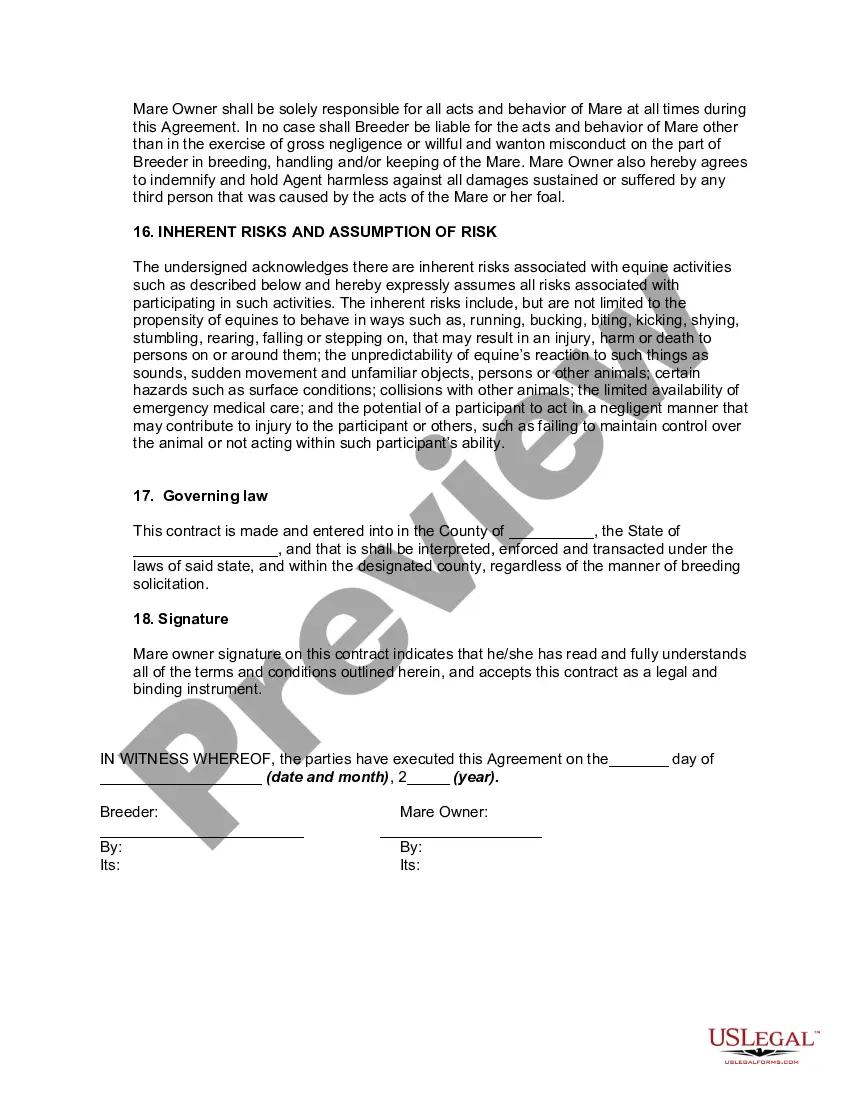
Get your form ready online
Our built-in tools help you complete, sign, share, and store your documents in one place.
Make edits, fill in missing information, and update formatting in US Legal Forms—just like you would in MS Word.
Download a copy, print it, send it by email, or mail it via USPS—whatever works best for your next step.
Sign and collect signatures with our SignNow integration. Send to multiple recipients, set reminders, and more. Go Premium to unlock E-Sign.
If this form requires notarization, complete it online through a secure video call—no need to meet a notary in person or wait for an appointment.
We protect your documents and personal data by following strict security and privacy standards.

Make edits, fill in missing information, and update formatting in US Legal Forms—just like you would in MS Word.

Download a copy, print it, send it by email, or mail it via USPS—whatever works best for your next step.

Sign and collect signatures with our SignNow integration. Send to multiple recipients, set reminders, and more. Go Premium to unlock E-Sign.

If this form requires notarization, complete it online through a secure video call—no need to meet a notary in person or wait for an appointment.

We protect your documents and personal data by following strict security and privacy standards.
Looking for another form?









Form popularity
FAQ
Estrous – Refers to the entire reproductive cycle. The average length of the estrous cycle is 21 to 23 days (from one ovulation to the next). Estrus – Refers to “heat,” the period when the mare is receptive to the stallion (usually lasts about five to six days).
During this period, the mare undergoes a series of cycles, each approximately 22 days in length. The estrous cycle is divided into two physiological parts: estrus and diestrus. The estrus, or "heat" segment of the cycle, is three to seven days in length and is the time when a mare is receptive to the stallion.
A stallion used for breeding is known as a stud.
Most abortions occur at 40–80 days of gestation, with some losses occurring as late as 140 days. A few affected mares present colic, fever, and/or purulent vulvar discharge, but most remain clinically normal.
Although the mare continues to ovulate regularly every 21 days throughout the breeding season, the length of estrus (sexual receptivity) varies from 2–8 days, and the length of diestrus varies ingly to maintain a 21-day interval.
Stallions will typically remain fertile beyond their 20th year of age. The age that stallions stop producing spermatozoa will vary between stallions. It is important that semen is routinely evaluated on all stallions, especially when using older stallions because of the expected decrease of semen production with age.
Yes, pregnant mares will let a stallion breed. It's best to have a vet find out for you so you can breed her of she's not, or separate them if she is.
If a colt appears to be breeding, does that mean he is mature enough to impregnate the mare? A. Most yearlings and two-year-olds can and will breed under good circumstances. There's probably not a horse practice without a firsthand story of the pregnant filly that was only with a colt until a year of age.
Frozen semen requires insemination within hours of ovulation so the mares must be very carefully watched. You should budget $800-$1300 per cycle in veterinary costs to do fresh cooled or a very carefully timed live cover. For frozen semen $1200-$1600 is not uncommon.
Despite early breeding (between two and five years) having yielded some good results anecdotally, most horse owners, breeders and equine veterinarians hold that the best age to breed a mare is in the 5 to 10 years of age range, with the caveat that the mare should have her first foal well before the age of 10 if she is ...
