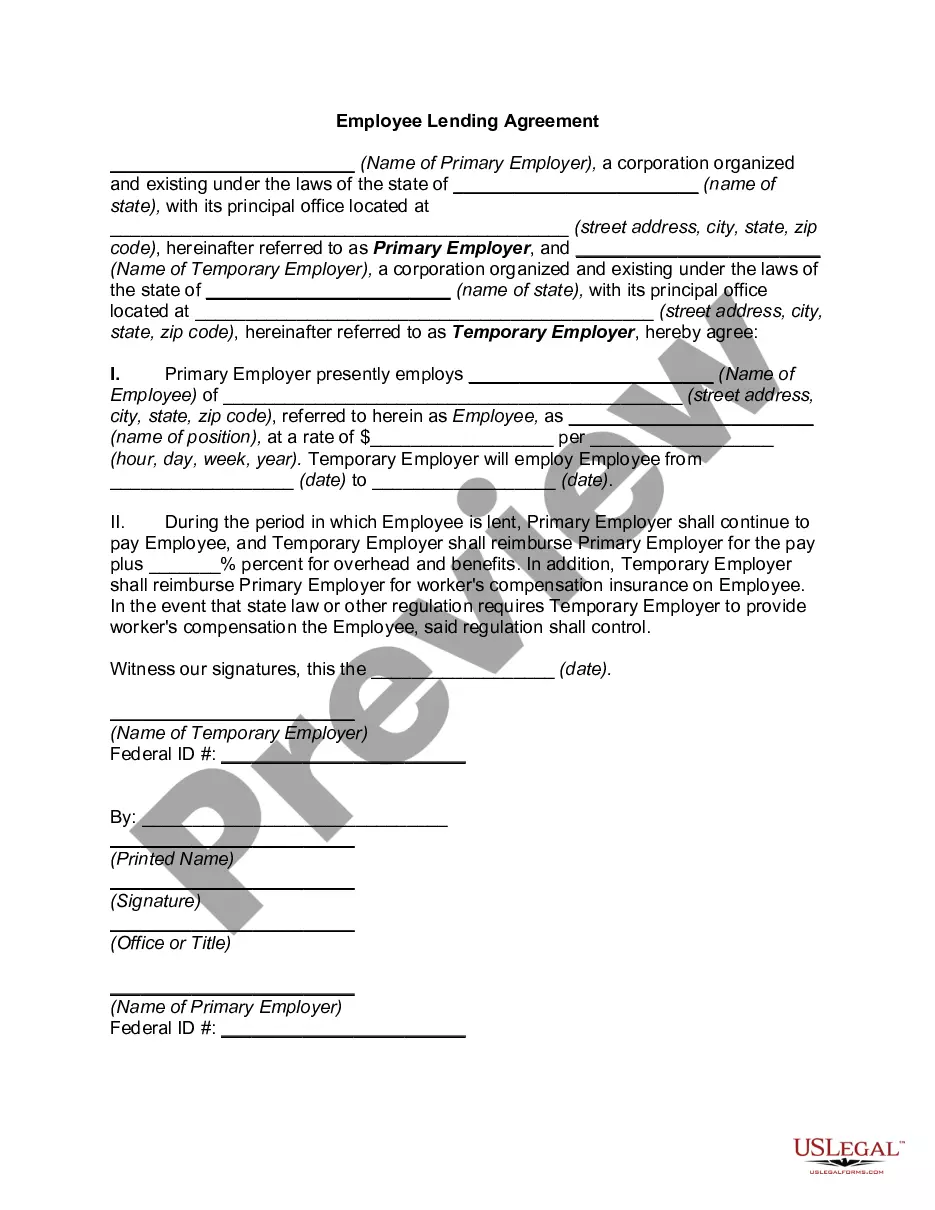
Employee Lease Addendum With Addendum In Dallas
Description

Get your form ready online
Our built-in tools help you complete, sign, share, and store your documents in one place.
Make edits, fill in missing information, and update formatting in US Legal Forms—just like you would in MS Word.
Download a copy, print it, send it by email, or mail it via USPS—whatever works best for your next step.
Sign and collect signatures with our SignNow integration. Send to multiple recipients, set reminders, and more. Go Premium to unlock E-Sign.
If this form requires notarization, complete it online through a secure video call—no need to meet a notary in person or wait for an appointment.
We protect your documents and personal data by following strict security and privacy standards.

Make edits, fill in missing information, and update formatting in US Legal Forms—just like you would in MS Word.

Download a copy, print it, send it by email, or mail it via USPS—whatever works best for your next step.

Sign and collect signatures with our SignNow integration. Send to multiple recipients, set reminders, and more. Go Premium to unlock E-Sign.

If this form requires notarization, complete it online through a secure video call—no need to meet a notary in person or wait for an appointment.

We protect your documents and personal data by following strict security and privacy standards.
Looking for another form?






Form popularity
FAQ
A lease agreement longer than one year must be in writing. A lease is a contract between a landlord and a tenant. As with any contract, both parties have the right to negotiate the terms before entering into it.
The letter should include: Your name, current address and contact information. Date the lease extension request is submitted. Length of the lease extension, including the proposed end date. Reasons for extension. Date by which you need a decision, usually 10 days to two weeks.
Lease modifications are permitted by Texas State Law before signing it, as the landlord agrees to making changes. It is recommended for changes to be written out in ink on the lease agreement with initials by the tenant and the landlord. Thereafter, the tenant must get a copy of the final lease before leaving.
No, signing a contract in front of a notary is not required. A notary's involvement does not make a contract somehow more binding or more enforceable than it otherwise would be. (To learn what makes a contract legally valid, see the "What makes a contract legally enforceable?" section in Understanding Contracts.)
There is nothing wrong, with someone leasing/renting more than one property. Having two leases makes the person liable for two properties. People may want to have two different places to live and rent in the state of Texas and it would be at their discretion to be liable, for both.
State-Specific Regulations. States dictate whether lease agreements need notarization. In some areas, like Ohio and Georgia, certain long-term leases require notarization to be enforceable. Texas and California, in contrast, typically don't require notarization for standard residential leases.
While notarization can enhance a lease's security by adding authenticity and preventing fraud, many states do not mandate it for standard residential leases. For example, California does not require lease notarization, while other states like Ohio may have different requirements.
Do Lease Agreements Need to Be Notarized in Texas? No, Texas Lease Agreements do not need to be notarized. They just need to be signed by the Tenant and Landlord.
How to Amend a Lease (3 steps) Speak with the Other Party. Whether you are the landlord or the tenant, the party seeking to change the lease will need to properly communicate their intentions with the other party. Write the Amendment. Get Signed.
