Lease Employee Agreement For Commercial Property In Alameda
Description
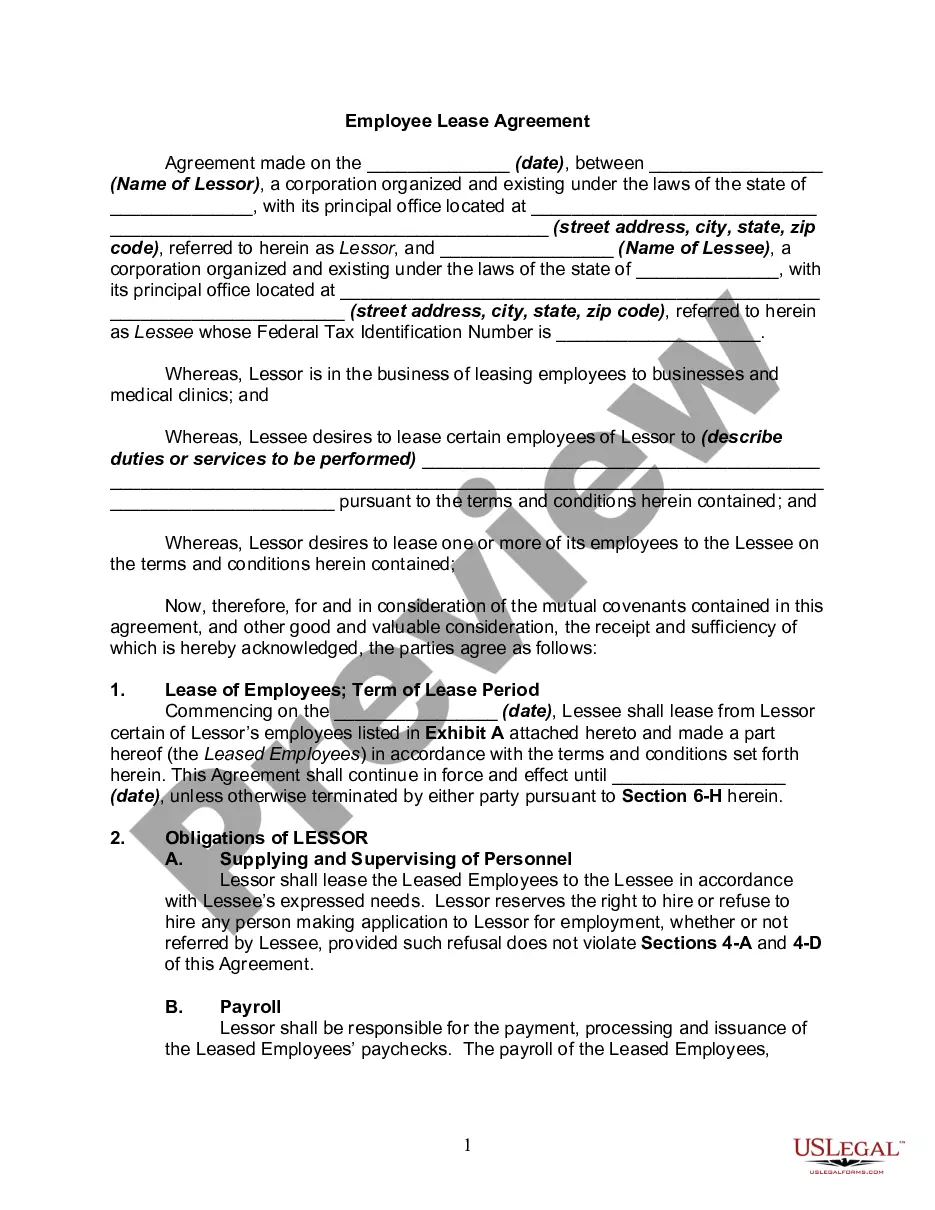
Get your form ready online
Our built-in tools help you complete, sign, share, and store your documents in one place.
Make edits, fill in missing information, and update formatting in US Legal Forms—just like you would in MS Word.
Download a copy, print it, send it by email, or mail it via USPS—whatever works best for your next step.
Sign and collect signatures with our SignNow integration. Send to multiple recipients, set reminders, and more. Go Premium to unlock E-Sign.
If this form requires notarization, complete it online through a secure video call—no need to meet a notary in person or wait for an appointment.
We protect your documents and personal data by following strict security and privacy standards.

Make edits, fill in missing information, and update formatting in US Legal Forms—just like you would in MS Word.

Download a copy, print it, send it by email, or mail it via USPS—whatever works best for your next step.

Sign and collect signatures with our SignNow integration. Send to multiple recipients, set reminders, and more. Go Premium to unlock E-Sign.

If this form requires notarization, complete it online through a secure video call—no need to meet a notary in person or wait for an appointment.

We protect your documents and personal data by following strict security and privacy standards.
Looking for another form?
Form popularity
FAQ
What are the most important steps for drafting a commercial lease agreement? Identify the parties and the property. Determine the rent and the term. Negotiate the improvements and the maintenance. Allocate the taxes and the insurance. Include the clauses and the contingencies. Review and sign the agreement.
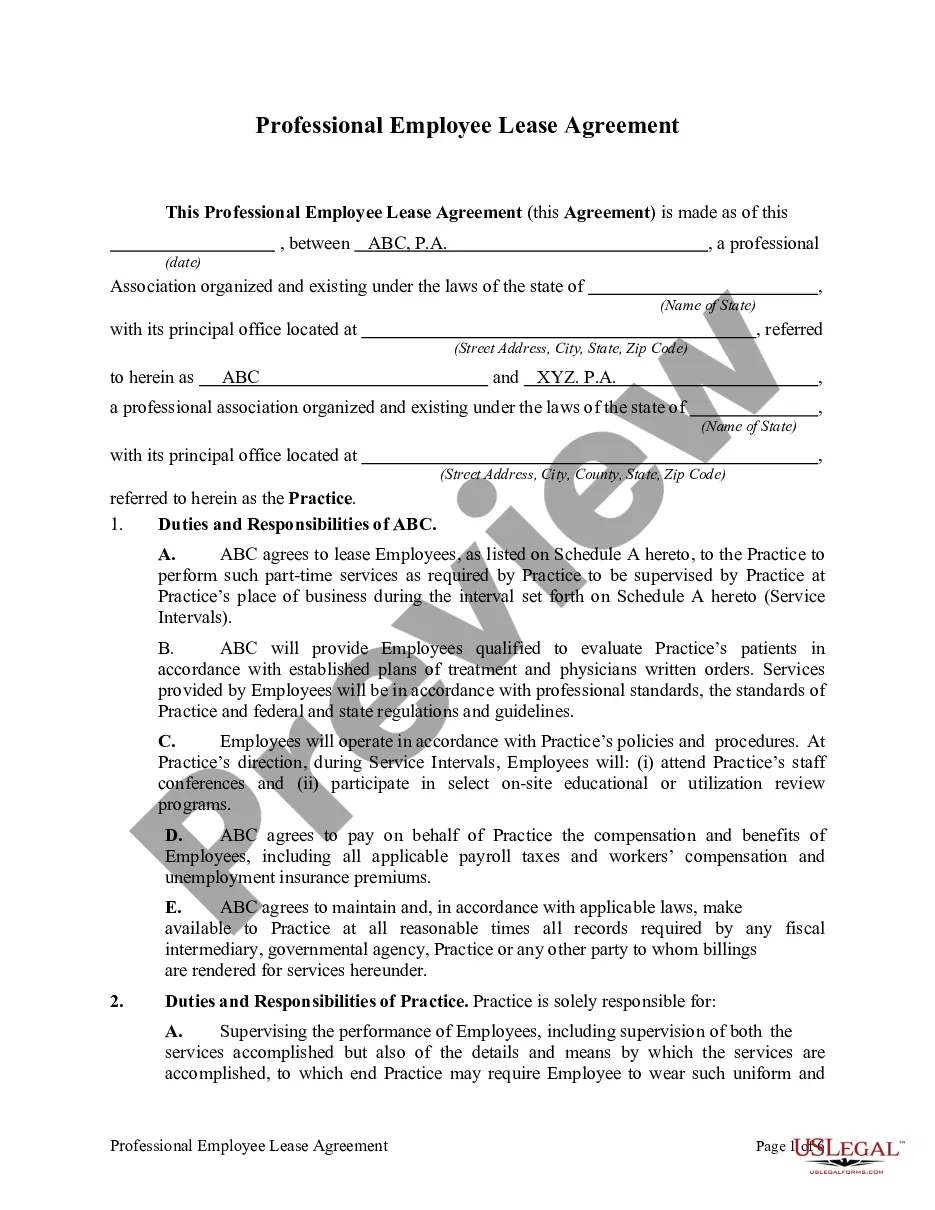
Employee leasing is an arrangement between a business and a staffing firm, who supplies workers on a project-specific or temporary basis. These employees work for the client business, but the leasing agency pays their salaries and handles all of the HR administration associated with their employment.
Key Commercial Lease Types Explained Gross Lease. Often found in office buildings and retail spaces, gross leases provide a simple, all-inclusive rental arrangement. Net Lease. In net leases, the tenant assumes a more significant share of responsibility for building expenses. Modified Gross Lease. Percentage Lease.
The three most common types of leases are gross leases, net leases, and modified gross leases.
Gross Lease Gross leases are most common for commercial properties such as offices and retail space. The tenant pays a single, flat amount that includes rent, taxes, utilities, and insurance.
Carefully considering your business needs and financial situation when choosing a commercial lease type is important. Gross Lease. Often found in office buildings and retail spaces, gross leases provide a simple, all-inclusive rental arrangement. Net Lease. Modified Gross Lease. Percentage Lease.
Negotiating a commercial lease can take anywhere from one day to a year or more. It all comes down to how close the parties are in terms of expectations at the beginning. Additionally, if neither party is willing to give much leeway, the process can take time. However, the average length is about three to nine months.
Unlike residential leasing, commercial leasing involves more complex and negotiable terms, such as rent, duration, maintenance, improvements, and subleasing. To qualify for commercial leasing, you need to prepare a strong application that showcases your business plan, financials, and credibility.
5 Steps to Leasing a Commercial Property Step 1: Assess your business. Step 2: Search for properties that meet your needs and budget. Step 3: Set up Showings. Step 4: Negotiate the Letter of Intent (LOI) or Lease Proposal. Step 5: Executing a Lease.
Gross Lease Gross leases are most common for commercial properties such as offices and retail space. The tenant pays a single, flat amount that includes rent, taxes, utilities, and insurance.