Factoring Agreement File Format Canada In Massachusetts
Description

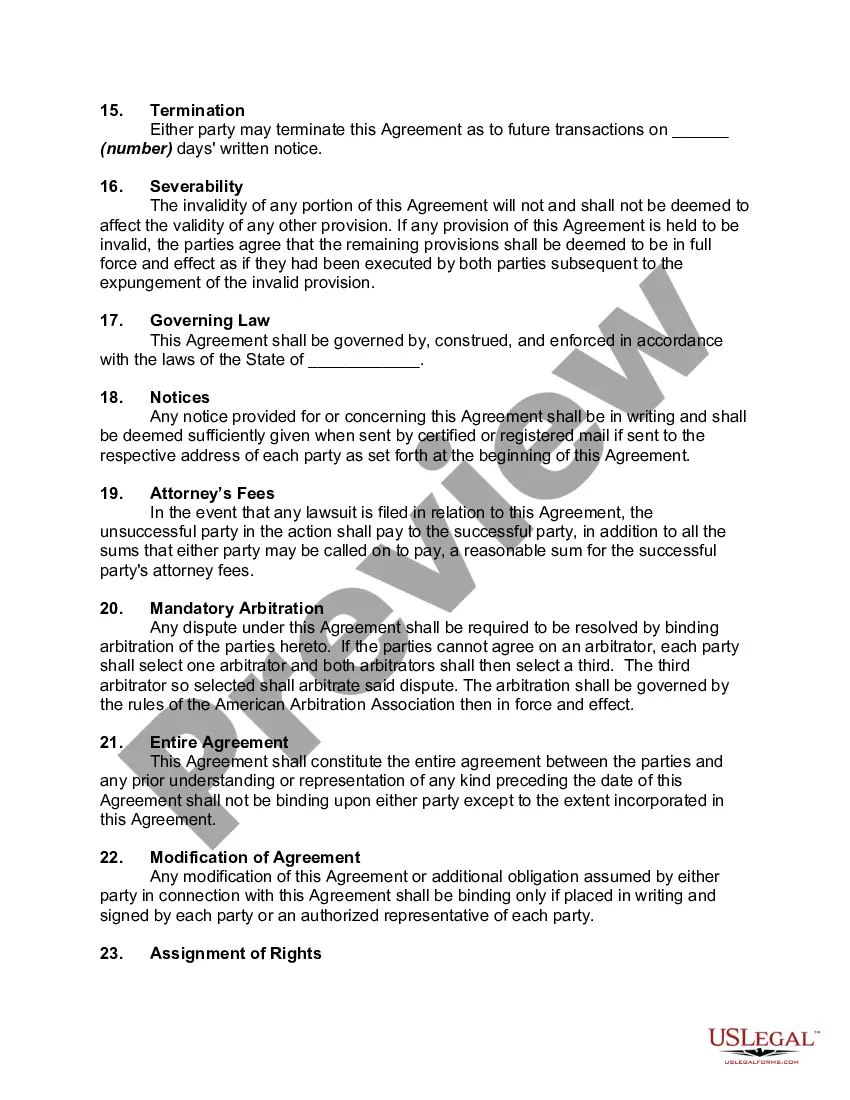

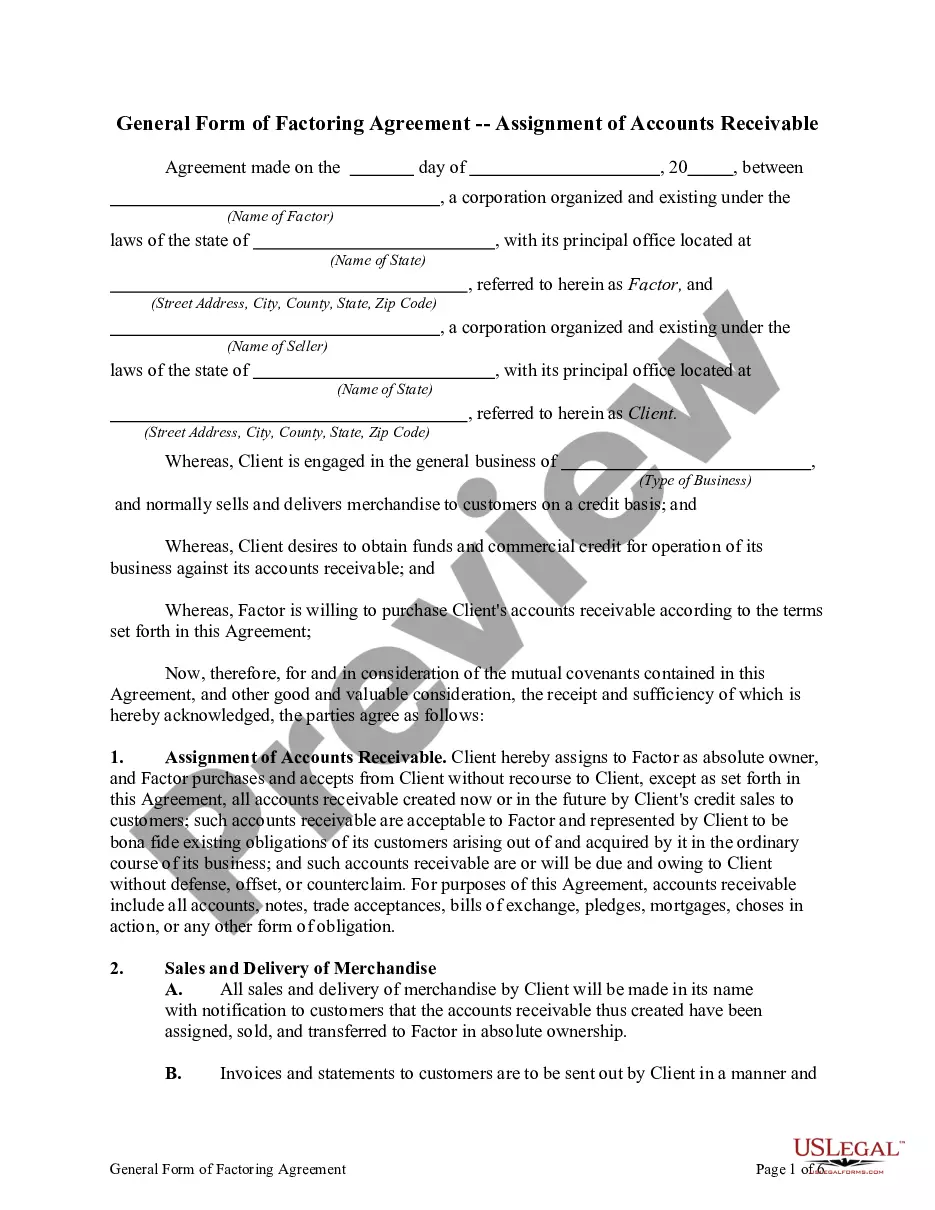
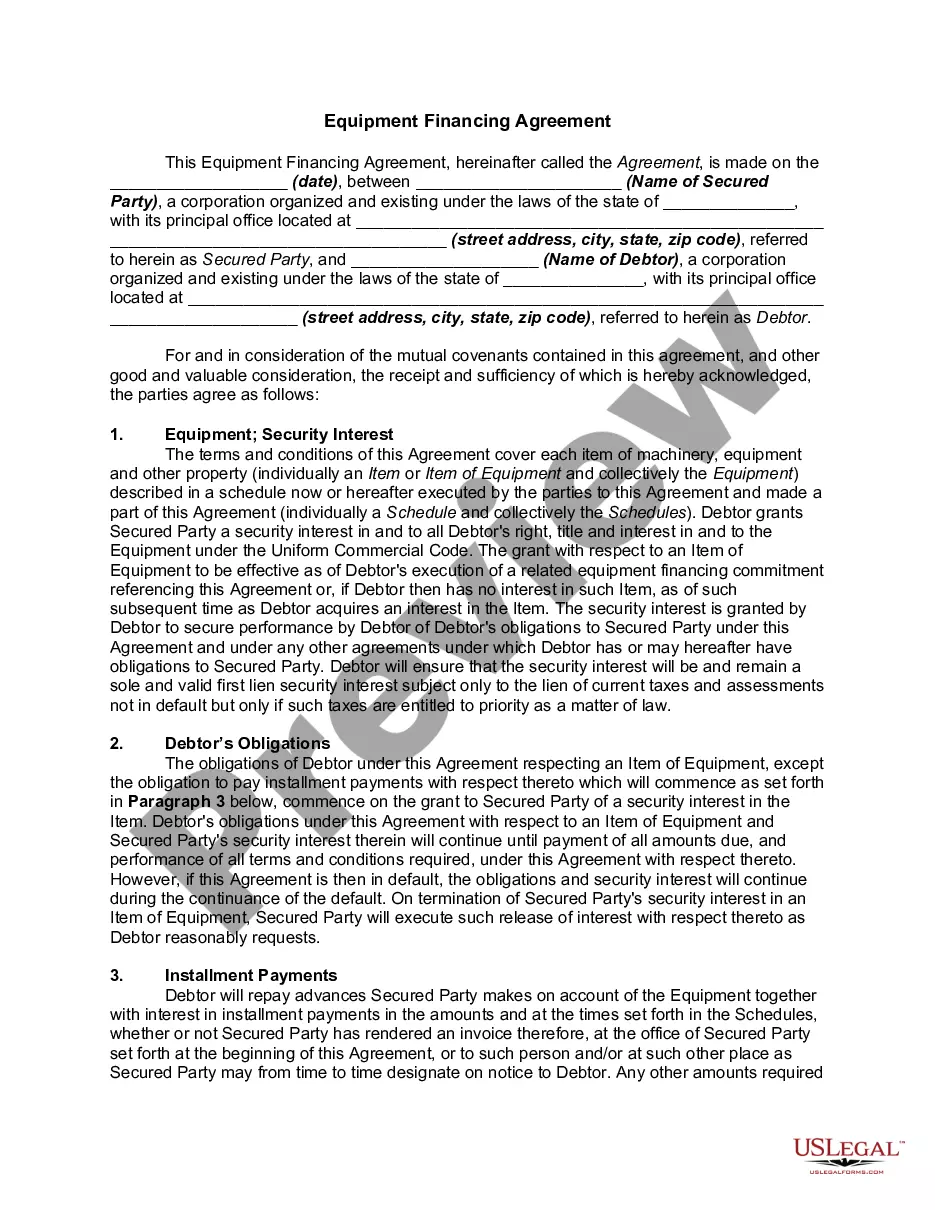
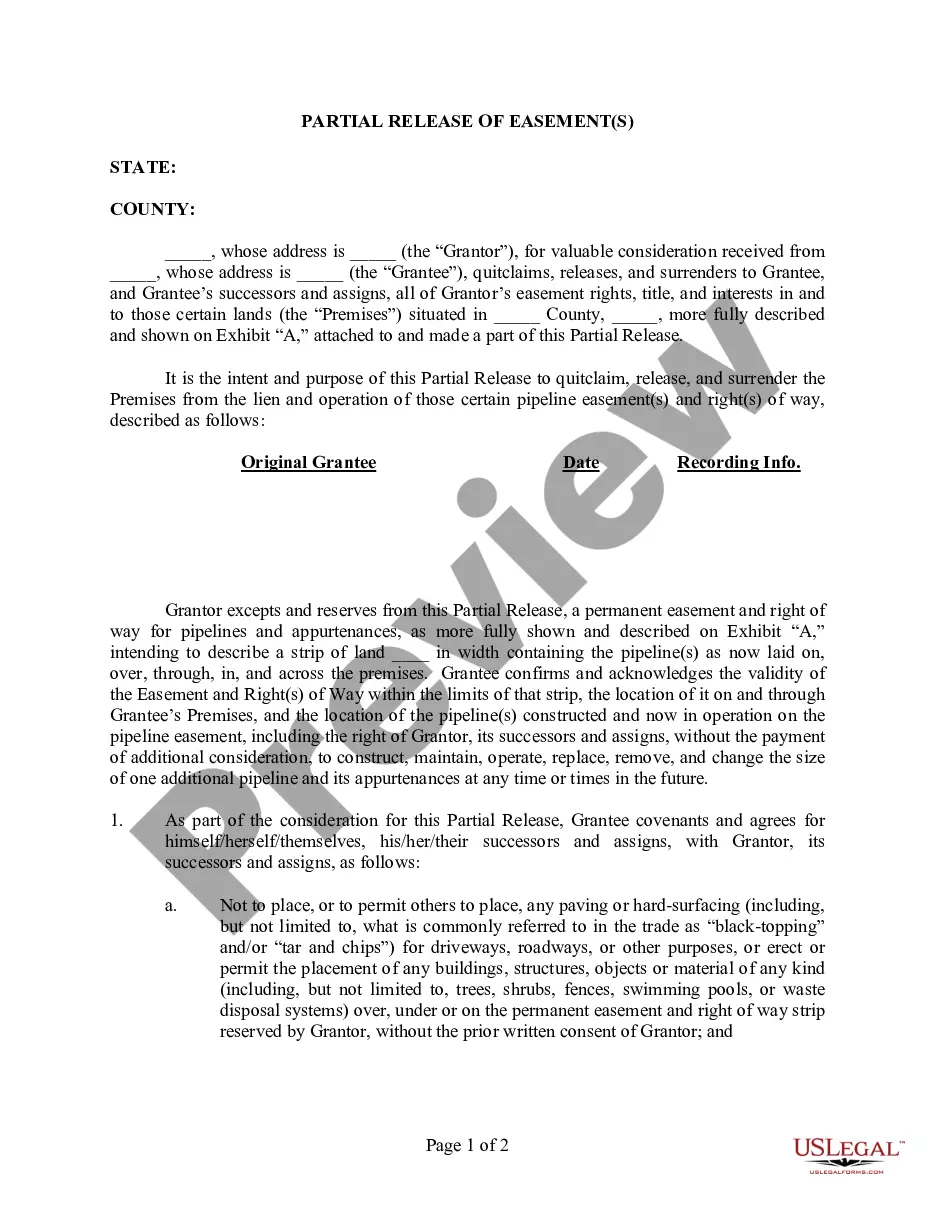
Get your form ready online
Our built-in tools help you complete, sign, share, and store your documents in one place.
Make edits, fill in missing information, and update formatting in US Legal Forms—just like you would in MS Word.
Download a copy, print it, send it by email, or mail it via USPS—whatever works best for your next step.
Sign and collect signatures with our SignNow integration. Send to multiple recipients, set reminders, and more. Go Premium to unlock E-Sign.
If this form requires notarization, complete it online through a secure video call—no need to meet a notary in person or wait for an appointment.
We protect your documents and personal data by following strict security and privacy standards.

Make edits, fill in missing information, and update formatting in US Legal Forms—just like you would in MS Word.

Download a copy, print it, send it by email, or mail it via USPS—whatever works best for your next step.

Sign and collect signatures with our SignNow integration. Send to multiple recipients, set reminders, and more. Go Premium to unlock E-Sign.

If this form requires notarization, complete it online through a secure video call—no need to meet a notary in person or wait for an appointment.

We protect your documents and personal data by following strict security and privacy standards.
Looking for another form?



Form popularity
FAQ
The FCA sets out rules and guidelines that govern the conduct and operations of factoring companies, ensuring they adhere to high standards of professionalism, transparency, and consumer protection.
Deductibility of Factoring Fees Factoring fees are generally treated as a business expense, making them tax-deductible. These fees can include service charges and interest. Documenting these fees properly is essential for ensuring that deductions are accurately reported on tax returns.
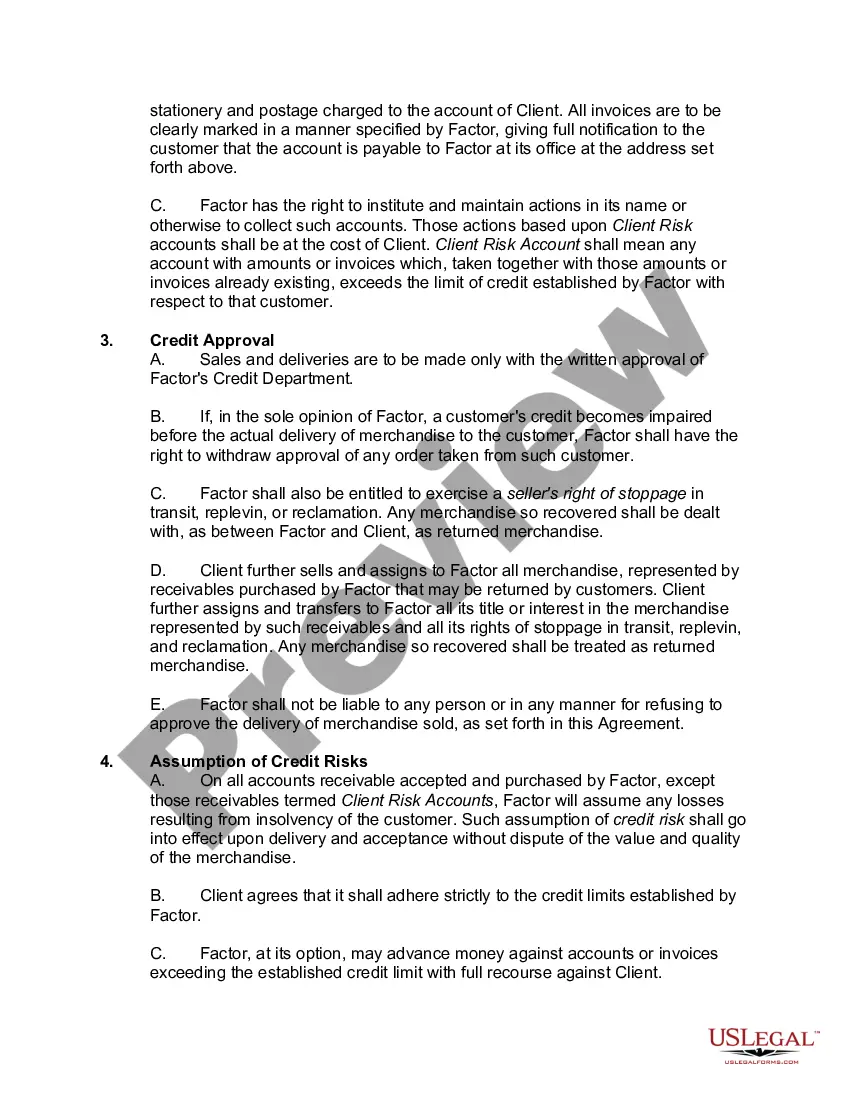
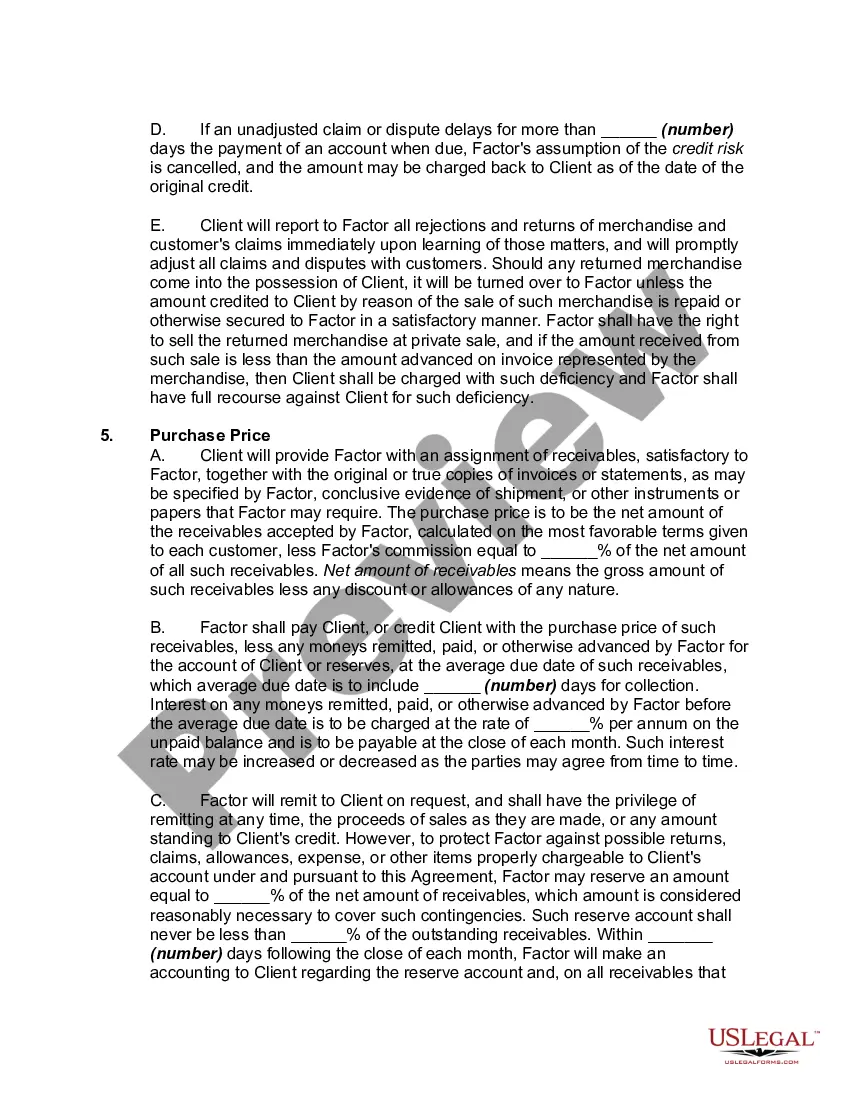
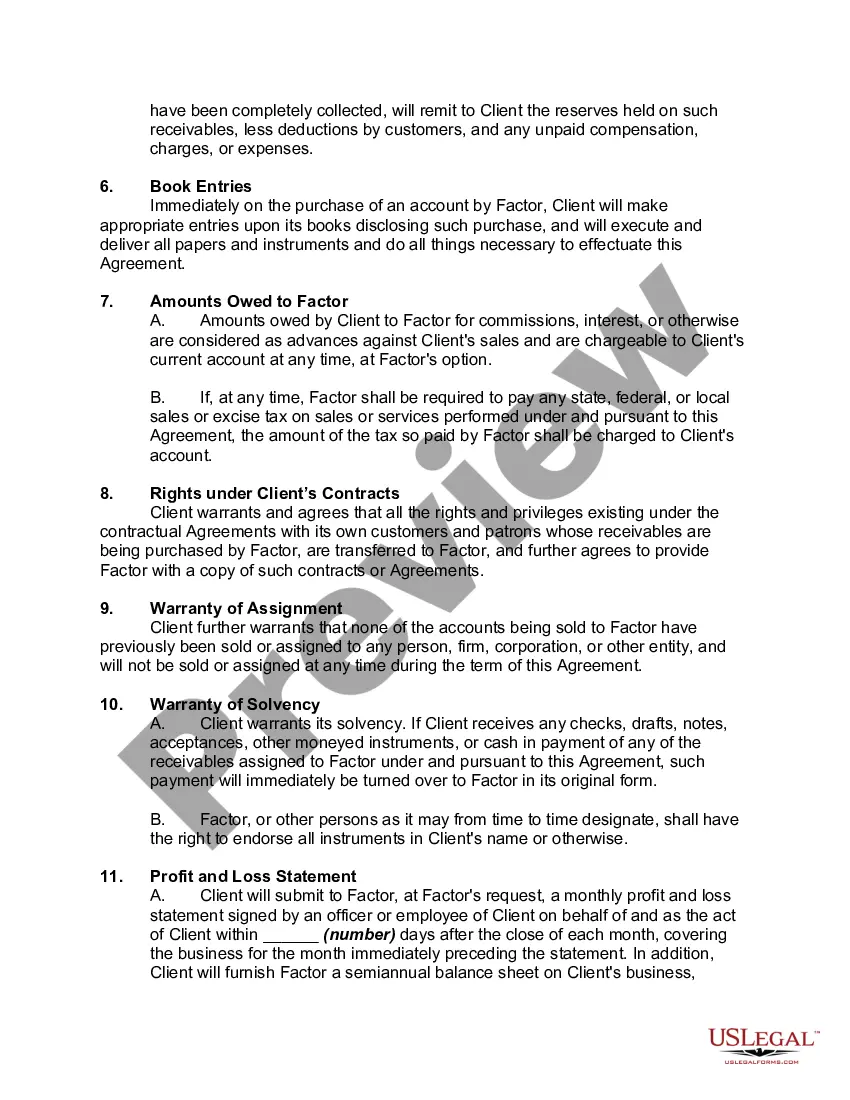
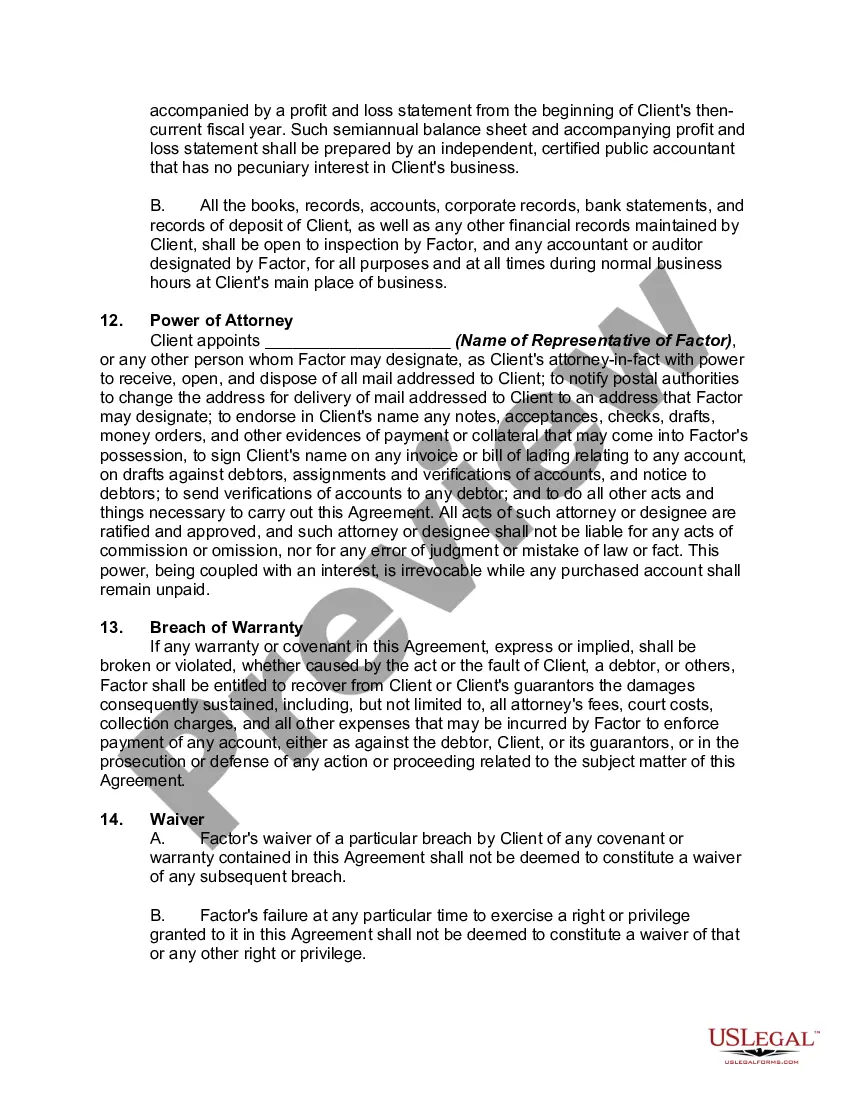
Broadly, debt factoring is a finance arrangement whereby a business sells its accounts receivable to a third party (factor) at a discount to obtain working capital. The factor then collects the receivables from the business's customers. Debt factoring agreements can either be recourse or non-recourse arrangements.
Factor expressions, also known as factoring, mean rewriting the expression as the product of factors. For example, 3x + 12y can be factored into a simple expression of 3 (x + 4y). In this way, the calculations become easier. The terms 3 and (x + 4y) are known as factors.
A factoring relationship involves three parties: (i) a buyer, who is a person or a commercial enterprise to whom the services are supplied on credit, (ii) a seller, who is a commercial enterprise which supplies the services on credit and avails the factoring arrangements, and (iii) a factor, which is a financial ...
Net sales is calculated as sales on credit - sales returns - sales allowances. Average accounts receivable is calculated as the sum of starting and ending receivables over a set period of time (generally monthly, quarterly or annually), divided by two.
What is the factoring rate for accounts receivable? Total factoring costs include a discount rate of 1% to 5% of the invoice value plus any hidden fees, like application fees or customer review fees. The discount rate depends on details such as the customer's creditworthiness, invoice amount, and payment terms.
Broadly, debt factoring is a finance arrangement whereby a business sells its accounts receivable to a third party (factor) at a discount to obtain working capital. The factor then collects the receivables from the business's customers.
FACTORING IN A CONTINUING AGREEMENT - It is an arrangement where a financing entity purchases all of the accounts receivable of a certain entity.
The factoring company assesses the creditworthiness of the customers and the overall financial stability of the business. Typically, the factoring rates range from 1% to 5% of the invoice value, but they can be higher or lower depending on the specific circumstances.
