Co-ownership Agreements For Real Estate In Washington
Description
Get your form ready online
Our built-in tools help you complete, sign, share, and store your documents in one place.
Make edits, fill in missing information, and update formatting in US Legal Forms—just like you would in MS Word.
Download a copy, print it, send it by email, or mail it via USPS—whatever works best for your next step.
Sign and collect signatures with our SignNow integration. Send to multiple recipients, set reminders, and more. Go Premium to unlock E-Sign.
If this form requires notarization, complete it online through a secure video call—no need to meet a notary in person or wait for an appointment.
We protect your documents and personal data by following strict security and privacy standards.

Make edits, fill in missing information, and update formatting in US Legal Forms—just like you would in MS Word.

Download a copy, print it, send it by email, or mail it via USPS—whatever works best for your next step.

Sign and collect signatures with our SignNow integration. Send to multiple recipients, set reminders, and more. Go Premium to unlock E-Sign.

If this form requires notarization, complete it online through a secure video call—no need to meet a notary in person or wait for an appointment.

We protect your documents and personal data by following strict security and privacy standards.
Looking for another form?
Form popularity
FAQ
One apostrophe on the last subject indicates joint ownership, which means that all members of the compound subject own the object. When each member of the compound subject has its own apostrophe, they have individual ownership, meaning that each member of the compound subject has its own object.
Control Issues. Since every owner has a co-equal share of the asset, any decision must be mutual. You might not be able to sell or mortgage a home if your co-owner does not agree. Creditor Issues. If a co-owner has outstanding debts, their creditors could seize an interest in your home or bank account.
Joint ownership is a concept in property law that refers to the ownership of property by two or more people. There are four main types of joint ownership: joint tenancy with rights of survivorship ; tenancy by the entirety ; tenancy in common and community property .
owner is an individual or group that shares ownership of an asset with another individual or group. Each coowner owns a percentage of the asset, although the amount may vary ing to the ownership agreement.
Co-ownership might entail more complex legal agreements, specifically outlining each party's rights and responsibilities. Joint property ownership usually involves a simpler, more standardised agreement.
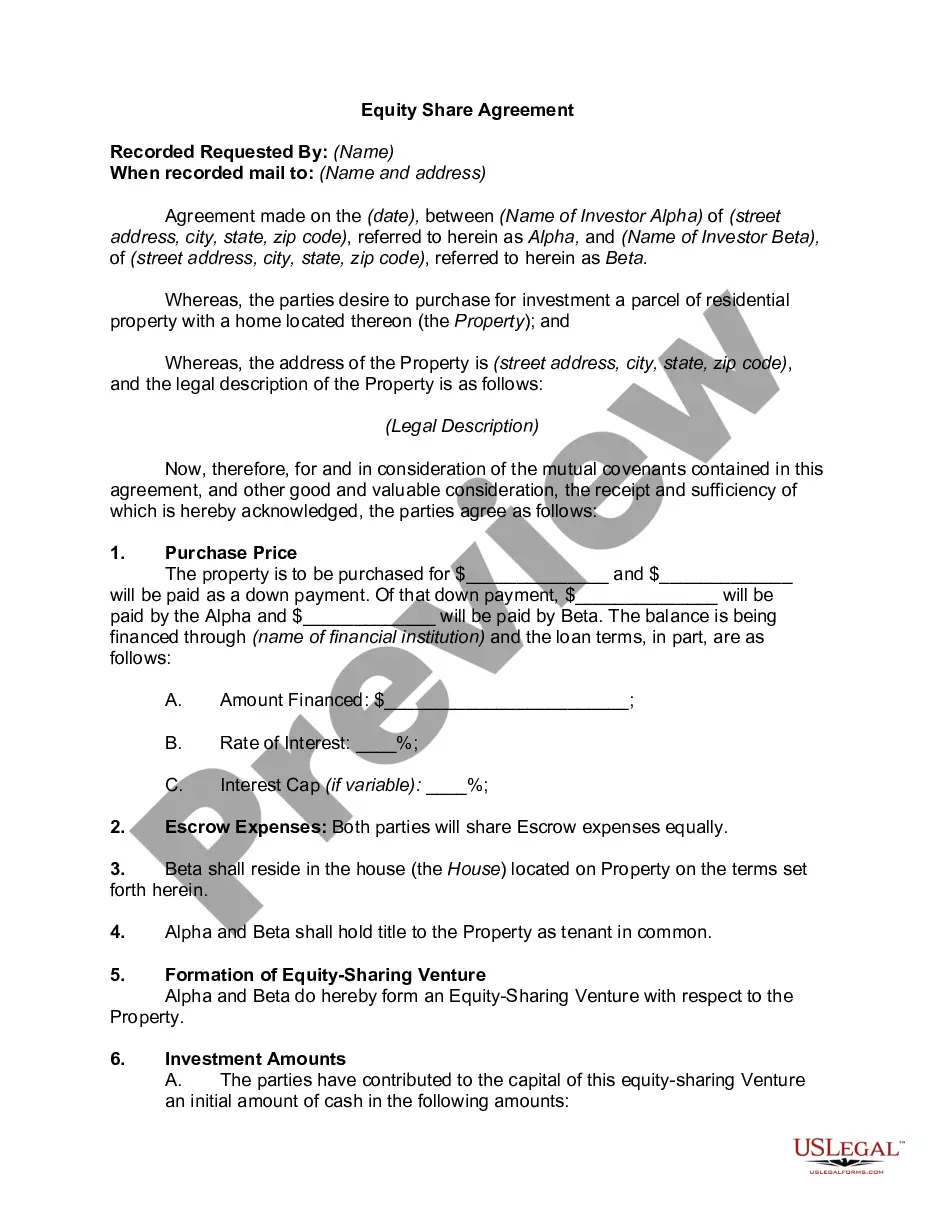
There are different types of co-ownership, including tenancy in common, joint ownership, community property and tenancy by the entirety.
Co-ownership shares, especially in the context of homeowners' associations, can also pose some challenges despite their advantages: Limited individual freedom of choice. Potential conflicts within the community. Financial obligations. Liability for joint debts. Limited flexibility when selling or renting.
Co-ownership is a legal concept in a business where two or more co-owners share the legal ownership of property. For the concept of co-ownership in different legal codes, see: Concurrent estate, for co-ownership in the common law system.
Since every owner has a co-equal share of the asset, any decision must be mutual. You might not be able to sell or mortgage a home if your co-owner does not agree. Creditor Issues. If a co-owner has outstanding debts, their creditors could seize an interest in your home or bank account.
A defining feature of joint tenancy is the right of survivorship—if one owner dies, their share automatically passes to the surviving joint tenants, avoiding probate. In Washington, this can simplify the transfer of property between spouses or family members, especially for homes and real estate investments.