Equity Share Agreement For Private Equity In Pima
Description






Get your form ready online
Our built-in tools help you complete, sign, share, and store your documents in one place.
Make edits, fill in missing information, and update formatting in US Legal Forms—just like you would in MS Word.
Download a copy, print it, send it by email, or mail it via USPS—whatever works best for your next step.
Sign and collect signatures with our SignNow integration. Send to multiple recipients, set reminders, and more. Go Premium to unlock E-Sign.
If this form requires notarization, complete it online through a secure video call—no need to meet a notary in person or wait for an appointment.
We protect your documents and personal data by following strict security and privacy standards.
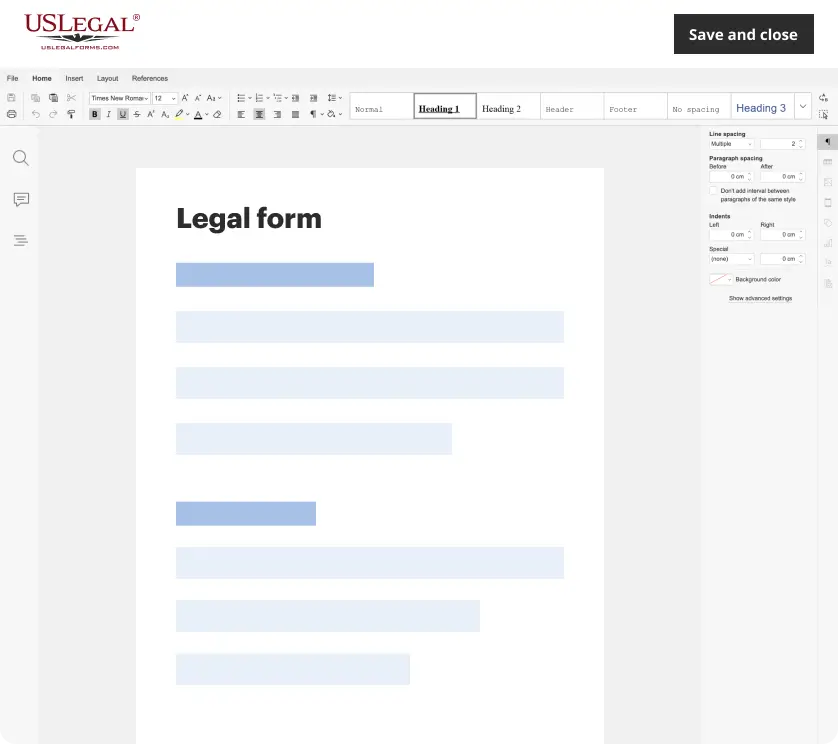
Make edits, fill in missing information, and update formatting in US Legal Forms—just like you would in MS Word.
Download a copy, print it, send it by email, or mail it via USPS—whatever works best for your next step.
Sign and collect signatures with our SignNow integration. Send to multiple recipients, set reminders, and more. Go Premium to unlock E-Sign.

If this form requires notarization, complete it online through a secure video call—no need to meet a notary in person or wait for an appointment.
We protect your documents and personal data by following strict security and privacy standards.
Looking for another form?








Form popularity
FAQ
A buyout is the process whereby a management team, which may be the existing team or one assembled specifically for the purpose of the buyout, acquires a business (Target) from the current owners of Target using equity finance from a private equity provider and debt finance from financial institutions.
Closing Period within a PE timeline Once the SPA is completed and signed, there is a closing period during which equity and debt execution and administrative documentation are processed to allow for final funding.
Here is a Structure of a Private Equity Deal 'Sourcing' and 'Teasers' Signing a Non-Disclosure Agreement (NDA) Initial Due Diligence. Investment Proposal. The First Round Bid or Non-Binding Letter of Intent (LOI) Further Due Diligence. Creating an Internal Operating Model. Preliminary Investment Memorandum (PIM)
Below are the seven strategies we see most often when it comes to an exit strategy involving private equity: Strategic Sale. Initial Public Offering (IPO) Secondary Sale. Recapitalization. Management Buyouts (MBO) Earn Outs. Divestiture.
An equity agreement, often referred to as a shareholder agreement or a shared equity agreement, is a legal contract that defines the relationship between a company and its shareholders. It specifies the rights, duties, and protections of shareholders, as well as the operational procedures of the company.
Location. Your property must be located in a state served by Unlock: Arizona, California, Florida, Michigan, New Jersey, North Carolina, Oregon, Pennsylvania, South Carolina, Tennessee, Utah, Virginia or Washington state.
Key Takeaways. A subscription agreement is an agreement that defines the terms for a party's investment into a private placement offering or a limited partnership (LP). Rules for subscription agreements are generally defined in SEC Rule 506(b) and 506(c) of Regulation D.
Private equity describes investment partnerships that buy and manage companies before selling them. Private equity firms operate these investment funds on behalf of institutional and accredited investors.
Equity agreements commonly contain the following components: Equity program. This section outlines the details of the investment plan, including its purpose, conditions, and objectives. It also serves as a statement of intention to create a legal relationship between both parties.
