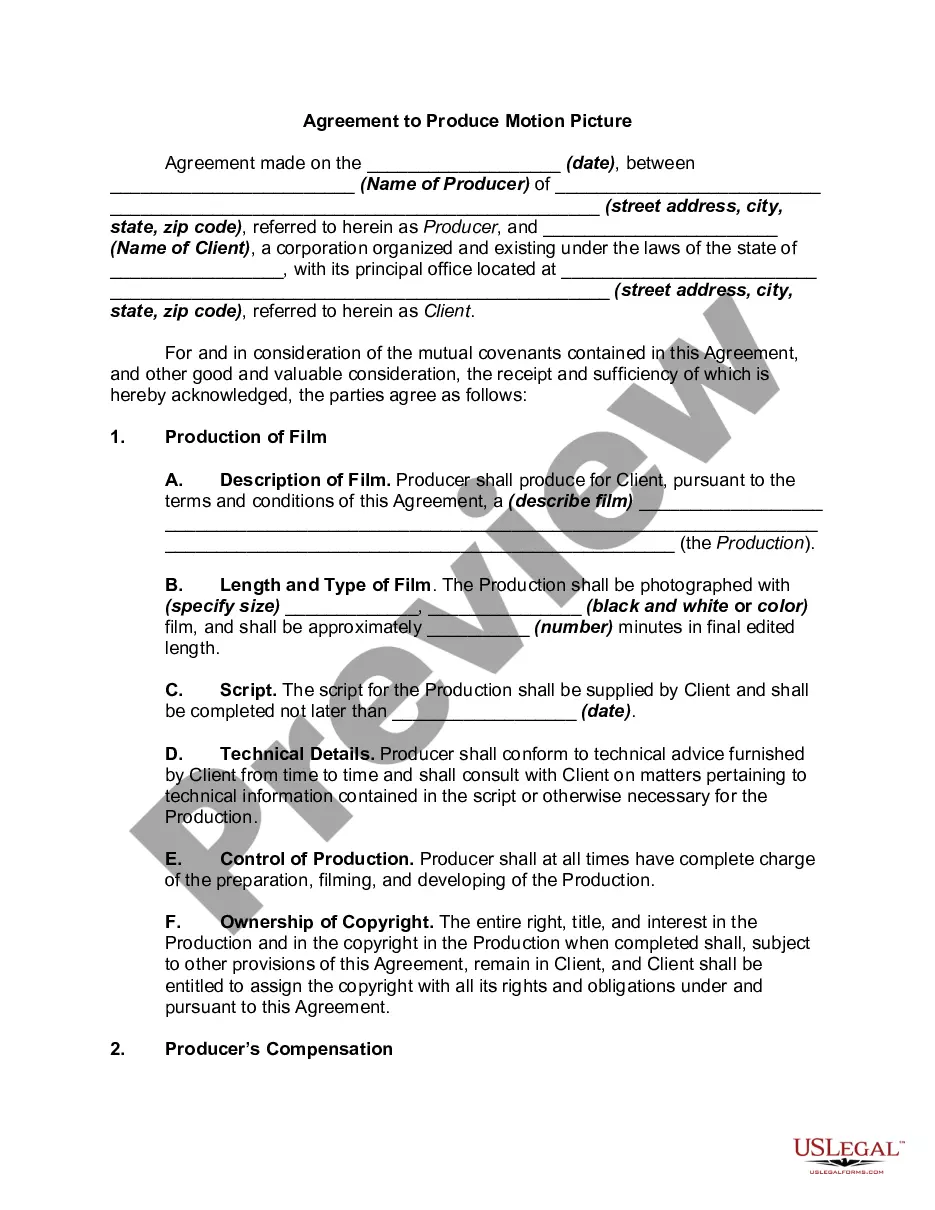
Movie Agreement Contract For Services In Miami-Dade
Description

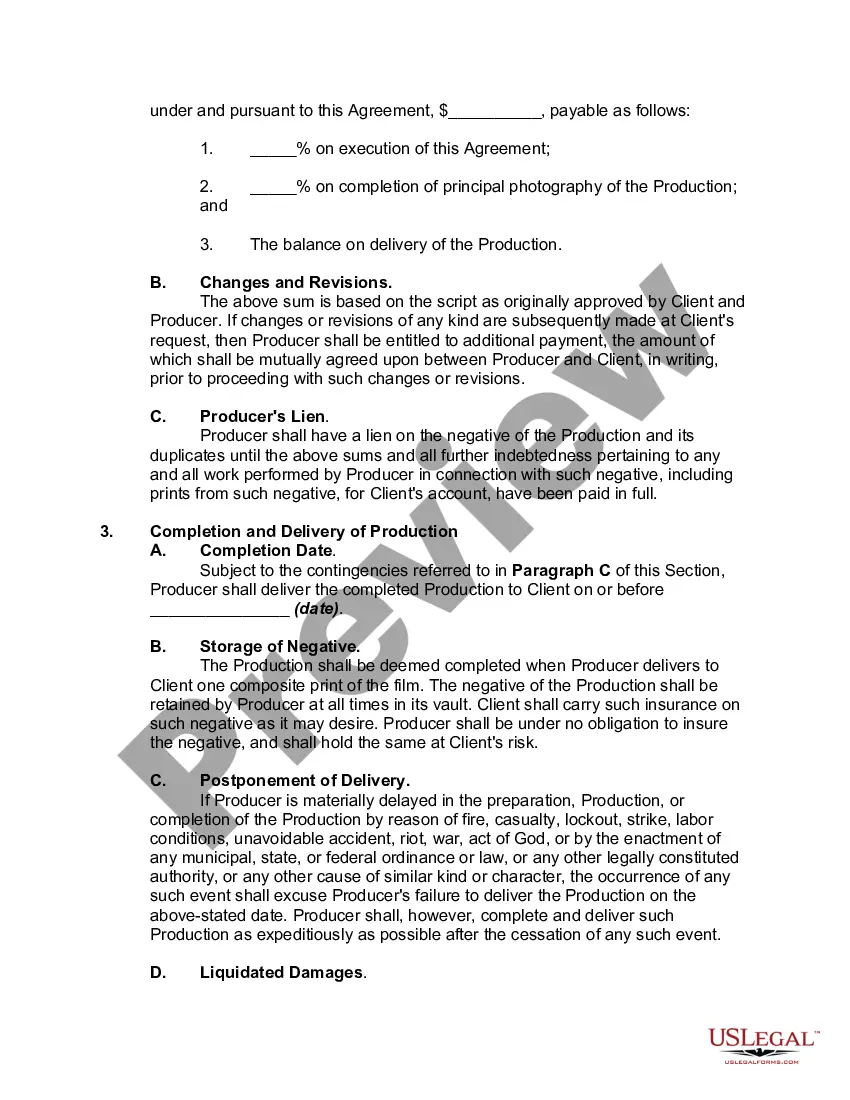
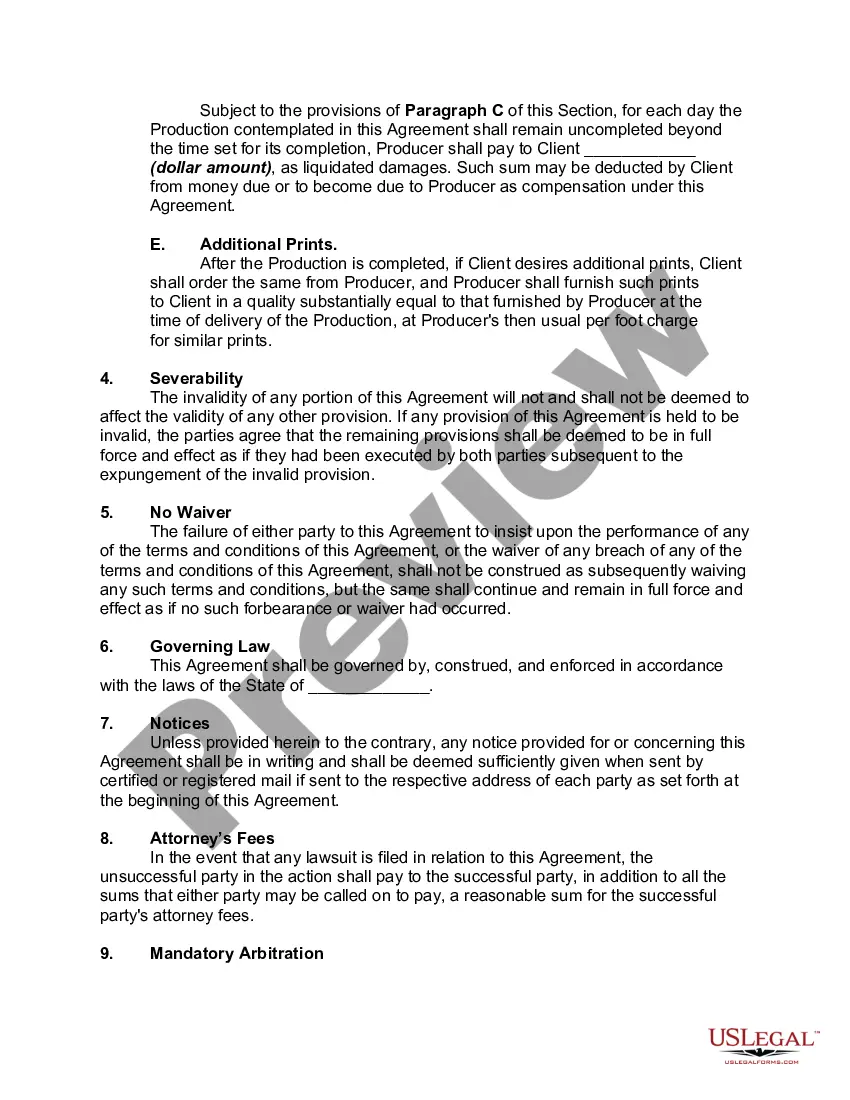
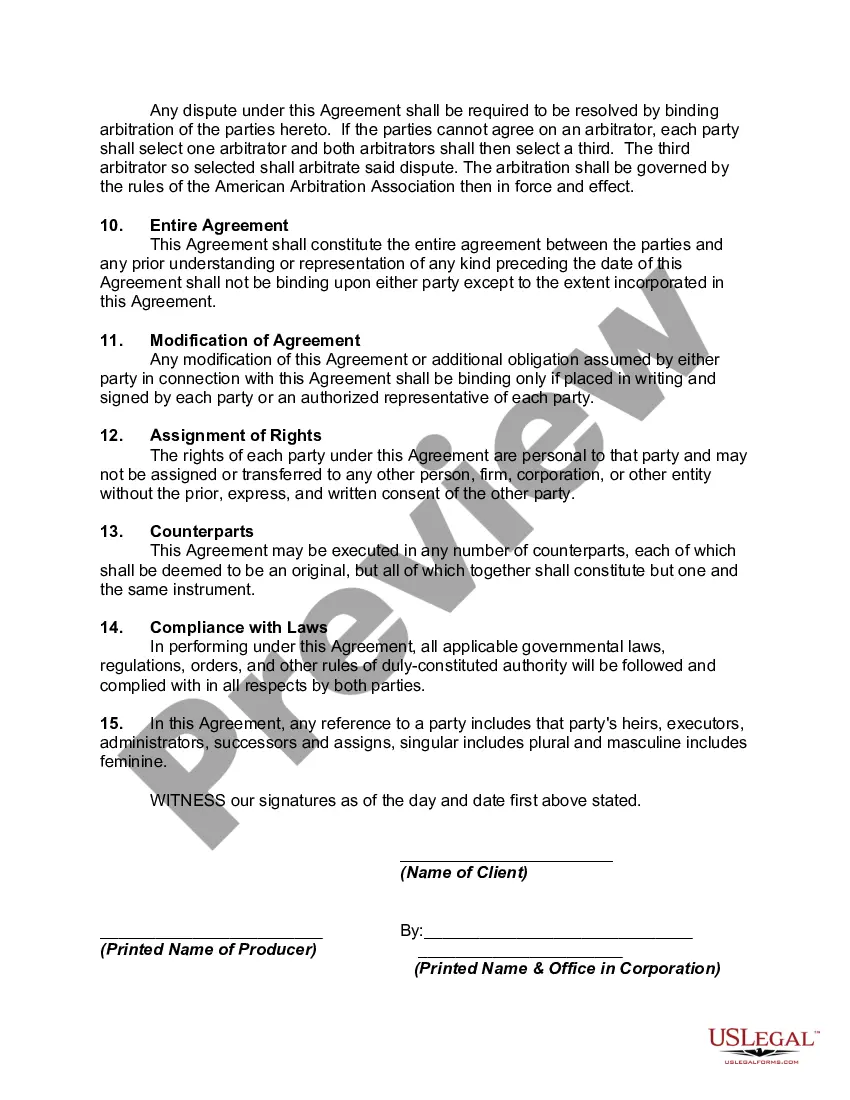
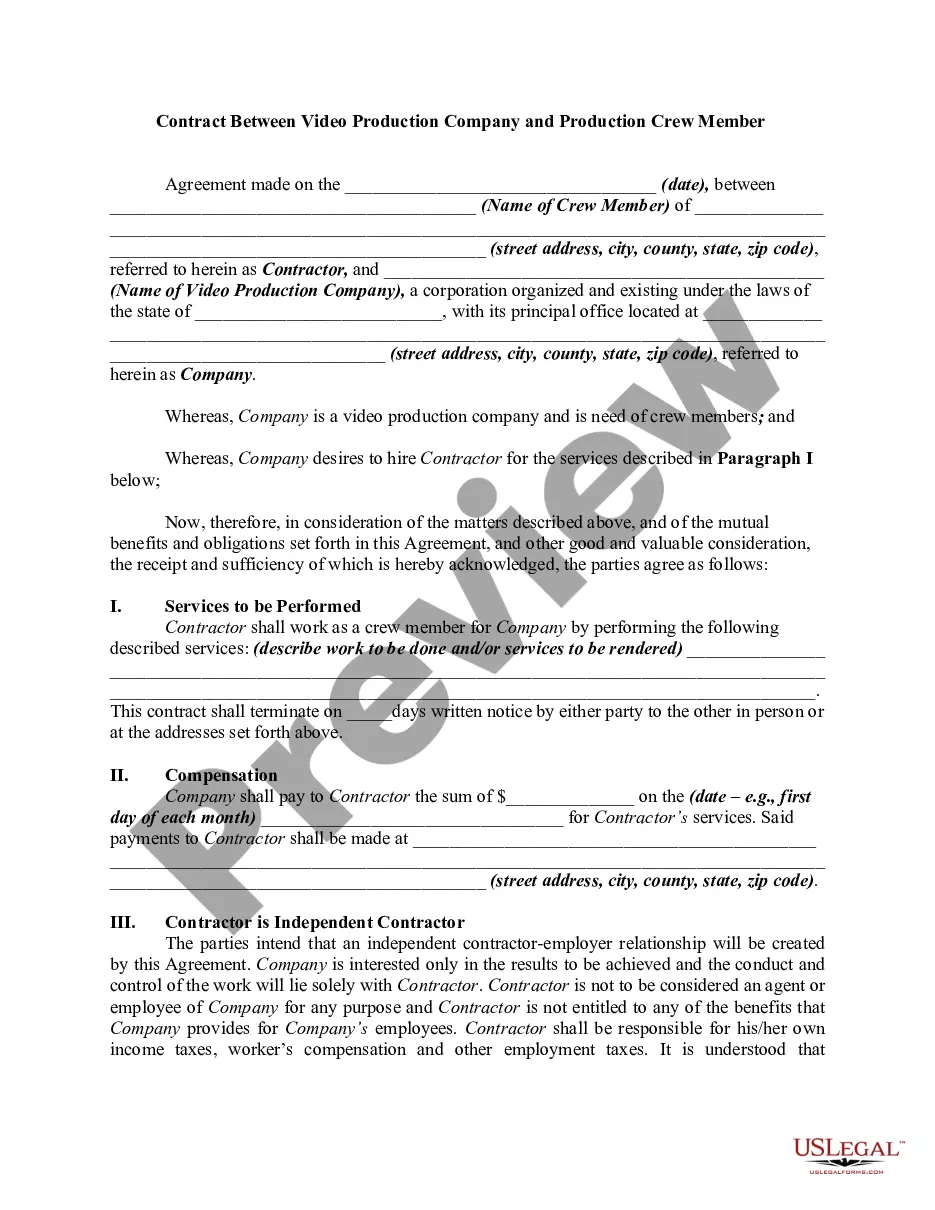
Get your form ready online
Our built-in tools help you complete, sign, share, and store your documents in one place.
Make edits, fill in missing information, and update formatting in US Legal Forms—just like you would in MS Word.
Download a copy, print it, send it by email, or mail it via USPS—whatever works best for your next step.
Sign and collect signatures with our SignNow integration. Send to multiple recipients, set reminders, and more. Go Premium to unlock E-Sign.
If this form requires notarization, complete it online through a secure video call—no need to meet a notary in person or wait for an appointment.
We protect your documents and personal data by following strict security and privacy standards.

Make edits, fill in missing information, and update formatting in US Legal Forms—just like you would in MS Word.

Download a copy, print it, send it by email, or mail it via USPS—whatever works best for your next step.

Sign and collect signatures with our SignNow integration. Send to multiple recipients, set reminders, and more. Go Premium to unlock E-Sign.

If this form requires notarization, complete it online through a secure video call—no need to meet a notary in person or wait for an appointment.

We protect your documents and personal data by following strict security and privacy standards.
Looking for another form?




Form popularity
FAQ
If an actor quits a project, they may face professional consequences. This could include damaging their reputation within the industry, losing future job opportunities, and possibly even facing legal ramifications if contractual obligations are not fulfilled.
Most actor contracts are between two and three pages long. The typical term for an actor contract is a certain a number of months after the film or play premieres, although some go on indefinitely. Term lengths can vary greatly! The typical term for an agent or manager contract for actors is about 12 to 18 months.
These contracts specify the actor's role and cover aspects such as compensation (salary, bonuses and profit-sharing arrangements), work schedule (filming dates, call times and duration of the shoot), rights and obligations (the actor's responsibilities, confidentiality agreements and moral clauses) and perks and ...
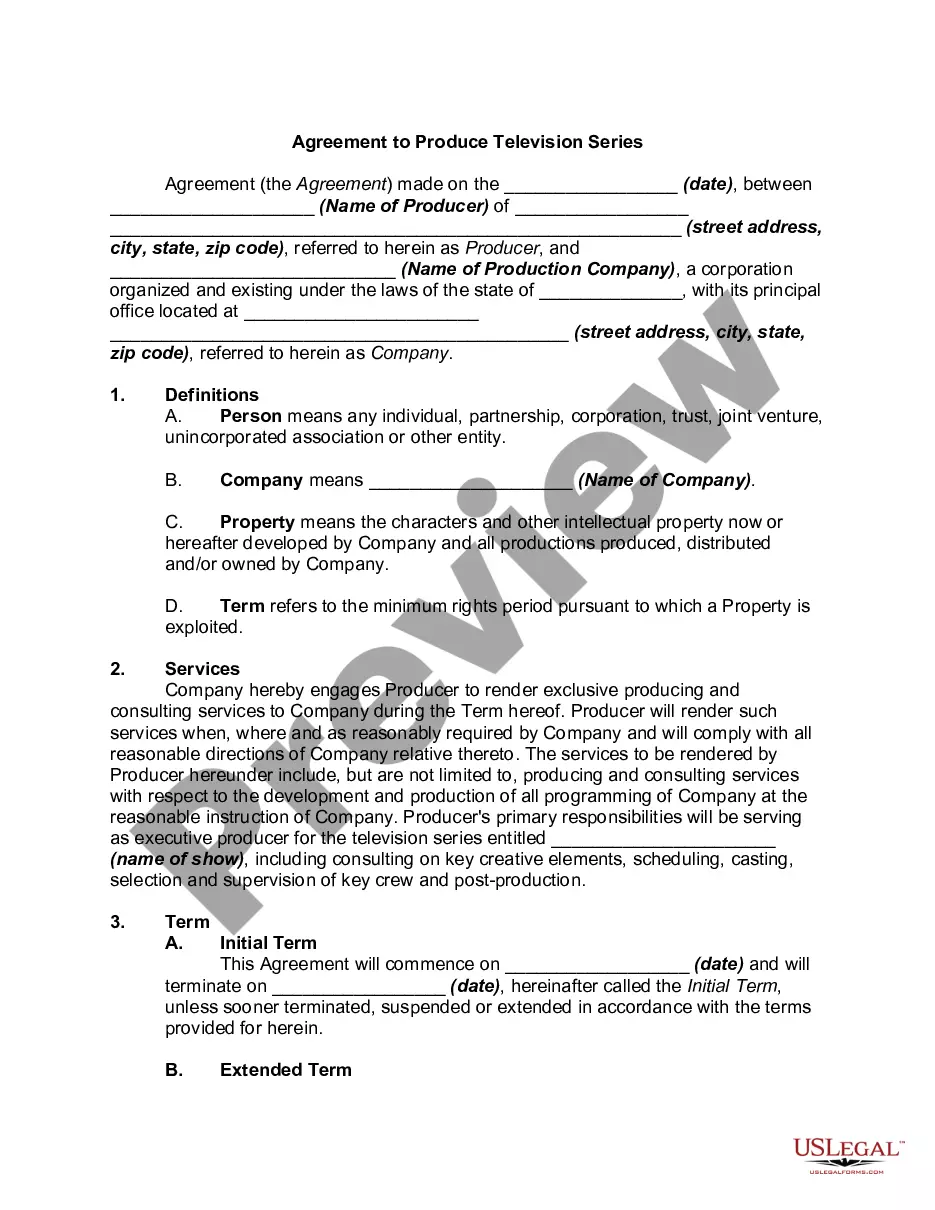
The production agreement sets forth the term between two or more producers, individuals, or companies, who together agree to produce a feature film based on an existing screenplay. The production agreement may include financing elements.
Incentive TypeCash rebate up to 20% Qualifying 90% of the production that occurs within the State of Florida must occur in Miami-Dade County. 60% of the qualified labor must be Miami-Dade County residents. 70% percent of hired vendors/contractors must be Miami-Dade County registered businesses.10 more rows
10 Best States for Film Tax Incentives & Tax Breaks Illinois. Kentucky. Louisiana. Massachusetts. New Jersey. New Mexico. New York. West Virginia. Our list of the 10 best states with tax breaks for film industry productions concludes with the Mountain State.
Businesses can earn up to a $1,000 tax credit per for new businesses with a minimum of 20 regular and full-time jobs and existing businesses with a minimum of 10 regular and full-time new jobs.
If you are planning to utilize a location that is owned or maintained by the State of Florida for your production, a permit may be required. A State location is any road, park, beach, building, etc. that is not privately owned or governed by a county or municipality.
This is typically established with a location release. Form where the owner consents to the relevantMoreThis is typically established with a location release. Form where the owner consents to the relevant details of the shoot.
The State considers an approved, issued CFC film permit to be your legal approval to use the state locations and images in your project in perpetuity. The CFC film permit, in most instances, takes the place of a location agreement or signed release.
