Film Agreement Sample Format In Hillsborough
Description

Get your form ready online
Our built-in tools help you complete, sign, share, and store your documents in one place.
Make edits, fill in missing information, and update formatting in US Legal Forms—just like you would in MS Word.
Download a copy, print it, send it by email, or mail it via USPS—whatever works best for your next step.
Sign and collect signatures with our SignNow integration. Send to multiple recipients, set reminders, and more. Go Premium to unlock E-Sign.
If this form requires notarization, complete it online through a secure video call—no need to meet a notary in person or wait for an appointment.
We protect your documents and personal data by following strict security and privacy standards.

Make edits, fill in missing information, and update formatting in US Legal Forms—just like you would in MS Word.

Download a copy, print it, send it by email, or mail it via USPS—whatever works best for your next step.

Sign and collect signatures with our SignNow integration. Send to multiple recipients, set reminders, and more. Go Premium to unlock E-Sign.

If this form requires notarization, complete it online through a secure video call—no need to meet a notary in person or wait for an appointment.

We protect your documents and personal data by following strict security and privacy standards.
Looking for another form?









Form popularity
FAQ
Write the contract in six steps Start with a contract template. Open with the basic information. Describe in detail what you have agreed to. Include a description of how the contract will be ended. Write into the contract which laws apply and how disputes will be resolved. Include space for signatures.
Write the name of the contract at the top of the page. Follow with the names or company names of all parties, in this format: This agreement is between ____ and ____. Contracts involving a business should include the business' full legal name, including descriptions such as “Ltd.” or “Inc.”
What should a music producer contract template include? Parties involved: Names and contact information of the artist, producer, and any relevant parties such as managers or record labels. Project scope: Detailed description of the work to be performed, including specific tracks or albums to be produced.
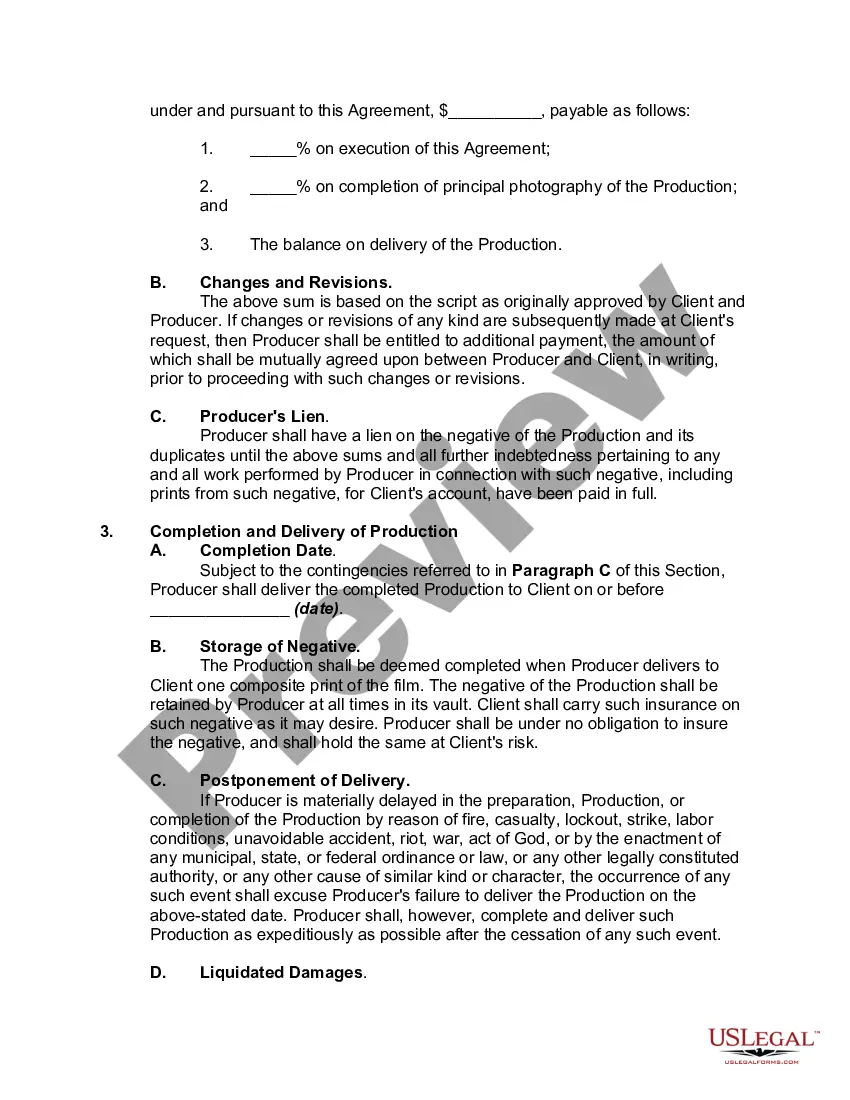
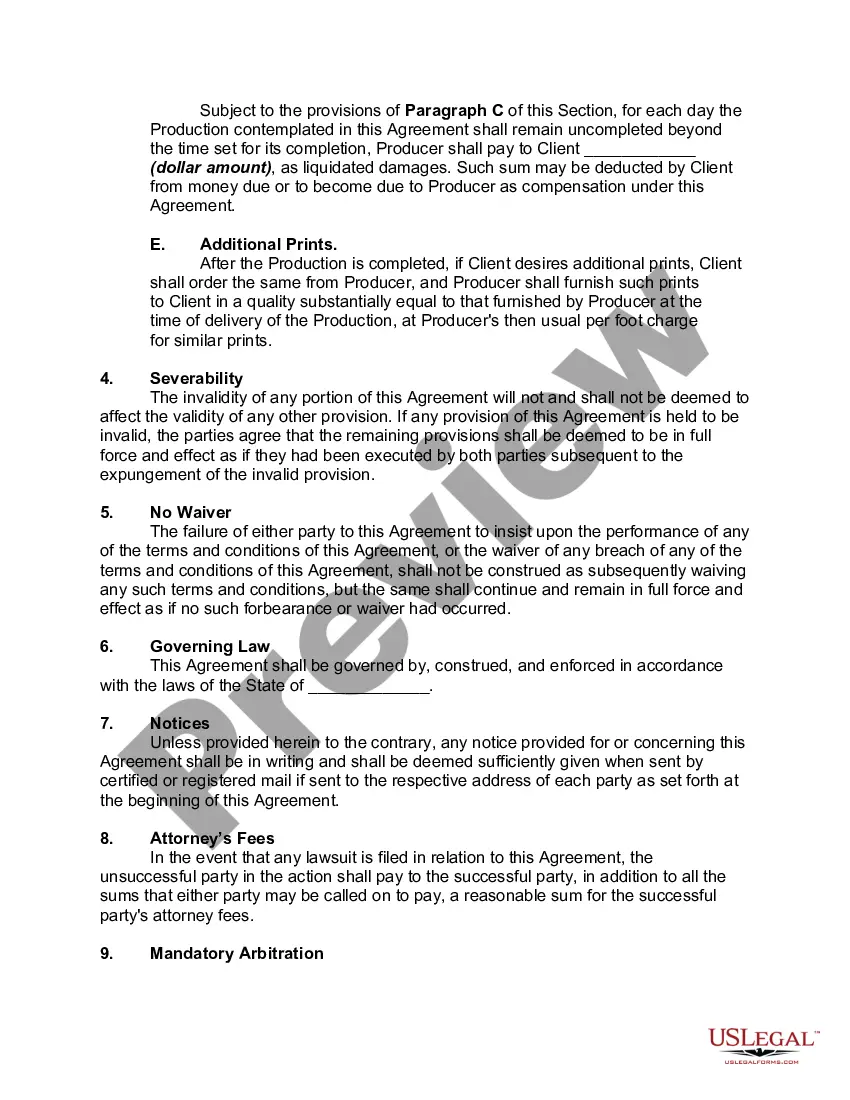
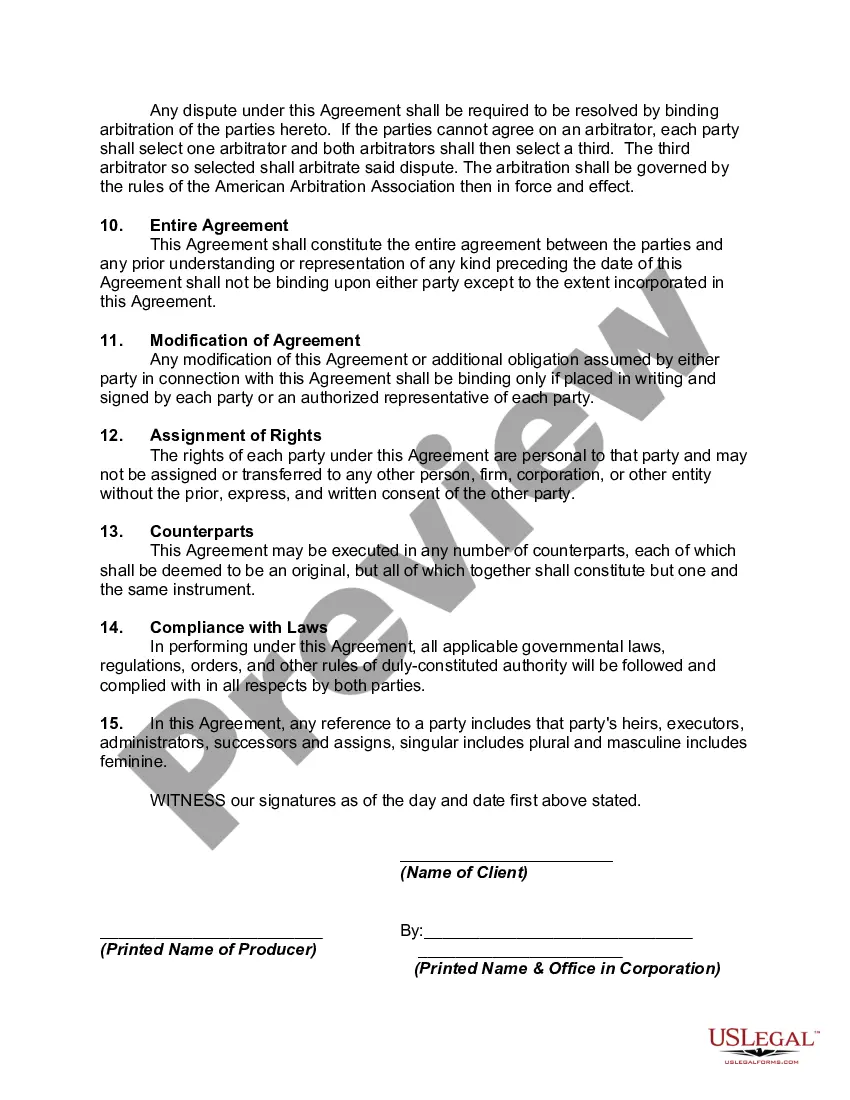
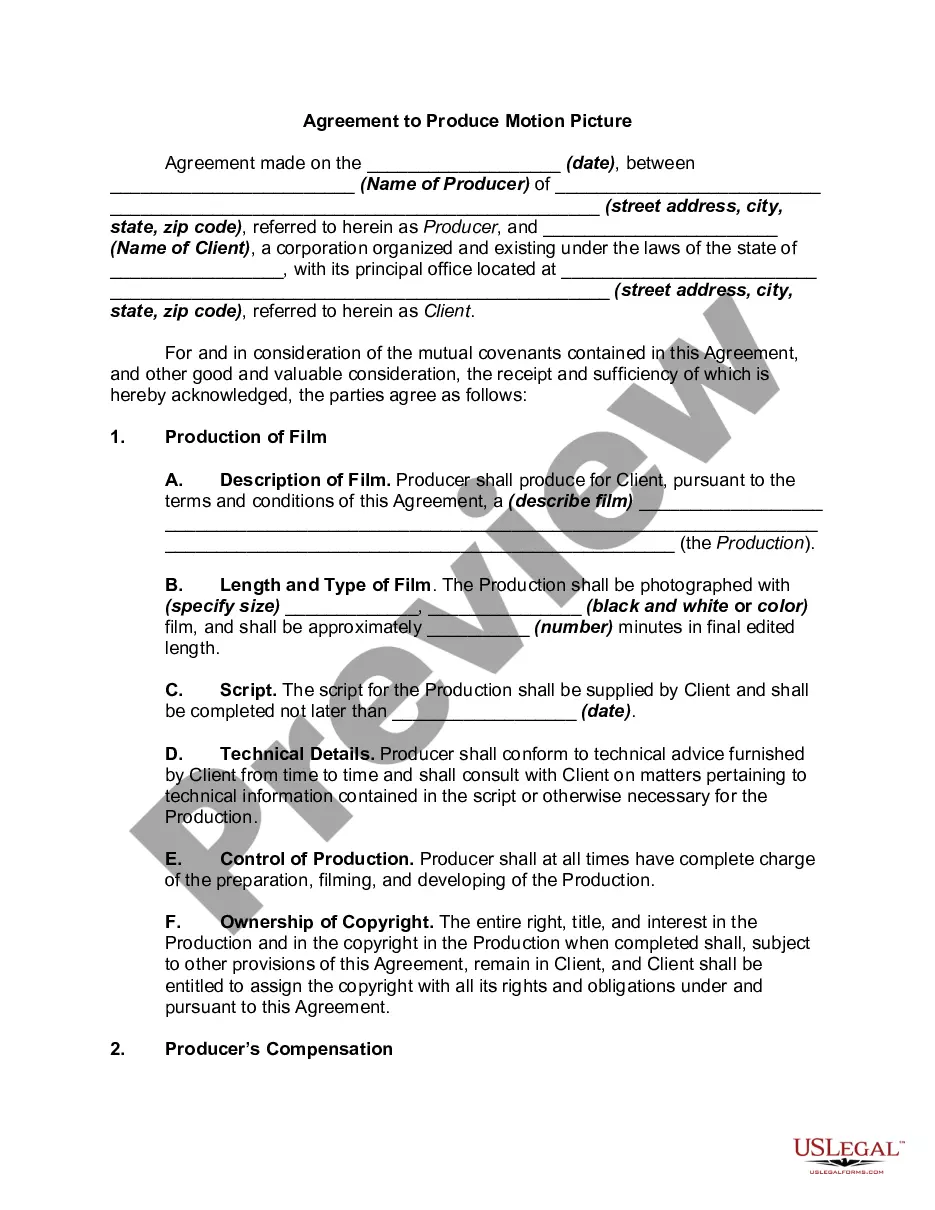
Sample Movie Production Agreement Description of Project. . Production Specifications. The Project will be produced in color on , using both studio and location recording techniques. Budget. Script. Date of Delivery. Ownership of Rights in Project. Credits. Right to Enter Project in Competitions.
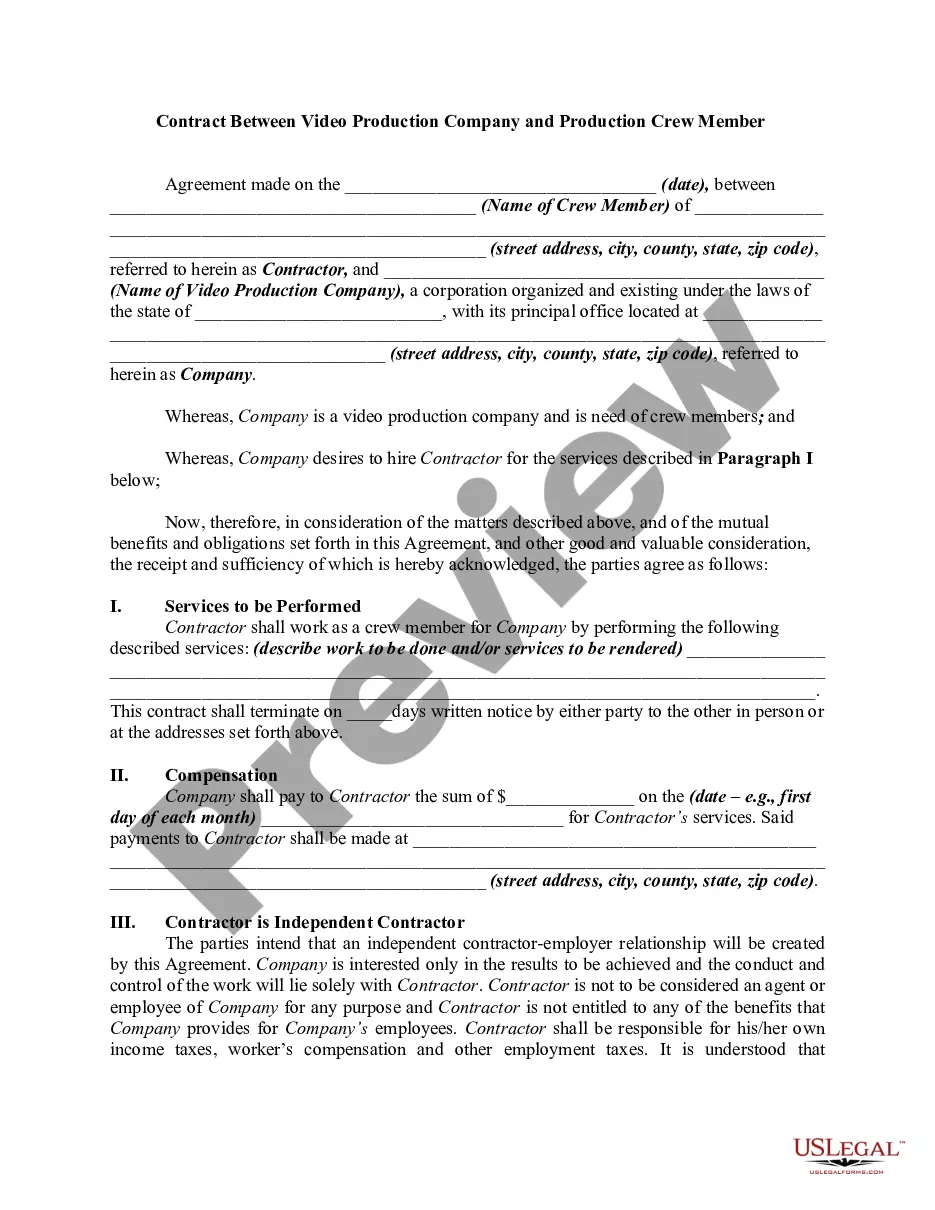
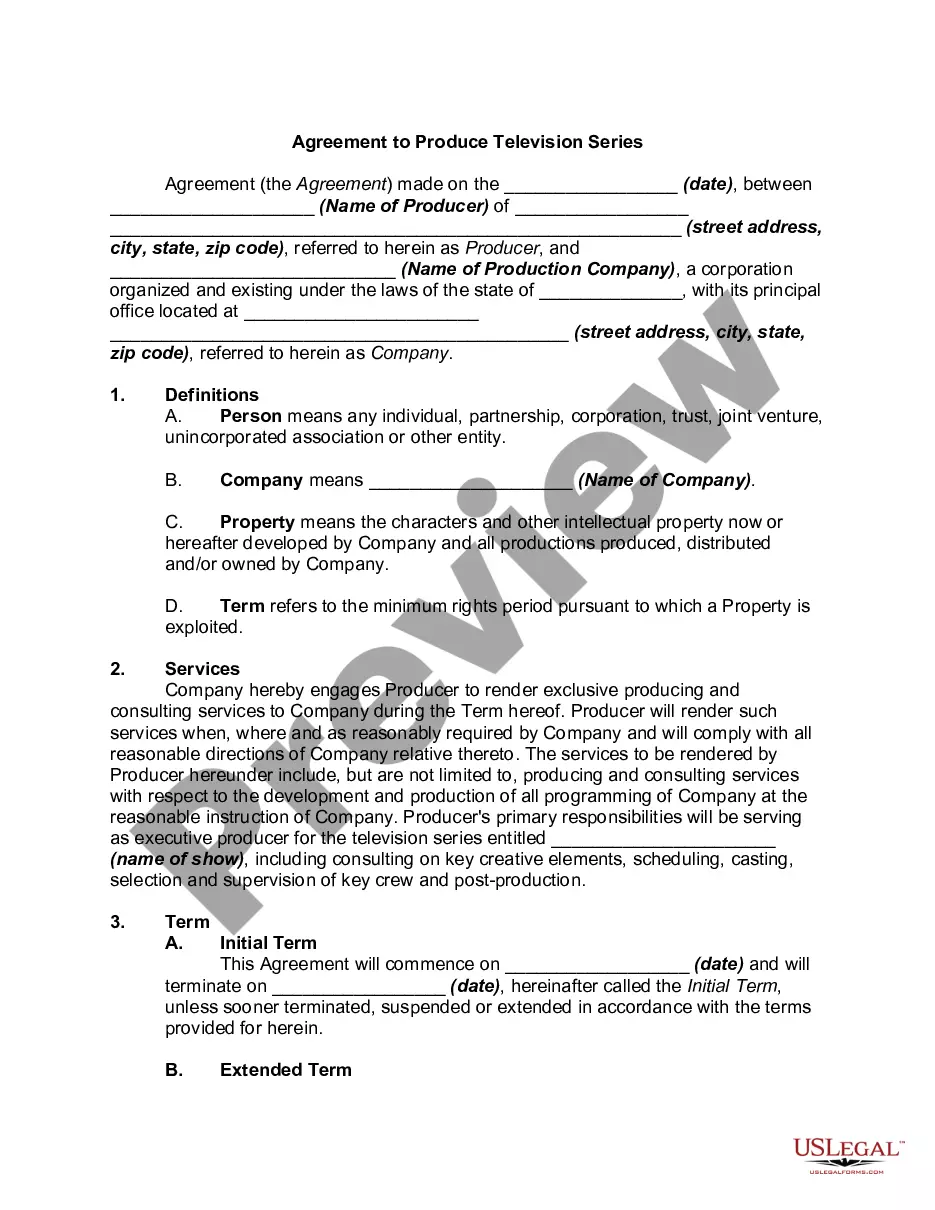
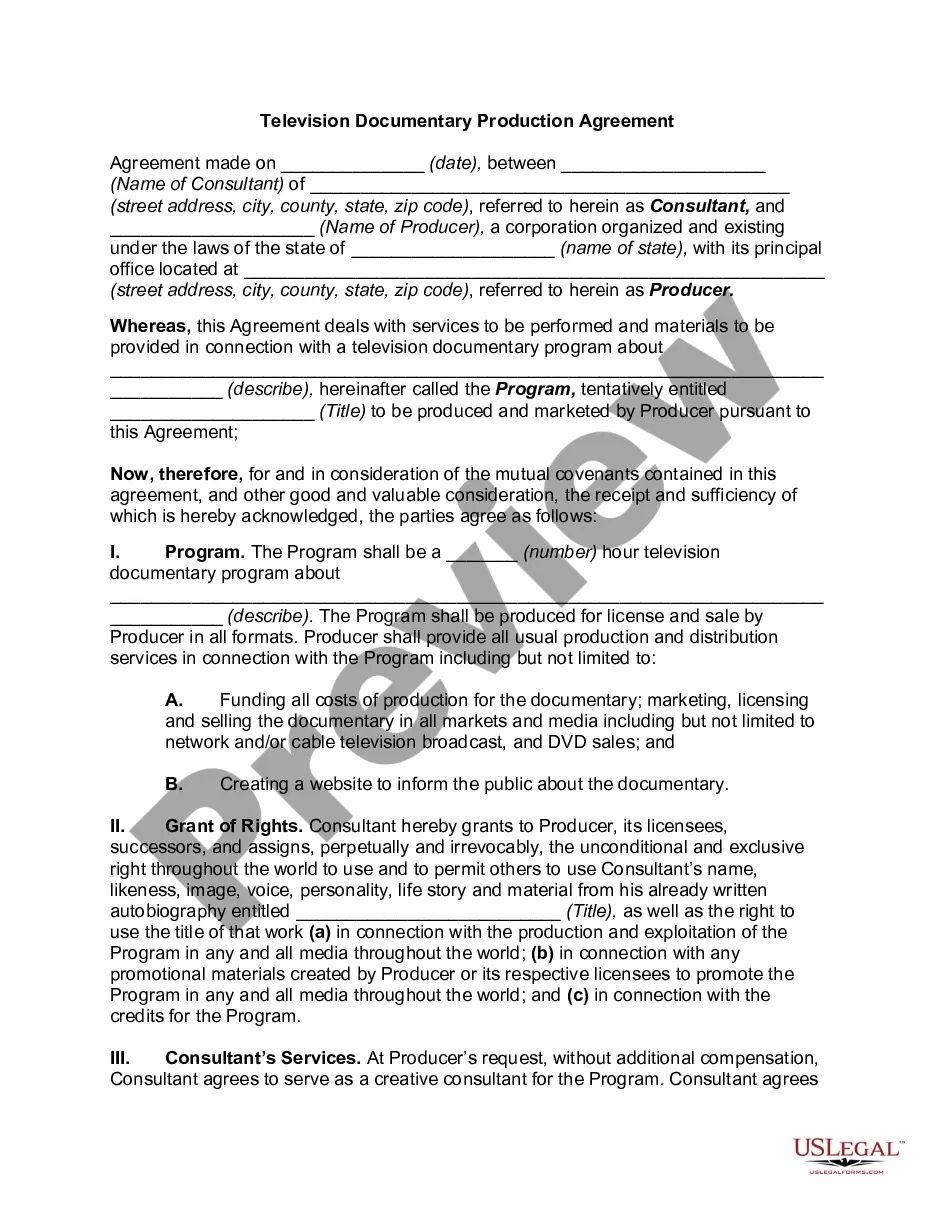
A film production contract is a key legal document that details the agreed terms and conditions for everyone involved in making a film. It ensures that all participants, from lead actors to set designers, understand their roles and compensation.
The qualifying expenditure figure is multiplied by the credit rate of 53% to give the amount of the “above the line” credit before tax. The maximum credit a film can receive is £6.36 million, which is based on the maximum amount a film would be entitled to if it had total core expenditure of £15 million.
Under the new proposal, then, a movie that chose to film in Buffalo could get a 40 percent tax break on production and salaries—credits that are also fully refundable, meaning a production could end up getting a check from the state instead of owing any taxes.
About. The Film Production Tax Credit is a 25% tax credit on qualified costs incurred in New York State for eligible productions. There are no caps for potential benefit for this credit.
Film tax incentives typically come in the form of tax credits equal to a percentage of a film or television production's qualified in-state spending and/or exemptions from sales tax on qualified transactions.
