Injunctive Relief Agreement For Trademark
Description
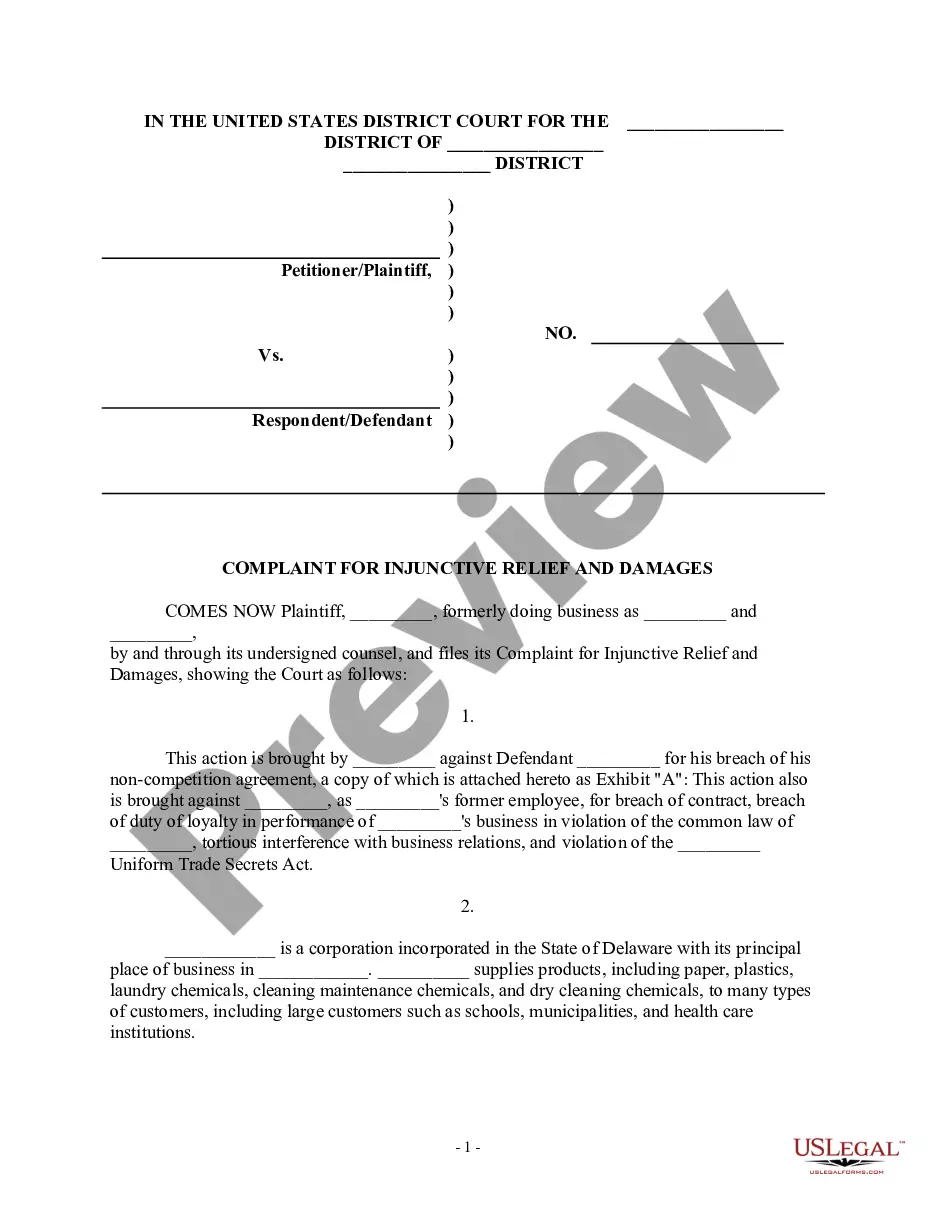
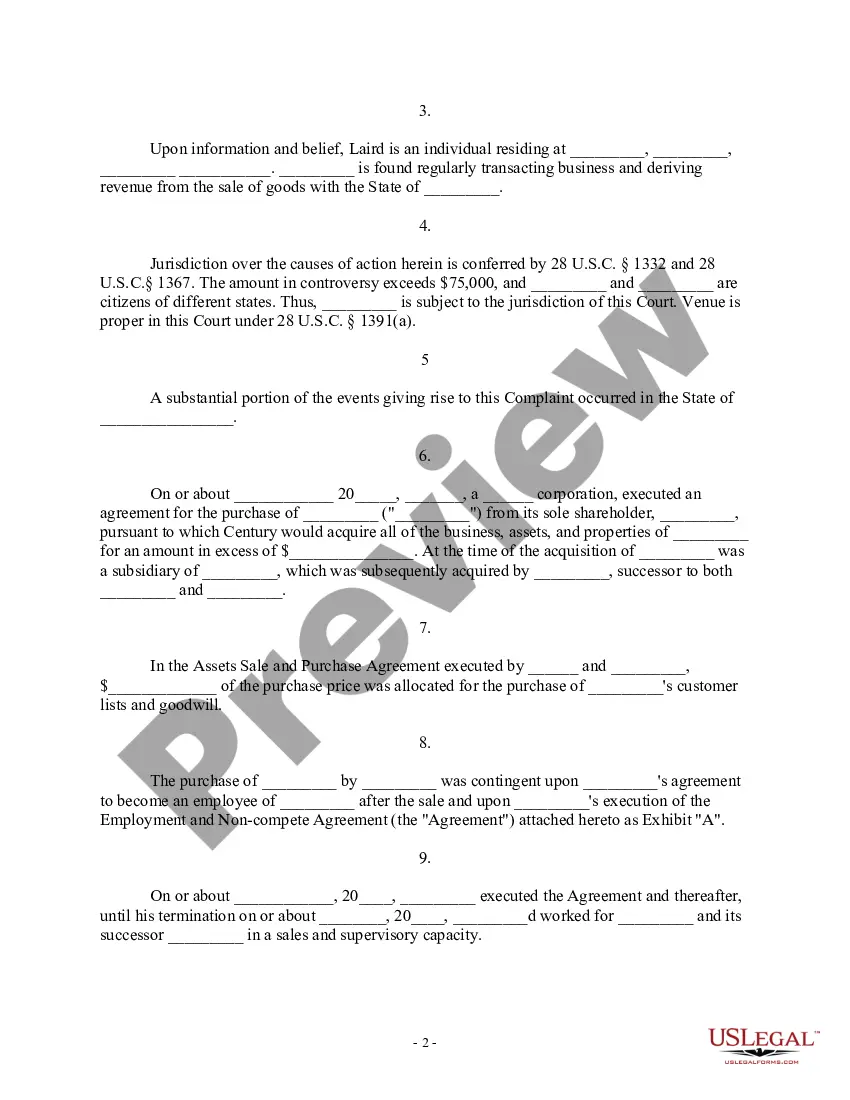
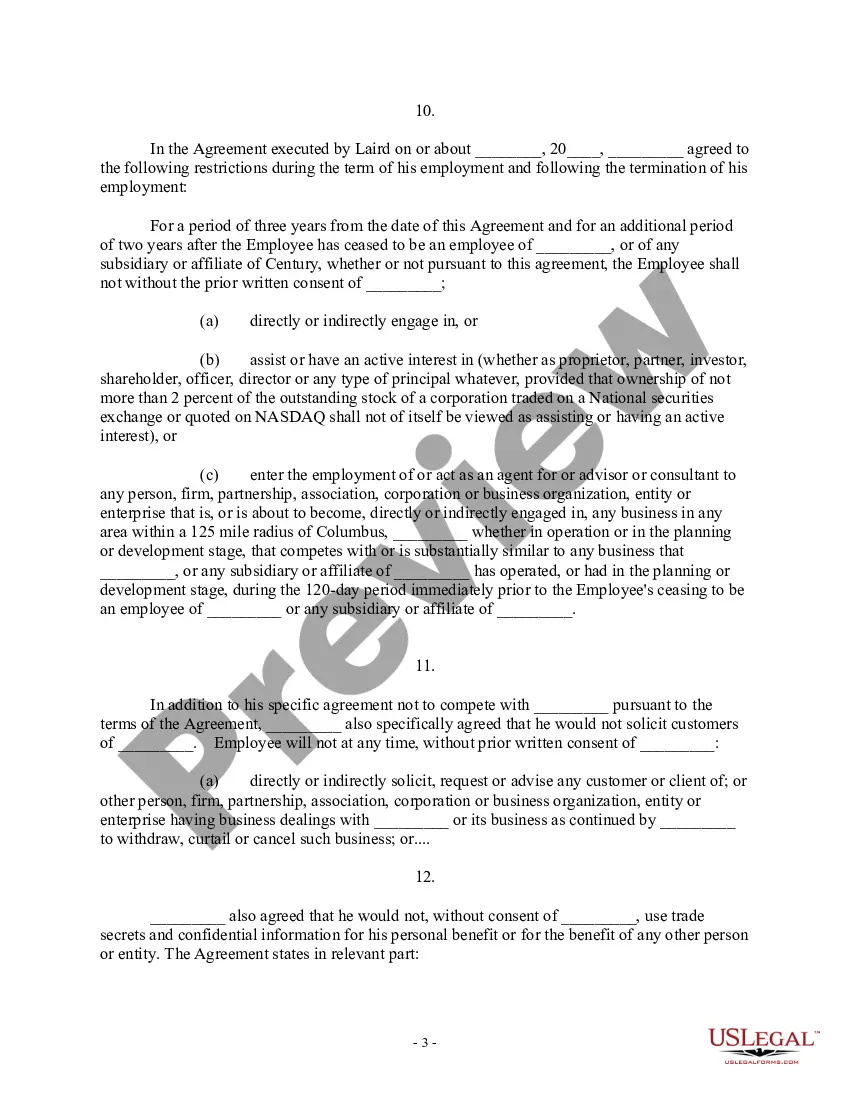
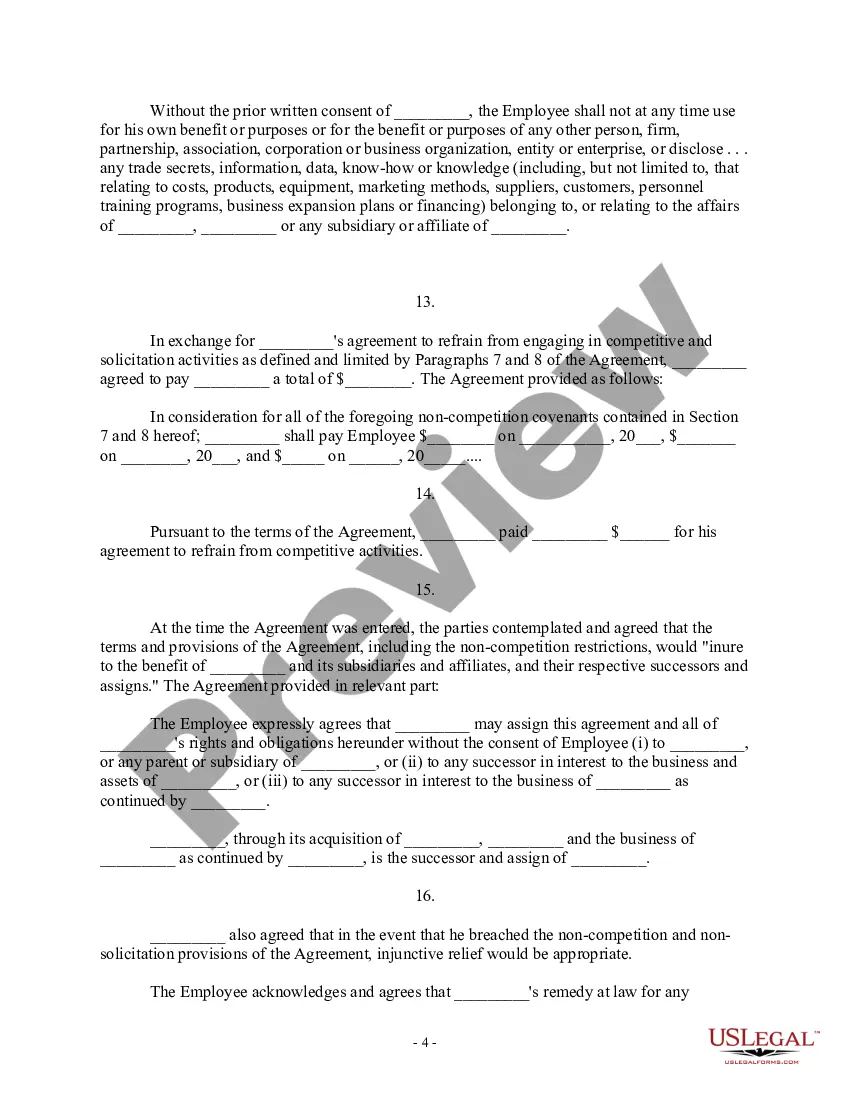
Get your form ready online
Our built-in tools help you complete, sign, share, and store your documents in one place.
Make edits, fill in missing information, and update formatting in US Legal Forms—just like you would in MS Word.
Download a copy, print it, send it by email, or mail it via USPS—whatever works best for your next step.
Sign and collect signatures with our SignNow integration. Send to multiple recipients, set reminders, and more. Go Premium to unlock E-Sign.
If this form requires notarization, complete it online through a secure video call—no need to meet a notary in person or wait for an appointment.
We protect your documents and personal data by following strict security and privacy standards.

Make edits, fill in missing information, and update formatting in US Legal Forms—just like you would in MS Word.

Download a copy, print it, send it by email, or mail it via USPS—whatever works best for your next step.

Sign and collect signatures with our SignNow integration. Send to multiple recipients, set reminders, and more. Go Premium to unlock E-Sign.

If this form requires notarization, complete it online through a secure video call—no need to meet a notary in person or wait for an appointment.

We protect your documents and personal data by following strict security and privacy standards.
Looking for another form?
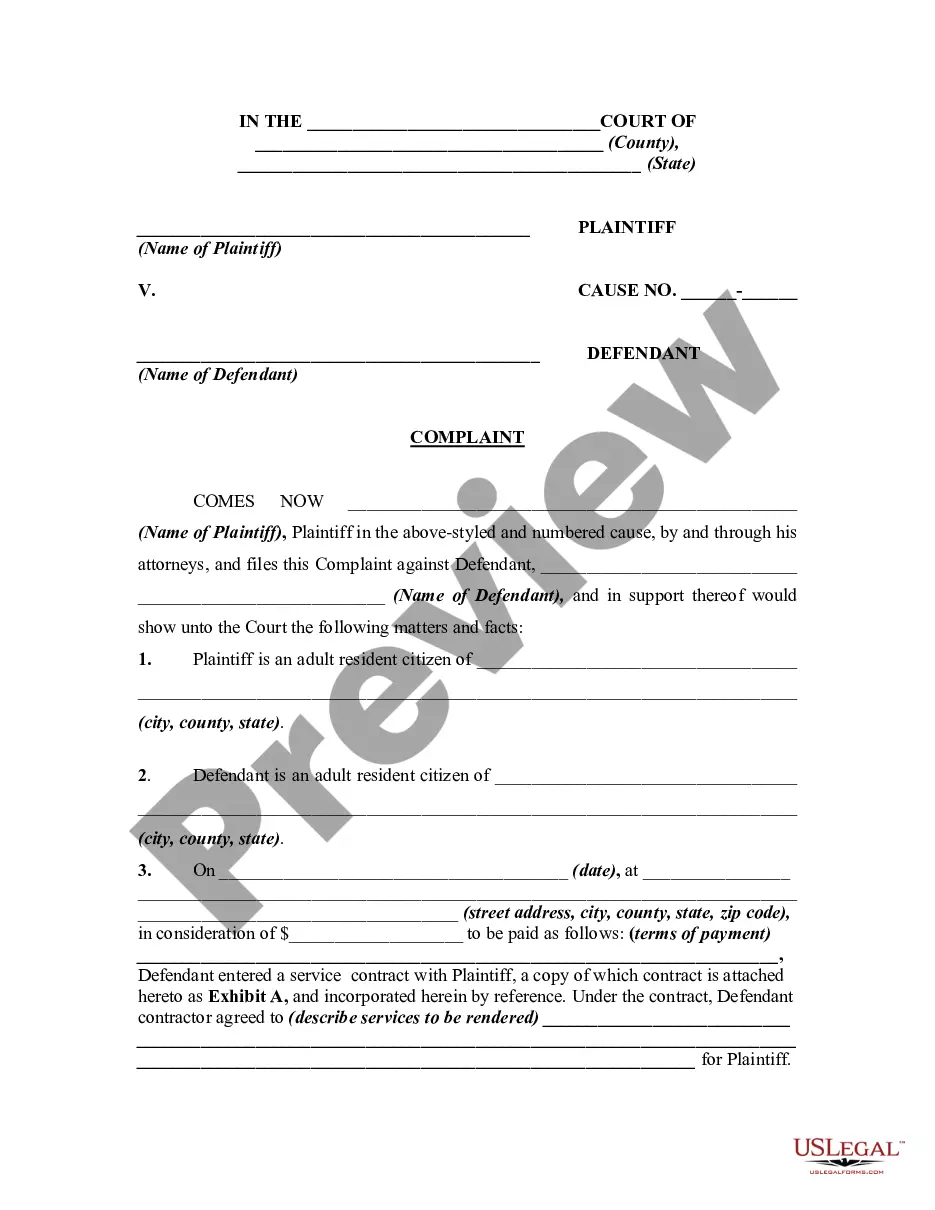
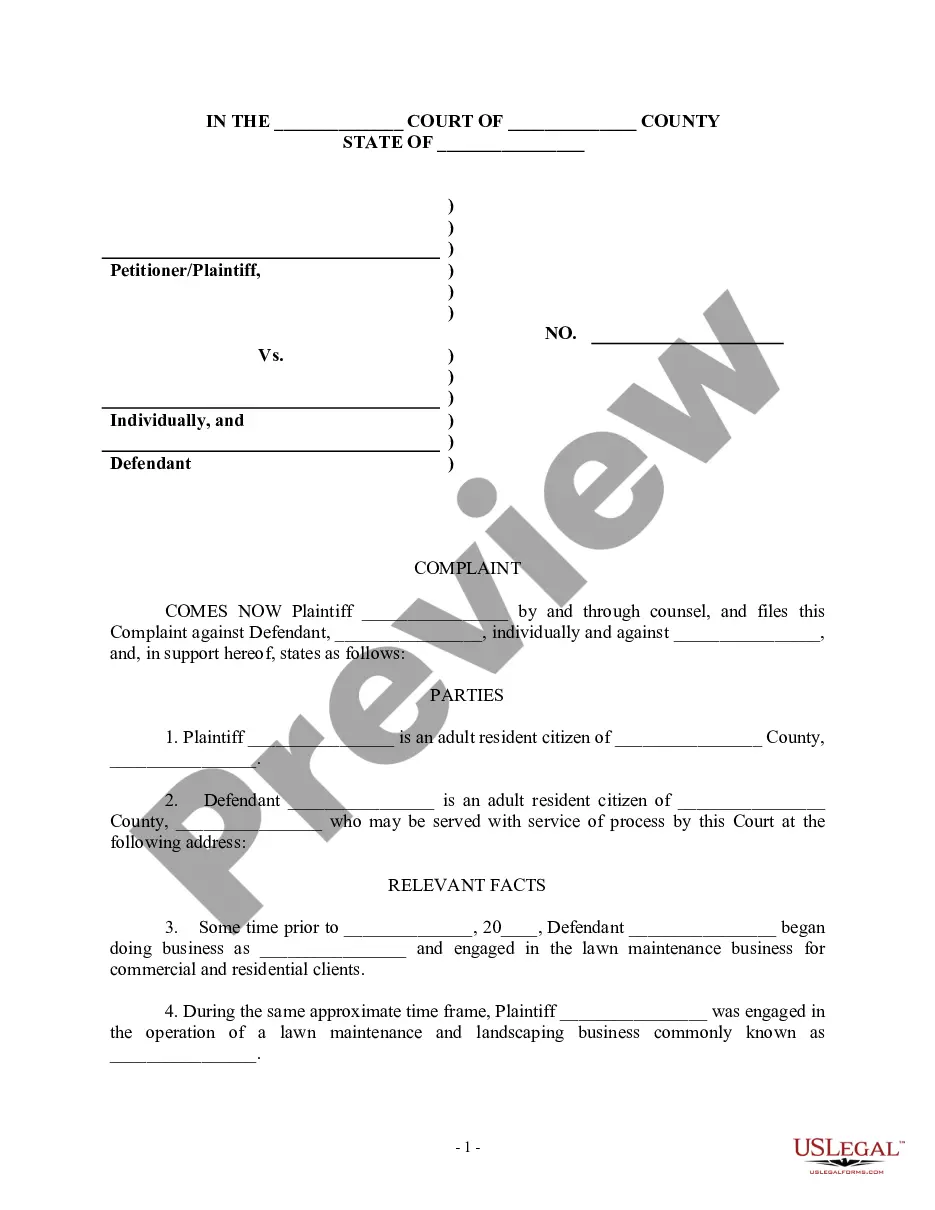
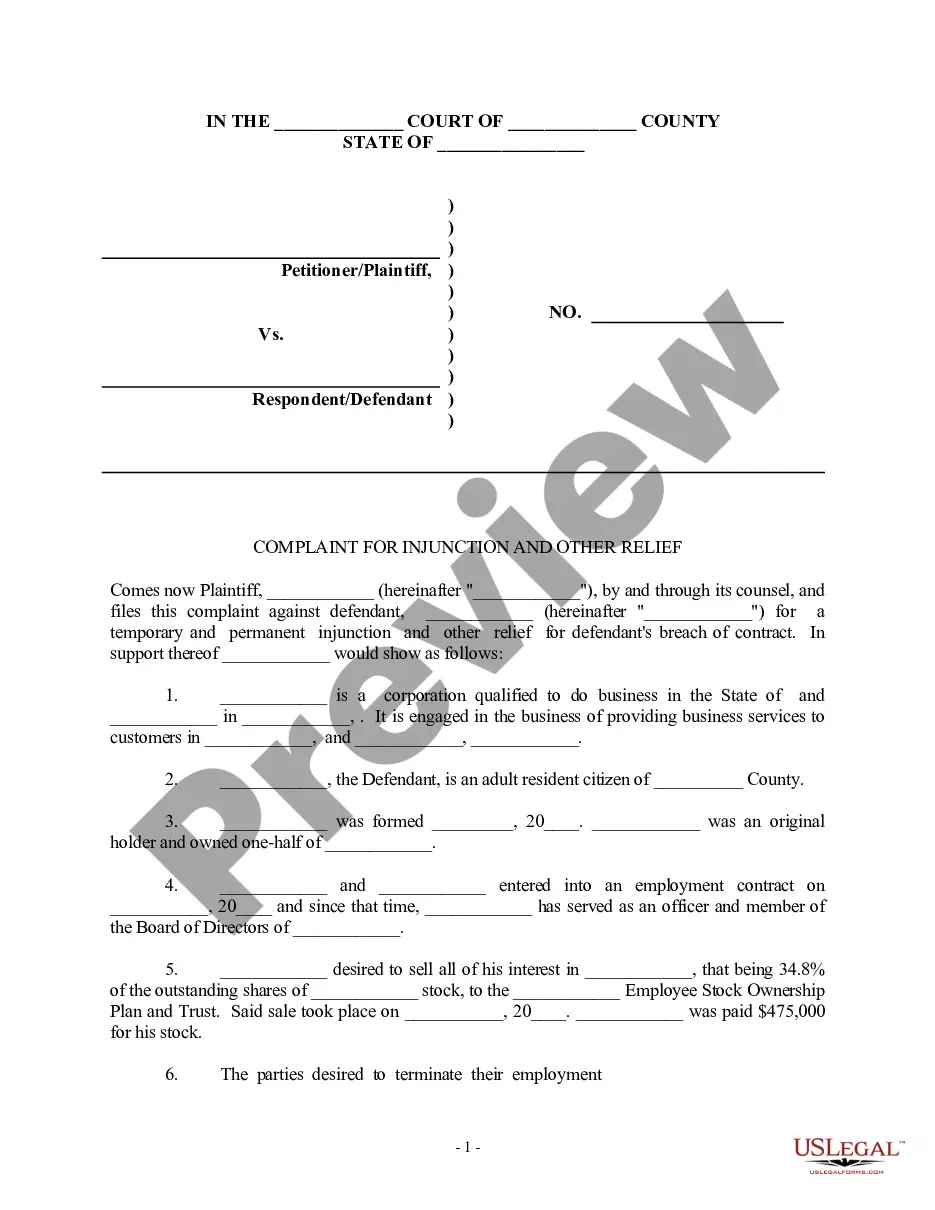
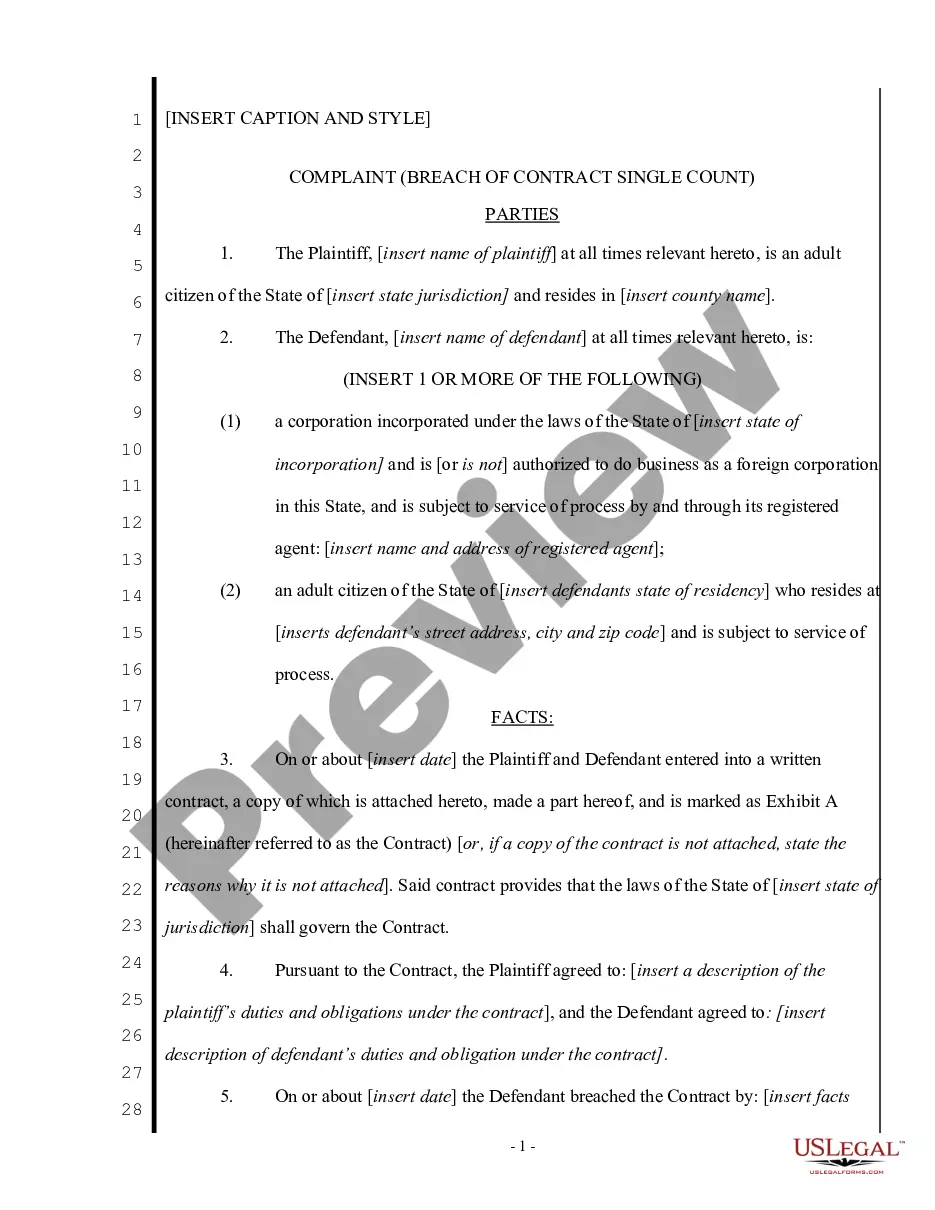
How to fill out Complaint For Injunctive Relief And Damages For Breach Of Noncompetition Agreement - Breach Of Contract - Violation Of Trade Secrets Act?
Managing legal documents and processes can be a lengthy addition to your daily routine.
Injunctive Relief Agreement For Trademark and similar forms typically necessitate that you search for them and figure out how to fill them out accurately.
Consequently, whether you are dealing with financial, legal, or personal issues, utilizing a comprehensive and user-friendly online directory of forms when necessary will be very beneficial.
US Legal Forms is the leading online source of legal templates, providing more than 85,000 state-specific forms along with a range of resources to help you complete your documents with ease.
Simply Log In to your account, find Injunctive Relief Agreement For Trademark, and download it instantly from the My documents section. You may also access previously saved forms.
- Explore the collection of applicable documents available at the click of a button.
- US Legal Forms offers you state- and county-specific documents accessible anytime for download.
- Protect your document management processes with excellent support that lets you prepare any form in mere minutes without extra or concealed fees.
Form popularity
FAQ
Seeking injunctive or other equitable relief involves asking the court for a necessary remedy that isn’t available through regular legal means. This encompasses situations where monetary damages are insufficient to resolve the harm caused. An injunctive relief agreement for trademark may serve as a powerful tool to maintain brand rights and ensure fair competition.
How can I prove cohabitation in the UK? To get a cohabitation agreement, you and your partner will need to prove that you are cohabitating. Evidence you can show to demonstrate this includes joint leases, letters that are addressed to both individuals, and joint utility bills such as gas, electricity or water.
Until the 1980s, it was illegal for unmarried couples to cohabitate, which made it impossible for many same-sex couples to live together.
Building a solid case with effective evidence ? Records of vehicles visiting the premises you believe cohabitation exists. ? Covert surveillance including image gathering. ? Background checks on the parties involved. ? An asset and financial check.
FAQ Fill out the names and contact information of both parties. ... Describe the relationship between the two parties, including how long you have been living together. Provide any additional details about your living arrangement that support your claim of cohabitation.
A cohabitation agreement is a legal document between unmarried couples who are living together. It sets out arrangements for finances, property and children while you're living together and if you split up, become ill or die. You can make an agreement at any time. It's good to do it before you move in together.
UK Unmarried Partner Visa. It's FREE, fast & no obligation! The Unmarried Partner visa (also known as the UK defacto visa) allows the unmarried partner to enter or remain in the UK on the basis that they are in a relationship with a person who is present and 'settled in the UK'.
Actual cohabitation is a non-institutionalized form of cohabitation. in other words it is not regulated in the Civil Code. The legislator has not provided for a comprehensive legal framework for such coexistence. Consequently, under the status of de facto cohabitant, one will not enjoy comprehensive protection either.
You can use things like: a marriage certificate or civil partnership certificate. a tenancy agreement, utility bills or council tax bills confirming that you live at the same address or pay bills together. a bank statement from a joint bank account, or confirming that you live at the same address.