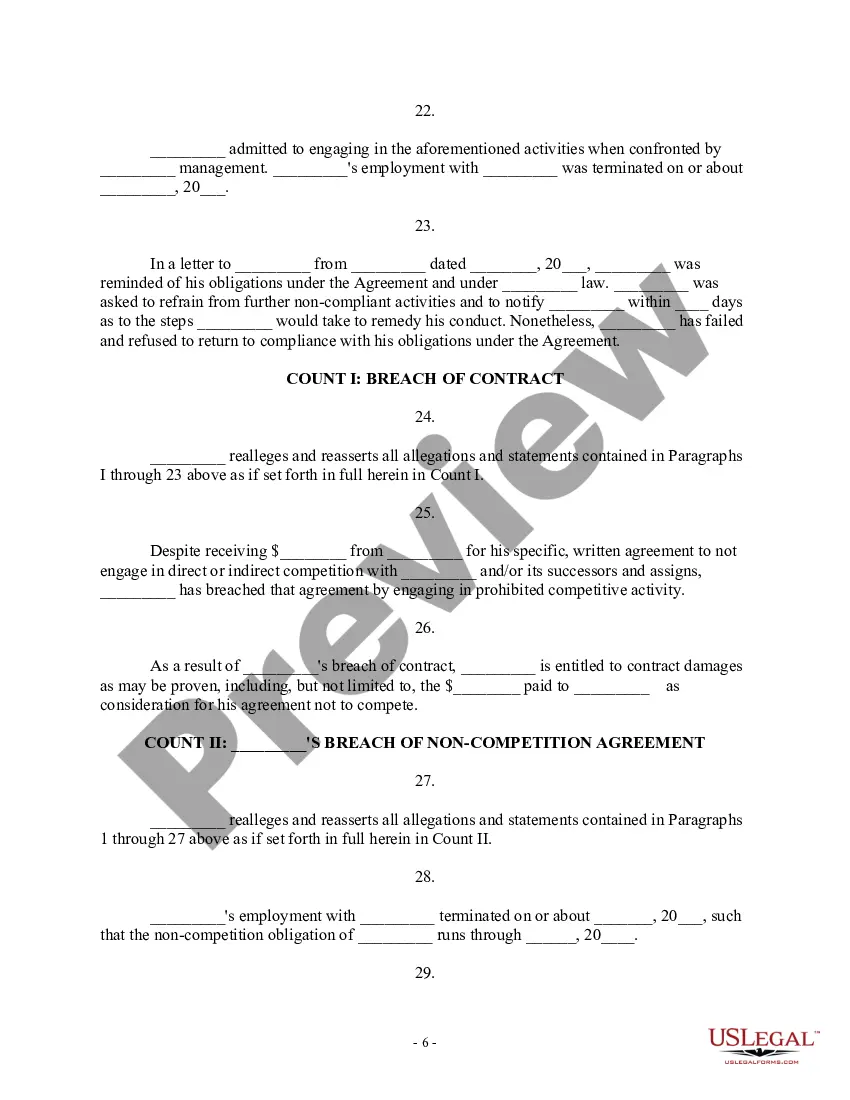
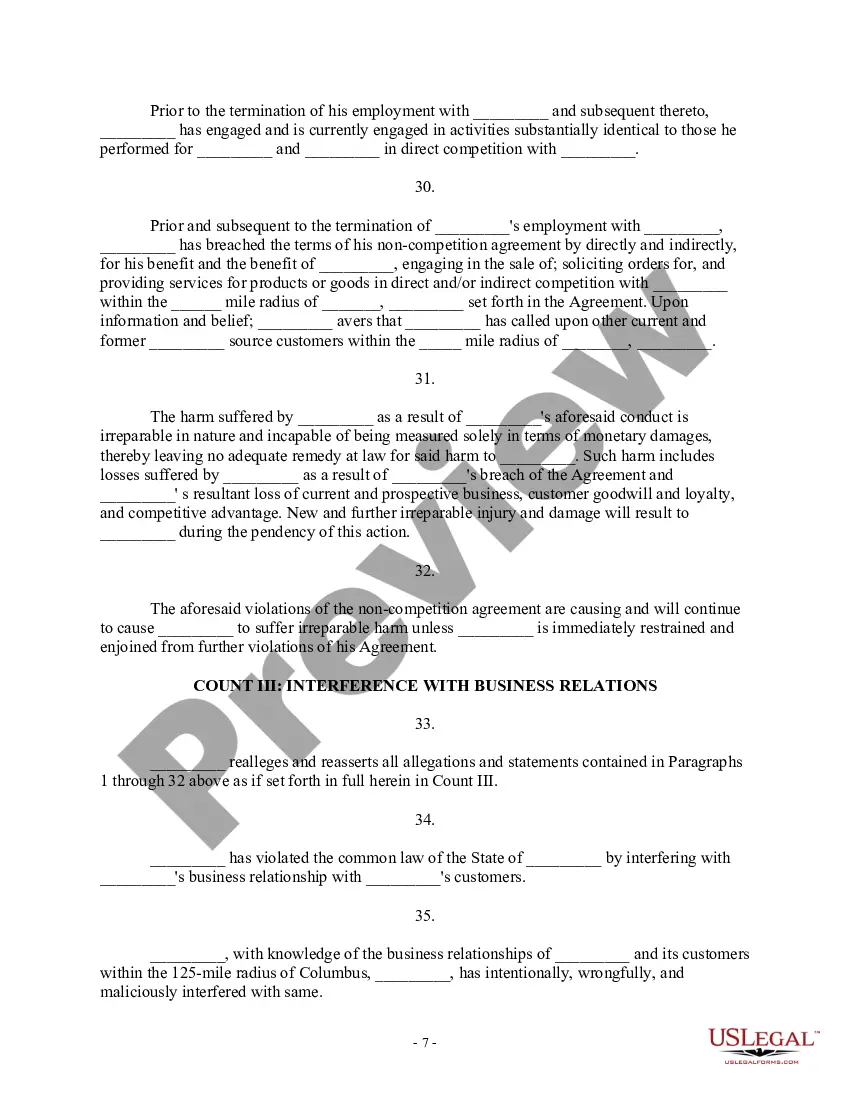
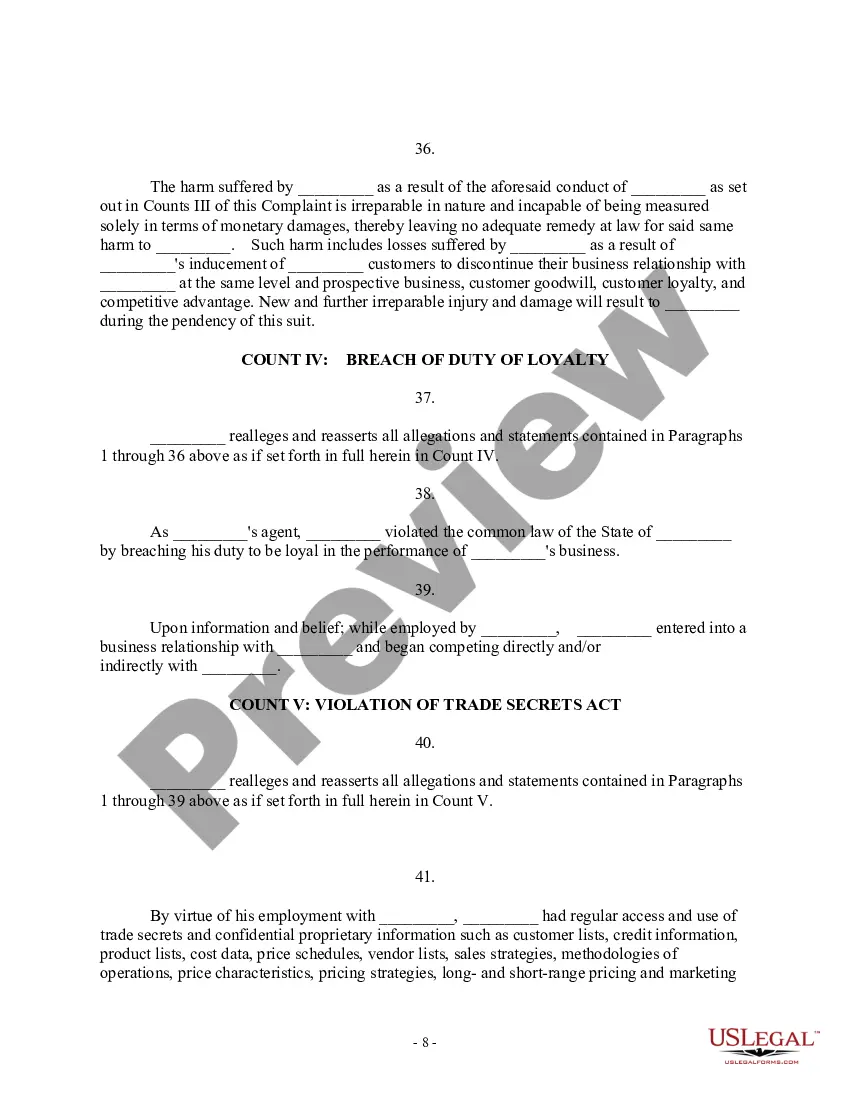
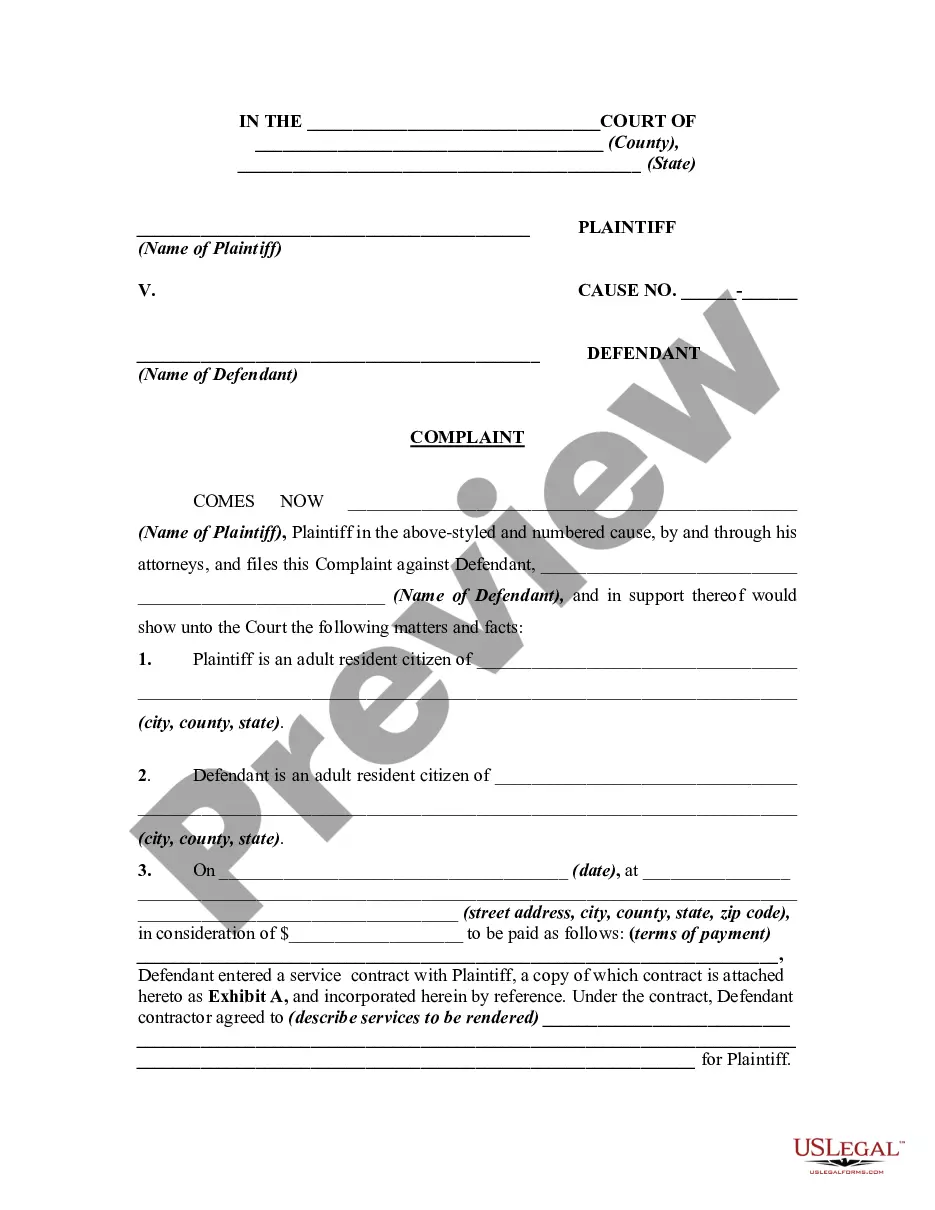
Injunctive Relief Agreement For Trade Secret Misappropriation In Florida
Description


Get your form ready online
Our built-in tools help you complete, sign, share, and store your documents in one place.
Make edits, fill in missing information, and update formatting in US Legal Forms—just like you would in MS Word.
Download a copy, print it, send it by email, or mail it via USPS—whatever works best for your next step.
Sign and collect signatures with our SignNow integration. Send to multiple recipients, set reminders, and more. Go Premium to unlock E-Sign.
If this form requires notarization, complete it online through a secure video call—no need to meet a notary in person or wait for an appointment.
We protect your documents and personal data by following strict security and privacy standards.

Make edits, fill in missing information, and update formatting in US Legal Forms—just like you would in MS Word.

Download a copy, print it, send it by email, or mail it via USPS—whatever works best for your next step.

Sign and collect signatures with our SignNow integration. Send to multiple recipients, set reminders, and more. Go Premium to unlock E-Sign.

If this form requires notarization, complete it online through a secure video call—no need to meet a notary in person or wait for an appointment.

We protect your documents and personal data by following strict security and privacy standards.
Looking for another form?







Form popularity
FAQ
A party seeking an injunction under general Florida case law must demonstrate: 1) irreparable harm; 2) a clear legal right; 3) an inadequate remedy at law; 4) consideration of the public interest.
Under TUTSA and DTSA, a plaintiff who successfully proves trade secret misappropriation can obtain several types of remedies, including injunctive relief, monetary damages, and, in certain cases, punitive damages.
Defenses to a Misappropriation Lawsuit You will need to use your own files and records to prove that you completed development before any dates on which the alleged misappropriation occurred. Related, but less strong, is a defense of reverse engineering.
A court may grant an injunction to prevent any actual or threatened misappropriation, provided that the injunction does not “prevent a person from entering into an employment relationship,” and that any conditions placed on employment are based on “evidence of threatened misappropriation and not merely on the ...
To prevail on statutory misappropriation claim the Plaintiff must prove by a preponderance of the evidence that (1) it possessed a trade secret, (2) it took reasonable steps to protect the secrecy, (3) the secret was misappropriated, and (4) resulting damages.
The plaintiff in a trade-secret case lawsuit must prove three facts: (1) it has some valuable business information that it has kept secret; (2) the information is not generally known; and (3) the defendant has used that secret. A defendant may attack each showing, but some attacks are better than others.
The party seeking a preliminary injunctive relief must demonstrate: (1) irreparable injury in the absence of such an order; (2) that the threatened injury to the moving party outweighs the harm to the opposing party resulting from the order; (3) that the injunction is not adverse to public interest; and (4) that the ...
A district court may grant injunctive relief only if the movant establishes the following: (1) it has a substantial likelihood of success on the merits of the underlying case; (2) the movant will suffer irreparable harm in the absence of an injunction, (3) the harm suffered by the movant in the absence of an injunction ...
