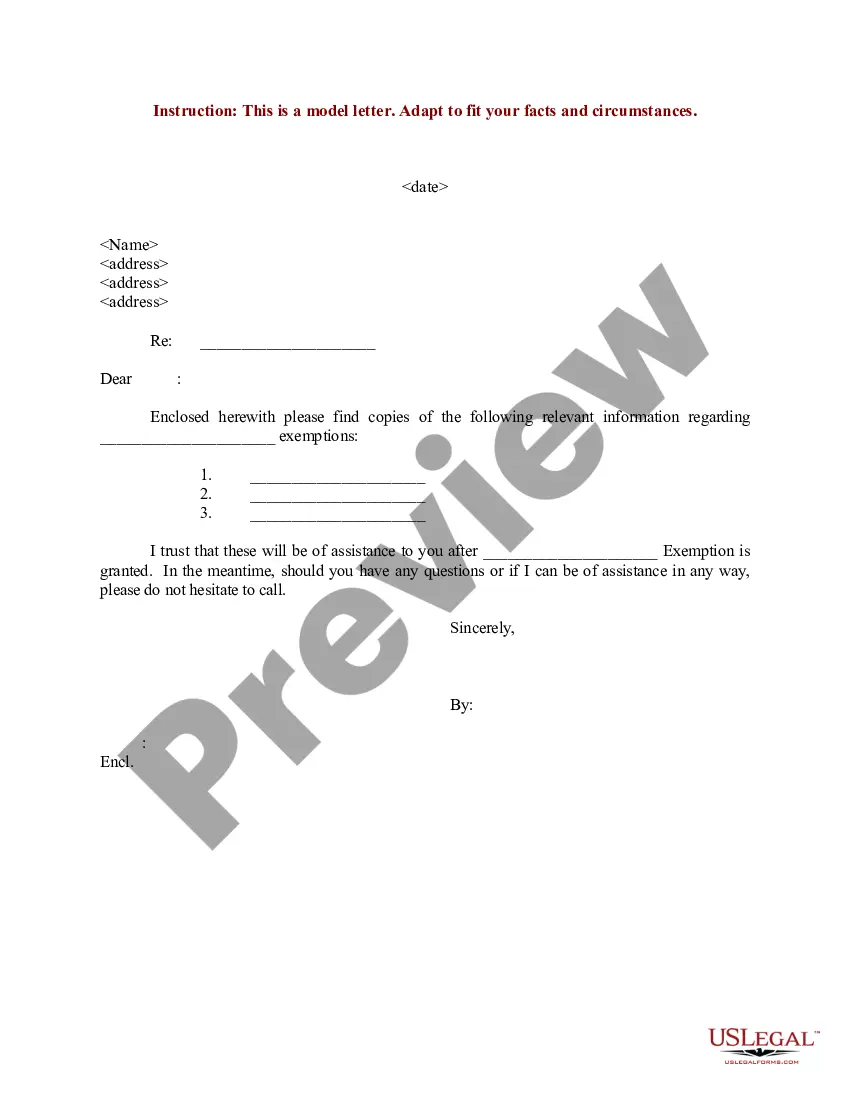
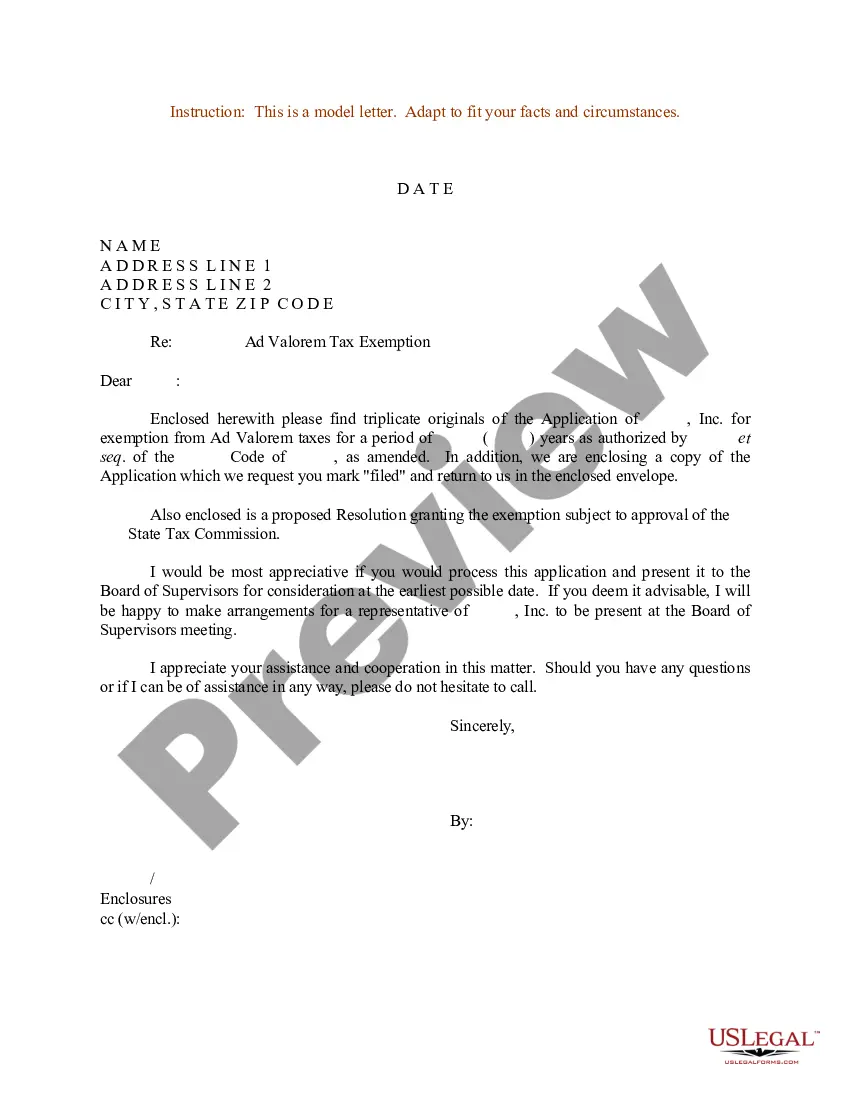
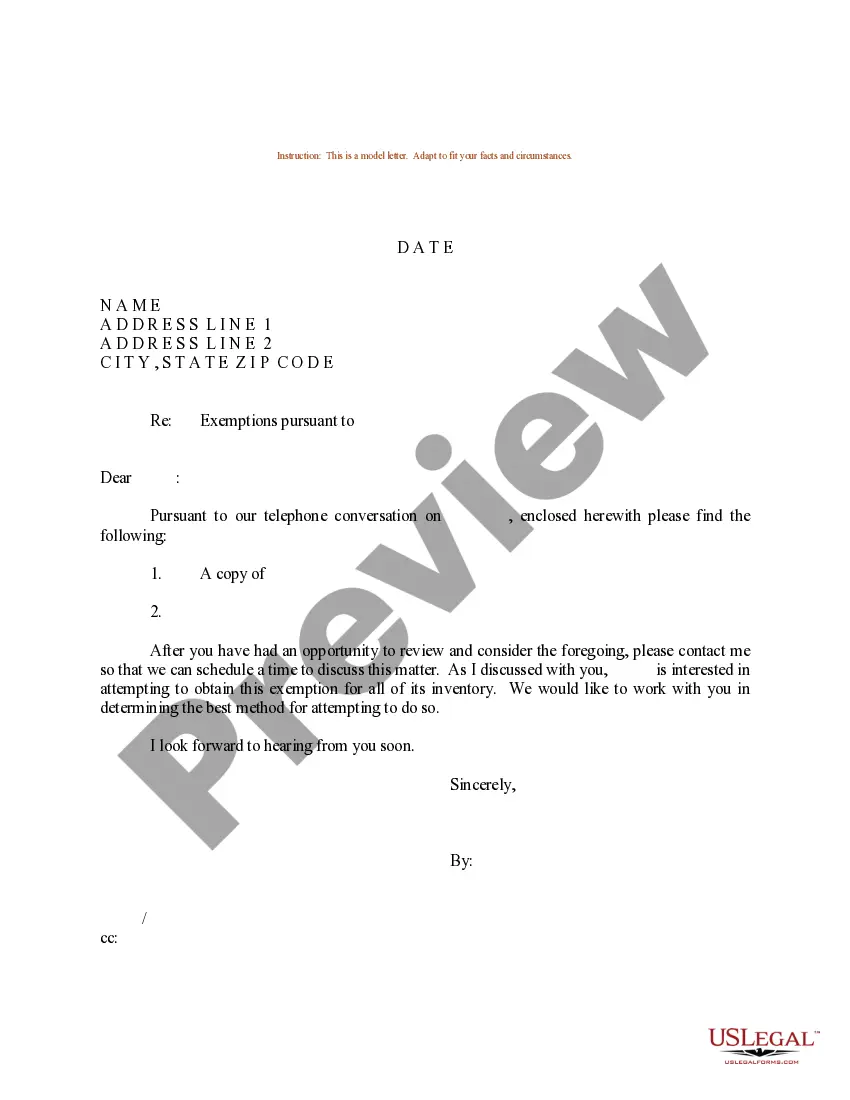
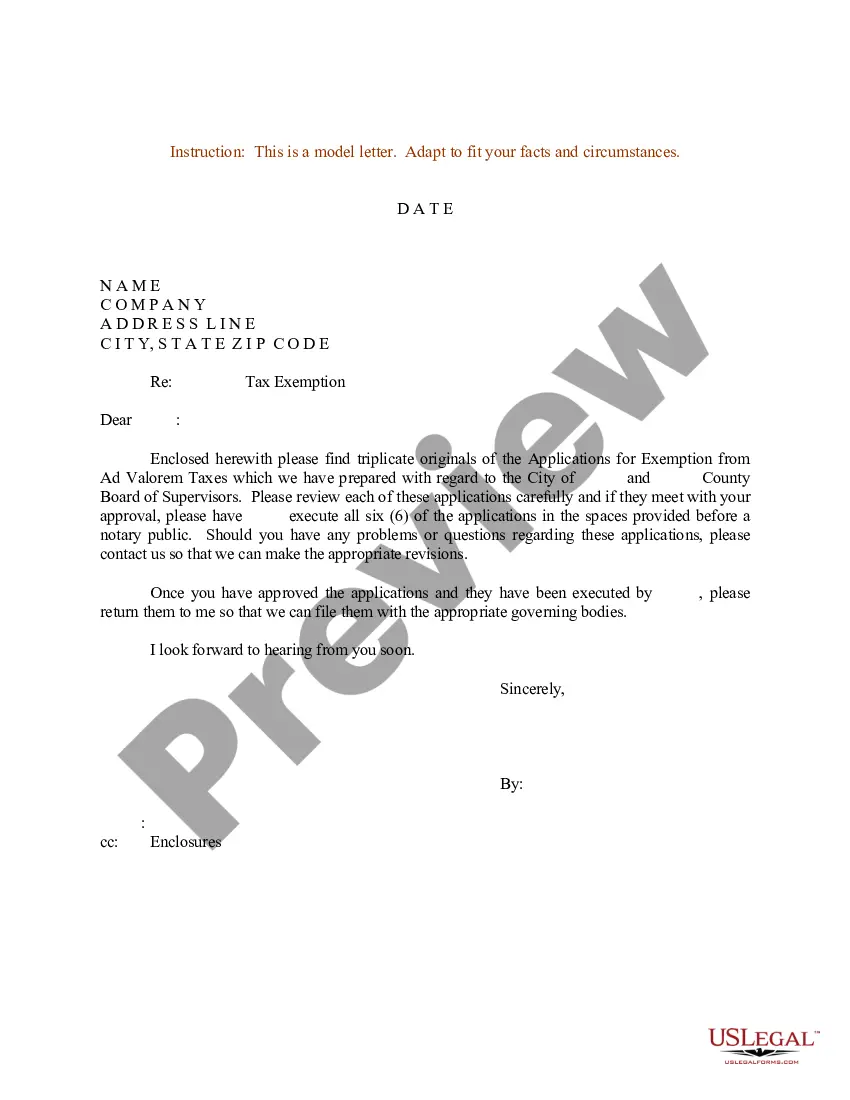
Sample Letter For Exemption In Maricopa
Description
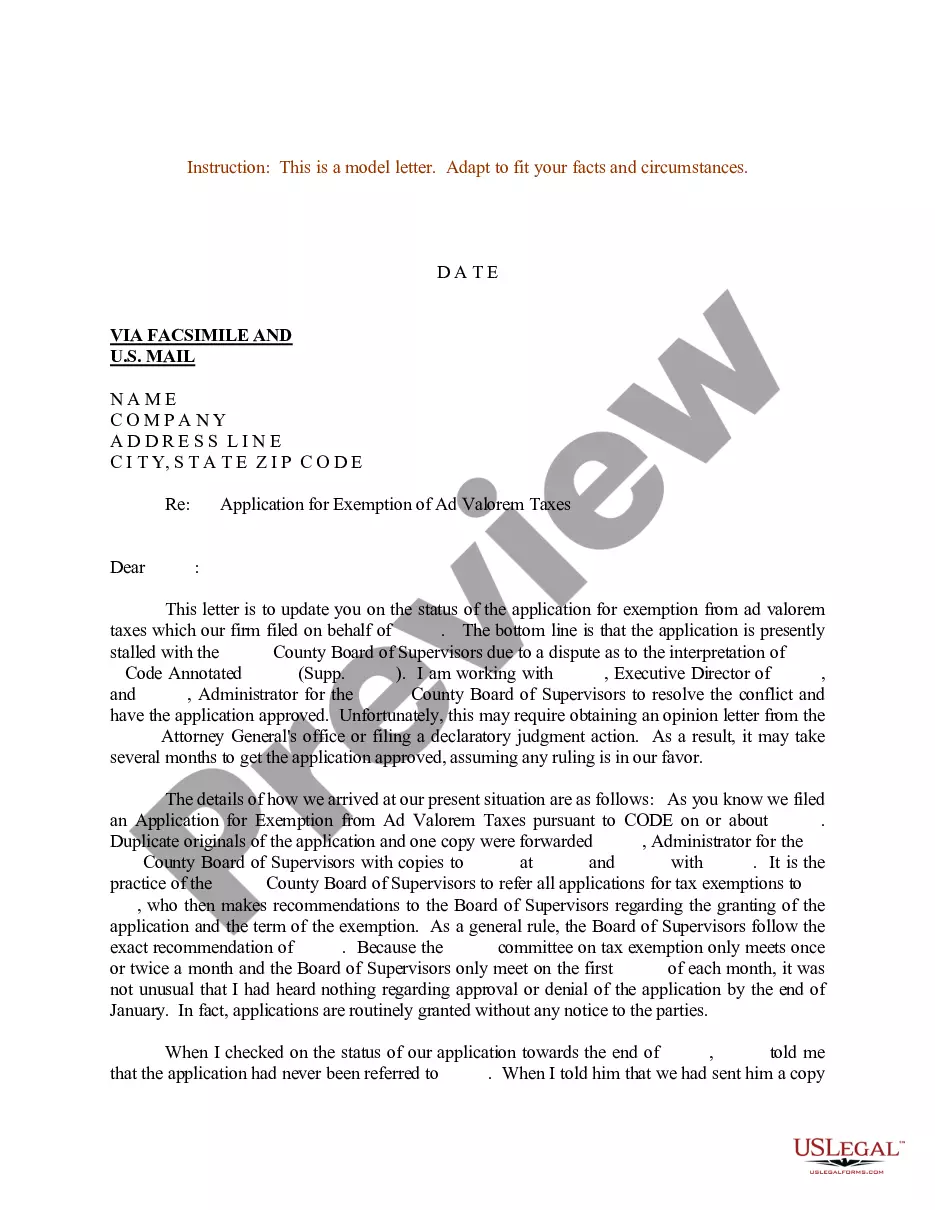
Get your form ready online
Our built-in tools help you complete, sign, share, and store your documents in one place.
Make edits, fill in missing information, and update formatting in US Legal Forms—just like you would in MS Word.
Download a copy, print it, send it by email, or mail it via USPS—whatever works best for your next step.
Sign and collect signatures with our SignNow integration. Send to multiple recipients, set reminders, and more. Go Premium to unlock E-Sign.
If this form requires notarization, complete it online through a secure video call—no need to meet a notary in person or wait for an appointment.
We protect your documents and personal data by following strict security and privacy standards.

Make edits, fill in missing information, and update formatting in US Legal Forms—just like you would in MS Word.

Download a copy, print it, send it by email, or mail it via USPS—whatever works best for your next step.

Sign and collect signatures with our SignNow integration. Send to multiple recipients, set reminders, and more. Go Premium to unlock E-Sign.

If this form requires notarization, complete it online through a secure video call—no need to meet a notary in person or wait for an appointment.

We protect your documents and personal data by following strict security and privacy standards.
Looking for another form?
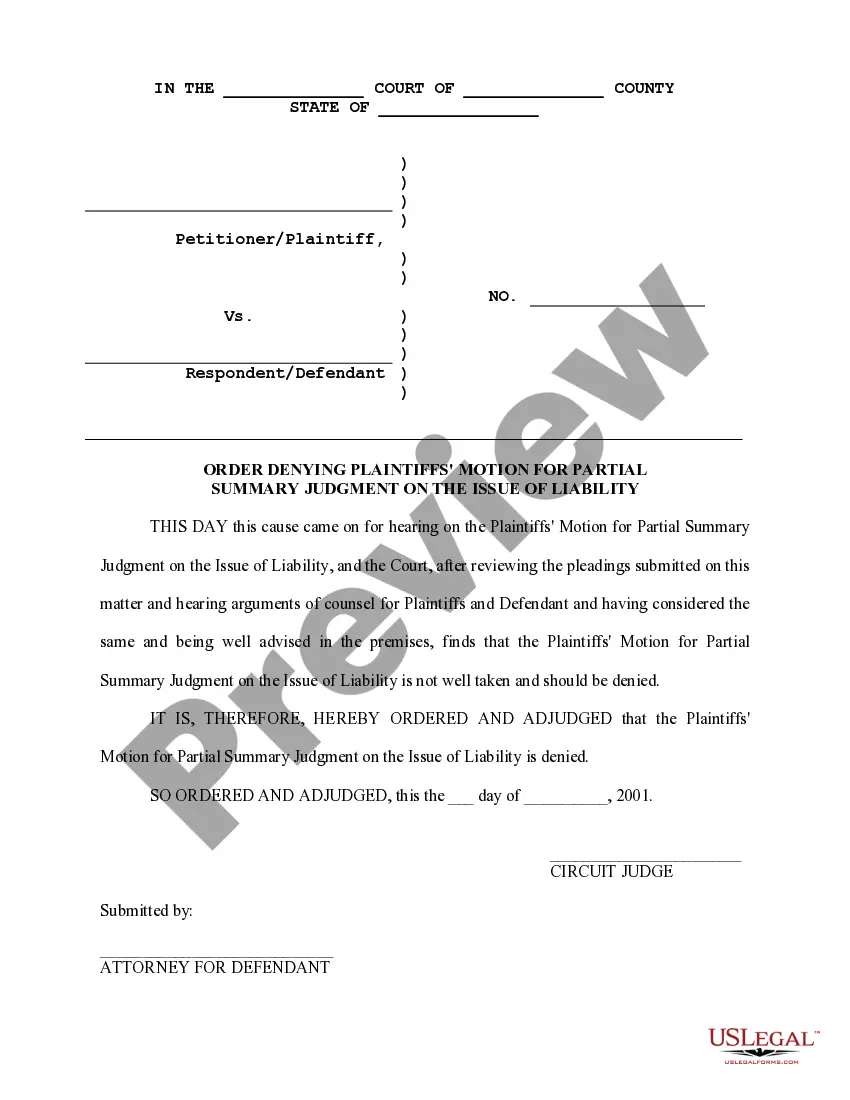

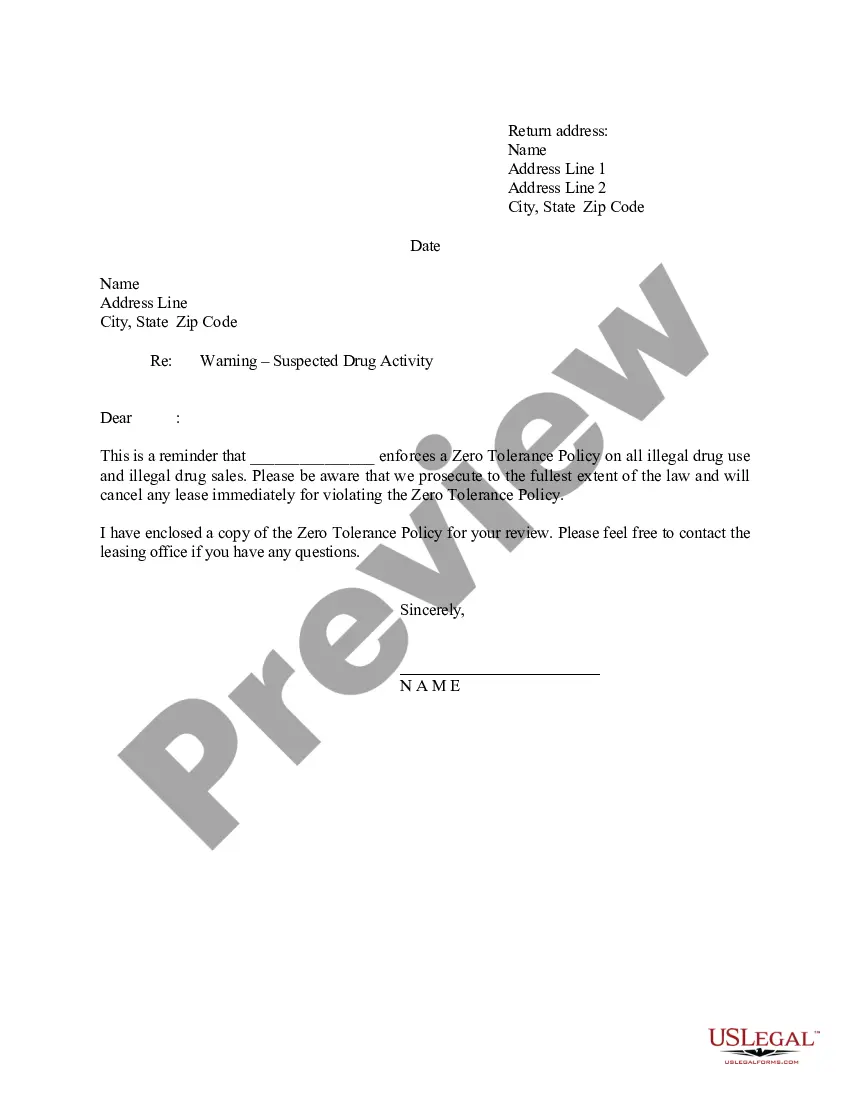

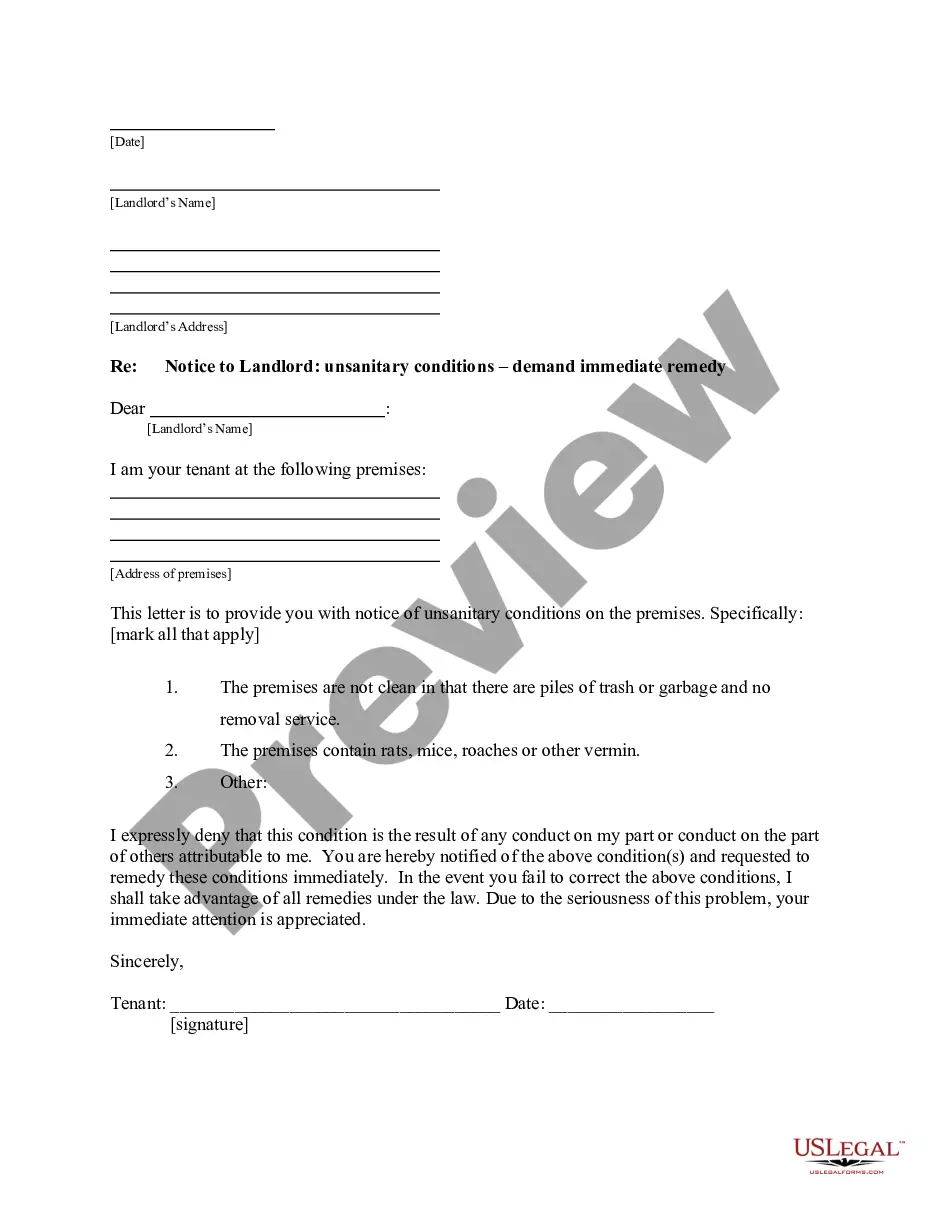
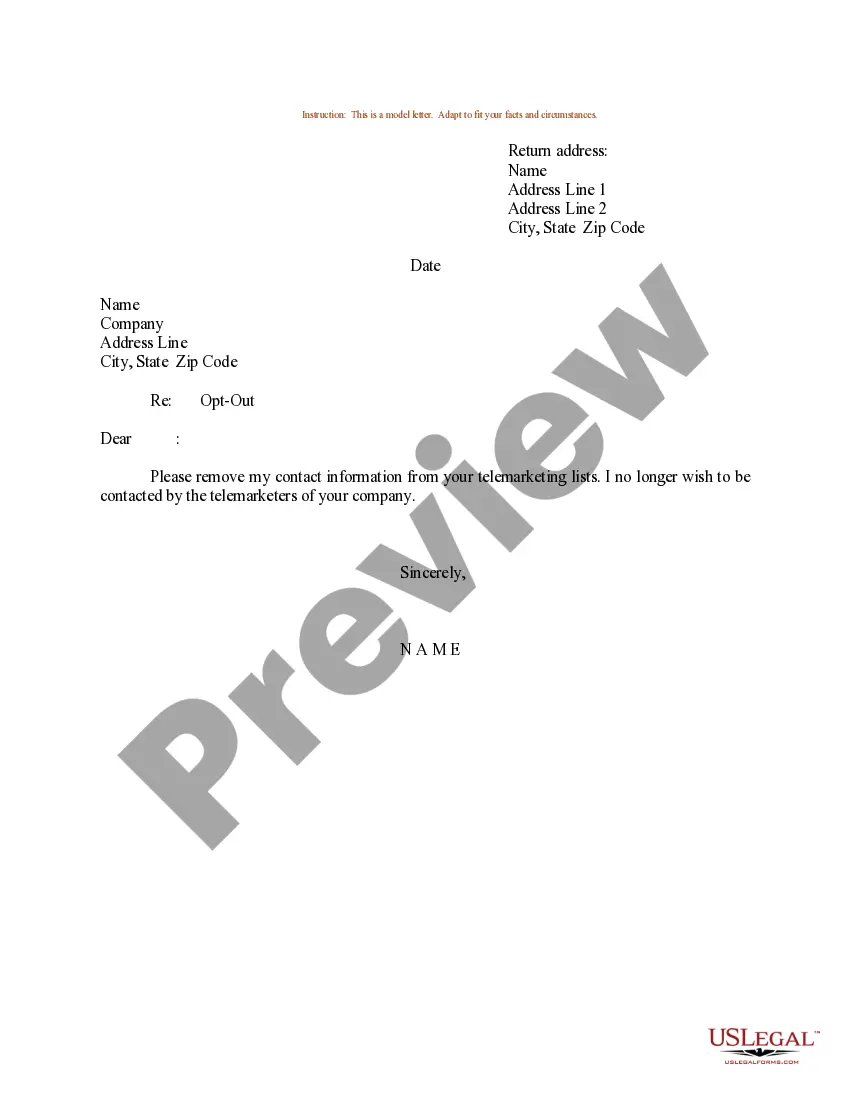

Form popularity
FAQ
Michigan veterans with 100% disability status are eligible to receive full disabled veteran property tax exemption. Minnesota. Mississippi. Missouri. Montana. Nebraska. Nevada. New Hampshire. New Jersey.
Personal Exemptions are part of the Office's Valuation Relief Programs Division: Personal Exemptions are offered to eligible Widows, Widowers, Totally Disabled Residents or Disabled Veterans with an Honorable Discharge.
1. Property owner (applicant) must be 65 years of age or older. 2. The property must be the primary residence of the property owner and must have lived there for at least 2 years.
The exemption application process for individuals and organizations is described in A.R.S. 42-11152 . In almost every case, the taxpayer must file an application with the county assessor, which provides the information required by the assessor to make an exemption determination.
To qualify for individual property tax exemption, a veteran with a service or nonservice connected disability must verify the disability by filing with the County Assessor the initial affidavit of eligibility (ADOR Form 82514V).
Michigan veterans with 100% disability status are eligible to receive full disabled veteran property tax exemption. Minnesota. Mississippi. Missouri. Montana. Nebraska. Nevada. New Hampshire. New Jersey.
Exemption Application: An Affidavit of Individual Tax Exemption (Form 82514) must be filed with the County Assessor annually Failure to file for an exemption will result in loss of eligibility for that year (2024). Applicant filing period for 2024 is January 2 to March 1.
Currently, there is not a property tax exemption for veterans, except for honorably discharged veterans with a service or nonservice connected disability.
The disabled veteran must be a Texas resident and must choose one property to receive the exemption. In Texas, veterans with a disability rating of: 100% are exempt from all property taxes. 70 to 100% receive a $12,000 property tax exemption.